

1 month 2 weeks ago
There is one particular property of living things, however, that I want to single out as explicable only by Darwinian selection. This property is the one that has been the recurring topic of this book: adaptive complexity.
▼
Source
source
Chapter 11 "Doomed Rivals" (p. 288)

3 months 3 weeks ago
Everything great glitters, glitter begets ambition, and ambition can easily have caused the inspiration or what we thought to be inspiration. But reason can no longer restrain one who is lured by the fury of ambition. He tumbles where his vehement drive calls him; no longer does he choose his position, but rather chance and luster determine it.
2 months 4 days ago
The reason that people take selfies is not narcissism. Rather, it is inner emptiness. There is no meaning to stabilize the ego. Faced with its inner emptiness, the ego constantly produces itself.

3 months 3 days ago
The King that followeth Truth, and ruleth according to Justice, shall reign quietly: but he that doth the contrary, seeketh another to reign for him.
2 months 2 weeks ago
Ah! why do women condescend to receive a degree of attention and respect from strangers different from that reciprocation of civility which the dictates of humanity and the politeness of civilization authorize between man and man? And why do they not discover, when, "in the noon of beauty's power", that they are treated like queens only to be deluded by hollow respect. Confined, then, in cages like the feathered race, they have nothing to do but to plume themselves, and stalk with mock majesty from perch to perch.
▼
Source
source
Ch. 4

3 months 3 weeks ago
The baby, assailed by eyes, ears, nose, skin, and entrails at once, feels it all as one great blooming, buzzing confusion; and to the very end of life, our location of all things in one space is due to the fact that the original extents or bignesses of all the sensations which came to our notice at once, coalesced together into one and the same space.
▼
Source
source
Ch. 13
1 month 2 weeks ago
Bitter for a free man is the bondage of debt.
▼
Source
source
Maxim 14 Variant: "Debt is the slavery of the free."

4 months 2 weeks ago
The history of science is full of revolutionary advances that required small insights that anyone might have had, but that, in fact, only one person did.
2 months 3 weeks ago
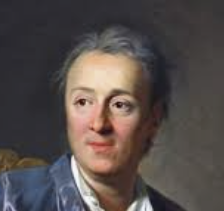
We are constantly railing against the passions; we ascribe to them all of man's afflictions, and we forget that they are also the source of all his pleasures ... But what provokes me is that only their adverse side is considered ... and yet only passions, and great passions, can raise the soul to great things. Without them there is no sublimity, either in morals or in creativity. Art returns to infancy, and virtue becomes small-minded.
▼
Source
source
As translated in Diderot (1977) by Otis Fellows, p. 39
3 months 3 weeks ago
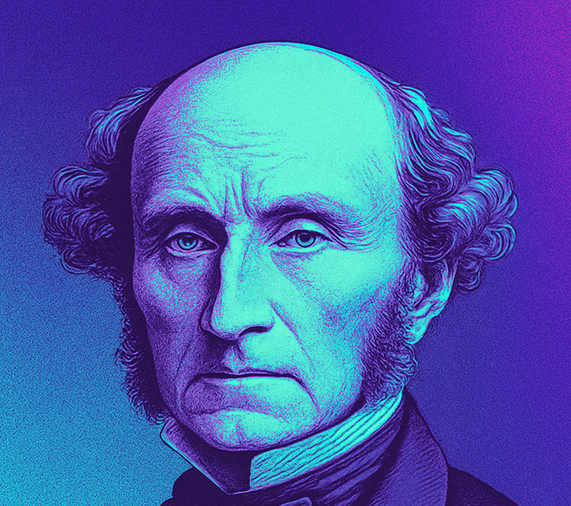
In the course of instruction which I have partially retraced, the point most superficially apparent is the great effort to give, during the years of childhood an amount of knowledge in what are considered the higher branches of education, which is seldom acquired (if acquired at all) until the age of manhood.
▼
Source
source
(p. 30)

2 months 2 weeks ago
Nothing is a better proof of how far humanity has regressed than the impossibility of finding a single nation, a single tribe, among whom birth still provokes mourning and lamentations.

3 months 1 week ago
The enmity of one's kindred is far more bitter than the enmity of strangers.
3 months 2 weeks ago
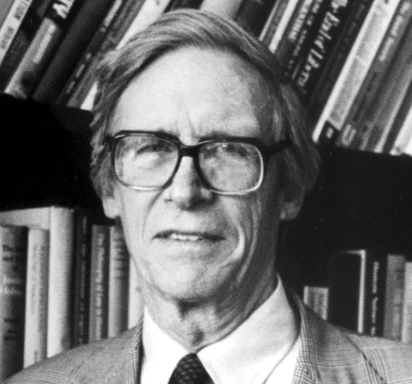
We must not be enticed by mathematically attractive assumptions into pretending that the contingencies of men's social positions and the asymmetries of their situations somehow even out in the end. Rather we must choose our conception of justice fully recognizing that this is not and cannot be the case.
▼
Source
source
Chapter III, Section 28, pg. 171

1 month 2 weeks ago
Violence is the effort to maintain and restore a weakened psyche.
▼
Source
source
(p. 377)

2 weeks 2 days ago
He whom God has touched will always be a being apart: he is, whatever he may do, a stranger among men; he is marked by a sign.
▼
Source
source
Oeuvres Complètes, vol. 3. L'Avenir de la Science (1890).

3 months 2 weeks ago
"Fare well!" "A whole world of pain is contained in these words." How can it be contained in them? - It is bound up in them. The words are like an acorn from which an oak tree can grow.
▼
Source
source
p. 52e
3 months 2 weeks ago
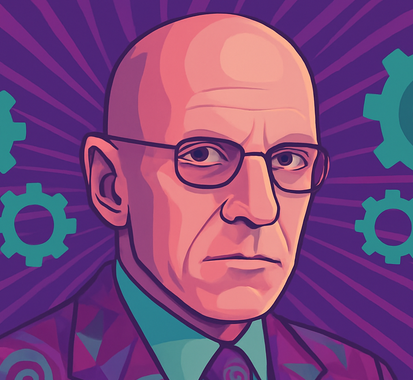
The criticism of the reformers was directed not so much at the weakness or cruelty of those in authority, as at a bad economy of power.
▼
Source
source
Chapter Two, pp.. 79
1 month 3 weeks ago
Whatever is referred to must exist. Let us call this the axiom of existence.
▼
Source
source
P. 77.
1 month 2 weeks ago
The electronic age is a world in which causes and effects become almost interchangeable, as in music structures.
▼
Source
source
(p. 99)

2 months 2 weeks ago
Thou sayest that I am a king. To this end was I born, and for this cause came I into the world, that I should bear witness unto the truth. Every one that is of the truth heareth my voice.
▼
Source
source
18:37, (KJV)
2 months 1 week ago
Classical science was based upon the belief that it is possible to formulate both the position and velocity at one time of any given particle. It followed that knowledge of the position and velocity of a given number of particles would enable the future behavior of the whole collection to be accurately predicted. The principle of Heisenberg is that given the determination of position, its velocity can be stated only as of a certain order of probability, while if its velocity is determined the correlative factor of position can be stated only as of a certain order of probability. Both cannot be determined at once, from which it follows necessarily that the future of the whole collection cannot possibly be foretold except in terms of some order of probability.
2 months 1 week ago
I know well that many of my readers do not think as I do. This also is most natural and confirms the theorem. For although my opinion turn out erroneous, there will always remain the fact that many of those dissentient readers have never given five minutes' thought to this complex matter. How are they going to think as I do? But by believing that they have a right to an opinion on the matter without previous effort to work one out for themselves, they prove patently that they belong to that absurd type of human being which I have called the "rebel mass." It is precisely what I mean by having one's soul obliterated, hermetically closed. Here it would be the special case of intellectual hermetism.
▼
Source
source
Chap. VIII: The Masses Intervene In Everything, And Why Their Intervention Is Solely By Violence

2 months 1 week ago
Only the feeble resign themselves to final death and substitute some other desire for the longing for personal immortality. In the strong the zeal for perpetuity overrides the doubt of realizing it, and their superabundance of life overflows upon the other side of death.
3 months 3 weeks ago
Beauty is the main positive form of the aesthetic assimilation of reality, in which aesthetic ideal finds it direct expression...
▼
Source
source
About Beauty
2 months 6 days ago
Intelligence is quickness to apprehend as distinct from ability, which is capacity to act wisely on the thing apprehended.
▼
Source
source
p. 135; Ch. 17, December 15, 1939.
2 months 4 days ago
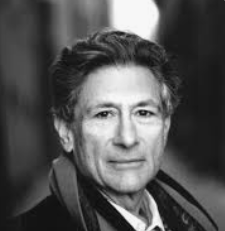
Every single empire in its official discourse has said that it is not like all the others, that its circumstances are special, that it has a mission to enlighten, civilize, bring order and democracy, and that it uses force only as a last resort. And, sadder still, there always is a chorus of willing intellectuals to say calming words about benign or altruistic empires, as if one shouldn't trust the evidence of one's eyes watching the destruction and the misery and death brought by the latest mission civilizatrice.
▼
Source
source
"Preface (2003)"
2 months 2 weeks ago
Miracles are propitious accidents, the natural causes of which are too complicated to be readily understood.

2 months 4 weeks ago
Our youth we can have but to-day, We may always find time to grow old. Can Love be controlled by Advice?
▼
Source
source
reported in Bartlett's Familiar Quotations, 10th ed. (1919).
3 months 3 days ago
By the air which I breathe, and by the water which I drink, I will not endure to be blamed on account of this discourse.
▼
Source
source
As reported by Heraclides Ponticus (c. 360 BC), and Diogenes Laërtius, in Lives and Opinions of Eminent Philosophers, "Pythagoras", Sect. 6, in the translation of C. D. Yonge

3 months 2 weeks ago
The hardness of God is kinder than the softness of men, and His compulsion is our liberation.

3 months 3 weeks ago
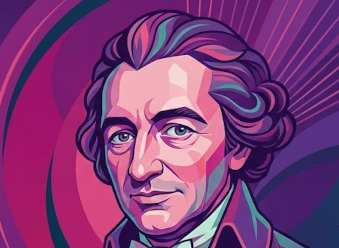
This sacrifice of common sense is the certain badge which distinguishes slavery from freedom; for when men yield up the privilege of thinking, the last shadow of liberty quits the horizon.
▼
Source
source
"Reflections on Titles", Pennsylvania Magazine

3 months 3 weeks ago
No man who believes that all is for the best in this suffering world can keep his ethical values unimpaired, since he is always having to find excuses for pain and misery.
▼
Source
source
The Collected Papers of Bertrand Russell: A fresh look at empiricism, 1927-42 (G. Allen & Unwin, 1996), p. 217
Just now
Of all things nothing exists that is not by its substance the offspring of ocean. But why will you have me tell this to the vulgar? Although better to have been shrouded in silence, it nevertheless has been spoken; at all events I declare it, although all men will not readily receive the same.
2 months 1 week ago
It is peculiar to "ressentiment criticism" that it does not seriously desire that its demands be fulfilled. It does not want to cure the evil. The evil is merely the pretext for the criticism.
▼
Source
source
L. Coser, trans. (1973), p. 51

3 months 2 weeks ago
I remind young people everywhere I go, one of the worst things the older generation did was to tell them for twenty-five years "Be successful, be successful, be successful" as opposed to "Be great, be great, be great". There's a qualitative difference.
▼
Source
source
Speech in San Francisco: Democracy Matters
4 months 2 weeks ago
Every revolutionary ends as an oppressor or a heretic.

6 days ago
Prove your words by your deeds.
4 months 2 weeks ago
Yes, everyone sleeps at that hour, and this is reassuring, since the great longing of an unquiet heart is to possess constantly and consciously the loved one...

3 months 3 weeks ago
IV. Every tax ought to be contrived as both to take out and to keep out of the pockets of the people as little as possible, over and above what it brings into the public treasury of the state.
▼
Source
source
Chapter II, Part II, p. 893.
2 weeks 1 day ago
Logic teaches us that on such and such a road we are sure of not meeting an obstacle; it does not tell us which is the road that leads to the desired end. For this, it is necessary to see the end from afar, and the faculty which teaches us to see is intuition. Without it, the geometrician would be like a writer well up in grammar but destitute of ideas.
▼
Source
source
Part II. Ch. 2 : Mathematical Definitions and Education, p. 130
1 month 2 weeks ago
All meaning alters with acceleration, because all patterns of personal and political interdependence change with any acceleration of information.
▼
Source
source
(p. 178-179)

3 months 3 weeks ago
Human reason has this peculiar fate that in one species of its knowledge it is burdened by questions which, as prescribed by the very nature of reason itself, it is not able to ignore, but which, as transcending all its powers, it is also not able to answer.
▼
Source
source
Preface, A vii
4 months 1 week ago
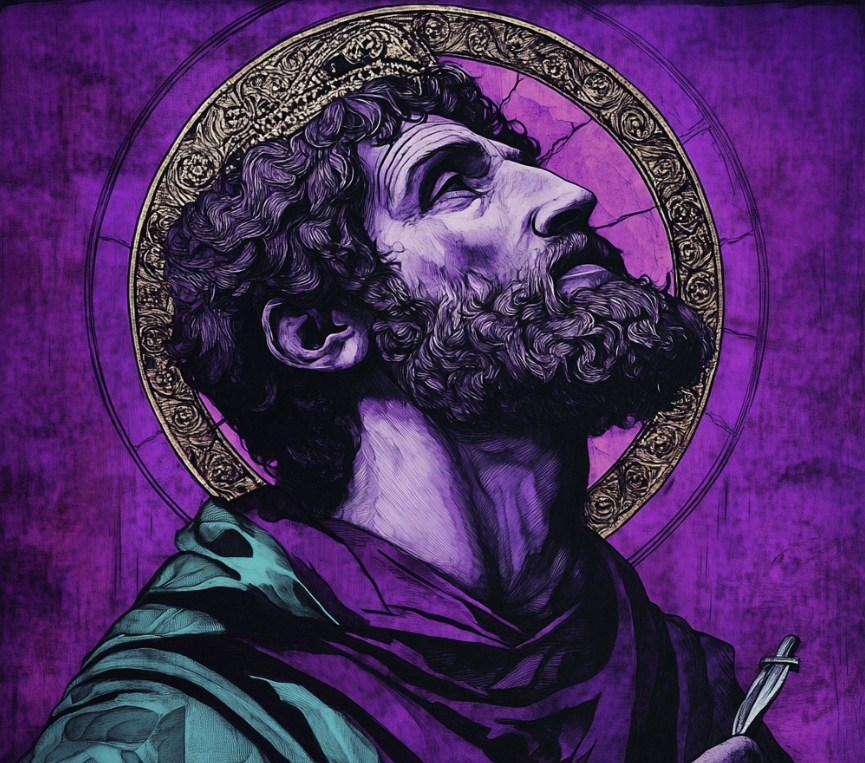
The Word takes to Himself one man, for He takes unity. He does not take schisms to Himself, nor does He take heresies. So it is one man who is taken, and his Head is Christ. This is that "blessed man who hath not walked in the council of the ungodly" (Ps. 1:1); this is he that is assumed. He is not outside of us. Let us be in Him, and we shall be assumed; let us be in Him, and we shall be chosen. Therefore this one man that is taken to become the temple of God, is at once many and one.
▼
Source
source
p.430
3 months 3 weeks ago
I have lived an honest and useful life to mankind; my time has been spend in doing good and I die in perfect composure and resignation to the will of my Creator, God.
▼
Source
source
Last will (1809), as quoted in The Fortnightly Review, vol. 31, pp. 398-399

2 months 2 weeks ago
The erotic instinct is something questionable, and will always be so whatever a future set of laws may have to say on the matter. It belongs, on the one hand, to the original animal nature of man, which will exist as long as man has an animal body. On the other hand, it is connected with the highest forms of the spirit. But it blooms only when the spirit and instinct are in true harmony. If one or the other aspect is missing, then an injury occurs, or at least there is a one-sided lack of balance which easily slips into the pathological. Too much of the animal disfigures the civilized human being, too much culture makes a sick animal.
3 weeks 4 days ago
Some anarchists have claimed not merely that we would be better off without a state, but that any state necessarily violates people's moral rights and hence is intrinsically immoral. Our starting point then, though nonpolitical, is by intention far from nonmoral. Moral philosophy sets the background for, and boundaries of, political philosophy. What persons may and may not do to one another limits what they may do through the apparatus of a state, or do to establish such an apparatus.
▼
Source
source
Ch. 1 : Why State of Nature Theory?; Political Philosophy, p. 6
3 months 3 weeks ago
I do like clarity and exact thinking and I believe that very important to mankind because when you allow yourself to think inexactly your prejudices, your bias, your self interest comes in in ways you don't notice and you do bad things without knowing that you are doing them: self deception is very easy. So that I do think clear thinking immensely important.
▼
Source
source
Television interview ("On clarity and exact thinking" - available on youtube)

2 months 1 day ago
Body and soul: a horse harnessed beside an ox.
▼
Source
source
D 103
3 months 3 weeks ago
It seems clear to me that marriage ought to be constituted by children, and relations not involving children ought to be ignored by the law and treated as indifferent by public opinion. It is only through children that relations cease to be a purely private matter.
▼
Source
source
Letter to Ottoline Morrell, January 30, 1916
CivilSimian.com created by AxiomaticPanic, CivilSimian, Kalokagathia