


6 days ago
He knows his own strength; he knows that he was born to carry burdens.

3 months 3 weeks ago
To different minds, the same world is a hell, and a heaven.
▼
Source
source
December 20, 1822

3 months 3 weeks ago
A process which led from the amœba to man appeared to the philosophers to be obviously a progress - though whether the amœba would agree with this opinion is not known.
▼
Source
source
Ch. 1: Mysticism and Logic
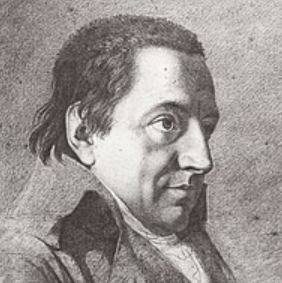
2 months 3 weeks ago
The determination to print them (his lectures), and to communicate them to the General Public, must also speak for itself; and should it not do so, any other recommendation of them would be thrown away. Thus, with respect to the appearance of this work, I have nothing further to say to the Public, than that I have nothing to say.
▼
Source
source
Preface
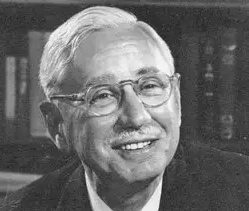
1 week 4 days ago
Space, subjectively, is the coexistence of perceptions - perceiving two objects at once.
▼
Source
source
Ch. 6 : Our Souls

2 months 2 weeks ago
Yet lackest thou one thing: sell all that thou hast, and distribute unto the poor, and thou shalt have treasure in heaven: and come, follow me.
▼
Source
source
18:22 (KJV)
6 days ago
The English, generally remarkable for doing very good things in a very bad manner, seem to have reserved the maturity and plenitude of their awkwardness for the pulpit.
▼
Source
source
Vol. I, ch. 3, p. 83

4 months 1 week ago
This is the ideal world, a perfect world of equality, fraternity, harmony, welfare, and justice.

1 month 3 weeks ago
Every body continues in its state of rest, or of uniform motion in a right line, unless it is compelled to change that state by forces impressed upon it.
▼
Source
source
Laws of Motion, I
3 months 3 weeks ago
William James used to preach the "will-to-believe." For my part, I should wish to preach the "will-to-doubt." None of our beliefs are quite true; all at least have a penumbra of vagueness and error. What is wanted is not the will to believe, but the will to find out, which is the exact opposite.
▼
Source
source
Ch. 12: Free Thought and Official Propaganda
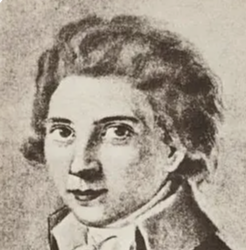
2 months 3 weeks ago
Whoever hasn't yet arrived at the clear realization that there might be a greatness existing entirely outside his own sphere and for which he might have absolutely no feeling; whoever hasn't at least felt obscure intimations concerning the approximate location of this greatness in the geography of the human spirit: that person either has no genius in his own sphere, or else he hasn't been educated to the level of the classic.
▼
Source
source
Lucinde and the Fragments, P. Firchow, trans. (1991), "Critical Fragments," § 36

2 weeks 3 days ago
Some economists also use the terms Fordism and pos-Fordism to mark the shift from an economy characterized by the stable-long-term employment typical of factory workers to one marked by flexible, mobile, and precarious labor relations: flexible because workers have to adapt to different tasks, mobile because workers have to move frequently between jobs, and precarious because no contracts guarantee stable, long-term employment. Whereas economic modernization, which developed Fordist labor relations, centered on the conomies of scale and larga systems of production and exchange, economic postmodernization, with its post-Fordist labor relations, develops smaller-scale, flexible systems.
▼
Source
source
112

1 month 2 weeks ago
Obsolescence is the moment of superabundance.
▼
Source
source
Yeats studies, Issue 2, Irish University Press, 1972, p. 135

4 months 2 weeks ago
A fire eater must eat fire even if he has to kindle it himself.

3 months 3 weeks ago
Mercy to the guilty is cruelty to the innocent.
▼
Source
source
Section II, Chap. III.

3 months 3 weeks ago
Any fool can make a ruleAnd every fool will mind it.
▼
Source
source
February 3, 1860

3 months 3 weeks ago
As the variable capital always stays in the hands of the capitalist in some form or other, it cannot be claimed in any way that it converts itself into revenue for anyone.
▼
Source
source
Vol. II, Ch. XX, p. 452.

3 months 2 weeks ago
I am responsible for everything ... except for my very responsibility, for I am not the foundation of my being. Therefore everything takes place as if I were compelled to be responsible. I am abandoned in the world ... in the sense that I find myself suddenly alone and without help, engaged in a world for which I bear the whole responsibility without being able, whatever I do, to tear myself away from this responsibility for an instant.
▼
Source
source
Part 4, Chapter 1, III

1 month 3 weeks ago
To attain this end we must secure a preponderance of virtue over vice and must endeavor to secure that the honest man may, even in this world, receive a lasting reward for his virtue. But in these great endeavors we are gravely hampered by the political institutions of today. What is to be done in these circumstances? To favor revolutions, overthrow everything, repel force by force?... No! We are very far from that. Every violent reform deserves censure, for it quite fails to remedy evil while men remain what they are, and also because wisdom needs no violence.
▼
Source
source
Book V, Ch. 7


3 months 2 weeks ago
At the end of reasons comes persuasion.
1 month 2 weeks ago
Each generation is a filter, a sieve; good genes tend to fall through the sieve into the next generation; bad genes tend to end up in bodies that die young or without reproducing.
3 months 3 weeks ago
I cannot believe - and I say this with all the emphasis of which I am capable - that there can ever be any good excuse for refusing to face the evidence in favour of something unwelcome. It is not by delusion, however exalted, that mankind can prosper, but only by unswerving courage in the pursuit of truth.
▼
Source
source
"The Pursuit of Truth" in The Collected Papers of Bertrand Russell, 1993
3 months 2 weeks ago
To each according to his threat advantage does not count as a principle of justice.
▼
Source
source
Chapter III, Section 24, pg. 141
2 months 3 weeks ago
Among other men Reason awakes in another form-as the impulse towards Personal Freedom, which, although it never opposes the mild rule of the inward Instinct which it loves, yet rises in rebellion against the pressure of a stranger Instinct which has usurped its rights; and in this awakening it breaks the chains,-not of Reason as Instinct itself, but of the Instinct of foreign natures clothed in the garb of external power.
▼
Source
source
p. 8

3 months 3 weeks ago
Intellect is invisible to the man who has none.
▼
Source
source
Our Relation to Others, § 23

4 months 3 weeks ago
If I were to imagine a girl deeply in love and some man who wanted to use all his reasoning powers and knowledge to ridicule her passion, well, there's surely no question of the enamoured girl having to choose between keeping her wealth and being ridiculed. No, but if some extremely cool and calculating man calmly told the young girl, "I will explain to you what love is," and the girl admitted that everything he told her was quite correct, I wonder if she wouldn't choose his miserable common sense rather than her wealth?

1 week 5 days ago
Hadst thou not Greek enough to understand thus much: The end of man is an Action, and not a Thought, though it were the noblest.
▼
Source
source
Bk. II, ch. 5 The words Carlyle put in italics are a quotation from Book 1 of Aristotle's Nicomachean Ethics.
1 month ago
Language steps in where the angels of experience fear to tread.
▼
Source
source
Chapter 1, The Faces of Silence, p. 5

3 months 4 weeks ago
Let no man be ashamed to speak what he is not ashamed to think.
▼
Source
source
Book III, Ch. 4

2 months 3 weeks ago
Once it's been proved to you that you're descended from an ape, it's no use pulling a face; just accept it. Once they've proved to you that a single droplet of your own fat must be dearer to you than a hundred thousand of your fellow human beings and consequently that all so-called virtues and duties are nothing but ravings and prejudices, then accept that too, because there's nothing to be done.
▼
Source
source
Part 1 Chapter 3 (tr. ?)
2 months 1 week ago
The simple point which I am concerned to make is that where ultimate values are irreconcilable, clear-cut solutions cannot, in principle, be found. To decide rationally in such situations is to decide in the light of general ideals, the overall pattern of life pursued by a man or a group or a society.
3 months 2 weeks ago
It is not how things are in the world that is mystical, but that it exists.
▼
Source
source
(6.44) Variant translation: The mystical is not how the world is, but that it is. Original German: Nicht wie die Welt ist, ist das Mystische, sondern dass sie ist.

3 months 2 weeks ago
If the only alternative to fascism we produce is a corporate-driven, milquetoast, neoliberal Democratic Party, fascism will come to America. Let us be very clear. It's like a Weimar America.
▼
Source
source
Speaking to Chris Hedges on The Real News Network, Cornel West's presidential candidacy is 'for the least of these'. June 16, 2023.

3 months 2 weeks ago
Ignorance is not a simple lack of knowledge but an active aversion to knowledge, the refusal to know, issuing from cowardice, pride or laziness of mind.
▼
Source
source
Principle attributed to Popper by Ryszard Kapiscinski in New York Times obituary, 1995.
3 months 3 weeks ago
Man is essentially a dreamer, wakened sometimes for a moment by some peculiarly obtrusive element in the outer world, but lapsing again quickly into the happy somnolence of imagination. Freud has shown how largely our dreams at night are the pictured fulfilment of our wishes; he has, with an equal measure of truth, said the same of day-dreams; and he might have included the day-dreams which we call beliefs.
▼
Source
source
Ch. 2: Dreams and Facts

2 months 6 days ago
The salvation of reality is its obstinate, irreducible, matter-of-fact entities, which are limited to be no other than themselves. Neither science, nor art, nor creative action can tear itself away from obstinate, irreducible, limited facts.
▼
Source
source
Ch. 5: "The Romantic Reaction", p. 132

3 months 3 weeks ago
I have learned to seek my happiness by limiting my desires, rather than in attempting to satisfy them.
▼
Source
source
Attributed to John Stuart Mill in The Phrenological Journal and Science of Health, Vol. LXXXV (September 1887), p. 170
1 month 2 weeks ago
I have often regretted my speech, never my silence.
▼
Source
source
Maxim 1070

2 months 2 weeks ago
I thought that the only action a man could perform without shame was to take his life; that he had no right to diminish himself in the succession of days and the inertic of misery. No elect, I kept telling myself, but those who committed suicide.
1 month 3 weeks ago
We live in a world where there is more and more information, and less and less meaning.
▼
Source
source
"The Implosion of Meaning in the Media," p. 79
2 months 2 weeks ago
To call war the soil of courage and virtue is like calling debauchery the soil of love.
▼
Source
source
Ch. III: Industry, Government, the peasants
2 months 2 weeks ago
What renders man an imaginative and moral being is that in society he gives new aims to his life which could not have existed in solitude: the aims of friendship, religion, science, and art.
▼
Source
source
Ch. V: Democracy
3 months 4 weeks ago
The mariner of old said to Neptune in a great tempest, "O God! thou mayest save me if thou wilt, and if thou wilt thou mayest destroy me; but whether or no, I will steer my rudder true."
▼
Source
source
Book II, Ch. 16. Of Glory
4 months 3 weeks ago
In an age as agitated as ours, it no longer suffices just to be advertised in the newspaper. To be advertised in this way is the same thing as being consigned to oblivion. If one is to be noticed, once must as least appear on the first page under a hand that points to and, as it were, announces or advertises the advertisement.

2 months 2 weeks ago
Ideas, aspirations, and objectives that, by their content, transcend the established universe of discourse and action are either repelled or reduced to terms of this universe.
▼
Source
source
p. 12
1 month 2 weeks ago
We are swiftly moving at present from an era where business was our culture into an era when culture will be our business. Between these poles stand the huge and ambiguous entertainment industries.
▼
Source
source
(p. 384)
3 months 3 weeks ago
It is not to be supposed that she was, or that any one, at the age at which I first saw her, could be, all that she afterwards became. Least of all could this be true of her, with whom self-improvement, progress in the highest and in all senses, was a law of her nature; a necessity equally from the ardour with which she sought it, and from the spontaneous tendency of faculties which could not receive an impression or an experience without making it the source or the occasion of an accession of wisdom. Up to the time when I first saw her, her rich and powerful nature had chiefly unfolded itself according to the received type of feminine genius. To her outer circle she was a beauty and a wit, with an air of natural distinction, felt by all who approached her: to the inner, a woman of deep and strong feeling, of penetrating and intuitive intelligence, and of an eminently meditative and poetic nature.
▼
Source
source
(p. 185)

2 weeks 2 days ago
The invasion... exhibits in stark terms, the choice that is before us today between maintaining a liberal government that respects the rights of individuals, or moving over to a form of centralized illiberal dictatorship, even if that... illiberal government is somehow democratically legitimated. ...That's the central issue in global politics today. ...That's basically what the... Ukraine invasion is about, and that's why... all liberal societies that care about those individual freedoms... have a very powerful interest in the outcome of that war, because Putin and Russia are at the center of an international network of illiberal forces that are seeking to overturn liberal values in virtually every part of the world, and therefore... that's all part of a larger global struggle over our fundamental liberal values.
▼
Source
source
26:50 Question & Answer period follows
CivilSimian.com created by AxiomaticPanic, CivilSimian, Kalokagathia