

2 months 1 week ago
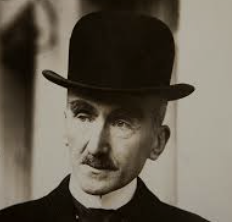
I cannot escape the objection that there is no state of mind, however simple, that does not change every moment.
▼
Source
source
An Introduction to Metaphysics (1903), translated by T. E. Hulme. New York: G. P. Putnam's Sons, 1912, p. 44

2 weeks 2 days ago
To write well is to think well; there is no art of style distinct from the culture of the mind. The good writer is a complete mind, gifted with judgment, passion, imagination, and at the same time well trained. The inner qualities of rectitude, of brilliant geniality, are not given; instruction, wealth of information, fulness of knowledge, are acquired. Thus good training of the mind is the only school of good style. Wanting that, you have merely rhetoric and bad taste.
▼
Source
source
As quoted in The Art of Authorship (1890) by George Bainton
2 months 4 days ago
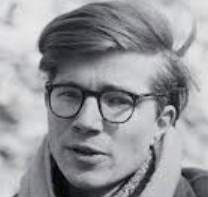
The individual begins that long effort as an Outsider; he may finish it as a saint.
▼
Source
source
Chapter Nine, Breaking the Circuit, final sentence
3 months 3 weeks ago
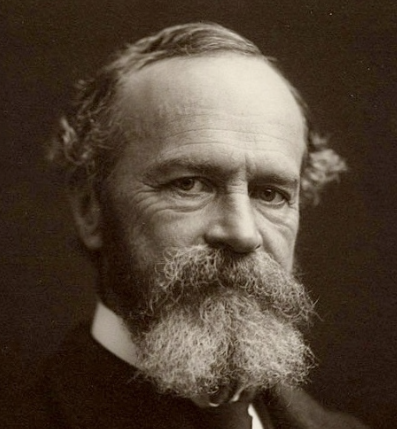
But such a straight identification of religion with any and every form of happiness leaves the essential peculiarity of religious happiness out. The more commonplace happinesses which we get are 'reliefs,' occasioned by our momentary escapes from evils either experienced or threatened. But in its most characteristic embodiments, religious happiness is no mere feeling of escape. It cares no longer to escape. It consents to the evil outwardly as a form of sacrifice - inwardly it knows it to be permanently overcome. ... In the Louvre there is a picture, by Guido Reni, of St. Michael with his foot on Satan's neck. The richness of the picture is in large part due to the fiend's figure being there. The richness of its allegorical meaning also is due to his being there - that is, the world is all the richer for having a devil in it, so long as we keep our foot upon his neck.
▼
Source
source
Lecture II, "Circumscription of the Topic"
3 months 3 weeks ago
Since the state must necessarily provide subsistence for the criminal poor while undergoing punishment, not to do the same for the poor who have not offended is to give a premium on crime.
▼
Source
source
Book V, Chapter XI, §13

3 months 3 weeks ago
Grief and disappointment give rise to anger, anger to envy, envy to malice, and malice to grief again, till the whole circle be completed.
▼
Source
source
Part 1, Section 4
3 months 3 weeks ago
The notion that truths external to the mind may be known by intuition or consciousness, independently of observation and experience, is, I am persuaded, in these times, the great intellectual support of false doctrines and bad institutions. By the aid of this theory, every inveterate belief and every intense feeling, of which the origin is not remembered, is enabled to dispense with the obligation of justifying itself by reason, and is erected into its own all-sufficient voucher and justification. There never was such an instrument devised for consecrating all deep-seated prejudices.
▼
Source
source
(pp. 225-226)

4 months 1 week ago
The wealth required by nature is limited and is easy to procure; but the wealth required by vain ideals extends to infinity.

3 months 3 weeks ago
A man contains all that is needful to his government within himself. He is made a law unto himself. All real good or evil that can befal [sic] him must be from himself. He only can do himself any good or any harm. Nothing can be given to him or can taken from him but always there is a compensation.. There is a correspondence between the human soul and everything that exists in the world; more properly, everything that is known to man. Instead of studying things without the principles of them, all may be penetrated unto with him. Every act puts the agent in a new position. The purpose of life seems to be to acquaint a man with himself. He is not to live the future as described to him but to live the real future to the real present. The highest revelation is that God is in every man.
▼
Source
source
September 8, 1833

4 months 3 weeks ago
We have seen how it is originally language which works on the construction of concepts, a labor taken over in later ages by science. Just as the bee simultaneously constructs cells and fills them with honey, so science works unceasingly on this great columbarium of concepts, the graveyard of perceptions.
1 month 3 days ago
Now civilizations, I believe, come to birth and proceed to grow by successfully responding to successive challenges. They break down and go to pieces if and when a challenge confronts them which they fail to meet.
▼
Source
source
Ch. 8: Civilization on Trial
4 months 2 weeks ago
Generals are, as a matter of course, allowed to be far more idiotic than ordinary human beings are permitted to be.
2 days ago
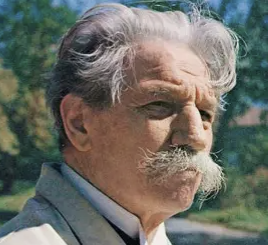
Any religion or philosophy which is not based on a respect for life is not a true religion or philosophy.
▼
Source
source
Letter to a Japanese Animal Welfare Society (1961); also in The Words of Albert Schweitzer (1984) edited by Norman Cousins, p. 37
3 months 1 week ago
By Thy perfect Intelligence, O MazdaThou didst first create us having bodies and spiritual consciences,And by Thy Thought gave our selves the power of thought, word, and deed.Thus leaving us free to choose our faith at our own will.
▼
Source
source
Ahunuvaiti Gatha; Yasna 31, 11.
2 months 3 weeks ago
A good man with a good conscience doesn't walk so fast.
▼
Source
source
Scene X.
2 months 5 days ago
Nature gets credit which should in truth be reserved for ourselves: the rose for its scent: the nightingale for his song: and the sun for his radiance. The poets are entirely mistaken. They should address their lyrics to themselves, and should turn them into odes of self-congratulation on the excellency of the human mind.
▼
Source
source
Ch. 3: "The Century of Genius", p. 77

3 months 3 weeks ago
And as every present state of a simple substance is naturally a consequence of its preceding state, so its present is pregnant with its future.
▼
Source
source
La monadologie (22).


2 months 2 weeks ago
The Creation was the first act of sabotage.
2 months 3 weeks ago
We are at war with a system, which, by it's essence, is inimical to all other Governments, and which makes peace or war, as peace and war may best contribute to their subversion. It is with an armed doctrine that we are at war. It has, by it's essence, a faction of opinion, and of interest, and of enthusiasm, in every country. To us it is a Colossus which bestrides our channel. It has one foot on a foreign shore, the other upon the British soil. Thus advantaged, if it can at all exist, it must finally prevail.
▼
Source
source
p. 19
3 months 4 days ago
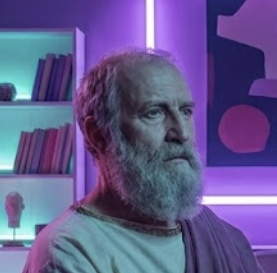
Incorporeal hypostases, in descending, are distributed into parts, and multiplied about individuals with a diminution of power; but when they ascend by their energies beyond bodies, they become united, and proceed into a simultaneous subsistence, through exuberance of power.
3 months 3 weeks ago
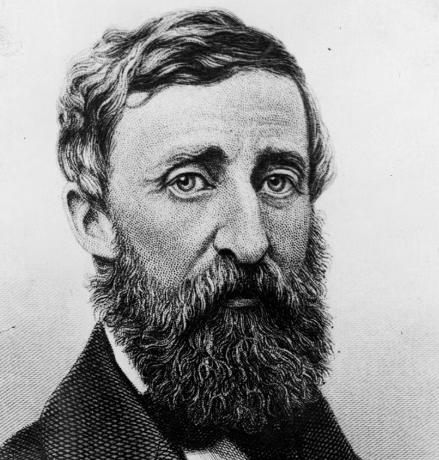
It seems to me that the god that is commonly worshipped in civilized countries is not at all divine, though he bears a divine name, but is the overwhelming authority and respectability of mankind combined. Men reverence one another, not yet God. If I thought that I could speak with discrimination and impartiality of the nations of Christendom, I should praise them, but it tasks me too much. They seem to be the most civil and humane, but I may be mistaken.
1 month 2 weeks ago
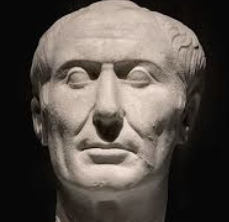
To spare the guilty is to injure the innocent.
▼
Source
source
Maxim 113
3 months 3 weeks ago
Explore, and explore, and explore. Be neither chided nor flattered out of your position of perpetual inquiry. Neither dogmatise yourself, nor accept another's dogmatism. Why should you renounce your right to traverse the star-lit deserts of truth, for the premature comforts of an acre, house, and barn? Truth also has its roof, and bed, and board. Make yourself necessary to the world, and mankind will give you bread, and if not store of it, yet such as shall not take away your property in all men's possessions, in all men's affections, in art, in nature, and in hope.
1 month 4 weeks ago
The real significance of the Russell paradox, from the standpoint of the modal-logic picture, is this: it shows that no concrete structure can be a standard model for the naive conception of the totality of all sets; for any concrete structure has a possible extension that contains more 'sets'. (If we identify sets with the points that represent them in the various possible concrete structures, we might say: it is not possible for all possible sets to exist in any one world!) Yet set theory does not become impossible. Rather, set theory becomes the study of what must hold in, e.g. any standard model for Zermelo set theory.
▼
Source
source
Mathematics without foundations
2 months 1 week ago
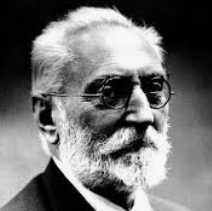
Little can be hoped for from a ruler... who has not at some time or other been preoccupied, even if only confusedly, with the first beginning and ultimate end of all things, and above all of man, with the "why" of his origin and the "wherefore" of his destiny.
2 months 2 weeks ago
My mission is to suffer for all those who suffer without knowing it. I must pay for them, expiate their unconsciousness, their luck to be ignorant of how unhappy they are.

4 weeks ago
Blair has been the modern man he claims to be: for him, a sense of subjective certainty is all that is needed for an action to be right. If deception is needed to realise the providential design, it cannot be truly deceitful.
▼
Source
source
Neoconned!: How Blair took New Labour for a ride, The Independent
3 months 3 weeks ago
The happiness which forms the utilitarian standard of what is right in conduct, is not the agent's own happiness, but that of all concerned. As between his own happiness and that of others, utilitarianism requires him to be as strictly impartial as a disinterested and benevolent spectator. In the golden rule of Jesus of Nazareth, we read the complete spirit of the ethics of utility. To do as one would be done by, and to love one's neighbour as oneself, constitute the ideal perfection of utilitarian morality.
▼
Source
source
Ch. 2
2 days ago
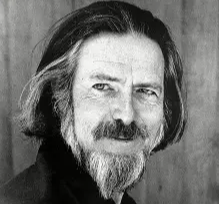
It must be obvious... that there is a contradiction in wanting to be perfectly secure in a universe whose very nature is momentariness and fluidity.

1 week 5 days ago
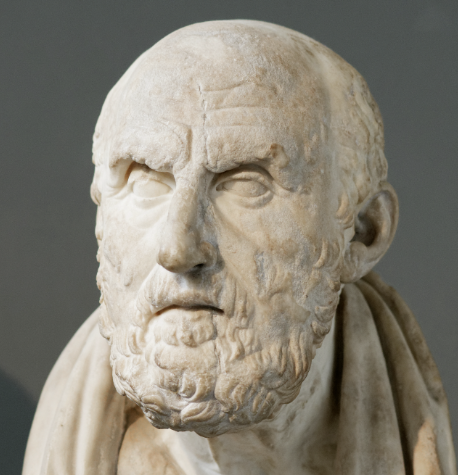
The rudest heathen that worshipped Canopus, or the Caabah Black-Stone, he, as we saw, was superior to the horse that worshipped nothing at all! Nay there was a kind of lasting merit in that poor act of his; analogous to what is still meritorious in Poets: recognition of a certain endless divine beauty and significance in stars and all natural objects whatsoever.
3 months 1 week ago
Wise people are in want of nothing, and yet need many things. On the other hand, nothing is needed by fools, for they do not understand how to use anything, but are in want of everything.
▼
Source
source
As quoted in Moral Epistles by Seneca, iii. 10.
1 month ago
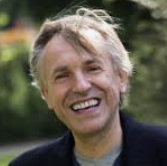
A lot of people recoil from the word "drugs" - which is understandable given today's noxious street drugs and their uninspiring medical counterparts. Yet even academics and intellectuals in our society typically take the prototypical dumb drug, ethyl alcohol. If it's socially acceptable to take a drug that makes you temporarily happy and stupid, then why not rationally design drugs to make people perpetually happier and smarter? Presumably, in order to limit abuse-potential, one would want any ideal pleasure drug to be akin - in one limited but important sense - to nicotine, where the smoker's brain finely calibrates its optimal level: there is no uncontrolled dose-escalation.
▼
Source
source
"The Abolitionist Project", Talks given at the FHI (Oxford University) and the Charity International Happiness Conference, 2007
3 months 1 week ago
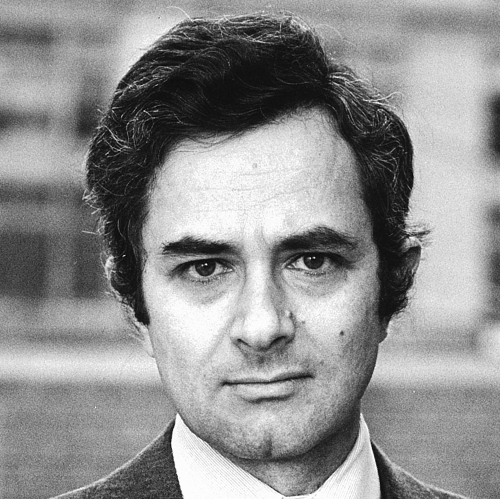
With regard to the rather common general distinction between good and bad sex ..., bad sex is generally better than none at all. This should not be controversial: it seems to hold for other important matters, like food, music, literature, and society. In the end, one must choose from among the available alternatives, whether their availability depends on the environment or on one's own constitution. And the alternatives have to be fairly grim before it becomes rational to opt for nothing.
▼
Source
source
"Sexual Perversion" (1969), p. 52.

3 months 3 weeks ago
It is clear that thought is not free if the profession of certain opinions makes it impossible to earn a living.
▼
Source
source
Ch. 12: Free Thought and Official Propaganda
3 months 1 week ago
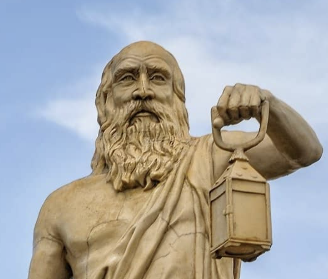
If you are to be kept right, you must possess either good friends or red-hot enemies. The one will warn you, the other will expose you.
▼
Source
source
Plutarch, Moralia, 74C

3 months 3 weeks ago
I have no great faith in political arithmetic, and I mean not to warrant the exactness of either of these computations.
▼
Source
source
Chapter V, p. 577.
5 days ago
Macaulay is like a book in breeches...He has occasional flashes of silence, that make his conversation perfectly delightful.
▼
Source
source
Vol. I, ch. 11, p. 415
3 months 4 weeks ago
A penny saved is of more value than a penny paid out.
▼
Source
source
What Luther Says, Section on "Life, Human," No. 2438. Rules for a Thrifty Life. 2, p. 784
3 months 3 weeks ago
Truth is a shining goddess, always veiled, always distant, never wholly approachable, but worthy of all the devotion of which the human spirit is capable.
▼
Source
source
Fact and Fiction (1961), Part II, Ch. 10: "University Education", p. 153
2 months 5 days ago
It is a safe rule to apply that, when a mathematical or philosophical author writes with a misty profundity, he is talking nonsense.
▼
Source
source
ch. 15.
4 months ago
There are four classes of Idols which beset men's minds. To these for distinction's sake I have assigned names - calling the first class, Idols of the Tribe; the second, Idols of the Cave; the third, Idols of the Market-Place; the fourth, Idols of the Theater.
▼
Source
source
Aphorism 39
3 months 3 weeks ago
Character means that the person derives his rules of conduct from himself and from the dignity of humanity. Character is the common ruling principle in man in the use of his talents and attributes. Thus it is the nature of his will, and is good or bad. A man who acts without settled principles, with no uniformity, has no character. A man may have a good heart and yet no character, because he is dependent upon impulses and does not act according to maxims. Firmness and unity of principle are essential to character.
▼
Source
source
Part III : Selection on Education from Kant's other Writings, Ch. I Pedagogical Fragments, # 14
3 months 3 weeks ago
Freedom of Men under Government is, to have a standing Rule to live by, common to every one of that Society, and made by the Legislative Power erected in it; a Liberty to follow my own Will in all things, where the Rule prescribes not; and not to be subject to the inconstant, uncertain, unknown, Arbitrary Will of another Man: as Freedom of Nature is, to be under no other restraint but the Law of Nature.
▼
Source
source
Second Treatise of Civil Government, Ch. IV, sec. 21
3 months 3 weeks ago
If a person is stupid, we excuse him by saying that he cannot help it; but if we attempted to excuse in precisely the same way the person who is bad, we should be laughed at.
▼
Source
source
E. Payne, trans., vol. 2, p. 230
3 months 3 weeks ago
We plant trees, we build stone houses, we redeem the waste, we make prospective laws, we found colleges and hospitals, for remote generations.
4 months 2 weeks ago
Indeed, it may well be argued that one reason for the decline in science, art, and literature was the increasing absorption of the better minds into a new sort of intellectual pursuit, theology.
2 months 1 week ago
My conduct must be the best proof, the moral proof, of my supreme desire; and if I do not end by convincing myself, within the bounds of the ultimate and irremediable uncertainty of the truth of what I hope for, it is because my conduct is not sufficiently pure. Virtue, therefore, is not based upon dogma, but dogma upon virtue, and it is not faith that creates martyrs but martyrs who create faith. There is no security or repose - so far as security and repose are obtainable in this life, so essentially insecure and unreposeful - save in conduct that is passionately good.
CivilSimian.com created by AxiomaticPanic, CivilSimian, Kalokagathia