


2 months 3 days ago
What excited me was the recognition that this was simply another version of the problem that had obsessed me all of my life -- the problem of those moments when life seems entirely delightful, when we experience a sensation of what G.K. Chesterton called "absurd good news." Life normally strikes most of us as hard, dull and unsatisfying; but in these moments, consciousness seems to glow and expand, and all the contradictions seem to be resolved. Which of the two visions is true? My own reflections had led me to conclude that the vision of "absurd good news" is somehow broader and more comprehensive than the feeling that life is dull, boring and meaningless. Boredom is basically a feeling of narrowness, and surely a narrow vision is bound to be less true than a broad one?
▼
Source
source
p. 16

3 months 4 weeks ago
Kings and philosophers shit, and so do ladies.
▼
Source
source
Ch. 42, English translation from Hartle, Ann (2003), Michel de Montaigne: Accidental Philosopher, Cambridge University Press.
3 months 1 week ago
When my ability to reason shows me that the suffering of another being is very similar to my own suffering and matters just as much to that other being as my own suffering matters to me, then my reason is showing me something that is undeniably true. ... The perspective on ourselves that we get when we take the point of view of the universe also yields as much objectivity as we need if we are to find a cause that is worthwhile in a way that is independent of our own desires. The most obvious such cause is the reduction of pain and suffering, wherever it is to be found.
▼
Source
source
p. 238
2 weeks 2 days ago
The seeds of heavenly bodies are deposited and cared for in the Milky Way, from which they emanate in swarms of comets that travel a ;long time and ordinarily gravitate towards various suns before becoming fixed in orbit.
▼
Source
source
L'attraction passioneé

3 months 2 days ago
Disbelieve nothing wonderful concerning the gods, nor concerning divine dogmas.
▼
Source
source
Symbol 4

1 month 2 weeks ago
The "tragic flaw" is not a detail of characterization, a mere "fly in the ointment", but a structural feature of ordinary consciousness.
▼
Source
source
(p.45)
4 months 2 weeks ago
So when the universe was quickened with soul, God was well pleased; and he bethought him to make it yet more like its type. And whereas the type is eternal and nought that is created can be eternal, he devised for it a moving image of abiding eternity, which we call time. And he made days and months and years, which are portions of time; and past and future are forms of time, though we wrongly attribute them also to eternity. For of eternal Being we ought not to say 'it was', 'it shall be', but 'it is' alone: and in like manner we are wrong in saying 'it is' of sensible things which become and perish; for these are ever fleeting and changing, having their existence in time.
Just now
So long as you are a slave to the opinions of the many you have not yet approached freedom or tasted its nectar...But I do not mean by this that we ought to be shameless before all men and to do what we ought not; but all that we refrain from and all that we do, let us not do or refrain from merely because it seems to the multitude somehow honorable or base, but because it is forbidden by reason and the god within us.
▼
Source
source
Oration to the Uneducated Cynics
3 months 2 weeks ago
An individual who finds that he enjoys seeing others in positions of lesser liberty understands that he has no claim whatever to this enjoyment.
▼
Source
source
Chapter I, Section 6, pg. 31
4 months 3 days ago
The source of the errors of these two sects, is in not having known that the state of man at the present time differs from that of his creation; so that the one, remarking some traces of his first greatness and being ignorant of his corruption, has treated nature as sound and without need of redemption, which leads him to the height of pride; whilst the other, feeling the present wretchedness and being ignorant of the original dignity, treats nature as necessarily infirm and irreparable, which precipitates it into despair of arriving at real good, and thence into extreme laxity.
2 months 6 days ago
Wrong life cannot be lived rightly.
▼
Source
source
E. Jephcott, trans. (1974), § 18

3 months 2 weeks ago
The propagandist's purpose is to make one set of people forget that certain other sets of people are human.
▼
Source
source
"Words and Behaviour", The Olive Tree, 1936
1 month 2 weeks ago
Sentimentality, like pornography, is fragmented emotion; a natural consequence of a high visual gradient in any culture.

2 months 2 weeks ago
How important can it be that I suffer and think? My presence in this world will disturb a few tranquil lives and will unsettle the unconscious and pleasant naiveté of others. Although I feel that my tragedy is the greatest in history - greater than the fall of empires - I am nevertheless aware of my total insignificance. I am absolutely persuaded that I am nothing in this universe; yet I feel that mine is the only real existence.

1 month 2 weeks ago
What is the Jew?...What kind of unique creature is this whom all the rulers of all the nations of the world have disgraced and crushed and expelled and destroyed; persecuted, burned and drowned, and who, despite their anger and their fury, continues to live and to flourish. What is this Jew whom they have never succeeded in enticing with all the enticements in the world, whose oppressors and persecutors only suggested that he deny (and disown) his religion and cast aside the faithfulness of his ancestors?! The Jew - is the symbol of eternity. ... He is the one who for so long had guarded the prophetic message and transmitted it to all mankind. A people such as this can never disappear. The Jew is eternal. He is the embodiment of eternity.
▼
Source
source
Attributed in "The Final Resolution", in Jewish World Periodical (1908), p. 189
3 months 2 weeks ago
If a lion could talk, we could not understand him.
▼
Source
source
Pt II, p. 223 of the 1968 English edition

3 months 3 weeks ago
The fact that all Mathematics is Symbolic Logic is one of the greatest discoveries of our age; and when this fact has been established, the remainder of the principles of mathematics consists in the analysis of Symbolic Logic itself.
▼
Source
source
Principles of Mathematics (1903), Ch. I: Definition of Pure Mathematics, p. 5

3 months 3 weeks ago
Morality is a subject that interests us above all others: We fancy the peace of society to be at stake in every decision concerning it; and 'tis evident, that this concern must make our speculations appear more real and solid, than where the subject is, in a great measure, indifferent to us. What affects us, we conclude can never be a chimera; and as our passion is engag'd on the one side or the other, we naturally think that the question lies within human comprehension; which, in other cases of this nature, we are apt to entertain some doubt of. Without this advantage I never should have ventur'd upon a third volume of such abstruse philosophy, in an age, wherein the greatest part of men seem agreed to convert reading into an amusement, and to reject every thing that requires any considerable degree of attention to be comprehended.
▼
Source
source
Part 1, Section 1
2 months 2 days ago
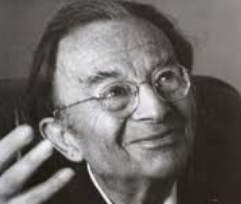
I believe that one can and must hope for a sane society that furthers man's capacity to love his fellow men, to work and create, to develop his reason and his objectivity of a sense of himself that is based on the experience of his productive energy. I believe that one can and must hope for the collective regaining of a mental health that is characterized by the capacity to love and to create...
1 month 2 weeks ago
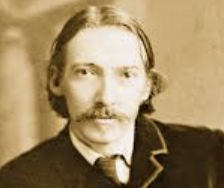
When a man is in a fair way and sees all life open in front of him, he seems to himself to make a very important figure in the world. His horse whinnies to him; the trumpets blow and the girls look out of window as he rides into town before his company; he receives many assurances of trust and regard--sometimes by express in a letter--sometimes face to face, with persons of great consequence falling on his neck. It is not wonderful if his head is turned for a time. But once he is dead, were he as brave as Hercules or as wise as Solomon, he is soon forgotten.
▼
Source
source
The Sire de Maletroit's Door.

1 month 3 days ago
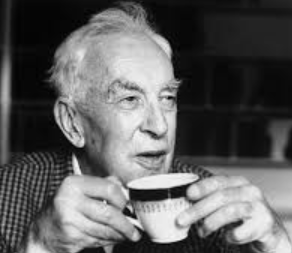
Civilizations die from suicide, not by murder.
▼
Source
source
In Mark Steyn, "It's the Demography, Stupid!", Opinion Journal, WSJ (2006).

2 months 1 week ago
It appears to me to be indisputable that he who I am to-day derives, by a continuous series of states of consciousness, from him who was in my body twenty years ago. Memory is the basis of individual personality, just as tradition is the basis of the collective personality of a people. We live in memory, and our spiritual life is at bottom simply the effort of our memory to persist, to transform itself into hope, the effort of our past to transform itself into our future.
1 month 2 weeks ago
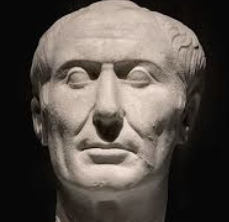
The poor man is ruined as soon as he begins to ape the rich.
▼
Source
source
Maxim 941
1 month 4 weeks ago
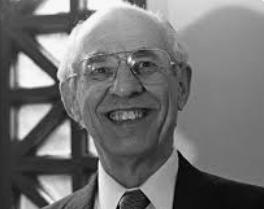
Now, moral philosophers generally prefer to talk about virtues, or about (specific) duties, rights, and so on, rather than about moral images of the world. There are obvious reasons for this; nevertheless, I think that it is a mistake, and that Kant is profoundly right. What we require in moral philosophy is, first and foremost, a moral image of the world, or rather--since, here again, I am more of a pluralist than Kant--a number of complementary moral images of the world.
▼
Source
source
Lecture III: Equality and Our Moral Image of the World

4 months 5 days ago
To none is life given in freehold; to all on lease.
▼
Source
source
Book III, line 971 (tr. R. E. Latham)
1 month 3 weeks ago
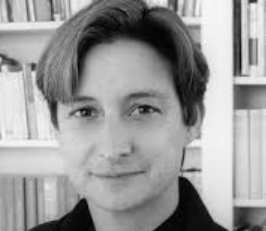
To subdue destruction is one of the most important affirmations of which we are capable in this world. It is the affirmation of this life, bound up with yours, and with the realm of the living: an affirmation caught up with a potential for destruction and its countervailing force.
▼
Source
source
p. 65
2 months 2 weeks ago
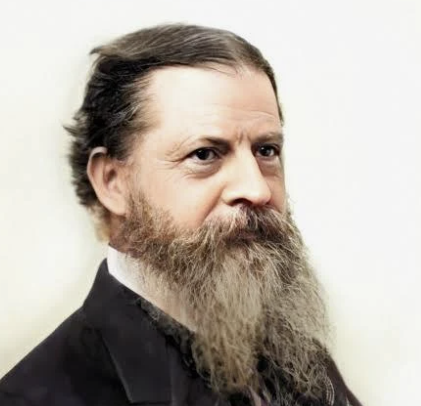
Third, consider the insistency of an idea. The insistency of a past idea with reference to the present is a quantity which is less, the further back that past idea is, and rises to infinity as the past idea is brought up into coincidence with the present.

3 weeks 6 days ago
Many people today hold to a Gnostic view of things without realizing the fact. Believing that human beings can be fully understood in the terms of scientific materialism, they reject any idea of free will. But they cannot give up hope of being masters of their destiny. So they have come to believe that science will somehow enable the human mind to escape the limitations that shape its natural condition. Throughout much of the world, and particularly in western countries, the Gnostic faith that knowledge can give humans a freedom no other creature can possess has become the predominant religion.
▼
Source
source
The Faith of Puppets: The Freedom of the Marionette (p. 9)
2 months 2 days ago
I must also call your attention to the fact that it is crucial for my viewpoint that human behavior is to a large extent charged with a considerable amount of energy, but that in contrast to Freud I do not consider this energy to be sexual, but the vital energy within any organism which, according to biological laws, gives man the desire to live, and that means to adapt himself to the social necessities of his society. To go back to what I consider to be the misunderstanding, it has never been my position that society only deforms or manifests that which is already there. If we make the distinction between human necessities in general and human desires in particular then indeed, society creates particular desires which, however, follow the general laws of the necessities rooted in human nature.
3 months 3 weeks ago
I wish to propose for the reader's favourable consideration a doctrine which may, I fear, appear wildly paradoxical and subversive. The doctrine in question is this: that it is undesirable to believe a proposition when there is no ground whatever for supposing it true.
▼
Source
source
Ch. 1: The Value of Scepticism
1 month 4 weeks ago
If we want a theory explaining how people play billiards, we do not want a theory of perfect billiard balls; we want a theory of what heuristics a human billiard player uses in order to plan and make a (often not quite accurate) shot. These heuristics and actions do not involve solving the differential equations of the billiard board; they involve rules of thumb and it is these practice guides to action we are trying to discover in order to explain the behavior.
▼
Source
source
An Empirically Based Microeconomics (1997), p. 173

4 months 2 weeks ago
Religion is more conservative than any other aspect of human life.

3 months 2 weeks ago
Society undergoes continual changes; it is barbarous, it is civilized, it is Christianized, it is rich, it is scientific; but this change is not amelioration. For everything that is given something is taken. Society acquires new arts, and loses old instincts. The civilized man has built a coach, but has lost the use of his feet; he has a fine Geneva watch, but cannot tell the hour by the sun.
▼
Source
source
p. 243

2 months 3 weeks ago
If it be of the highest importance to man, as an individual, that his religion should be true, the case of society is not the same. Society has no future life to hope for or to fear; and provided the citizens profess a religion, the peculiar tenets of that religion are of very little importance to its interests. Variant translation: Though it is very important for man as an individual that his religion should be true, that is not the case for society. Society has nothing to fear or hope from another life; what is most important for it is not that all citizens profess the true religion but that they should profess religion.
▼
Source
source
Chapter XVII.
3 months 4 weeks ago
The human understanding is of its own nature prone to suppose the existence of more order and regularity in the world than it finds. And though there be many things in nature which are singular and unmatched, yet it devises for them parallels and conjugates and relatives which do not exist. Hence the fiction that all celestial bodies move in perfect circles, spirals and dragons being (except in name) utterly rejected.
▼
Source
source
Aphorism 45

2 months 1 week ago
The man old in days will not hesitate to ask a small child seven days old about the place of life, and he will live. For many who are first will become last, and they will become one and the same.
3 months 3 weeks ago
Indignation is a submission of our thoughts, but not of our desires.
2 months 1 week ago
The concept of guilt is found most powerfully developed even in the most primitive communal forms which we know: ... the man is guilty who violates one of the original laws which dominate the society and which are mostly derived from a divine founder; the boy who is accepted into the tribal community and learns its laws, which bind him thenceforth, learns to promise; this promise is often given under the sign of death, which is symbolically carried out on the boy, with a symbolical rebirth.
▼
Source
source
p. 178

1 week 4 days ago
Wonder, indeed, is, on all hands, dying out: it is the sign of uncultivation to wonder.

2 months 3 days ago
The huge laugh is a most extreme expression of freedom.
2 months 3 days ago
These left me in no doubt that something was trying to communicate with us, but that direct communication would be counterproductive. It seemed to be an important part of the scheme to create a sense of mystery.
▼
Source
source
p. 352
3 months 3 weeks ago
A man of intellect is like an artist who gives a concert without any help from anyone else, playing on a single instrument - a piano, say, which is a little orchestra in itself. Such a man is a little world in himself; and the effect produced by various instruments together, he produces single-handed, in the unity of his own consciousness. Like the piano, he has no place in a symphony; he is a soloist and performs by himself - in solitude, it may be; or if in the company with other instruments, only as principal; or for setting the tone, as in singing.
3 months 2 weeks ago
At the end of reasons comes persuasion.
1 month 2 weeks ago
Is there anything in life so disenchanting as attainment?
▼
Source
source
The Suicide Club, The Adventure of the Hansom Cabs.

2 months 1 week ago
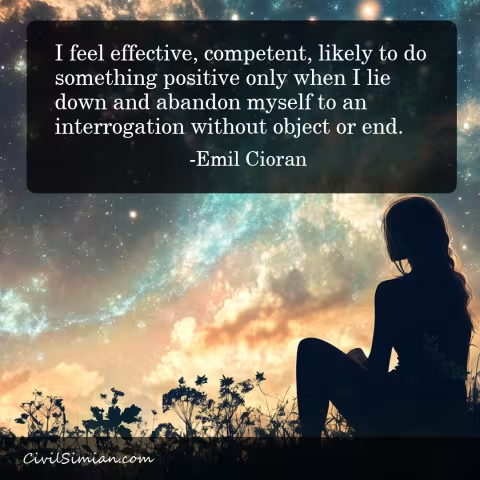
In the ice of solitude man becomes most inexorably a question to himself, and just because the question pitilessly summons and draws into play his most secret life he becomes an experience to himself.
▼
Source
source
p. 150
2 months 3 days ago
Nietzsche's great concept of Yea-saying gave him a notion of purpose that is seen as positive.
▼
Source
source
Nietzsche, in short, was a religious mystic. p. 275

2 months 3 weeks ago
A little water makes a sea, a small puff of wind a Tempest.

2 months 4 days ago
To be in touch with senses and emotions beyond conquest is to enter the realm of the mysterious.
▼
Source
source
Chapter 2, Altars of Sacrifice
CivilSimian.com created by AxiomaticPanic, CivilSimian, Kalokagathia