


3 months 2 weeks ago
Political ideals must be based upon ideals for the individual life. The aim of politics should be to make the lives of individuals as good as possible.

3 months 2 weeks ago
Quietism is the attitude of people who say, "let others do what I cannot do." The doctrine I am presenting before you is precisely the opposite of this, since it declares that there is no reality except in action. It goes further, indeed, and adds, "Man is nothing else but what he purposes, he exists only in so far as he realizes himself, he is therefore nothing else but the sum of his actions, nothing else but what his life is." Hence we can well understand why some people are horrified by our teaching.
▼
Source
source
p. 41

2 months 2 weeks ago
All those countless battles-those endless, and... for the greater part, useless wars, of which... fills up for so many thousand years... are but little atoms compared with the great whole of human destiny.

1 month 4 weeks ago
We do not think good metaphors are anything very important, but I think that a good metaphor is something even the police should keep an eye on...
▼
Source
source
E 91 Variant translation: A good metaphor is something even the police should keep an eye on.

2 months 3 days ago
The greatest invention of the nineteenth century was the invention of the method of invention.
▼
Source
source
Ch. 6: "The Nineteenth Century", p. 136
2 weeks 1 day ago
Between ourselves and our real natures we interpose that wax figure of idealizations and selections which we call our character.
▼
Source
source
Ch. VI: "Some Necessary Iconoclasm", p. 168.

2 months 2 weeks ago
We die in proportion to the words we fling around us.
3 months 1 week ago
A sovereign shows himself to be a tyrant if he disregards his honest advisors, or punishes them for what they have said.
4 months 2 weeks ago
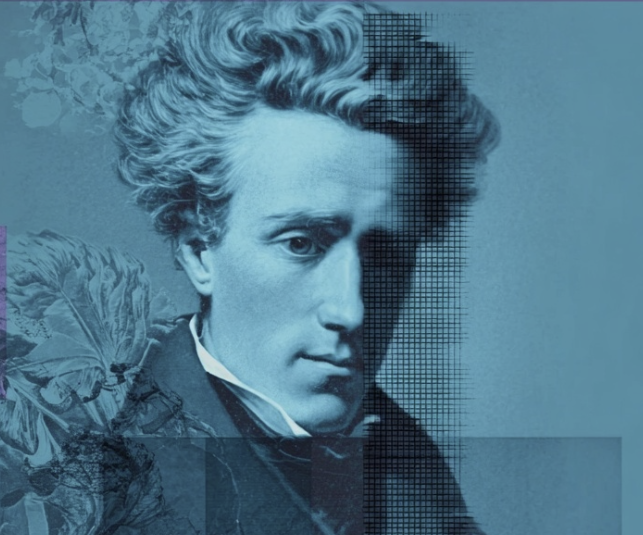
If it were so, as conceited sagacity, proud of not being deceived, thinks, that we should believe nothing that we cannot see with our physical eyes, then we first and foremost ought to give up believing in love. ... We can be deceived by believing what is untrue, but we certainly are also deceived by not believing what is true. ... Which deception is more dangerous?
4 months 1 week ago
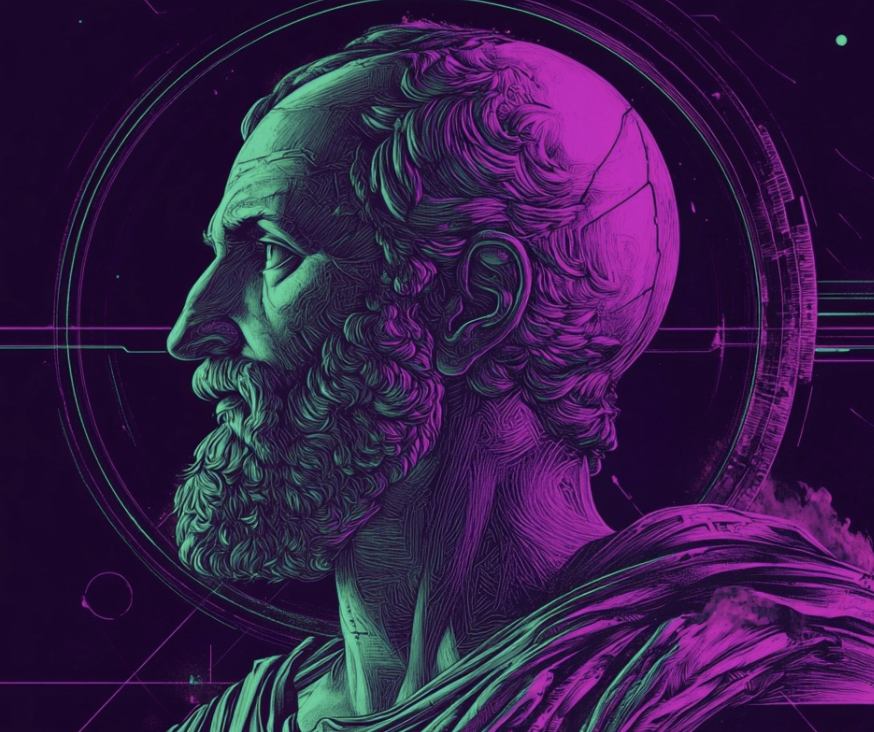
Withdraw into yourself and look. And if you do not find yourself beautiful yet, act as does the creator of a statue that is to be made beautiful: he cuts away here, he smoothes there, he makes this line lighter, this other purer. ... Cut away all that is excessive, straighten all that is crooked, bring light to all that is overcast, labor to make all one glow or beauty and never cease chiseling your statue, until there shall shine out on you from it the godlike splendor of virtue.

3 months 2 weeks ago
First, you know, a new theory is attacked as absurd; then it is admitted to be true, but obvious and insignificant; finally it is seen to be so important that its adversaries claim that they themselves discovered it.
▼
Source
source
Lecture VI, Pragmatism's Conception of Truth
3 months 2 weeks ago
[The church] is in its major part an opponent still of progress and improvement in all the ways that diminish suffering in the world, because it has chosen to label as morality a certain narrow set of rules of conduct which have nothing to do with human happiness; and when you say that this or that ought to be done because it would make for human happiness, they think that has nothing to do with the matter at all. "What has human happiness to do with morals? The object of morals is not to make people happy."
▼
Source
source
"How The Churches Have Retarded Progress"
2 months 2 weeks ago
One grasps incomparably more things in boredom than by labor, effort being the mortal enemy of meditation.

3 months 2 weeks ago
I have learned to seek my happiness by limiting my desires, rather than in attempting to satisfy them.
▼
Source
source
Attributed to John Stuart Mill in The Phrenological Journal and Science of Health, Vol. LXXXV (September 1887), p. 170
1 month 4 weeks ago
I have remarked very clearly that I am often of one opinion when I am lying down and of another when I am standing up.
▼
Source
source
F 73

3 days ago
What is more affectionate to others than man? Yet what is more savage against them than anger?
2 months 4 days ago
The important thing is not the planning of an Index Verborum Prohibitorum of current noble nouns, but rather the examination of their linguistic function.
▼
Source
source
p. 6

3 weeks 4 days ago
Hayek watched the interwar collapse with horror, as Keynes did, and shared many of Keynes's liberal values. What he failed to understand is that these values cannot be renewed by applying any formula or doctrine, or by trying to construct an ideal liberal regime in which freedom is insulated from the contingencies of politics.

2 months 2 weeks ago
Strong as it looks at the outset, State-agency perpetually disappoints every one. Puny as are its first stages, private efforts daily achieve results that astound the world.
▼
Source
source
Vol. 3, Ch. VII, Over-Legislation
3 months 1 week ago
There is hardly a philosophy which has not invoked something like the will or desire to know, the love of truth, etcetera. But, in truth, very few philosophers-apart, perhaps, from Spinoza and Schopenhauer-have accorded it more than a marginal status; as if there was no need for philosophy to say first of all what the name that it bears actually refers to. As if placing at the head of its discourse the desire to know, which it repeats in its name, was enough to justify its own existence and show-at a stroke-that it is necessary and natural: All men desire to know. Who, then, is not a philosopher, and how could philosophy not be the most necessary thing in the world?
▼
Source
source
pp. 4-5

1 week 2 days ago
Properly speaking, the Land belongs to these two: To the Almighty God; and to all His Children of Men that have ever worked well on it, or that shall ever work well on it. No generation of men can or could, with never such solemnity and effort, sell Land on any other principle: it is not the property of any generation, we say, but that of all the past generations that have worked on it, and of all the future ones that shall work on it.
1 week 2 days ago
Books-there is a good kind of a book and a bad kind of a book. I am not to assume that you are all ill acquainted with this; but I may remind you that it is a very important consideration at present. It casts aside altogether the idea that people have that if they are reading any book-that if an ignorant man is reading any book, he is doing rather better than nothing at all.
4 months 1 week ago
The Law teaches that the universe was invented and created by God, and that it did not come into being by chance or by itself.
3 months 3 weeks ago
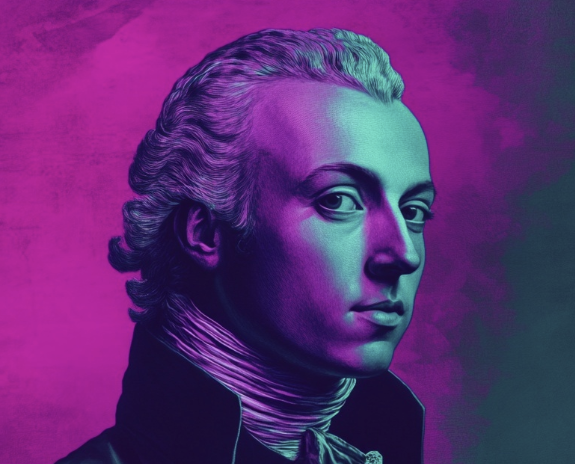
Through laziness and cowardice a large part of mankind, even after nature has freed them from alien guidance, gladly remain immature. It is because of laziness and cowardice that it is so easy for others to usurp the role of guardians. It is so comfortable to be a minor!
2 months 2 weeks ago
The reaction against your own thought in itself lends life to thought. How this reaction is born is hard to describe, because it identifies with the very rare intellectual tragedies. - The tension, the degree and level of intensity of a thought proceeds from its internal antinomies, which in turn are derived from the unsolvable contradictions of a soul. Thought cannot solve the contradictions of the soul. As far as linear thinking is concerned, thoughts mirror themselves in other thoughts, instead of mirroring a destiny.

4 months 1 week ago
Temperance is that discreet regulation of the desires and passions, by which we are enabled to enjoy pleasures without suffering any consequent inconvenience. They who maintain such a constant self-command, as never to be enticed by the prospect of present indulgence, to do that which will be productive of evil, obtain the truest pleasure by declining pleasure.
3 months 3 weeks ago
Money is the password, and all doors, which are closed to the man of lesser means, fly open to those whom Plutus favors. The invention of money, which has no other usefulness (or at least it should not have any) except for the commercial exchange of the products of man's industry, now serves all that is physically good among men. Especially after money was represented by metal, it has produced avarice which, finally, without indulgence, but by its mere possession, and even with the resolution (of the stingy) not to spend it, still contains a power which people believe can sufficiently compensate for the lack of any other power.
▼
Source
source
Kant, Immanuel (1996), pages 181-182
2 months 1 week ago
There are in our minds in solution a vast number of emotional attitudes, feelings ready to be re-excited when the proper stimulus arrives, and more than anything else it is these forms, this residue of experience, which, fuller and richer than in the mind if the ordinary man, constitute the artist's capital. What is called the magic of the artist resides in his ability to transfer these values from one field of experience to another, to attach them to objects of our common life, and by his imaginative insight make these objects poignant and momentous. Not colors, not sense qualities as such, are either matter or form, but these qualities as thoroughly imbued, impregnated, with transferred value. And then they are either matter or form according to the direction of our interest.
▼
Source
source
p. 123
1 month 1 week ago
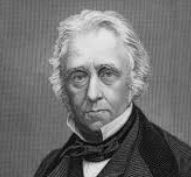
The object of oratory alone is not truth, but persuasion.
▼
Source
source
'On the Athenian Orators', Knight's Quarterly Magazine (August 1824), quoted in The Miscellaneous Writings of Lord Macaulay, Vol. I (1860), p. 135
3 months 1 week ago
If our intention now is to reveal classical unreason on its own terms, outside of its ties with dreams and error, it must be understood not as a form of reason that is somehow diseased, lost or mad, but quite simply as reason dazzled.
▼
Source
source
Part Two: 2. The Transcendence of Delirium
3 months 2 weeks ago
If everything must have a cause, then God must have a cause. If there can be anything without a cause, it may just as well be the world as God, so that there cannot be any validity in that argument. It is exactly of the same nature as the Hindu's view, that the world rested upon an elephant and the elephant rested upon a tortoise; and when they said, "How about the tortoise?" the Indian said, "Suppose we change the subject." The argument is really no better than that.
▼
Source
source
"The First-cause Argument"
3 months 2 weeks ago
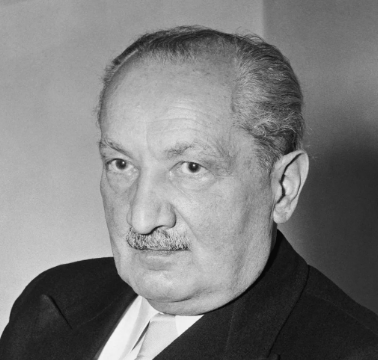
Nietzsche ... does not shy from conscious exaggeration and one-sided formulations of his thought, believing that in this way he can most clearly set in relief what in his vision and in his inquiry is different from the run-of-the-mill.
▼
Source
source
p. 50

4 months 2 weeks ago
If you're going to write a story, avoid contemporary references. They date a story and they have no staying power.

1 month 2 weeks ago
In tetrad form, the artefact is seen to be not netural or passive, but an active logos or utterance of the human mind or body that transforms the user and his ground.
▼
Source
source
p. 99

3 months 2 weeks ago
If I could put my hand on the north star, would it be as beautiful? The sea is lovely, but when we bathe in it, the beauty forsakes all the near water. For the imagination and senses cannot be gratified at the same time.
▼
Source
source
Beauty
4 months 4 days ago
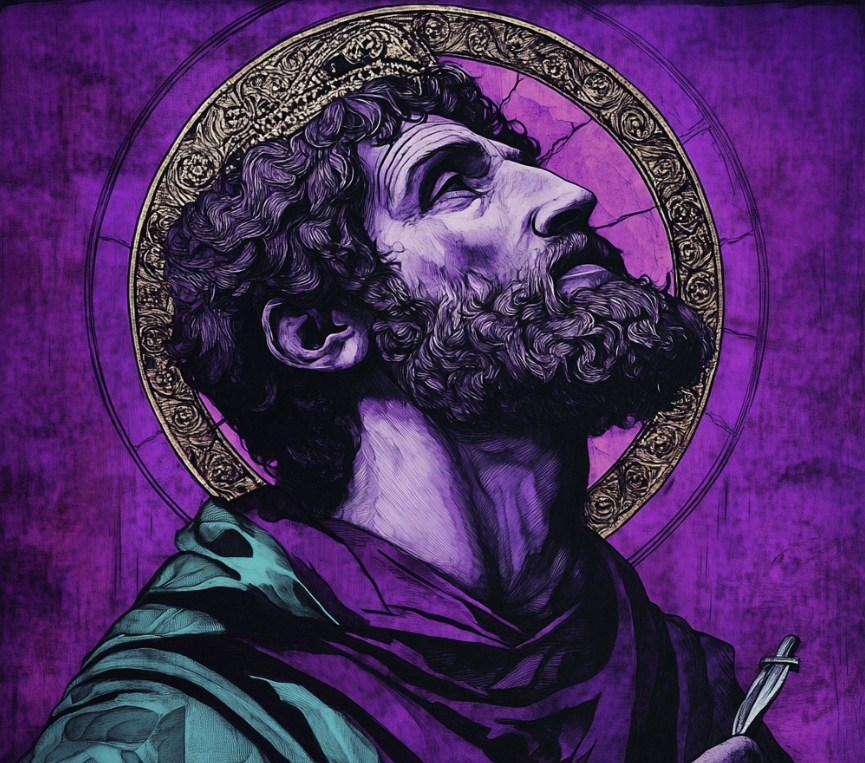
Christ is not valued at all unless He be valued above all.
▼
Source
source
p. 395
2 months 2 days ago
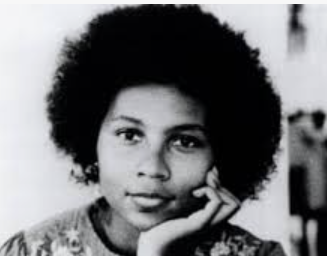
The first act of violence that patriarchy demands of males is not violence toward women. Instead patriarchy demands of all males that they engage in acts of psychic self-mutilation, that they kill off the emotional parts of themselves. If an individual is not successful in emotionally crippling himself, he can count on patriarchal men to enact rituals of power that will assault his self-esteem.
▼
Source
source
The Will To Change: Men, Masculinity, and Love (2004), p. 66

3 months 3 weeks ago
The worst evil is hardness of heart. Those who do not repent, who deliberately remain in their habits of sin, have the most to fear.
▼
Source
source
p. 146

4 months 2 weeks ago
Absolute freedom mocks at justice. Absolute justice denies freedom. To be fruitful, the two ideas must find their limits in each other.
▼
Source
source
"Historical Murder", as translated by Anthony Bower
1 month 2 weeks ago
Familiarity breeds contempt.

3 months ago
Many words befall men, mean and noble alike; do not be astonished by them, nor allow yourself to be constrained. If a lie is told, bear with it gently. But whatever I tell you, let it be done completely. Let no one persuade you by word or deed to do or say whatever is not best for you.
▼
Source
source
As quoted in Divine Harmony: The Life and Teachings of Pythagoras by John Strohmeier and Peter Westbrook.
3 months 2 weeks ago
Too little liberty brings stagnation, and too much brings chaos.
▼
Source
source
Authority and the Individual (1949), p. 37
3 months 1 week ago
Let hopes and sorrows, fears and angers be, and think each day that dawns the last you'll see; For so the hour that greets you unforeseen, will bring with it enjoyment twice as keen.
▼
Source
source
Book I, epistle iv, line 12 (translated by John Conington)

3 months 3 weeks ago
The two ways of contemplation are not unlike the two ways of action commonly spoken of by the ancients: the one plain and smooth in the beginning, and in the end impassable; the other rough and troublesome in the entrance, but after a while fair and even. So it is in contemplation: If a man will begin with certainties, he shall end in doubts; but if he will be content to begin with doubts he shall end in certainties.
▼
Source
source
Book I, v, 8

3 months 3 weeks ago
It is good to rub and polish our brain against that of others.
▼
Source
source
Book I, Ch. 26

3 months 2 weeks ago
The World and Life are one. Physiological life is of course not "Life". And neither is psychological life. Life is the world. Ethics does not treat of the world. Ethics must be a condition of the world, like logic. Ethics and Aesthetics are one.
▼
Source
source
Journal entry (24 July 1916), p. 77e
3 months 3 weeks ago
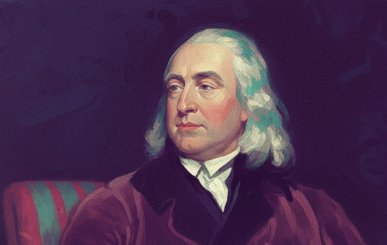
Create all the happiness you are able to create: remove all the misery you are able to remove. Every day will allow you to add something to the pleasure of others, or to diminish something of their pains. And for every grain of enjoyment you sow in the bosom of another, you shall find a harvest in your own bosom; while every sorrow which you pluck out from the thoughts and feelings of a fellow creature shall be replaced by beautiful peace and joy in the sanctuary of your soul.
▼
Source
source
Advice to a young girl, 22 June 1830
2 months 1 week ago
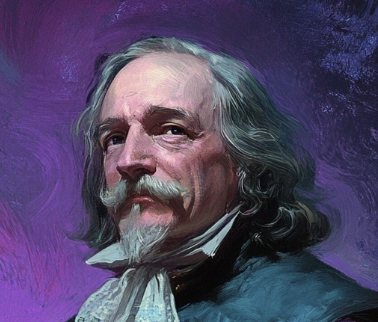
A naturall foole that could never learn by heart the order of numerall words, as one, two, and three, may observe every stroak of the Clock, and nod to it, or say one, one, one; but can never know what houre it strikes.
▼
Source
source
The First Part, Chapter 4, p. 14

1 week 6 days ago
In Kant's words, human beings are uncaused causes, and therefore have infinite value, and a liberal regime protects that autonomy by giving people rights... The right to speak, to organize, to associate, and ultimately to have a share of power by being able to vote. ...This is ...the moral status, the dignity that life in a liberal regime that does respect individual rights, gives us, and it is one of the reasons that to this day, people do not want to live in authoritarian countries that do not recognize the fundamental dignity of their... citizens.
▼
Source
source
11:47
CivilSimian.com created by AxiomaticPanic, CivilSimian, Kalokagathia