


2 months 2 weeks ago
The rights and duties of man thus simplified, it seems almost impertinent to attempt to illustrate truths that appear so incontrovertible: yet such deeply rooted prejudices have clouded reason, and such spurious qualities have assumed the name of virtues, that it is necessary to pursue the course of reason as it has been perplexed and involved in error, by various adventitious circumstances, comparing the simple axiom with casual deviations.Men, in general, seem to employ their reason to justify prejudices, which they have imbibed, they cannot trace how, rather than to root them out. The mind must be strong that resolutely forms its own principles; for a kind of intellectual cowardice prevails which makes many men shrink from the task, or only do it by halves. Yet the imperfect conclusions thus drawn, are frequently very plausible, because they are built on partial experience, on just, though narrow, views.
▼
Source
source
Ch. 1

3 months 3 weeks ago
Though the profusion of Government must undoubtedly have retarded the natural progress of England to wealth and improvement, it has not been able to stop it.
▼
Source
source
Chapter III.
1 month 2 weeks ago
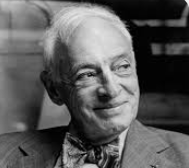
We mustn't forget how quickly the visions of genius become the canned goods of intellectuals.
▼
Source
source
Herzog (1964) [Penguin Classics, 2003, ISBN 0-142-43729-8], p. 82

3 months 3 weeks ago
Man differs from other animals in one very important respect, and that is that he has some desires which are, so to speak, infinite, which can never be fully gratified, and which would keep him restless even in Paradise. The boa constrictor, when he has had an adequate meal, goes to sleep, and does not wake until he needs another meal. Human beings, for the most part, are not like this.

2 weeks ago
For this also we will honour the poor Manchester Insurrection, and augur well of it. A deep unspoken sense lies in these strong men,- inconsiderable, almost stupid, as all they can articulate of it is. Amid all violent stupidity of speech, a right noble instinct of what is doable and what is not doable never forsakes them: the strong inarticulate men and workers, whom Fact patronises; of whom, in all difficulty and work whatsoever, there is good augury!
1 week 5 days ago
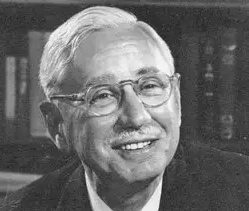
[on Epicurus] His starting point is a conviction that apathy is impossible, and that pleasure - though not necessarily sensual pleasure - is the only conceivable, and quite legitimate, end of life and action. "Nature leads every organism to prefer its own good to every other good" - even the stoic finds a subtle pleasure in renunciation. "We must not avoid pleasures, but we must select them". Epicurus, then, is no epicurean, he exalts the joys of intellect rather than those of sense; he warns against pleasures that excite and disturb the soul which they should rather quite and appease. In the end he proposes to seek not pleasure in its usual sense, but ataraxia - tranquility, equaninimity, repose of mind; all of which trembles on the verge of Zeno's "Apathy"

3 months 2 weeks ago
From whence are these "rights of individuals" derived, and why should we care? Unless we presume the existence of some greater power that determines what is good, isn't it arbitrary to posit that human survival is more important than private property rights, an equally artificially construed concept? Isn't it arbitrary to assume that some sort of equality is preferable to a system where, say, the poor are assumed to have bad karma? If these 'rights of individuals' are derived only from shared humanity, then do 'individuals' (a thoroughly meaningless term, by the way), begin to lose them when they act inhumanely? And isn't it totally arbitrary to grant rights to humans rather than other creatures anyway?
▼
Source
source
Lecture in New Haven, On Constructed Rights
3 months 3 weeks ago
Arithmetic must be discovered in just the same sense in which Columbus discovered the West Indies, and we no more create numbers than he created the Indians.
▼
Source
source
Principles of Mathematics (1903), p. 451

2 months 1 week ago
Error is the price we pay for progress.

4 months 2 weeks ago
The same man who could not find it in his conscience to curb his curiosity into the nuclear studies that might someday kill half of Earth would risk his life to save that of an unimportant fellow man.



3 months 3 weeks ago
The worker's existence is thus brought under the same condition as the existence of every other commodity. The worker has become a commodity, and it is a bit of luck for him if he can find a buyer, And the demand on which the life of the worker depends, depends on the whim of the rich and the capitalists.
▼
Source
source
Wages of Labor, p. 20.
2 days ago
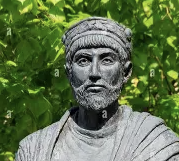
If the immediate creator of the universe be he who is proclaimed by Moses, then we hold nobler beliefs concerning him, inasmuch as we consider him to be the master of all things in general, but that there are besides national gods who are subordinate to him and are like viceroys of a king, each administering separately his own province; and, moreover, we do not make him the sectional rival of the gods whose station is subordinate to his. But if Moses first pays honour to a sectional god, and then makes the lordship of the whole universe contrast with his power, then it is better to believe as we do, and to recognise the God of the All, though not without apprehending also the God of Moses; this is better, I say, than to honour one who has been assigned the lordship over a very small portion, instead of the creator of all things.
3 days ago
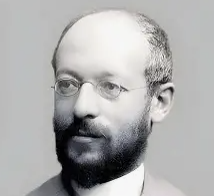
Objectivity may also be defined as freedom: the objective individual is bound by no commitments which could prejudice his perception, understanding, and evaluation of the given.
▼
Source
source
p. 403
2 months 2 weeks ago
The slaves of developed industrial civilization are sublimated slaves.
▼
Source
source
p. 32

3 months 3 weeks ago
The means employed by Nature to bring about the development of all the capacities of men is their antagonism in society, so far as this is, in the end, the cause of a lawful order among men.
▼
Source
source
Fourth Thesis
3 months 3 weeks ago
The fault of the utilitarian doctrine is that it mistakes impersonality for impartiality.
▼
Source
source
Chapter III, Section 30, pg. 190

4 months 1 week ago
Where without any change in circumstances the things held to be just by law are seen not to correspond with the concept of justice in actual practice, such laws are not really just; but wherever the laws have ceased to be advantageous because of a change in circumstances, in that case the laws were for that time just when they were advantageous for the mutual dealings of the citizens, and subsequently ceased to be just when they were no longer advantageous.
2 months 2 weeks ago
Whenever government assumes to deliver us from the trouble of thinking for ourselves, the only consequences it produces are those of torpor and imbecility.
▼
Source
source
Vol. 2, bk. 6, ch. 1

4 days ago
The old view was that delicacy of language was part of the nature, the sacred nature, of eros and that to speak about it in any other way would be to misunderstand it. What has disappeared is the risk and the hope of human connectedness embedded in eros. Ours is a language that reduces the longing for an other to the need for individual, private satisfaction and safety.
▼
Source
source
pp. 13-14.

2 months 3 weeks ago
Those who cavalierly reject the Theory of Evolution, as not adequately supported by facts, seem quite to forget that their own theory is supported by no facts at all. Like the majority of men who are born to a given belief, they demand the most rigorous proof of any adverse belief, but assume that their own needs none.

1 month 3 weeks ago
Psychic communal integration, made possible at last by the electronic media, could create the universality of consciousness foreseen by Dante when he predicted that men would continue as no more than broken fragments until they were unified into an inclusive consciousness...This is a new interpretation of the mystical body of Christ; and Christ, after all, is the ultimate extension of man.
3 months 3 weeks ago
Perhaps the best hope for the future of mankind is that ways will be found of increasing the scope and intensity of sympathy.

3 months 3 weeks ago
Speed, it seems to me, provides the one genuinely modern pleasure.
▼
Source
source
Wanted, A New Pleasure

2 months 2 weeks ago
The true hero fights and dies in the name of his destiny, and not in the name of a belief.

1 month 3 weeks ago
In many cases it is a matter for decision and not a simple matter of fact whether x understands y; and so on.
3 months 3 weeks ago
We have to learn to think in a new way. We have to learn to ask ourselves, not what steps can be taken to give military victory to whatever group we prefer, for there no longer are such steps; the question we have to ask ourselves is: what steps can be taken to prevent a military contest of which the issue must be disastrous to all parties?

4 months 2 days ago
Finally, every man will become dear and pleasing to every other man; all will be beloved by all! and, what is still more desirable, beloved also by Christ; to become acceptable to whom is the highest felicity of human nature.

3 months 3 weeks ago
In doing Good, I lose myself in Being, I abandon my particularity, I become a universal subject.
▼
Source
source
p. 77
3 months 3 weeks ago
Psychologists have hitherto failed to realize that imagination is a necessary ingredient of perception itself.
▼
Source
source
A 120
4 months 1 week ago
This happy state can only be obtained by a prudent care of the body, and a steady government of the mind. The diseases of the body are to be prevented by temperance, or cured by medicine, or rendered tolerable by patience.

2 weeks 3 days ago
If all the parts of the universe are interchained in a certain measure, any one phenomenon will not be the effect of a single cause, but the resultant of causes infinitely numerous; it is, one often says, the consequence of the state of the universe the moment before.

2 months 6 days ago
The 'open' mind of the poet and artist can sense realities beyond the reach of our normal senses. The real problem is that our materialistic assumptions have a number of false premises built into them: it is only when we recognize this that we see there is no sharp dividing line between the everyday world and the invisible world of the clairvoyant.
▼
Source
source
p. 294
3 months 3 weeks ago
All religions promise a reward for excellences of the will or heart, but none for excellences of the head or understanding.
▼
Source
source
E. Payne, trans., vol. 2, p. 230

3 months 4 days ago
You will know that wretched men are the cause of their own suffering, who neither see nor hear the good that is near them, and few are the ones who know how to secure release from their troubles. Such is the fate that harms their minds; like pebbles they are tossed about from one thing to another with cares unceasing. For the dread companion Strife harms them unawares, whom one must not walk behind, but withdraw from and flee.
▼
Source
source
As quoted in Divine Harmony: The Life and Teachings of Pythagoras by John Strohmeier and Peter Westbrook
1 week 1 day ago
Everything sacred is a tie, a fetter.
▼
Source
source
Cambridge 1995, p. 192
4 months 2 weeks ago
Throughout history there have been peasant rebellions which have followed always the same course. Blindly, the peasants sacked and destroyed, and when members of the "upper classes" fell into their hands, they killed ruthlessly and cruelly, for never in their lives had they been taught gentleness and mercy by those now in their power.
2 months 2 weeks ago
As incompetent in life as in death, I loathe myself and in this loathing I dream of another life, another death. And for having sought to be a sage such as never was, I am only a madman among the mad.

3 months 6 days ago
If two right lines cut one another, they will form the angles at the vertex equal. ...This... is what the present theorem evinces, that when two right lines mutually cut each other, the vertical angles are equal. And it was first invented according to Eudemus by Thales...
▼
Source
source
Proposition XV. Thereom VIII.

1 month 3 weeks ago
One might expect that a consideration of grievability pertains only to those who are dead, but my contention is that grievability is already operative in life, and that it is a characteristic attributed to living creatures, marking their value within a differential scheme of values and bearing directly on the question of whether or not they are treated equally and in a just way. To be grievable is to be interpellated in such a way that you know your life matters; that the loss of your life would matter; that your body is treated as one that should be able to live and thrive, whose precarity should be minimized, for which provisions for flourishing should be available. The presumption of equal grievability would be not only a conviction or attitude with which another person greets you, but a principle that organizes the social organization of health, food, shelter, employment, sexual life, and civic life.
▼
Source
source
p. 59
2 weeks ago
The inventive genius of great England will not forever sit patient with mere wheels and pinions, bobbins, straps and billy-rollers whirring in the head of it. The inventive genius of England is not a Beaver's, or a Spinner's or Spider's genius: it is a Man's genius, I hope, with a God over him!
2 months 2 weeks ago
In a word, we reject all legislation, all authority, and all privileged, licensed, official, and legal influence, even though arising from universal suffrage, convinced that it can turn only to the advantage of a dominant minority of exploiters against the interest of the immense majority in subjection to them. This is the sense in which we are really Anarchists.

4 months 2 days ago
"You err, not knowing the Scriptures nor the power of God" This canon is the mother of all canons against heresy; the causes of error are two; the ignorance of the will of God, and the ignorance or not sufficient consideration of his power.
▼
Source
source
Of Heresies

4 months 1 day ago
Certainly it is true that Christians, so far as they themselves are concerned, are subject neither to law nor sword, and have need of neither. But take heed and first fill the world with real Christians before you attempt to rule it in a Christian and evangelical manner. This you will never accomplish; for the world and the masses are and always will be un-Christian, even if they are all baptized and Christian in name.
▼
Source
source
p. 91
2 months 2 weeks ago
I forsook the company and the dinner-parties, the port-wine and champagne of the middle-classes, and devoted my leisure-hours almost exclusively to the intercourse with plain working men; I am both glad and proud of having done so. Glad, because thus I was induced to spend many a happy hour in obtaining a knowledge of the realities of life-many an hour, which else would have been wasted in fashionable talk and tiresome etiquette; proud, because thus I got an opportunity of doing justice to an oppressed and calumniated class of men who with all their faults and under all the disadvantages of their situation, yet command the respect of every one but an English money-monger.
▼
Source
source
p. 27
1 week 5 days ago
Sixty years ago I knew everything. Now I know nothing. Education is a progressive discovery of our own ignorance.
▼
Source
source
Quoted in "Teachers: The Essence of the Centuries", Time magazine, 13 August 1965

2 months 3 weeks ago
People will not look forward to posterity, who never look backward to their ancestors.
▼
Source
source
Volume iii, p. 274

2 months 1 week ago
There is a certain kind of morality which is even more alien to good and evil than amorality is.
▼
Source
source
"The responsibility of writers," p. 169

3 months 3 weeks ago
"The cardinal difficulty," said MacPhee, "in collaboration between the sexes is that women speak a language without nouns. If two men are doing a bit of work, one will say to the other, 'Put this bowl inside the bigger bowl which you'll find on the top shelf of the green cupboard.' The female for this is, 'Put that in the other one in there.' And then if you ask them, 'in where?' they say, 'in there, of course.' There is consequently a phatic hiatus."
▼
Source
source
Ch. 8 : Moonlight at Belbury, section 2
CivilSimian.com created by AxiomaticPanic, CivilSimian, Kalokagathia