


3 months 1 week ago
On the other hand, the cheapest form of pride is national pride; for the man affected therewith betrays a want of individual qualities of which he might be proud, since he would not otherwise resort to that which he shares with so many millions. The man who possesses outstanding personal qualities will rather see most clearly the faults of his own nation, for he has them constantly before his eyes. But every miserable fool, who has nothing in the world whereof he could be proud, resorts finally to being proud of the very nation to which he belongs. In this he finds compensation and is now ready and thankful to defend, ... all the faults and follies peculiar to it.
▼
Source
source
From 'Parerga and Paralipomena', Vol. 1, Aphorisms on the Wisdom of Life, 'What A Man Represents', pp. 360

3 months 1 week ago
Encourage therefore his inquisitiveness all you can, by satisfying his demands, and informing his judgement, as far as it is capable. When his reasons are any way tolerable, let him find the credit and commendation of it, without being laugh'd at for his mistake be gently put into the right; and if he shew a forwardness to be reasoning about things that come in his way, take care, as much as you can, that no body check this inclination in him, or mislead it by captious or fallacious ways of talking with him. For when all is done, this is the highest and most important faculty of our minds, deserves the greatest care and attention in cultivating it: the right improvement, and exercise of our reason being the highest perfection that a man can attain to in his life.
▼
Source
source
Sec. 122

3 months 1 week ago
Better to have beasts that let themselves be killed than men who run away.
▼
Source
source
Act 11, sc. 2
1 month ago
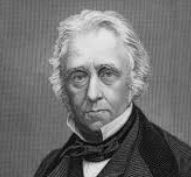
His imagination resembled the wings of an ostrich. It enabled him to run, though not to soar.
▼
Source
source
p. 223
1 month 1 week ago
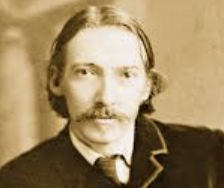
There are circumstances in which even the least energetic of mankind learn to behave with vigour and decision; and the most cautious forget their prudence and embrace foolhardy resolutions.
▼
Source
source
The Rajah's Diamond, Story of the Bandbox.
3 months 1 week ago
This is the contradiction of racism, colonialism, and all forms of tyranny: in order to treat a man like a dog, one must first recognize him as a man.
3 weeks 3 days ago
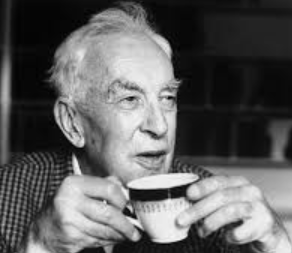
The human race's prospects of survival were considerably better when we were defenceless against tigers than they are today when we have become defenceless against ourselves.
▼
Source
source
"Man and Hunger: The Perspectives of History", Speech to the World Food Congress (4 June 1963)
3 months 1 week ago
I do not give a damn about the dead. They died for the [Communist] Party and the Party can decide what it wants. I practice a live man's politics, for the living.
▼
Source
source
Act 5, sc. 3

3 months 1 week ago
The Beatific Vision, Sat Chit Ananda, Being-Awareness-Bliss-for the first time I understood, not on the verbal level, not by inchoate hints or at a distance, but precisely and completely what those prodigious syllables referred to. And then I remembered a passage I had read in one of Suzuki's essays. "What is the Dharma-Body of the Buddha?" ('"the Dharma-Body of the Buddha" is another way of saying Mind, Suchness, the Void, the Godhead.) The question is asked in a Zen monastery by an earnest and bewildered novice. And with the prompt irrelevance of one of the Marx Brothers, the Master answers, "The hedge at the bottom of the garden." "And the man who realizes this truth," the novice dubiously inquires, "what, may I ask, is he?" Groucho gives him a whack over the shoulders with his staff and answers, "A golden-haired lion."

3 months 1 week ago
If a man makes the press utter atrocious things he becomes as answerable for them as if he had uttered them by word of mouth. Mr. Jefferson has said in his inaugural speech, that "error of opinion might be tolerated, when reason was left free to combat it." This is sound philosophy in cases of error. But there is a difference between error and licentiousness.
▼
Source
source
Liberty of the Press, 1806
3 months 3 weeks ago
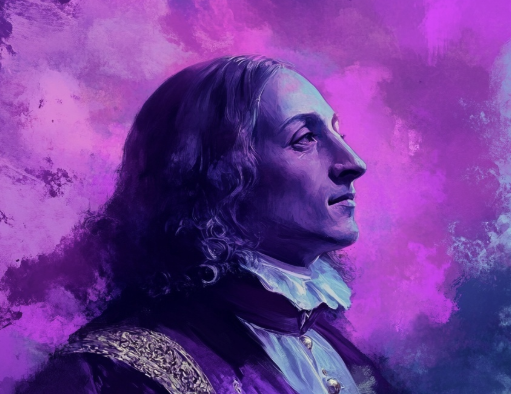
FIRE. God of Abraham, God of Isaac, God of Jacob, not of the philosophers and scholars. Certainty. Certainty. Feeling. Joy. Peace.
▼
Source
source
Note on a parchment stitched to the lining of Pascal's coat, found by a servant shortly after his death, as quoted in Burkitt Speculum religionis (1929), p. 150
3 months 3 weeks ago
Whilst in speaking of human things, we say that it is necessary to know them before we can love them...the saints on the contrary say in speaking of divine things that it is necessary to love them in order to know them, and that we only enter truth through charity.

1 month 1 week ago
Scientific beliefs are supported by evidence, and they get results. Myths and faiths are not and do not.

3 months 1 week ago
As the chosen people bore in their features the sign manual of Jehovah, so the division of labour brands the manufacturing workman as the property of capital.
▼
Source
source
Vol. I, Ch. 14, Section 5, pg. 396.
3 weeks 3 days ago
It is a paradoxical but profoundly true and important principle of life that the most likely way to reach a goal is to be aiming not at that goal itself but at some more ambitious goal beyond it.
▼
Source
source
Vol. 7 (1954). Also in Civilization on Trial (1957 ) p. 247

4 months 1 week ago
There must have been many who had a relationship to Jesus similar to that of Barabbas (his name was Jesus Barrabas). The Danish "Barrabas" is about the same as "N.N." [Mr. X or John Doe], filius patris, his father's son. - It is too bad, however, that we do not know anything more about Barrabas; it seems to me that in many ways he could have become a counterpart to the Wandering Jew. The rest of his life must have taken a singular turn. God knows whether or not he became a Christian. - It would be a poetic motif to have him, gripped by Christ's divine power, step forward and witness for him.

4 months 1 week ago
The most exciting phrase to hear in science, the one that heralds new discoveries, is not 'Eureka!', but 'That's funny ...'

4 months 1 week ago
He tried to recall what he had read about the disease. Figures floated across his memory, and he recalled that some thirty or so great plagues known to history had accounted for nearly a hundred million deaths. But what are a hundred million deaths? When one has served in a war, one hardly knows what a dead man is, after a while. And since a dead man has no substance unless one actually sees him dead, a hundred million corpses broadcast through history are no more than a puff of smoke in the imagination.


3 months 1 week ago
My thought is me: that's why I can't stop. I exist because I think ... and I can't prevent myself from thinking.
▼
Source
source
Lundi ("Monday")
3 months 1 week ago
All that I know about my life, it seems, I have learned in books.

3 months 1 week ago
Thee might observe incidentally that if the state paid for child-bearing it might and ought to require a medical certificate that the parents were such as to give a reasonable result of a healthy child - this would afford a very good inducement to some sort of care for the race, and gradually as public opinion became educated by the law, it might react on the law and make that more stringent, until one got to some state of things in which there would be a little genuine care for the race, instead of the present haphazard higgledy-piggledy ways.
▼
Source
source
Letter to Alys Pearsall Smith (1894); published in The Selected Letters of Bertrand Russell, Volume 1: The Private Years (1884-1914)

2 months 1 week ago
The flesh spreads, further and further, like a gangrene upon the surface of the globe. It cannot impose limits upon itself, it continues to be rife despite its rebuffs, it takes its defeats for conquests, it has never learned anything. It belongs above all to the realm of the Creator, and it is indeed in the flesh that He has projected His maleficent instincts.
3 months 2 days ago
Everyone is entitled to commit murder in the imagination once in a while, not to mention lesser infractions.
▼
Source
source
Concealment and Exposure and Other Essays (1998).

4 months 1 week ago
Misfortune shows those who are not really friends.
5 days ago
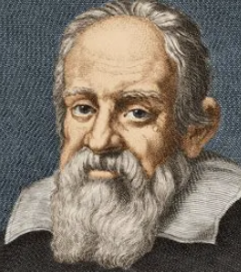
Indeed, I think we may concede to our Academician, without flattery, his claim that in the principle [principio, i. e., accelerated motion] laid down in this treatise he has established a new science dealing with a very old subject. Observing with what ease and clearness he deduces from a single principle the proofs of so many theorems, I wonder not a little how such a question escaped the attention of Archimedes, Apollonius, Euclid and so many other mathematicians and illustrious philosophers, especially since so many ponderous tomes have been devoted to the subject of motion.
▼
Source
source
(Galileo referred to himself as the/our Academician in his dialogue) Sagredo, Third Day P. 242
1 month 3 weeks ago
I believe that none can "save" his fellow man by making a choice for him. To help him, he can indicate the possible alternatives, with sincerity and love, without being sentimental and without illusion. The knowledge and awareness of the freeing alternatives can reawaken in an individual all his hidden energies and put him on the path to choosing respect for "life" instead of for "death."

1 month 2 days ago
Like many others, I came to philosophy to study matters of life and death, and was taught that professionalization required forgetting them. The more I learned, the more I grew convinced of the opposite: the history of philosophy was indeed animated by the questions that drew us there.

3 months 1 week ago
Respect the child. Be not too much his parent. Trespass not on his solitude.
▼
Source
source
Education
1 month 1 week ago
We are survival machines-robot vehicles blindly programmed to preserve the selfish molecules known as genes. This is a truth which still fills me with astonishment.
▼
Source
source
Preface to the first edition

2 days ago
All the gifted souls, of every rank, who are born to you in this generation. These are appointed, by the true eternal "divine right" which will never become obsolete, to be your governors and administrators; and precisely as you employ them, or neglect to employ them, will your State be favored of Heaven or disfavored. This noble young soul, you can have him on either of two conditions; and on one of them, since he is here in the world, you must have him. As your ally and coadjutor; or failing that, as your natural enemy: which shall it be? I consider that every Government convicts itself of infatuation and futility, or absolves and justifies itself before God and man, according as it answers this question.
3 months 1 week ago
Listen to me: a family man is never a real family man. An assassin is never entirely assassin. They play a role, you understand. While a dead man, he is really dead. To be or not to be, right?
▼
Source
source
Hugo, Act 4, sc. 6
2 months 4 days ago
Another doctrine repugnant to Civill Society, is that whatsoever a man does against his Conscience, is Sinne; and it dependeth on the presumption of making himself judge of Good and Evill. For a man's Conscience and his Judgement are the same thing, and as the Judgement, so also the Conscience may be erroneous.
▼
Source
source
The Second Part, Chapter 29, p. 168

2 months 1 week ago
The whole nature of man presupposes woman, both physically and spiritually. His system is tuned into woman from the start, just as it is prepared for a quite definite world where there is water, light, air, salt, carbohydrates etc.
▼
Source
source
"Two Essays in Analytical Psychology" In CW 7: P. 188

3 months 2 weeks ago
All the world knows me in my book, and my book in me.
▼
Source
source
Book III, Ch. 5. Upon some Verses of Virgil
4 months 1 week ago
Certain success evicts one from the paradise of winning against the odds.

1 month 1 week ago
My method is vertical rather than horizontal so the scenery does not change but the texture does.
▼
Source
source
Letter to The Listener October 1971, Letters of Marshall McLuhan (1987), p. 318
3 months 1 day ago
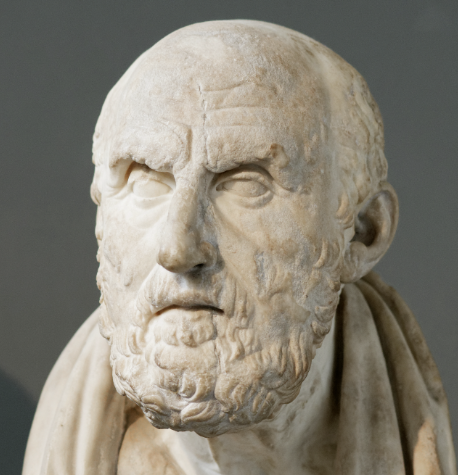
Wise people are in want of nothing, and yet need many things. On the other hand, nothing is needed by fools, for they do not understand how to use anything, but are in want of everything.
▼
Source
source
As quoted in Moral Epistles by Seneca, iii. 10.

2 months 1 week ago
Limiting the liberty of each by the like liberty of all, excludes a wide range of improper actions, but does not exclude certain other improper ones.
▼
Source
source
Pt. II, Ch. 4 : Derivation of a First Principle, § 4

6 days ago
That's... the crisis. The number of liberal democracies measured by... Freedom House in its annual survey of freedom around the world has been in decline for 16 straight years, and the biggest declines recently have been in the two biggest liberal democracies, India and the United States. So... we're dealing with a big global problem.
▼
Source
source
7:18
3 months 1 week ago
The foundations on which several duties are built, and the foundations of right and wrong from which they spring, are not perhaps easily to be let into the minds of grown men, not us'd to abstract their thoughts from common received opinions. Much less are children capable of reasonings from remote principles. They cannot conceive the force of long deductions. The reasons that move them must be obvious, and level to their thoughts, and such as may be felt and touched. But yet, if their age, temper, and inclination be consider'd, they will never want such motives as may be sufficient to convince them.
▼
Source
source
Sec. 81
3 months 1 week ago
I do not believe that I am now dreaming, but I cannot prove that I am not. I am, however, quite certain that I am having certain experiences, whether they be those of a dream or those of waking life.
▼
Source
source
Human Knowledge: Its Scope and Limits (1948), p. 172
2 months 1 week ago
Education will enable young people quickly to familiarize themselves with the whole system of production and to pass from one branch of production to another in response to the needs of society or their own inclinations. It will, therefore, free them from the one-sided character which the present-day division of labor impresses upon every individual. Communist society will, in this way, make it possible for its members to put their comprehensively developed faculties to full use. But, when this happens, classes will necessarily disappear. It follows that society organized on a communist basis is incompatible with the existence of classes on the one hand, and that the very building of such a society provides the means of abolishing class differences on the other.
2 months 1 week ago
The true Poet is all-knowing; he is an actual world in miniature.
2 months 2 days ago
Whoever abhors the name and fancies that he is godless - when he addresses with his whole devoted being the Thou of his life that cannot be restricted by any other, he addresses God.
1 month 1 week ago
Evolution is a fact. Beyond reasonable doubt, beyond serious doubt, beyond sane, informed, intelligent doubt, beyond doubt evolution is a fact. The evidence for evolution is at least as strong as the evidence for the Holocaust, even allowing for eye witnesses to the Holocaust. It is the plain truth that we are cousins of chimpanzees, somewhat more distant cousins of monkeys, more distant cousins still of aardvarks and manatees, yet more distant cousins of bananas and turnips... continue the list as long as desired.
▼
Source
source
The Greatest Show on Earth: The Evidence for Evolution (2009) (p. 8)

1 month 1 week ago
It is sometimes expedient to forget who we are.
▼
Source
source
Maxim 233
3 months 1 week ago
Americans need rest, but do not know it. I believe this to be a large part of the explanation of the crime wave in the United States.
▼
Source
source
Ch. 13: Freedom in Society.

4 months 1 day ago
Is God willing to prevent evil, but not able? Then he is not omnipotent. Is he able, but not willing? Then he is malevolent. Is he both able and willing? Then whence cometh evil? Is he neither able nor willing? Then why call him God?

3 months 2 weeks ago
A man must be perfectly crazy who, where there is tolerable security, does not employ all the stock which he commands…
▼
Source
source
Chapter I, p. 313 (see opportunity cost).
CivilSimian.com created by AxiomaticPanic, CivilSimian, Kalokagathia