

4 months 5 days ago
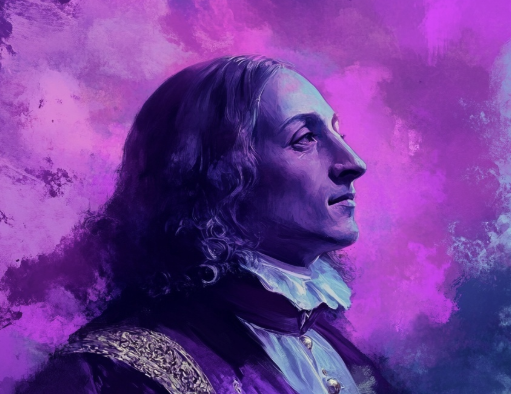
When I consider the short duration of my life, swallowed up in the eternity before and after, the small space which I fill, or even can see, engulfed in the infinite immensity of spaces whereof I know nothing, and which know nothing of me, I am terrified, and wonder that I am here rather than there, for there is no reason why here rather than there, or now rather than then. Who has set me here? By whose order and design have this place and time been destined for me? It is not well to be too much at liberty. It is not well to have all we want.How many kingdoms know nothing of us! The eternal silence of these infinite spaces alarms me.
▼
Source
source
"The Misery of Man Without God": "Man's Disproportion," The Thoughts of Blaise Pascal translated from the Text of M. Auguste Molinier Tr. C. Kegan Paul, 1885
1 month 2 weeks ago
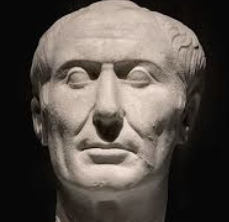
The loss which is unknown is no loss at all.
▼
Source
source
Maxim 38

4 months 2 weeks ago
Printing will tell you such useful things and such interesting things that not being able to read would be as bad as not being able to see.

4 months ago
Concerning the female sorcerer. Roman law also prescribes this. Why does the law name women more than men here, even though men are also guilty of this? Because women are more susceptible to those superstitions of Satan; take Eve, for example. They are commonly called "wise women." Let them be killed.
▼
Source
source
Sermon on Exodus, 1526, WA XVI, p. 551 as quoted in Luther on Women: A Sourcebook, edited by Susan C. Karant-Nunn, Merry E. Wiesner-Hanks, (2003), p. 231
1 month 3 weeks ago
Today's terrorism is not the product of a traditional history of anarchism, nihilism, or fanaticism. It is instead the contemporary partner of globalization.
▼
Source
source
The Spirit of Terrorism (2003) "The Violence of the Global"
2 months 4 days ago
The lack of objectivity, as far as foreign nations are concerned, is notorious. From one day to another, another nation is made out to be utterly depraved and fiendish, while one's own nation stands for everything that is good and noble. Every action of the enemy is judged by one standard - every action of oneself by another. Even good deeds by the enemy are considered a sign of particular devilishness, meant to deceive us and the world, while our bad deeds are necessary and justified by our noble goals which they serve.
3 days ago
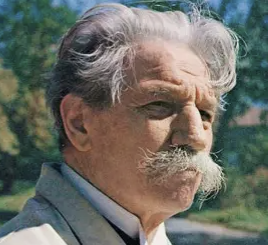
The mistake made by all previous systems of ethics has been the failure to recognize that life as such is the mysterious value with which they have to deal. All spiritual life meets us within natural life. Reverence for life, therefore, is applied to natural life and spiritual life alike. In the parable of Jesus, the shepherd saves not merely the soul of the lost sheep but the whole animal. The stronger the reverence for natural life, the stronger grows also that for spiritual life.
▼
Source
source
p. 264

4 months 2 weeks ago
I shall assume that your silence gives consent.

3 months 3 weeks ago
There is always a best way of doing everything, if it be to boil an egg. Manners are the happy ways of doing things; each once a stroke of genius or of love, - now repeated and hardened into usage. They form at last a rich varnish, with which the routine of life is washed, and its details adorned.
▼
Source
source
Behavior
1 month 3 weeks ago
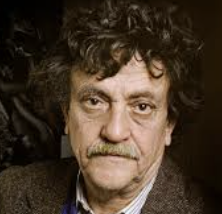
I have wanted to give Iraq a lesson in democracy - because we're experienced with it, you know. And, in democracy, after a hundred years, you have to let your slaves go. And, after a hundred and fifty years, you have to let your women vote. And, at the beginning of democracy, is that quite a bit of genocide and ethnic cleansing is quite okay. And that's what's going on now.
▼
Source
source
Interviewed by Jon Stewart on The Daily Show
2 months 2 weeks ago
At midday the daily food of all Spaniards was the puchero or cocido, as the dish is really called which the foreigners call pot-pourri or olla podrida. This contains principally yellow chick-peas, with a little bacon, some potatoes or other vegetables and normally also small pieces of beef or sausage, all boiled in one pot at a very slow fire; the liquid of the same makes the substantial broth that is served first.
▼
Source
source
p. 14
3 months 3 weeks ago
Dissimulation is innate in woman, and almost as much a quality of the stupid as of the clever.
▼
Source
source
"Of Women"
3 months 3 weeks ago
Wealth begins in a tight roof that keeps the rain and wind out; in a good pump that yields you plenty of sweet water; in two suits of clothes, so to change your dress when you are wet; in dry sticks to burn; in a good double-wick lamp; and three meals; in a horse, or a locomotive, to cross the land; in a boat to cross the sea; in tools to work with; in books to read; and so, in giving, on all sides, by tolls and auxiliaries, the greatest possible extension to our powers, as if it added feet, and hands, and eyes, and blood, length to the day, and knowledge, and good-will.Wealth begins with these articles of necessity.
▼
Source
source
Wealth
3 days ago
A man should build a house with his own hands before he calls himself an engineer.
1 day ago
We ought to acquiesce in the reasoning of the Egyptian priests, who raise altars to the Sun conjointly with Jupiter; nay, rather we should assent to Apollo himself (long before them), who sits on the same throne with Jove, and whose words are,

3 months 3 weeks ago
Power may be defined as the production of intended effects.
▼
Source
source
Ch. 3: The Forms of Power

2 months 2 weeks ago
Whit Meynell was a sociologist; he had got into an intellectual muddle early on in life and never managed to get out.
▼
Source
source
The Philosopher's Pupil (1983) p. 165.
3 months 3 weeks ago
Nor mourn the unalterable Days That Genius goes and Folly stays.
▼
Source
source
In Memoriam E. B. E., st. 9
3 days ago
The greater part of human activity is designed to make permanent those experiences and joys which are only lovable because they are changing.
▼
Source
source
p. 32

3 months 3 weeks ago
"...the church of England, when she baptizes any one, makes him not a Christian [...] the church of England is mistaken, and makes none but socinians Christians"
▼
Source
source
279

2 months 1 week ago
It is not in a person's nature to desire what he already has. Desire is a tendency, the start of a movement toward something, toward a point from which one is absent. If, at the very outset, this movement doubles back on itself toward its point of departure, a person turns round and round like a squirrel in a cage or a prisoner in a condemned cell. Constant turning soon produces revulsion. All workers, especially though not exclusively those who work under inhumane conditions, are easily the victims of revulsion, exhaustion and disgust and the strongest are often the worst affected.
▼
Source
source
p. 245

2 months 5 days ago
These are the visionary, mystical moments, when a man 'completes his partial mind'. His everyday conscious self is only a small part of the mind, like the final crescent of the moon. In moments of crisis, the full moon suddenly appears.
▼
Source
source
p. 156

4 months 1 day ago
You venerate the saints, and you take pleasure in touching their relics. But you disregard their greatest legacy, the example of a blameless life. No devotion is more pleasing to Mary than the imitation of Mary's humility. No devotion is more acceptable and proper to the saints than striving to imitate their virtues.
▼
Source
source
The Erasmus Reader (1990), p. 144.

1 week ago
For love of bustle is not industry - it is only the restlessness of a hunted mind.
▼
Source
source
Line 5.

4 months 1 week ago
Therefore let every Christian, yea, let the whole body of Christ everywhere cry out, despite the tribulations it endures, despite temptations and countless scandals, saying: "Preserve my soul, for I am holy; save Thy servant, O my God, that trusteth in thee" (Ps. 85:2) No, this holy one is not proud, for he trusts in God.
▼
Source
source
p.429

1 week 6 days ago
Those who try to include all life when trying to determine justice: Should a man be executed for killing a fly? No? The fly has a short life span? The fly is small? All these rationalizations can be applied to you, by a creature that lives longer, is bigger, etc. #philosophy

1 week 6 days ago
We have the greatest admiration for this learned doctor: with what scientific stoicism he walks through the land of wonders, unwondering; like a wise man through some huge, gaudy, imposing Vauxhall, whose fire-works, cascades and symphonies, the vulgar may enjoy and believe in,-but where he finds nothing real but the saltpetre, pasteboard and catgut.
2 months 2 weeks ago
When two, or more men, know of one and the same fact, they are said to be CONSCIOUS of it one to another; which is as much as to know it together.
▼
Source
source
The First Part, Chapter 7, p. 31

2 months 2 days ago
As the few adepts in such things well know, universal morality is to be found in little everyday penny-events just as much as in great ones. There is so much goodness and ingenuity in a raindrop that an apothecary wouldn't let it go for less than half-a-crown.
▼
Source
source
B 33
4 months 1 week ago
God judged it better to bring good out of evil than to suffer no evil to exist.
▼
Source
source
Enchiridion (c. 420 ), Ch. 27

2 months 3 weeks ago
You have theories enough concerning the Rights of Men. It may not be amiss to add a small degree of attention to their Nature and disposition.
▼
Source
source
Letter to Charles-Jean-François Depont (November 1789), quoted in Alfred Cobban and Robert A. Smith (eds.), The Correspondence of Edmund Burke, Volume VI: July 1789-December 1791 (1967), p. 46

4 months 2 weeks ago
At this point of his effort man stands face to face with the irrational. He feels within him his longing for happiness and for reason. The absurd is born of this confrontation between the human need and the unreasonable silence of the world. This must not be forgotten. This must be clung to because the whole consequence of a life can depend on it. The irrational, the human nostalgia, and the absurd that is born of their encounter, these are the three characters in the drama that must necessarily end with all the logic of which an existence is capable.

4 months 3 weeks ago
Therefore only an utterly senseless person can fail to know that our characters are the result of our conduct.
4 months 2 weeks ago
The history of science is full of revolutionary advances that required small insights that anyone might have had, but that, in fact, only one person did.

2 months 5 days ago
Human nature asserts itself regardless of all laws, nor is there any plausible reason why nature should adapt itself to a perverted conception of morality.
3 days ago
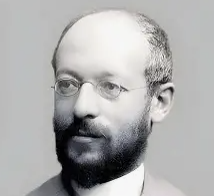
I understand the task of sociology to be description and determination of the historical-psychological origin of those forms in which interactions take place between human beings. The totality of these interactions, springing from the most diverse impulses, directed toward the most diverse objects, and aiming at the most diverse ends, constitutes "society."
▼
Source
source
p. 167
1 day ago
As a general rule, all that has been hitherto advanced respecting the nature of this deity, must be understood to refer to his properties: for the nature of the god is not one thing, and his influence another: and truly, besides these two, his energy a third thing: seeing that all things which he wills, these he is, he can, and he works. For neither doth he will that which he is not; nor is he without strength to do that which he wills; nor doth he will that which he cannot effect. Now this is very different in the case of men, for theirs is a double nature mixed up in one, that of soul and body; the former divine, the latter full of darkness and obscurity: hence naturally arise warfare and discord between the two.

3 days ago
Intellectuals ... advertise their superiority to political practice but are absolutely in its thrall. ... It is no accident that Marxist theory and practice use the intellectuals as tools and keep them in brutal subservience.
▼
Source
source
"Commerce and Culture," p. 281.
4 months 5 days ago
There are some men who expose themselves to damnation so foolishly by avarice, by brutality, by debauches, by violence, by excesses, by blasphemies! ...it is always a great folly for a man to expose himself to damnation... He must despise desire and its kingdom, and aspire to that kingdom of love in which all the subjects breathe nothing but love, and desire nothing but the benefits of love.
1 week ago
If any one is angry with you, meet his anger by returning benefits for it: a quarrel which is only taken up on one side falls to the ground: it takes two men to fight.
▼
Source
source
De Ira (On Anger): Book 2, cap. 34, line 5.
2 months 3 weeks ago
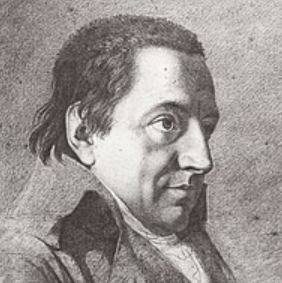
A living language can stand on a higher level of culture in comparison with another, but it can never in itself attain that perfection of development which a dead language quite easily attains. In the latter the connotation of words is fixed, and the possibilities of suitable combinations will also gradually become exhausted. Hence, he who wishes to speak this language must speak it just as it is; but, after he has once learnt to do this, the language speaks itself in his mouth and thinks and imagines for him.
▼
Source
source
Consequences of the Difference p. 85

3 months 1 week ago
For joys fall not to the rich alone, nor has he lived ill, who from birth to death has passed unknown.
▼
Source
source
Book I, epistle xvii, line 9
3 months 3 weeks ago
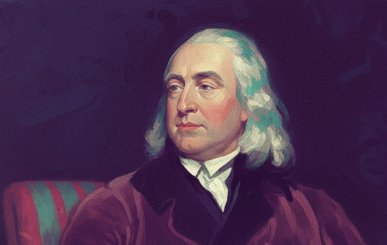
Nature has placed mankind under the governance of two sovereign masters, pain and pleasure. It is for them alone to point out what we ought to do, as well as to determine what we shall do. On the one hand the standard of right and wrong, on the other the chain of causes and effects, are fastened to their throne. They govern us in all we do, in all we say, in all we think: every effort we can make to throw off our subjection, will serve but to demonstrate and confirm it. In words a man may pretend to abjure their empire: but in reality he will remain subject to it all the while. The principle of utility recognizes this subjection, and assumes it for the foundation of that system, the object of which is to rear the fabric of felicity by the hands of reason and of law. Systems which attempt to question it, deal in sounds instead of sense, in caprice instead of reason, in darkness instead of light.
▼
Source
source
Ch. 1: Of the Principle of Utility

2 months 2 weeks ago
The true hero fights and dies in the name of his destiny, and not in the name of a belief.
2 months 2 weeks ago
Art can speak its own language only as long as the images are alive which refuse and refute the established order.
▼
Source
source
p. 62

3 months 3 weeks ago
He would have left a Greek accent slanting the wrong way, and righted up a falling man.
2 months 2 weeks ago
We do not rush toward death, we flee the catastrophe of birth, survivors struggling to forget it. Fear of death is merely the projection into the future of a fear which dates back to our first moment of life. We are reluctant, of course, to treat birth as a scourge: has it not been inculcated as the sovereign good - have we not been told that the worst came at the end, not at the outset of our lives? Yet evil, the real evil, is behind, not ahead of us. What escaped Jesus did not escape Buddha: "If three things did not exist in the world, O disciples, the Perfect One would not appear in the world. ..." And ahead of old age and death he places the fact of birth, source of every infirmity, every disaster.

3 months 3 weeks ago
The consequences of beliefs that go against the providence of a perfectly good, wise, and just God, or against that immortality of souls which lays them open to the operations of justice.... I even find that somewhat similar opinions, by stealing gradually into the minds of men of high station who rule the rest and on whom affairs depend, and by slithering into fashionable books, are inclining everything toward the universal revolution with which Europe is threatened, and are completing the destruction of what still remains in the world of the generous Greeks and Romans who placed love of country and of the public good, and the welfare of future generations before fortune and even before life.
▼
Source
source
Nouveaux essais sur l'entendement humain, 1704
3 months 3 weeks ago
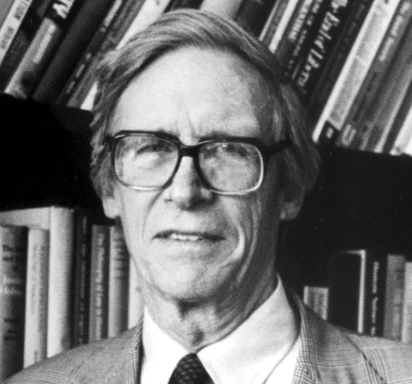
In all sectors of society there should be roughly equal prospects of culture and achievement for everyone similarly motivated and endowed. The expectations of those with the same abilities and aspirations should not be affected by their social class.
▼
Source
source
Chapter II, Section 12, pg. 73
2 months 2 weeks ago
To call war the soil of courage and virtue is like calling debauchery the soil of love.
▼
Source
source
Ch. III: Industry, Government, the peasants
CivilSimian.com created by AxiomaticPanic, CivilSimian, Kalokagathia