


1 day ago
All old Poems, Homer's and the rest, are authentically Songs. I would say, in strictness, that all right Poems are; that whatsoever is not sung is properly no Poem, but a piece of Prose cramped into jingling lines,-to the great injury of the grammar, to the great grief of the reader, for most part! What we wants to get at is the thought the man had, if he had any: why should he twist it into jingle, if he could speak it out plainly? It is only when the heart of him is rapt into true passion of melody, and the very tones of him, according to Coleridge's remark, become musical by the greatness, depth and music of his thoughts, that we can give him right to rhyme and sing; that we call him a Poet, and listen to him as the Heroic of Speakers,-whose speech is Song.
2 months 3 days ago
But this priviledge, is allayed by another; and that is, by the priviledge of Absurdity; to which no living creature is subject, but man only.
▼
Source
source
The First Part, Chapter 5, p. 20

3 months 5 days ago
Instead of insanity eliminating the crime according to the original meaning of article 64,every crime and even every offense now carries within it, as a legitimate suspicion, but also as a right that may be claimed, the hypothesis of insanity, in any case of anomaly. And the sentence that condemns or acquits is not simply a judgement of guily, a legal decision that lays down punishment; it bears within it an assessment of normality and a technical prescription for a possible normalization Today the judge- magistrate or juror0 certainly does more than 'judge'.
▼
Source
source
pp. 20-21
1 month 2 weeks ago
A on his lips and not-A in his heart.
▼
Source
source
E 95

3 months 5 days ago
The 'Enlightenment', which discovered the liberties, also invented the disciplines.
3 months 2 weeks ago
The believing man hath the Holy Ghost; and where the Holy Ghost dwelleth, He will not suffer a man to be idle, butstirreth him up to all exercises of piety and godliness, and of true religion, to the love of God, to the patient suffering of afflictions, to prayer, to thanksgiving, and the exercise of charity towards all men.
▼
Source
source
p. 320

3 months 1 week ago
In democratic countries, the most important private organizations are economic. Unlike secret societies, they are able to exercize their terrorism without illegality, since they do not threaten to kill their enemies, but only to starve them.
▼
Source
source
Ch. 12: Powers and forms of governments
3 months 3 weeks ago
When I see someone in anxiety, I say to myself, What can it be that this fellow wants? For if he did not want something that was outside of his control, how could he still remain in anxiety?
▼
Source
source
Book II, ch. 13, 1.
1 month 3 weeks ago
The lack of objectivity, as far as foreign nations are concerned, is notorious. From one day to another, another nation is made out to be utterly depraved and fiendish, while one's own nation stands for everything that is good and noble. Every action of the enemy is judged by one standard - every action of oneself by another. Even good deeds by the enemy are considered a sign of particular devilishness, meant to deceive us and the world, while our bad deeds are necessary and justified by our noble goals which they serve.

2 months 6 days ago
Try to be free: you will die of hunger.
3 weeks 5 days ago
That mysterious independent variable of political calculation, Public Opinion.
▼
Source
source
Universities, Actual and Ideal
2 months 1 week ago
The determination to print them (his lectures), and to communicate them to the General Public, must also speak for itself; and should it not do so, any other recommendation of them would be thrown away. Thus, with respect to the appearance of this work, I have nothing further to say to the Public, than that I have nothing to say.
▼
Source
source
Preface
1 day ago
In the lowest broad strata of the population, equally as in the highest and narrowest, are produced men of every kind of genius; man for man, your chance of genius is as good among the millions as among the units;-and class for class, what must it be! From all classes, not from certain hundreds now but from several millions, whatsoever man the gods had gifted with intellect and nobleness, and power to help his country, could be chosen: O Heavens, could,-if not by Tenpound Constituencies and the force of beer, then by a Reforming Premier with eyes in his head, who I think might do it quite infinitely better. Infinitely better. For ignobleness cannot, by the nature of it, choose the noble: no, there needs a seeing man who is himself noble, cognizant by internal experience of the symptoms of nobleness.
3 months 1 week ago
Surplus value is exactly equal to surplus labour; the increase of the one [is] exactly measured by the diminution of necessary labour.
▼
Source
source
Notebook III, The Chapter on Capital, p. 259.
1 month 3 weeks ago
Obviously, Anarchism, or any other social theory, making man a conscious social unit, will act as a leaven for rebellion.

3 months 1 week ago
We have two bits of evidence about the Somebody. One is the universe He has made. If we used that as our only clue, I think we should have to conclude that He was a great artist (for the universe is a very beautiful place), but also that He is quite merciless and no friend to man (for the universe is a very dangerous and terrifying place.) ...The other bit of evidence is that Moral Law which He has put in our minds. And this is a better bit of evidence than the other, because it is inside information. You find out more about God from the Moral Law than from the universe in general just as you find out more about a man by listening to his conversation than by looking at a house he has built.
▼
Source
source
Book I, Chapter 5, "We Have Cause to Be Uneasy"
4 days ago
I was obliged to retract, like a good Catholic, this opinion of mine; and as a punishment my dialogue was prohibited; and after five months being dismissed from Rome (at the time that the city of Florence was infected with plague), the habitation which with generous pity was assigned to me, was that of the dearest friend I had in Siena, Monsignor the Archbishop Piccolomini, whose most agreeable conversation I enjoyed with such quite and satisfaction of mind, that having there resumed my studies, I discovered and demonstrated a great number on the mechanical conclusions on the resistance of solids ... after about five months, the pestilence having ceased, the confinement of that house was changed by His Holiness for the freedom of the country so agreeable to me, whence I returned to the villa of Bellosguardo, and afterwards to Arcetri, where I still breathe salubrious air near my dear native-country Florence.
▼
Source
source
Stay sane. p. 251-253

3 months 5 days ago
The Enlightenment worldview held by Du Bois is ultimately inadequate, and, in many ways, antiquated, for our time. The tragic plight and absurd predicament of Africans here and abroad requires a more profound interpretation of the human condition - one that goes beyond the false dichotomies of expert knowledge vs. mass ignorance, individual autonomy vs. dogmatic authority, and self-mastery vs. intolerant tradition.
▼
Source
source
The Future of the Race (1997) by Henry Louis Gates, Jr. and Cornel West, p. 64
1 month 1 week ago
Honest work is much better than a mansion.
▼
Source
source
p. 82
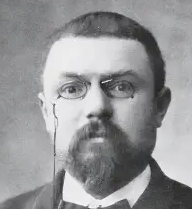
4 days ago
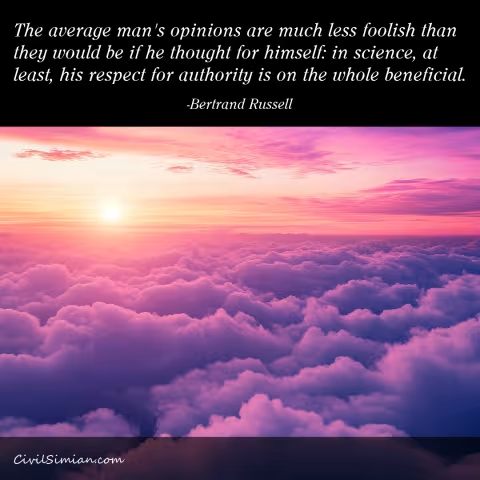
It is the simple hypotheses of which one must be most wary; because these are the ones that have the most chances of passing unnoticed.
▼
Source
source
Thermodynamique: Leçons professées pendant le premier semestre 1888-1889 (1892), Preface

1 month 1 week ago
By simply moving information and brushing information against information, any medium whatever creates vast wealth.
1 month 1 week ago
If you want to be happy, be.
▼
Source
source
Attributed in Wisdom for the Soul : Five Millennia of Prescriptions for Spiritual Healing (2006) by Larry Chang, p. 352
1 day ago
Enjoying things which are pleasant; that is not the evil: it is the reducing of our moral self to slavery by them that is.

3 months 1 week ago
Instead of noble men, let us have noble villages of men. If it is necessary, omit one bridge over the river, round a little there and throw one arch at least over the darker gulf of ignorance which surrounds us.
▼
Source
source
Editorial, Andhra Granthalayam, vol. 1, no. 2 (1939) p. 6
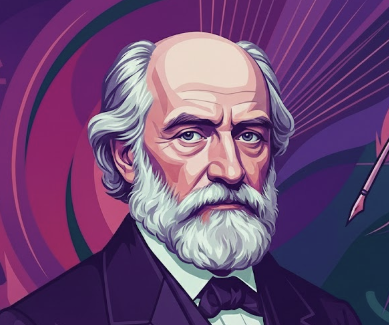
3 months 1 week ago
Men are by nature merely indifferent to one another; but women are by nature enemies.
▼
Source
source
Vol. 2 "On Women" as translated in Essays and Aphorisms (1970), as translated by R. J. Hollingdale

1 month 1 week ago
Disarmament is illogical and futile, unless one is prepared to regard the available means of production and social organization as affording unique social ends. To divert electrical energy and circuitry into atomic bombs shows the same imaginative power as wiring the dining-room chairs to enable one to electrocute the sitter in the event that he might prove hostile. It is part of the age-old habit of using new means for old purposes instead of discovering what are the new goals contained in the new means.
▼
Source
source
(p.202)
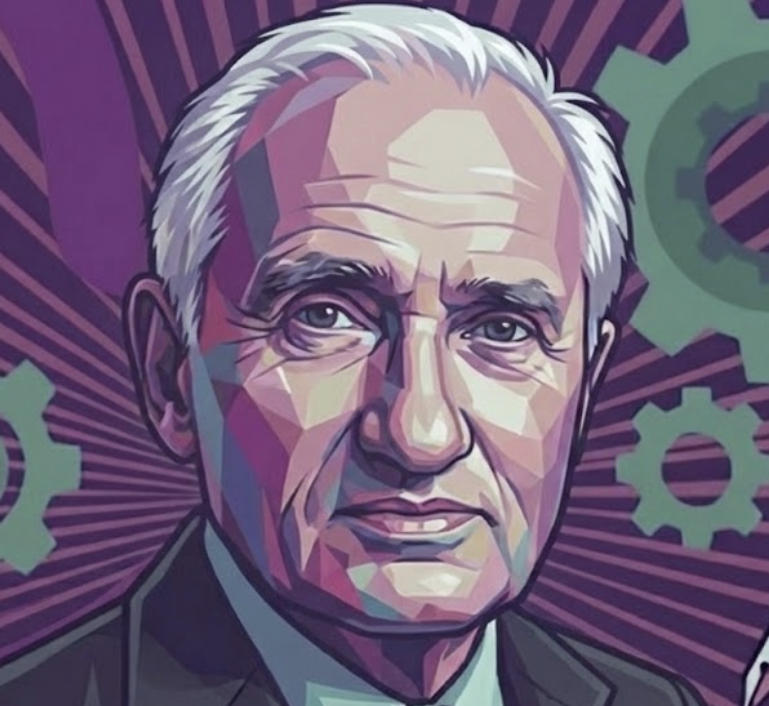
3 months 5 days ago
All affected can accept the consequences and the side effects that [the norm's] general observance can be anticipated to have for the satisfaction of everyone's interests, and the consequences are preferred to those of known alternative possibilities for regulation.
▼
Source
source
p. 65
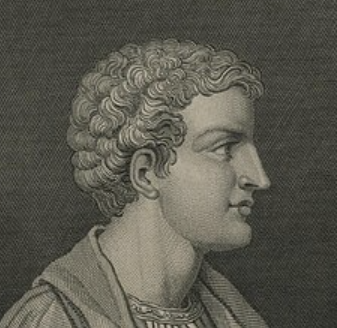
3 months ago
When you wish to instruct, be brief; that men's minds may take in quickly what you say, learn its lesson, and retain it faithfully. Every word that is unnecessary only pours over the side of a brimming mind.
▼
Source
source
Lines 335-337; Edward Charles Wickham translation
2 months 6 days ago
Labour is the source of all wealth, the political economists assert. And it really is the source -- next to nature, which supplies it with the material that it converts into wealth. But it is even infinitely more than this. It is the prime basic condition for all human existence, and this to such an extent that, in a sense, we have to say that labour created man himself.
▼
Source
source
The Part Played by Labour in the Transition from Ape to Man

2 months 3 days ago
The tangible source of exploitation disappears behind the façade of objective rationality.
▼
Source
source
p. 32
1 month 6 days ago
I regard you with an indifference closely bordering on aversion.
▼
Source
source
The Rajah's Diamond, Story of the House with the Green Blinds.
3 months 1 week ago
A great myth is relevant as long as the predicament of humanity lasts; as long as humanity lasts. It will always work, on those who can receive it, the same catharsis.
▼
Source
source
"Haggard Rides Again", in Time and Tide, Vol. XLI, 9/3/1960
3 months 1 week ago
Democracy is the process by which people choose the man who'll get the blame.
▼
Source
source
Attributed to Russell in Geary's Guide to the World's Great Aphorists (2007), p. 346
2 months 1 week ago
Every civilized human being, whatever his conscious development, is still an archaic man at the deeper levels of his psyche. Just as the human body connects us with the mammals and displays numerous relics of earlier evolutionary stages going back to even the reptilian age, so the human psyche is likewise a product of evolution which, when followed up to its origins, show countless archaic traits.
▼
Source
source
p. 126
1 month 3 weeks ago
I acknowledge that history is full of religious wars: but we must distinguish; it is not the multiplicity of religions which has produced wars; it is the intolerant spirit animating that which believed itself in the ascendant.
▼
Source
source
No. 86. (Usbek writing to Mirza)

3 months 2 weeks ago
Now, as there is an infinity of possible universes in the Ideas of God, and as only one of them can exist, there must be a sufficient reason for God's choice, which determines him toward one rather than another. And this reason can be found only in the fitness, or the degrees of perfection, that these worlds contain, since each possible thing has the right to claim existence in proportion to the perfection it involves.
▼
Source
source
La monadologie (53 & 54).
2 months 1 week ago
Has woman the same rights in the state which man has? This question may appear ridiculous to many. For if the only ground of all legal rights is reason and freedom, how can a distinction exist between two sexes which possess both the same reason and the same freedom. Nevertheless, it seems that, so long as men have lived, this has been differently held, and the female sex seems not to have been placed on a par with the male sex in the exercise of its rights. Such a universal sentiment must have a ground, to discover which was never a more urgent problem than in our days.
▼
Source
source
P. 439
3 months 1 week ago
There is darkness without and when I die there will be darkness within. There is no splendor, nor vastness anywhere; only triviality for a moment and then nothing.
▼
Source
source
Attributed to Russell in Ken Davis' Fire Up Your Life! (1995), p. 33
3 months 1 week ago
The force of the word World, as commonly used, of itself falls in with us. For no one will attribute accidents to the World as parts, but as determinations, states; hence the so-called world of the ego, unrestrained by the single substance and its accidents, is not very appositely called a World, unless, perhaps, an imaginary one.

3 months 1 week ago
Nothing is so common as to imitate one's enemies, and to use their weapons.
▼
Source
source
"Oracles", 1770

2 months 3 days ago
And, being assembled together with them, commanded them that they should not depart from Jerusalem, but wait for the promise of the Father, which, saith he, ye have heard of me. For John truly baptized with water; but ye shall be baptized with the Holy Ghost not many days hence.
▼
Source
source
1:4-5 (KJV)
3 months 2 weeks ago
There is the name and the thing: the name is a voice which denotes and signifies the thing; the name is no part of the thing, nor of the substance; 'tis a foreign piece joined to the thing, and outside it. God, who is all fulness in Himself and the height of all perfection, cannot augment or add anything to Himself within; but His name may be augmented and increased by the blessing and praise we attribute to His exterior works: which praise, seeing we cannot incorporate it in Him, forasmuch as He can have no accession of good, we attribute to His name, which is the part out of Him that is nearest to us. Thus is it that to God alone glory and honour appertain; and there is nothing so remote from reason as that we should go in quest of it for ourselves; for, being indigent and necessitous within, our essence being imperfect, and having continual need of amelioration, 'tis to that we ought to employ all our endeavour.
▼
Source
source
Ch. 16

3 months 6 days ago
I am my world.
▼
Source
source
(The microcosm.) (5.63) Original German: Ich bin meine welt (Der Mikrokosmos.)
3 months 2 weeks ago
I speak truth, not so much as I would, but as much as I dare; and I dare a little the more as I grow older.
▼
Source
source
Book iii. Chap 2. Of Repentance
1 month 3 weeks ago
In reading Jung's account of his cases, it is impossible not to be aware that his success was due partly to an element of ruthlessness; he was dominated by curiosity rather than compassion.
▼
Source
source
p. 36
2 months 1 day ago
The idea that an aim can be reasonable for its own sake-on the basis of virtues that insight reveals it to have in itself-without reference to some kind of subjective gain or advantage, is utterly alien to subjective reason, even where it rises above the consideration of immediate utilitarian values and devotes itself to reflection about the social order as a whole.
▼
Source
source
p. 4.

4 months 1 week ago
Korell is that frequent phenomenon in history: the republic whose ruler has every attribute of the absolute monarch but the name. It therefore enjoyed the usual despotism unrestrained even by those two moderating influences in the legitimate monarchies: regal, honor and court etiquette.
2 months 4 weeks ago
Philip being arbitrator betwixt two wicked persons, he commanded one to fly out of Macedonia and the other to pursue him.
▼
Source
source
36 Philip
CivilSimian.com created by AxiomaticPanic, CivilSimian, Kalokagathia