
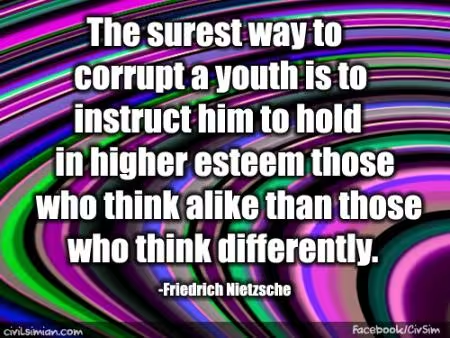
Think differently, but know when it's your duty to think the same...



Normal science, the activity in which most scientists inevitably spend almost all their time, is predicated on the assumption that the scientific community knows what the world is like. Normal science often suppresses fundamental novelties because they are necessarily subversive of its basic commitments.

More controversially, technology can accelerate the transition from harming to helping free-living sentient beings: mankind's fitfully expanding "circle of compassion". The civilising process needn't be species-specific but instead extend to free-living dwellers in tomorrow's wildlife parks. Every cubic metre of the biosphere will soon be computationally accessible to surveillance, micro-management and control. Fertility regulation via immunocontraception can replace Darwinian ecosystems governed by starvation and predation. Any species of obligate carnivore we choose to preserve can be genetically and behaviourally tweaked into harmlessness. Asphyxiation, disembowelling, and agonies of being eaten alive can pass into the dustbin of history.
Imagination places the future world for us either above or below or in reincarnation. We dream of travels throughout the universe: is not the universe within us? We do not know the depths of our spirit. The mysterious path leads within. In us, or nowhere, lies eternity with its worlds, the past and the future. Fragment No. 16 Variant translations: We dream of a journey through the universe. But is the universe then not in us? We do not know the depths of our spirit. Inward goes the secret path. Eternity with its worlds, the past and the future, is in us or nowhere.

Alonso of Aragon was wont to say in commendation of age, that age appears to be best in four things - old wood best to burn, old wine to drink, old friends to trust, and old authors to read.
With the abolition of otium and of the ego no aloof thinking is left. ... Without otium philosophical thought is impossible, cannot be conceived or understood.

Guilt has to be understood not only as a way of checking one's own destructiveness, but as a mechanism for safeguarding the life of the other, one that emerges from our own need and dependency, from a sense that this life is not a life without another life. Indeed, when it turns into a safeguarding action, I am not sure it should still be called "guilt." If we do still use that term, we could conclude that "guilt" is strangely generative or that its productive form is reparation.
Our blight is ideologies - they are the long-expected Antichrist!
But the philosophy that killed off truth proclaims unlimited tolerance for the "language games" (i.e., opinions, beliefs and doctrines) that people find useful. The outcome is expressed in the words of Karl Kraus: "Alles ist wahr und auch das Gegenteil." "Everything is true, and also its opposite."
A fair exterior is a silent recommendation.

The will is not free to strive toward whatever is declared good.
Whilst in speaking of human things, we say that it is necessary to know them before we can love them...the saints on the contrary say in speaking of divine things that it is necessary to love them in order to know them, and that we only enter truth through charity.

The real and lasting victories are those of peace, and not of war.

Some people talk as if meeting the gaze of absolute goodness would be fun. They need to think again. They are still only playing with religion. Goodness is either the great safety or the great danger-according to the way you react to it.

I am as desirous of being a good neighbor as I am of being a bad subject.
The concept of justice I take to be defined, then, by the role of its principles in assigning rights and duties and in defining the appropriate division of social advantages. A conception of justice is an interpretation of this role.
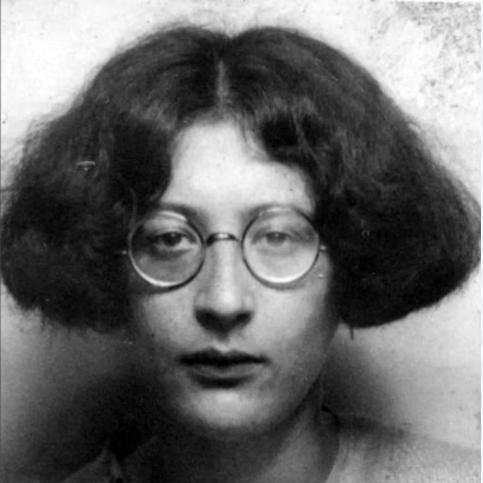
By committing a crime, a man places himself, of his own accord, outside the chain of eternal obligations which bind every human being to every other one. Punishment alone can weld him back again; fully so, if accompanied by consent on his part; otherwise only partially so. Just as the only way of showing respect for somebody suffering from hunger is to give him something to eat, so the only way of showing respect for somebody who has placed himself outside the law is to reinstate him inside the law by subjecting him to the punishment ordained by law.The need for punishment is not satisfied where, as is generally the case, the penal code is merely a method of exercising pressure through fear.

And why should man, added he, pretend to an exemption from the lot of all other animals? The whole earth, believe me, PHILO, is cursed and polluted. A perpetual war is kindled amongst all living creatures. Necessity, hunger, want, stimulate the strong and courageous: Fear, anxiety, terror, agitate the weak and infirm. The first entrance into life gives anguish to the new-born infant and to its wretched parent: Weakness, impotence, distress, attend each stage of that life: and it is at last finished in agony and horror.

Grave talk and grave humor with the doers of the craft. Building, walling, is an operation that beyond most other manual ones requires incessant consideration - even new invention. I have heard good judges say that he excelled in it all persons they had seen.
The very desire for guarantees that our values are eternal and secure in some objective heaven is perhaps only a craving for the certainties of childhood or the absolute values of our primitive past.
He dies twice who perishes by his own hand.

Ancient histories, as one of our wits has said, are but fables that have been agreed upon.

The proposal of any new law or regulation of commerce which comes from this order, ought always to be listened to with great precaution, and ought never to be adopted till after having been long and carefully examined, not only with the most scrupulous, but with the most suspicious attention. It comes from an order of men, whose interest is never exactly the same with that of the public, who have generally an interest to deceive and even to oppress the public, and who accordingly have, upon many occasions, both deceived and oppressed it.
The administration of the great system of the universe, however, the care of the universal happiness of all rational and sensible beings, is the business of God and not of man. To man is allotted a much humbler department, but one much more suitable to the weakness of his powers, and to the narrowness of his comprehension; the care of his own happiness, of that of his family, his friends, his country: that he is occupied in contemplating the more sublime, can never be an excuse for his neglecting the more humble department.

The great and inspiring aims of the Revolution became so clouded with and obscured by the methods used by the ruling political power that it was hard to distinguish what was temporary means and what final purpose. Psychologically and socially the means necessarily influence and alter the aims. The whole history of man is continuous proof of the maxim that to divest one's methods of ethical concepts means to sink into the depths of utter demoralization. In that lies the real tragedy of the Bolshevik philosophy as applied to the Russian Revolution. May this lesson not be in vain.

Ideas do not exist separately from language.

The less somebody knows and understands himself the less great he is, however great may be his talent. For this reason our scientists are not great.
Burning in effigy. Kissing the picture of one's beloved... it aims at nothing at all; we just behave this way and then we feel satisfied.

For man to become successful, for man to establish himself as the ruler of the planet, it was necessary for him to use his brain as something more than a device to make the daily routine of getting food and evading enemies a little more efficient. Man had to learn to control his environment.
Gregorian chant, Romanesque architecture, the Iliad, the invention of geometry were not, for the people through whom they were brought into being and made available to us, occasions for the manifestation of personality.
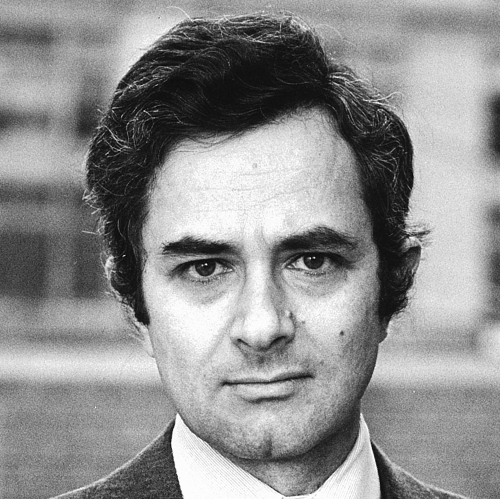
That is what is meant, I think by the allegation that it is good simply to be alive, even if one is undergoing terrible experiences. The situation is roughly this: There are elements which, if added to one's experience, make life better; there are other elements which, if added to one's experience, make life worse. But what remains when these are set aside is not merely neutral: it is emphatically positive. Therefore life is worth living even when the bad elements of experience are plentiful, and the good ones too meager to outweigh the bad ones on their own. The additional positive weight is supplied by experience itself, rather than by any of its contents.
The best books are those, which those who read them believe they themselves could have written.
All of us need an identity which unites us with our neighbours, our countrymen, those people who are subject to the same rules and the same laws as us, those people with whom we might one day have to fight side by side to protect our inheritance, those people with whom we will suffer when attacked, those people whose destinies are in some way tied up with our own.
These things, which we state lightly enough here, are yet of deep import, and indicate a mighty change in our whole manner of existence. For the same habit regulates not our modes of action alone, but our modes of thought and feeling. Men are grown mechanical in head and in heart, as well as in hand. They have lost faith in individual endeavour, and in natural force, of any kind. Not for internal perfection, but for external combinations and arrangements, for institutions, constitutions, for Mechanism of one sort or other, do they hope and struggle. Their whole efforts, attachments, opinions, turn on mechanism, and are of a mechanical character.

Time: That which man is always trying to kill, but which ends in killing him.
The virtue of frugality lies in a middle between avarice and profusion, of which the one consists in an excess, the other in a defect of the proper attention to the objects of self-interest.
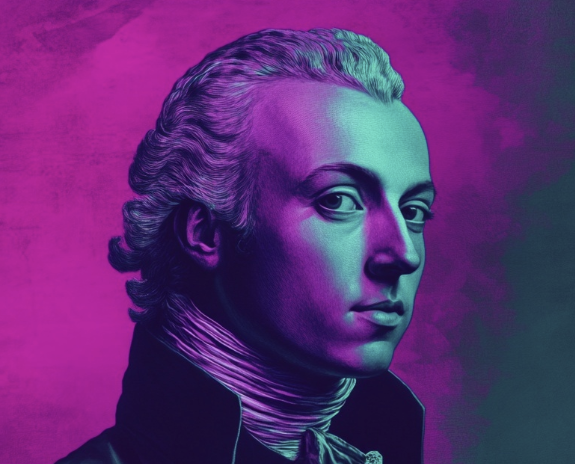
Space is employed as the type even of the concept of time itself, representing it by a line, and its limits - moments - by points. Time, on the other had, approaches more to a universal and rational concept, comprising under its relations all things whatsoever, to wit, space itself, and besides, those accidents which are not comprehended in the relations of space, such as the thoughts of the soul. Again, time, besides this, though it certainly does not dictate the laws of reason, yet constitutes the principal conditions tinder favor of which the mind compares its notions according to the laws of reason. Thus, I cannot judge what is impossible except by predicating a and not-a of the same subject at the same time.
A gifted noble people; a people of wild strong feelings, and of iron restraint over these: the characteristic of noble-mindedness, of genius.

The souls of emperors and cobblers are cast in the same mould.... The same reason that makes us wrangle with a neighbour causes a war betwixt princes.
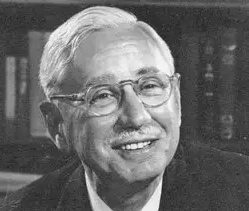
I know how unfashionable it is now to acknowledge in life or history any genius loftier than ourselves. Our democratic dogma has leveled not only all voters but all leaders; we delight to show that living geniuses are only mediocrities, and that dead ones are myths. ... Since it is contrary to good manners to exalt ourselves, we achieve the same result by slyly indicating how inferior are the great men of the earth. In some of us, perhaps, it is a noble and merciless asceticism, which would root out of our hearts the last vestige of worship and adoration, lest the old gods should return and terrify us again. For my part, I cling to this final religion, and discover in it a content and stimulus more lasting than came from the devotional ecstasies of youth.
Frazer is much more savage than most of his savages, for they are not as far removed from the understanding of spiritual matter as a twentieth-century Englishman. His explanations of primitive practices are much cruder than the meaning of these practices themselves.
When a sixth of the population of a nation which has undertaken to be the refuge of liberty are slaves, and a whole country is unjustly overrun and conquered by a foreign army, and subjected to military law, I think that it is not too soon for honest men to rebel and revolutionize. What makes this duty the more urgent is the fact that the country so overrun is not our own, but ours is the invading army.
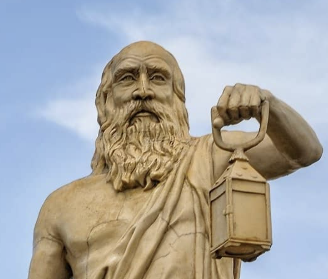
Self-taught poverty is a help toward philosophy, for the things which philosophy attempts to teach by reasoning, poverty forces us to practice.
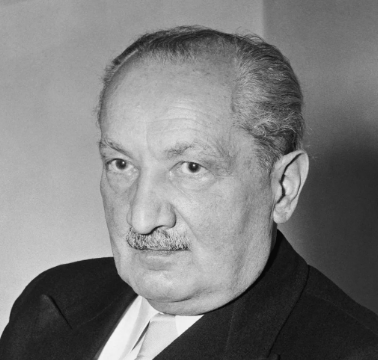
We think of beauty as being most worthy of reverence. But what is most worthy of reverence lights up only where the magnificent strength to revere is alive. To revere is not a thing for the petty and lowly, the incapacitated and underdeveloped. It is a matter of tremendous passion; only what flows from such passion is in the grand style.

There is no power relation without the correlative constitution of a field of knowledge, nor any knowledge that does not presuppose and constitute at the same time power relations.
For freedom is not acquired by satisfying yourself with what you desire, but by destroying your desire.
I pre-suppose, of course, a reader who is willing to learn something new and therefore to think for himself.
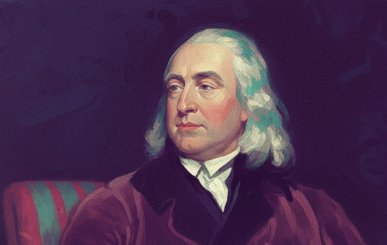
Rights are, then, the fruits of the law, and of the law alone. There are no rights without law-no rights contrary to the law-no rights anterior to the law. Before the existence of laws there may be reasons for wishing that there were laws-and doubtless such reasons cannot be wanting, and those of the strongest kind;-but a reason for wishing that we possessed a right, does not constitute a right. To confound the existence of a reason for wishing that we possessed a right, with the existence of the right itself, is to confound the existence of a want with the means of relieving it. It is the same as if one should say, everybody is subject to hunger, therefore everybody has something to eat.

To give one's self earnestly to the duties due to men, and, while respecting spiritual beings, to keep aloof from them, may be called wisdom.
To look for a single general theory of how to decide the right thing to do is like looking for a single theory of how to decide what to believe.
CivilSimian.com created by AxiomaticPanic, CivilSimian, Kalokagathia