


3 months 2 weeks ago
Their worship was not paid to the demon which such a being as they imagined would really be, but to their own idea of excellence. The evil is, that such a belief keeps the ideal wretchedly low; and opposes the most obstinate resistance to all thought which has a tendency to raise it higher. Believers shrink from every train of ideas which would lead the mind to a clear conception and an elevated standard of excellence, because they feel (even when they do not distinctly see) that such a standard would conflict with many of the dispensations of nature, and with much of what they are accustomed to consider as the Christian creed.
▼
Source
source
(p. 42)

3 months 1 week ago
England's genius filled all measure Of heart and soul, of strength and pleasure, Gave to the mind its emperor, And life was larger than before: Nor sequent centuries could hit Orbit and sum of Shakespeare's wit. The men who lived with him became Poets, for the air was fame.
▼
Source
source
Solution, ll. 35-42

3 months 1 week ago
Society is undergoing a silent revolution, which must be submitted to, and which takes no more notice of the human existences it breaks down than an earthquake regards the houses it subverts. The classes and the races, too weak to master the new conditions of life, must give way. But can there be anything more puerile, more short-sighted, than the views of those Economists who believe in all earnest that this woeful transitory state means nothing but adapting society to the acquisitive propensities of capitalists, both landlords and money-lords?
▼
Source
source
"Forced Emigration," New York Daily Tribune, 22 March 1853.
3 months 3 days ago
O Fortune, cruellest of heavenly powers, why make such game of this poor life of ours?
▼
Source
source
Book II, satire viii, line 61 (trans. Conington)

1 month 1 week ago
Dialectic functions by converting everything it touches into figure but metaphor is a means of perceiving one thing in terms of another.
▼
Source
source
(p. 298)
1 month 3 weeks ago
The narcissistic, the domineering, the possessive woman can succeed in being a "loving" mother as long as the child is small. Only the really loving woman, the woman who is happier in giving than in taking, who is firmly rooted in her own existence, can be a loving mother when the child is in the process of separation.
▼
Source
source
Ch. 2
3 days ago
...Lucretius talked epicureanism stoically (like Heine's Englishman taking his pleasures sadly), and concluded on his stren gospel of pleasure by committing suicide. His noble epic "on the Nature of Things", follows Epicurus in damning pleasure with faint praise. Almost contemporary with Caesar and Pompey, he lived in the midst of turmoil and alarms; his nervous pen is forever inditing prayers to tranquility and peace. One pictures him as a timid soul whose youth had been darkened with religious fears; for he never tires of telling his readers that there's no hell, except here, and there are no gods except gentlemanly ones who live in a garden of Epicurus in the clouds, and never intrude in the affairs of men.
3 months 1 week ago
In writing what he does not speak, what he would never say and, in truth, would probably never even think, the author of the written speech is already entrenched in the posture of the sophist; the man of non-presence and non-truth. Writing is thus already on the scene. The incompatibility between written and the true is clearly announced at the moment Socrates starts to recount the way in which men are carried out themselves by pleasure, become absent from themselves, forget themselves and die in the thrill of song.
▼
Source
source
Plato's Pharmacy, Pharmacia
3 months 2 weeks ago
Human reason has this peculiar fate that in one species of its knowledge it is burdened by questions which, as prescribed by the very nature of reason itself, it is not able to ignore, but which, as transcending all its powers, it is also not able to answer.
▼
Source
source
Preface, A vii
3 months 2 weeks ago
One good schoolmaster is of more use than a hundred priests.
▼
Source
source
Worship and Church Bells, 1797

3 months 2 weeks ago
If nature has been frugal in her gifts and endowments, there is the more need of art to supply her defects. If she has been generous and liberal, know that she still expects industry and application on our part, and revenges herself in proportion to our negligent ingratitude. The richest genius, like the most fertile soil, when uncultivated, shoots up into the rankest weeds; and instead of vines and olives for the pleasure and use of man, produces, to its slothful owner, the most abundant crop of poisons.
▼
Source
source
Part I, Essay 16: The Stoic

4 days ago
Our English careers to born genius are twofold. There is the silent or unlearned career of the Industrialisms, which are very many among us; and there is the articulate or learned career of the three professions, Medicine, Law (under which we may include Politics), and the Church. Your born genius, therefore, will first have to ask himself, Whether he can hold his tongue or cannot? True, all human talent, especially all deep talent, is a talent to do, and is intrinsically of silent nature; inaudible, like the Sphere Harmonies and Eternal Melodies, of which it is an incarnated fraction.
1 month 3 weeks ago
If there were no limits to human rationality administrative theory would be barren. It would consist of the single precept: Always select that alternative, among those available, which will lead to the most complete achievement of your goals.
▼
Source
source
Simon (1945, p. 240); As cited in:
3 months 4 weeks ago
Know, first, who you are, and then adorn yourself accordingly.
▼
Source
source
Book III, ch. 1, 25.

3 months 1 week ago
Kierkegaard writes: If Christianity were so easy and cozy, why should God in his Scriptures have set Heaven and Earth in motion and threatened eternal punishments? - Question: But then in that case why is this Scriptures so unclear?
▼
Source
source
p. 31e

1 month 3 weeks ago
It repudiates, as something vile and sinful, our deepest feelings; but being absolutely ignorant as to the real functions of human emotions, Puritanism is itself the creator of the most unspeakable vices.

4 days ago
Yes, truly, it is a great thing for a Nation that it get an articulate voice; that it produce a man who will speak forth melodiously what the heart of it means!
1 month 3 weeks ago
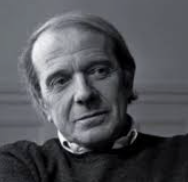
When Nietzsche praises egoism it is always in an aggressive or polemical way, against the virtues, against the virtue of disinterestedness. But in fact egoism is a bad interpretation of the will, just as atomism is a bad interpretation of force. In order for there to be egoism it is necessary for there to be an ego.
▼
Source
source
p. 7
3 months 1 week ago
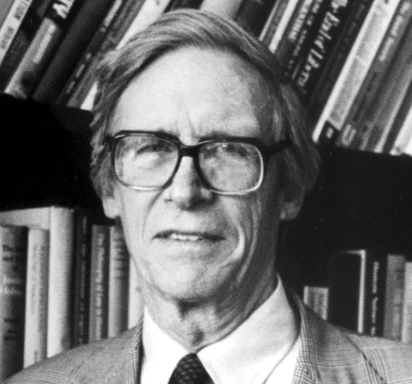
A conception of justice cannot be deduced from self evident premises or conditions on principles; instead, its justification is a matter of the mutual support of many considerations, of everything fitted together into one coherent view.
▼
Source
source
Chapter I, Section 4, p. 21

2 months 3 weeks ago
Rejoice not in another man's misfortune!

1 week 1 day ago
Now the argument that I make in my book is that part of the current disaffection with liberalism is not from any of its basic principles, but... is the result of certain deformations of liberal principles that were carried to extremes that led... to bad outcomes... There's a move in this direction on the right and... on the left.
▼
Source
source
12:25 Ref: Francis Fukuyama, Liberalism and Its Discontents
3 months 1 week ago
Standing on the bare ground, - my head bathed by the blithe air, and uplifted into infinite space, - all mean egotism vanishes. I become a transparent eye-ball; I am nothing; I see all; the currents of the Universal Being circulate through me; I am part or particle of God.
▼
Source
source
Nature

3 months 1 week ago
Thus, Beauty is neither an appearance nor a being, but a relationship: the transformation of being into appearance
▼
Source
source
p. 408
1 month 4 weeks ago
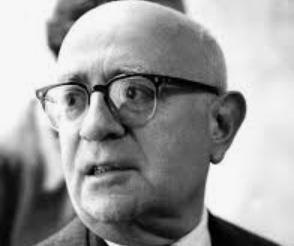
The more reified the world becomes, the thicker the veil cast upon nature, the more the thinking weaving that veil in its turn claims ideologically to be nature, primordial experience.
▼
Source
source
p. 7
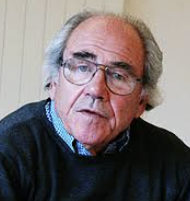
1 month 2 weeks ago
The world is not dialectical -- it is sworn to extremes, not to equilibrium, sworn to radical antagonism, not to reconciliation or synthesis. This is also the principle of evil.
▼
Source
source
Jean Baudrillard in: Eldon Taylor What Does That Mean?: Exploring Mind, Meaning, and Mysteries, Hay House, Inc, 15 January 2010, p. 171

2 months 3 weeks ago
Not much younger than these (sc. Hermotimus of Colophon and Philippus of Mende) is Euclid, who put together the Elements, collecting many of Eudoxus' theorems, perfecting many of Theaetetus', and also bringing to irrefragable demonstration the things which were only somewhat loosely proved by his predecessors. This man lived in the time of the first Ptolemy. For Archimedes, who came immediately after the first (Ptolemy), makes mention of Euclid: and, further, they say that Ptolemy once asked him if there was in geometry any shorter way than that of the elements, and he answered that there was no royal road to geometry. He is then younger than pupils of Plato but older than Eratosthenes and Archimedes; for the latter were contemporary with one another, as Eratosthenes somewhere says.
▼
Source
source
As quoted by Sir Thomas Little Heath, The Thirteen Books of Euclid's Elements (1908) Vol.1 Introduction and Books I, II p.1, citing Proclus ed. Friedlein, p. 68, 6-20.
3 months 2 weeks ago
Since sounds have no natural connection with our ideas ... the doubtfulness and uncertainty of their signification ... has its cause more in the ideas they stand for than in any incapacity there is in one sound more than another to signify any idea.
▼
Source
source
Book III, Ch. 9, sec. 4
3 months 1 week ago
It is easy to see that the existing generation are conspiring with a beneficence, which, in its working for coming generations, sacrifices the passing one, which infatuates the most selfish men to act against their private interest for the public welfare. We build railroads, we know not for what or for whom; but one thing is certain, that we who build will receive the very smallest share of benefit. Benefit will accrue; they are essential to the country, but that will be felt not until we are no longer countrymen. We do the like in all matters: - 'Man's heart the Almighty to the Future setBy secret and inviolable springs.'
3 months 3 weeks ago
When I consider the short duration of my life, swallowed up in the eternity before and after, the small space which I fill, or even can see, engulfed in the infinite immensity of spaces whereof I know nothing, and which know nothing of me, I am terrified, and wonder that I am here rather than there, for there is no reason why here rather than there, or now rather than then. Who has set me here? By whose order and design have this place and time been destined for me? It is not well to be too much at liberty. It is not well to have all we want.How many kingdoms know nothing of us! The eternal silence of these infinite spaces alarms me.
▼
Source
source
"The Misery of Man Without God": "Man's Disproportion," The Thoughts of Blaise Pascal translated from the Text of M. Auguste Molinier Tr. C. Kegan Paul, 1885
2 months 6 days ago
Hereby it is manifest, that during the time men live without a common Power to keep them all in awe, they are in that conditions called Warre; and such a warre, as is of every man, against every man.
▼
Source
source
The First Part, Chapter 13, p. 62
4 months 2 weeks ago
If, then, in the sphere of action there is some one end which we desire for its own sake, and for the sake of which we desire every thing else; and if we do not choose every thing for the sake of something else, for this would go on without limit, and our desire would be idle and futile, it is clear that this must be the supreme good, and the best thing of all.

3 months 2 weeks ago
By nature a philosopher is not in genius and disposition half so different from a street porter, as a mastiff is from a greyhound.
▼
Source
source
Chapter II, p. 17.

3 months 2 weeks ago
It is remarkable, that almost all speakers and writers feel it to be incumbent on them, sooner or later, to prove or to acknowledge the personality of God. ... In reading a work on agriculture, we have to skip the author's moral reflections, and the words "Providence" and "He" scattered along the page, to come at the profitable level of what he has to say. What he calls his religion is for the most part offensive to the nostrils. ... There is more religion in men's science than there is science in their religion.

1 month 1 week ago
My reason will still not understand why I pray, but I shall still pray, and my life, my whole life, independently of anything that may happen to me, is every moment of it no longer meaningless as it was before, but has an unquestionable meaning of goodness with which I have the power to invest it.
▼
Source
source
Pt. VIII, ch. 19
1 month 2 days ago
There were gentlemen and there were seamen in the navy of Charles II. But the seamen were not gentlemen, and the gentlemen were not seamen.
▼
Source
source
Vol. I, ch. 2
3 months 2 weeks ago
He that knows anything, knows this, in the first place, that he need not seek long for instances of his ignorance.
▼
Source
source
Book IV, Ch. 3, sec. 22
1 month 3 weeks ago
Care and responsibility are constituent elements of love, but without respect for and knowledge of the beloved person, love deteriorates into domination and possessiveness. Respect is not fear and awe; it denotes, in accordance with the root of the word (respicere = to look at), the ability to see a person as he is, to be aware of his individuality and uniqueness. To respect a person is not possible without knowing him; care and responsibility would be blind if they were not guided by the knowledge of the person's individuality.
▼
Source
source
Ch. 3; in Ch. 2 of his later work The Art of Loving (1956) a similar statement is made :

2 months 2 weeks ago
If any ask me what a free Government is, I answer, that, for any practical purpose, it is what the people think so, - and that they, and not I, are the natural, lawful, and competent judges of this matter.

3 months 1 week ago
There is but one good; that is God. Everything else is good when it looks to Him and bad when it turns from Him.
▼
Source
source
Ch. 11
3 months 2 weeks ago
Wit and good nature meeting in a fair young lady as they do in you make the best resemblance of an angel that we know; and he that is blessed with the conversation and friendship of a person so extraordinary enjoys all that remains of paradise in this world.
▼
Source
source
Letter to Mary Clarke (7 May 1682), quoted in Maurice Cranston, John Locke: A Biography (1957; 1985), p. 221
1 week 2 days ago
We shouldn't teach great books; we should teach a love of reading. Knowing the contents of a few works of literature is a trivial achievement. Being inclined to go on reading is a great achievement.
▼
Source
source
As quoted in B. F. Skinner : The Man and His Ideas (1968) by Richard Isadore Evans, p. 73
3 months 1 week ago
Try to exclude the possibility of suffering which the order of nature and the existence of free-wills involve, and you find that you have excluded life itself.
1 month 3 weeks ago
Rationality requires a complete knowledge and anticipation of the consequences that will follow on each choice. In fact, knowledge of consequences is always fragmentary.
3 months 1 week ago
I owed a magnificent day to the Bhagavad Gita. It was the first of books; it was as if an empire spoke to us, nothing small or unworthy, but large, serene, consistent, the voice of an old intelligence which in another age and climate had pondered and thus disposed of the same questions which exercise us.
▼
Source
source
October 1, 1848

3 months 2 weeks ago
To understand a name you must be acquainted with the particular of which it is a name.
2 months 6 days ago
Intuition is a method of feeling one's way intellectually into the inner heart of a thing to locate what is unique and inexpressible in it.
▼
Source
source
Quoted in Georgia O'Keeffe, 1887-1986 : Flowers in the Desert (2000) by Britta Benke, p. 28
1 month 1 week ago
But if you can breed cattle for milk yield, horses for running speed, and dogs for herding skill, why on Earth should it be impossible to breed humans for mathematical, musical or athletic ability? Objections such as "these are not one-dimensional abilities" apply equally to cows, horses and dogs and never stopped anybody in practice. I wonder whether, some 60 years after Hitler's death, we might at least venture to ask what the moral difference is between breeding for musical ability and forcing a child to take music lessons. Or why it is acceptable to train fast runners and high jumpers but not to breed them. I can think of some answers, and they are good ones, which would probably end up persuading me. But hasn't the time come when we should stop being frightened even to put the question? From the Afterword, The Herald
▼
Source
source
Glasgow, Scotland, 20 November 2006
2 months 1 week ago
Nothing is more indispensable to true religiosity than a mediator that links us with divinity.
▼
Source
source
Fragment No. 74

3 months 3 weeks ago
Love with delight discourses in my mind Upon my lady's admirable gifts...Beyond the range of human intellect.
▼
Source
source
Trattato Terzo, line 1.
CivilSimian.com created by AxiomaticPanic, CivilSimian, Kalokagathia