

1 month 4 weeks ago
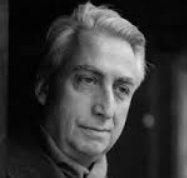
When I was a student I was assigned "Mythologies" and "A Lover's Discourse," by Roland Barthes, and felt at once that something momentous had happened to me, that I had met a writer who had changed my course in life somehow; and looking back now, I think he did.
▼
Source
source
Zadie Smith Interview

4 months 1 week ago
He is a dreamer of ancient times, or rather, of the myths of what ancient times used to be. Such men are harmless in themselves, but their queer lack of realism makes them fools for others.
1 month 3 weeks ago
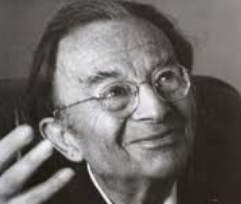
Temperament refers to the mode of reaction and is constitutional and not changeable; character is essentially formed by a person's experiences, especially of those in early life, and changeable, to some extent, by insights and new kinds of experiences. If a person has a choleric temperament, for instance, his mode of reaction is "quick and strong." But what he is quick or strong about depends on his kind of relatedness, his character. If he is a productive, just, loving person he will react quickly and strongly when he loves, when he is enraged by injustice, and when he is impressed by a new idea. If he is a destructive or sadistic character, he will be quick and strong in his destructiveness or in his cruelty. The confusion between temperament and character has had serious consequences for ethical theory. Preferences with regard to differences in temperament are mere matters of subjective taste. But differences in character are ethically of the most fundamental importance.
▼
Source
source
Ch. 3
1 week ago
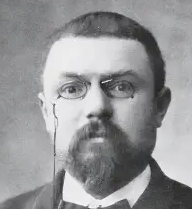
But these labels can only be finite in number. On that score, psychologic time should be discontinuous.

4 months 1 week ago
Let us be understood. If the Japanese surrender after the destruction of Hiroshima, having been intimidated, we will rejoice. But we refuse to see anything in such grave news other than the need to argue more energetically in favor of a true international society, in which the great powers will not have superior rights over small and middle-sized nations, where such an ultimate weapon will be controlled by human intelligence rather than by the appetites and doctrines of various states. Before the terrifying prospects now available to humanity, we see even more clearly that peace is the only goal worth struggling for. This is no longer a prayer but a demand to be made by all peoples to their governments a demand to choose definitively between hell and reason.

4 days ago
The Public is an old woman. Let her maunder and mumble.
▼
Source
source
Journal (1835).

2 months 2 weeks ago
A great profusion of things, which are splendid or valuable in themselves, is magnificent. The starry heaven, though it occurs so very frequently to our view, never fails to excite an idea of grandeur. This cannot be owing to the stars themselves, separately considered. The number is certainly the cause. The apparent disorder augments the grandeur, for the appearance of care is highly contrary to our idea of magnificence. Besides, the stars lie in such apparent confusion, as makes it impossible on ordinary occasions to reckon them. This gives them the advantage of a sort of infinity.
▼
Source
source
Part II Section XIII

2 months 1 week ago
A marvel that has nothing to offer, democracy is at once a nation's paradise and its tomb.
4 months 1 week ago
The papers were always talking about the debt owed to society. According to them, it had to be paid. But that doesn't speak to the imagination. What really counted was the possibility of escape, a leap to freedom, out of the implacable ritual, a wild run for it that would give whatever chance for hope there was. Of course, hope meant being cut down on some street corner, as you ran like mad, by a random bullet. But when I really thought it through, nothing was going to allow me such a luxury. Everything was against it; I would just be caught up in the machinery again.
1 month 2 weeks ago
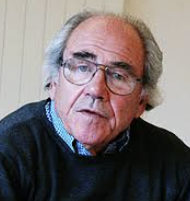
Disneyland exists in order to hide that it is the "real" country, all of "real" America that is Disneyland (a bit like prisons are there to hide that it is the social in its entirety, in its banal omnipresence, that is carceral). Disneyland is presented as imaginary in order to make us believe that the rest is real.
▼
Source
source
"The Precession of Simulacra," p. 12
3 months 2 weeks ago
He that thinks diversion may not lie in hard and painful labour, forgets the early rising, hard riding, heat, cold and hunger of huntsmen, which is yet known to be the constant recreation of men of the greatest condition.
▼
Source
source
Sec. 206
3 months 1 day ago
When one asked him what boys should learn, "That," said he, "which they shall use when men."
▼
Source
source
Of Agesilaus the Great
3 months 2 weeks ago
Secrecy is an instrument of conspiracy; it ought not, therefore, to be the system of a regular government.
▼
Source
source
On Publicity from The Works of Jeremy Bentham volume 2, part 2, 1839

3 months 3 weeks ago
Jews hate the name of Christ and have a secret and innate rancor against the people among whom they live.
▼
Source
source
See Silent Truth by Mark Edwards

1 week 1 day ago
If you look at the sociology of populism in the United States, it is tied most closely to population density, which... is correlated... to these types of cultural differences... to belief... in traditional cultural values, in family, in religion and the like, and conversely to... belief in immigration and diversity as strengths... This is the fundamental division that's taken hold of the United States. It has been augmented by technology because the internet has succeeded in... destroying every other source of authority that used to filter news and facts and information that... formed the basis of a democratic ability to have political discourse.
▼
Source
source
25:32
3 months 3 weeks ago
These five rules [above] form all that is necessary to render proofs convincing, immutable, and to say all, geometrical; and the eight rules together render them even more perfect.

1 month 3 weeks ago
One of the major problems of our society is that so many people are too intelligent to accept religion, but not intelligent or strong-minded enough to look for acceptable alternatives; in the same way, many people are strong-minded enough not to want to be 'organization men', but incapable of seeing beyond an act of protest. These situations produce a sense of being 'between two stools', lacking real motive; a sense of mental strain is produced that may find its outlet in violence, or in organised anti-social behaviour.
▼
Source
source
p. 224, Crimes of Freedom -- and their cure

3 months 1 week ago
To travel is to discover that everyone is wrong.
▼
Source
source
Part II: Malaya,

3 months 2 weeks ago
We do not live for idle amusement. I would not run round a corner to see the world blow up.
▼
Source
source
p. 491

3 months 1 week ago
That is precisely what we should have expected, since Genet wants to live simultaneously creation, destruction, the impossibility of destroying and the impossibility of creating, since he wants both to show his rejection of the divine creation and to manifest, in the absolute, human impotence as man's reproval of God and as the testimony of his grandeur.
▼
Source
source
p. 424
2 months 4 days ago
When we cannot obtain a thing, we comfort ourselves with the reassuring thought that it is not worth nearly as much as we believed.
▼
Source
source
L. Coser, trans. (1973), p. 73

3 months 1 week ago
All affected can accept the consequences and the side effects that [the norm's] general observance can be anticipated to have for the satisfaction of everyone's interests, and the consequences are preferred to those of known alternative possibilities for regulation.
▼
Source
source
p. 65
1 month 2 weeks ago
It is the real, and not the map, whose vestiges persist here and there in the deserts that are no longer those of the Empire, but ours: The desert of the real itself.
▼
Source
source
"The Precession of Simulacra," p. 1

1 month 3 weeks ago
My own book Women, Race and Class was one of many that were published during that era, including, to name only a few, This Bridge Called My Back, edited by Gloria Anzaldúa and Cherrie Moraga, the work of bell hooks and Michelle Wallace, and the anthology All the Women Are White, All the Blacks Are Men, but Some of Us Are Brave: Black Women's Studies. So behind this concept of intersectionality is a rich history of struggle. A history of conversations among activists within movement formations, and with and among academics as well.
▼
Source
source
Angela Davis Freedom Is a Constant Struggle: Ferguson, Palestine, and the Foundations of a Movement (2015) p 19

3 months 3 weeks ago
In Matthew 12:23 Christ says: "Either make the tree good, and its fruit good; or make the tree bad and its fruit bad," as if to say: "Let the one who wishes to have good fruit begin by planting a good tree." Therefore, let the person who wishes to do good works being not with the works but with the believing, for this alone makes a person good.
▼
Source
source
p. 76
2 months 2 weeks ago
Cast your eyes on the journals of parliament. It is for fear of losing the inestimable treasure we have, that I do not venture to game it out of my hands for the vain hope of improving it. I look with filial reverence on the constitution of my country, and never will cut it in pieces, and put it into the kettle of any magician, in order to boil it, with the puddle of their compounds, into youth and vigour. On the contrary, I will drive away such pretenders; I will nurse its venerable age, and with lenient arts extend a parent's breath.
▼
Source
source
Speech in the House of Commons against William Pitt's motion for parliamentary reform (7 May 1782), quoted in The Works of the Right Honorable Edmund Burke ...: Miscellaneous speeches, letters, and fragments, Vol. VI (1890), p. 153

2 months 2 weeks ago
The debates of that great assembly are frequently vague and perplexed, seeming to be dragged rather than to march, to the intended goal. Something of this sort must, I think, always happen in public democratic assemblies.
▼
Source
source
Book One, Chapter XXI.

6 days ago
Investigate what is, and not what pleases.
▼
Source
source
Der Versuch als Vermittler von Objekt und Subjekt (The Attempt as Mediator of Object and Subject)
2 months 1 week ago
What all other men are is of the greatest importance to me. However independent I may imagine myself to be, however far removed I may appear from mundane considerations by my social status, I am enslaved to the misery of the meanest member of society. The outcast is my daily menace. Whether I am Pope, Czar, Emperor, or even Prime Minister, I am always the creature of their circumstance, the conscious product of their ignorance, want and clamoring. They are in slavery, and I, the superior one, am enslaved in consequence.
▼
Source
source
Solidarity in Liberty: The Workers' Path to Freedom
2 months 1 week ago
The worst is not ennui nor despair but their encounter, their collision. To be crushed between the two!
3 months 2 weeks ago
In the sphere of thought, absurdity and perversity remain the masters of the world, and their dominion is suspended only for brief periods.
▼
Source
source
"The Art of Controversy" as translated by T. Bailey Saunders
3 months 1 week ago
Justice as fairness provides what we want.
▼
Source
source
Chapter III, Section 30, pg. 190

1 month 4 days ago
Far less import than your belief of whether god exists is what you think your belief entails. Does it direct your behaviour by rules and commandments that are set out before you or does it require you to think them through yourself? Does it require you to try to make sense of the world, or does it give up on sense itself? And I think these are the crucial distinctions. Not whether you add belief in a god to them.
3 months 2 weeks ago
The auspices for philosophy are bad if, when proceeding ostensibly on the investigation of truth, we start saying farewell to all uprightness, honesty and sincerity, and are intent only on passing ourselves off for what we are not. We then assume, like those three sophists [Fichte, Schelling and Hegel], first a false pathos, then an affected and lofty earnestness, then an air of infinite superiority, in order to impose where we despair of ever being able to convince.
▼
Source
source
E. Payne, trans. (1974) Vol. 1, p. 22

1 month 1 week ago
It is a sore thing to have laboured along and scaled the arduous hilltops, and when all is done, find humanity indifferent to your achievement. Hence physicists condemn the unphysical; financiers have only a superficial toleration for those who know little of stocks; literary persons despise the unlettered; and people of all pursuits combine to disparage those who have none. But though this is one difficulty of the subject, it is not the greatest. You could not be put in prison for speaking against industry, but you can be sent to Coventry for speaking like a fool. The greatest difficulty with most subjects is to do them well; therefore, please to remember this is an apology. It is certain that much may be judiciously argued in favour of diligence; only there is something to be said against it, and that is what, on the present occasion, I have to say.
▼
Source
source
An Apology for Idlers.

3 months 2 weeks ago
What is prudence in the conduct of every private family, can scarce be folly in that of a great kingdom.
▼
Source
source
Chapter II, p. 490.

3 months 1 week ago
A great prison structure was planned, whose different levels would correspond exactly to the levels of the centralized administration. The scaffold, where the body of the tortured criminal had been exposed to the ritually manifested force of the sovereign, the punitive theatre in which the representation of punishment was permanently available to the social body, was replaced by a great enclosed, complex and hierarchized structure that was integrated into the very body of the state apparatus.
▼
Source
source
Chapter Three, The Gentle Way in Punishment

3 months 1 week ago
If this life be not a real fight, in which something is eternally gained for the universe by success, it is no better than a game of private theatricals from which one may withdraw at will. But it feels like a real fight.
▼
Source
source
"Is Life Worth Living?"
1 month 3 weeks ago
Now the basic impulse behind existentialism is optimistic, very much like the impulse behind all science. Existentialism is romanticism, and romanticism is the feeling that man is not the mere he has always taken himself for. Romanticism began as a tremendous surge of optimism about the stature of man. Its aim - like that of science - was to raise man above the muddled feelings and impulses of his everyday humanity, and to make him a god-like observer of human existence.
▼
Source
source
p. 96
4 months 1 week ago
Art, at least, teaches us that man cannot be explained by history alone and that he also finds a reason for his existence in the order of nature.
3 months 1 week ago
The Beatific Vision, Sat Chit Ananda, Being-Awareness-Bliss-for the first time I understood, not on the verbal level, not by inchoate hints or at a distance, but precisely and completely what those prodigious syllables referred to. And then I remembered a passage I had read in one of Suzuki's essays. "What is the Dharma-Body of the Buddha?" ('"the Dharma-Body of the Buddha" is another way of saying Mind, Suchness, the Void, the Godhead.) The question is asked in a Zen monastery by an earnest and bewildered novice. And with the prompt irrelevance of one of the Marx Brothers, the Master answers, "The hedge at the bottom of the garden." "And the man who realizes this truth," the novice dubiously inquires, "what, may I ask, is he?" Groucho gives him a whack over the shoulders with his staff and answers, "A golden-haired lion."

3 months 1 week ago
The difficulty in philosophy is to say no more than we know.
▼
Source
source
p. 45

4 months 2 weeks ago
He who humbleth himself wants to be exalted.

3 months 1 week ago
...wickedness, when you examine it, turns out to be the pursuit of some good in the wrong way. You can be good for the mere sake of goodness: you cannot be bad for the mere sake of badness. You can do a kind action when you are not feeling kind and when it gives you no pleasure, simply because kindness is right; but no one ever did a cruel action simply because cruelty is wrong - only because cruelty was pleasant or useful to him. in other words badness cannot succeed even in being bad in the same way in which goodness is good. Goodness is, so to speak, itself: badness is only spoiled goodness.
▼
Source
source
Book II, Chapter 2, "The Invasion"

3 months 1 week ago
People seem not to see that their opinion of the world is also a confession of character.
▼
Source
source
Worship

2 months 3 weeks ago
It is not proper either to have a blunt sword or to use freedom of speech ineffectually. Neither is the sun to be taken from the world, nor freedom of speech from erudition.
▼
Source
source
As quoted in the translation of Thomas Taylor
3 months 1 week ago
The effects of opposition are wonderful. There are men who rise refreshed on hearing of a threat, - men to whom a crisis which intimidates and paralyzes the majority - demanding, not the faculties of prudence and thrift, but comprehension, immovableness, the readiness of sacrifice - comes graceful and beloved as a bride!
▼
Source
source
p. 189

3 weeks 5 days ago
When one is a stranger to oneself then one is estranged from others too. If one is out of touch with oneself, then one cannot touch others.
CivilSimian.com created by AxiomaticPanic, CivilSimian, Kalokagathia