


3 months 2 weeks ago
There are four classes of Idols which beset men's minds. To these for distinction's sake I have assigned names - calling the first class, Idols of the Tribe; the second, Idols of the Cave; the third, Idols of the Market-Place; the fourth, Idols of the Theater.
▼
Source
source
Aphorism 39
2 months 1 week ago
The plea of anger or of drunkenness - as having placed the criminal for the moment beyond the control of his reason - relieves him from the charge of premeditated and malicious intent; but a rational legislation will rather provide more severe than milder punishment for such cases, particularly if such a state of mind is habitual with the accused; for a single unlawful act may well constitute an exception from an otherwise blameless life. But a person who pleads, "I habitually get so angry or so drunk as not to be any longer master of my senses!" confesses thereby that he changes himself into a beast on a fixed principle, and that he is, therefore, not fit to live among rational beings.
▼
Source
source
P. 351

1 month 1 week ago
Is not the reason of the confidence of the positive, critical, experimental scientists, and of the reverent attitude of the crowd towards their doctrines, still the same? At first it seems strange how the theory of evolution (which, like the redemption in theology, serves the majority as a popular expression of the whole new creed) can justify people in their injustice, and it seems as if the scientific theory dealt only with facts and did nothing but observe facts. But that only seems so. It seemed just the same in the case of theological doctrine: theology, it seemed, was only occupied with dogmas and had no relation to people's lives, and it seemed the same with regard to philosophy, which appeared to be occupied solely with transcendental reasonings. But that only seemed so. It was just the same with the Hegelian doctrine on a large scale and with the particular case of the Malthusian teaching.
1 month 1 week ago
Never find your delight in another's misfortune.
▼
Source
source
Maxim 467

3 months 5 days ago
So we do sometimes think because it has been found to pay.
▼
Source
source
§ 470
3 months 1 week ago
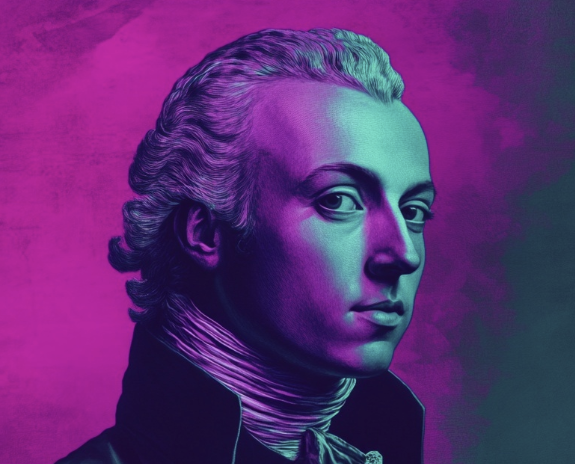
The first characteristic of the human species is man's ability, as a rational being, to establish character for himself, as well as for the society into which nature has placed him. This ability, however, presupposes an already favorable natural predisposition and an inclination to the good in man, because the evil is really without character (since it is at odds with itself, and since it does not tolerate any lasting principle within itself)
▼
Source
source
Kant, Immanuel (1996), page 246

3 months 1 week ago
It is one of the superstitions of the human mind to have imagined that virginity could be a virtue.
▼
Source
source
Notebooks (c.1735-c.1750) Note: This quotation and the three that follow directly below are from the so-called Leningrad Notebook, also known as Le Sottisier; it is one of several posthumously published notebooks of Voltaire.

4 months ago
Earnest in practicing the ordinary virtues, and careful in speaking about them, if, in his practice, he has anything defective, the superior man dares not but exert himself; and if, in his words, he has any excess, he dares not allow himself such license. Thus his words have respect to his actions, and his actions have respect to his words; is it not just an entire sincerity which marks the superior man?
3 months 5 days ago
"It is necessary to be given the prop that all elementary props are given." This is not necessary because it is even impossible. There is no such prop! That all elementary props are given is SHOWN by there being none having an elementary sense which is not given.
▼
Source
source
Notes of 1919, as quoted in Ludwig Wittgenstein : The Duty of Genius (1990) by Ray Monk

1 month 3 weeks ago
Our whole civilization, our entire culture is concentrated in the mad demand for the most perfected weapons of slaughter. Ammunition! Ammunition! O, Lord, thou who rulest heaven and earth, thou God of love, of mercy and of justice, provide us with enough ammunition to destroy our enemy. Such is the prayer which is ascending daily to the Christian heaven.

2 months 2 weeks ago
Obstinacy in a bad cause, is but constancy in a good.
▼
Source
source
Section 25



4 months 1 week ago
What a human being believes, however, no matter with what ardor, is not necessarily objective truth.
1 month 1 week ago
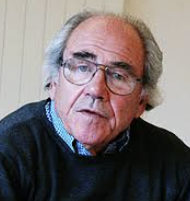
Such would be the successive phases of the image:it is the reflection of a profound reality;it masks and denatures a profound reality;it masks the absence of a profound reality;it has no relation to any reality whatsoever: it is its own pure simulacrum.In the first case, the image is a good appearance-representation is of the sacramental order. In the second, it is an evil appearance-it is of the order of maleficence. In the third, it plays at being an appearance-it is of the order of sorcery. In the fourth, it is no longer of the order of appearances, but of simulation.

3 months 1 week ago
Critics who treat adult as a term of approval, instead of as a merely descriptive term, cannot be adult themselves. To be concerned about being grown up, to admire the grown up because it is grown up, to blush at the suspicion of being childish; these things are the marks of childhood and adolescence. And in childhood and adolescence they are, in moderation, healthy symptoms. Young things ought to want to grow. But to carry on into middle life or even into early manhood this concern about being adult is a mark of really arrested development. When I was ten, I read fairy tales in secret and would have been ashamed if I had been found doing so. Now that I am fifty I read them openly. When I became a man I put away childish things, including the fear of childishness and the desire to be very grown up.
▼
Source
source
"On Three Ways of Writing for Children" (1952) - in Of Other Worlds: Essays and Stories (1967), p. 25
1 month 3 weeks ago
Modern science has imposed on humanity the necessity for wandering. Its progressive thought and its progressive technology make the transition through time, from generation to generation, a true migration into uncharted seas of adventure.
▼
Source
source
Ch. 13: "Requisites for Social Progress", p. 291

2 months 6 days ago
We dread the future only when we are not sure we can kill ourselves when we want to.

1 day ago
With stupidity and sound digestion man may front much.
▼
Source
source
Bk. II, ch. 4.
2 months ago
Thought must be judged by something that is not thought, by its effect on production or its impact on social conduct, as art today is being ultimately gauged in every detail by something that is not art, be it box-office or propaganda value.
▼
Source
source
describing the pragmatist view, p. 51.
4 weeks 1 day ago
To sum up the whole, we should say that the aim of the Platonic philosophy was to exalt man into a god. The aim of the Baconian philosophy was to provide man with what he requires while he continues to be man. The aim of the Platonic philosophy was to raise us far above vulgar wants. The aim of the Baconian philosophy was to supply our vulgar wants. The former aim was noble; but the latter was attainable.
▼
Source
source
'Lord Bacon', The Edinburgh Review (July 1837), quoted in T. B. Macaulay, Critical and Historical Essays Contributed to The Edinburgh Review, Vol. II (1843), p. 395

3 months 5 days ago
The Democratic Party is beyond redemption at this point when it comes to seriously speaking to the needs of poor and working people... The neofascism that's escalating is predicated on the rottenness of a system in which the Democratic Party facilitates that frustration and desperation because it can't present an alternative... If America is unable to present an alternative to the Democratic Party, then we're going fascist.

2 months 1 week ago
An ardent affection for the human race makes enthusiastic characters eager to produce alteration in laws and governments prematurely. To render them useful and permanent, they must be the growth of each particular soil, and the gradual fruit of the ripening understanding of the nation, matured by time, not forced by an unnatural fermentation.
▼
Source
source
Appendix

4 months ago
Guide the people by law, subdue them by punishment; they may shun crime, but will be void of shame. Guide them by example, subdue them by courtesy; they will learn shame, and come to be good.
3 months 1 week ago
Truth gains more even by the errors of one who, with due study and preparation, thinks for himself, than by the true opinions of those who only hold them because they do not suffer themselves to think.
▼
Source
source
Ch. II: Of the Liberty of Thought and Discussion

4 months 1 week ago
The modern scientific counterpart to belief in God is the belief in the universe as an organism: this disgusts me. This is to make what is quite rare and extremely derivative, the organic, which we perceive only on the surface of the earth, into something essential, universal, and eternal! This is still an anthropomorphizing of nature!

3 months 2 weeks ago
There are some defeats more triumphant than victories.
▼
Source
source
Ch. 30. Of Cannibals, tr. Cotton, rev. W. Hazlitt, 1842
3 months ago
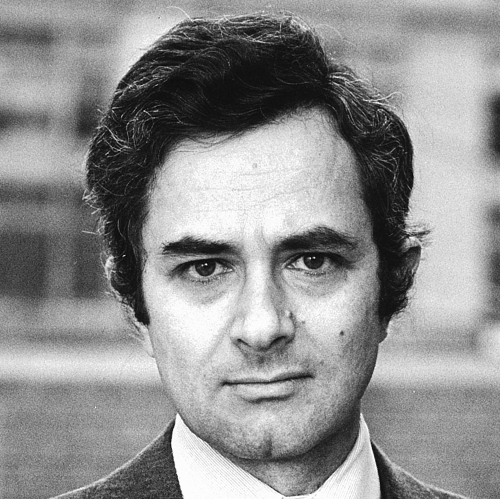
All of us, I believe, are fortunate to have been born.
▼
Source
source
"Death" (1970), p. 7.
3 months 5 days ago
For remember that in general we don't use language according to strict rules - it hasn't been taught us by means of strict rules, either.
▼
Source
source
p. 25
2 months 1 week ago
Independence I have long considered as the grand blessing of life, the basis of every virtue; and independence I will ever secure by contracting my wants, though I were to live on a barren heath.
▼
Source
source
Dedication

4 months 1 week ago
Doing what is for the good of the people, this must be the truest criterion of right government, in accordance with which the wise and good man will govern the affairs of his subjects. Just as the captain of a ship keeps watch for what is at any moment for the good of the vessel and the sailors, not by writing rules, but by making his science his law, and thus preserves his fellow voyagers, so may not a right government be established in the same way by men who could rule by this principle, making science more powerful than the laws? And whatever the wise rulers do, they can commit no error, so long as they maintain one great principle and by always dispensing absolute justice to them with wisdom and science are able to preserve the citizens and make them better than they were, so far as that is possible.

4 months 1 week ago
One recognizes one's course by discovering the paths that stray from it.
3 months 1 week ago
My education, which was wholly his work, had been conducted without any regard to the possibility of its ending in this result; and I saw no use in giving him the pain of thinking that his plans had failed, when the failure was probably irremediable, and, at all events, beyond the power of his remedies. Of other friends, I had at that time none to whom I had any hope of making my condition intelligible. It was however abundantly intelligible to myself; and the more I dwelt upon it, the more hopeless it appeared.
▼
Source
source
(p. 135)
3 months 1 week ago
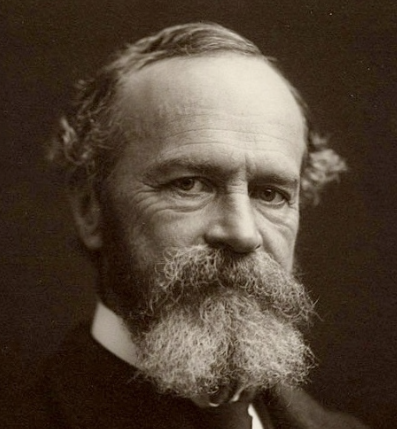
I wished, by treating Psychology like a natural science, to help her to become one.
▼
Source
source
A Plea for Psychology as a Natural Science, 1892
3 weeks 5 days ago
God give me strength to face a fact though it slay me.
▼
Source
source
As quoted in Nature Vol. 149 (Jan-Jun) 1942 p. 291, and A Philosophy for Our Time (1954) by Bernard Mannes Baruch, p. 13
3 months 1 week ago
There is wishful thinking in Hell as well as on Earth.
▼
Source
source
Preface
1 month 1 week ago
I know that my unity with all people cannot be destroyed by national boundaries and government orders.
▼
Source
source
My Religion (1884)

3 months ago
Beware an act of avarice; it is bad and incurable disease.
▼
Source
source
Maxim no. 19.

2 months 2 days ago
When there were gathered together an innumerable multitude of people, insomuch that they trode one upon another, he began to say unto his disciples first of all, Beware ye of the leaven of the Pharisees, which is hypocrisy. For there is nothing covered, that shall not be revealed; neither hid, that shall not be known. Therefore whatsoever ye have spoken in darkness shall be heard in the light; and that which ye have spoken in the ear in closets shall be proclaimed upon the housetops. And I say unto you my friends, Be not afraid of them that kill the body, and after that have no more that they can do. But I will forewarn you whom ye shall fear: Fear him, which after he hath killed hath power to cast into hell; yea, I say unto you, Fear him.
▼
Source
source
12:1-5
4 days ago
What is objective must be common to many minds and consequently transmissible from one to the other, and as this transmission can only come about by... discourse... we are even forced to conclude: no discourse no objectivity.
4 months 1 week ago
Ironic philosophies produce passionate works. Any thought that abandons unity glorifies diversity! And diversity is the home of art. The only thought to liberate the mind is that which leaves it alone, certain of its limits and of its impending end. No doctrine tempts it. It awaits the ripening of the work and of life.

3 months 2 weeks ago
And as every present state of a simple substance is naturally a consequence of its preceding state, so its present is pregnant with its future.
▼
Source
source
La monadologie (22).

3 months 2 weeks ago
The Christian Religion not only was at first attended with miracles, but even at this day cannot be believed by any reasonable person without one. Mere reason is insufficient to convince us of its veracity: and whoever is moved by Faith to assent to it, is conscious of a continued miracle in his own person, which subverts all the principles of his understanding, and gives him a determination to believe what is most contrary to custom and experience.
▼
Source
source
Section 10 : Of Miracles Pt. 2
3 months 1 week ago
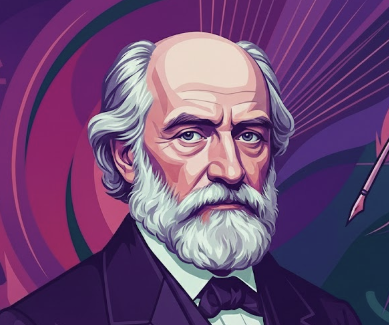
Philosophy ... is a science, and as such has no articles of faith; accordingly, in it nothing can be assumed as existing except what is either positively given empirically, or demonstrated through indubitable conclusions.
▼
Source
source
Vol I

3 months 1 week ago
Go where he will, the wise man is at home, His hearth the earth, his hall the azure dome.
▼
Source
source
Wood-notes, st. 3

1 month 3 weeks ago
If life can no longer be narrated, wisdom deteriorates, and its place is taken by problem-solving.
3 months 1 week ago
There is but one unconditional commandment, which is that we should seek incessantly, with fear and trembling, so to vote and to act as to bring about the very largest total universe of good which we can see. Abstract rules indeed can help; but they help the less in proportion as our intuitions are more piercing, and our vocation is the stronger for the moral life. For every real dilemma is in literal strictness a unique situation; and the exact combination of ideals realized and ideals disappointed which each decision creates is always a universe without a precedent, and for which no adequate previous rule exists.
▼
Source
source
"The Moral Philosopher and the Moral Life", International Journal of Ethics, April 1891
1 month 1 week ago
We measure the earth, sun, stars, and ocean depths. We burrow into the depths of the earth for gold. We search for rivers and mountains on the moon. We discover new stars and know their magnitudes. We sound the depths of gorges and build clever machines. Each day brings a new invention. What don't we think of! What can't we do! But there is something else, the most important thing of all, that we are missing. We do not know exactly what it is. We are like a small child who knows he does not feel well but cannot explain why. We are uneasy, because we know a lot of superfluous facts; but we do not know what is really important-ourselves.
▼
Source
source
p. 10
2 months 1 day ago
At the parting of ways in the life-order, where the question is between the new creation or decay, that man will be decisive for new creation who is able on his own initiative to seize the helm and steer a course of his own choosing - even if that course be opposed to the will of the masses. Should the emergence of such persons become impossible a lamentable shipwreck will be inevitable.
3 months ago
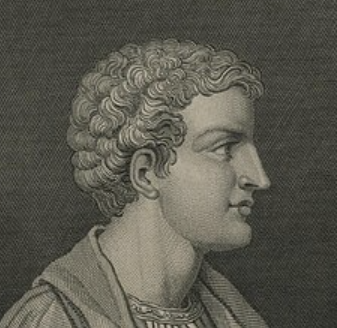
Struggling to be brief I become obscure.
▼
Source
source
Line 25
CivilSimian.com created by AxiomaticPanic, CivilSimian, Kalokagathia