

3 months 2 weeks ago
If you feel irritated by the absurd remarks of two people whose conversation you happen to overhear, you should imagine that you are listening to a dialogue of two fools in a comedy.
▼
Source
source
T. B. Saunders, trans., § 38

1 month 3 weeks ago
The haste of day rules over the night as empty form.

3 months 1 week ago
"No, no no," she said. "You don't understand. Not that kind of longing. It was when I was happiest that I longed most. It was on happy days when we were up there on the hills, the three of us, with the wind and the sunshine ... where you couldn't see Glome or the palace. Do you remember? The colour and the smell, and looking at the Grey Mountain in the distance? And because it was so beautiful, it set me longing, always longing. Somewhere else there must be more of it. Everything seemed to be saying, Psyche come! But I couldn't (not yet) come and I didn't know where I was to come to. It almost hurt me. I felt like a bird in a cage when the other birds of its kind are flying home."
▼
Source
source
Psyche
2 months 1 week ago
While moral rules may be propounded by authority the fact that these were so propounded would not validate them.
▼
Source
source
"The Meaning of Life".

3 months 1 week ago
The days .... come and go like muffled and veiled figures, sent from a distant friendly party; but they say nothing, and if we do not use the gifts they bring, they carry them as silently away.
▼
Source
source
Works and Days
3 months ago
Never will this prevail, that the things that are not are - bar your thought from this road of inquiry.
▼
Source
source
Frag. B 7.1-2, quoted by Plato, Sophist, 237a

1 month 3 weeks ago
People have committed suicide because of their failure to realize the passions for love, power, fame, revenge. Cases of suicide because of a lack of sexual satisfaction are virtually nonexistent.
▼
Source
source
p. 30

4 months 1 week ago
If you suspect that my interest in the Bible is going to inspire me with sudden enthusiasm for Judaism and make me a convert of mountain‐moving fervor and that I shall suddenly grow long earlocks and learn Hebrew and go about denouncing the heathen — you little know the effect of the Bible on me. Properly read, it is the most potent force for atheism ever conceived.

1 month 3 weeks ago
Upper middle-class upbringing has rooted out any element of what might appear to be self-assertion or egoism; good manners is to be like everyone else. So the male of the species becomes accustomed to suppress any stirring of impatience or originality. Shaw once said you can't learn to skate without making a fool of yourself; the British middle-class attitude seems to be that, in that case, you hadn't better skate at all. The result seems to be considerably more oppressive than being brought up in a Jewish ghetto or a west side slum.
▼
Source
source
p. 112, An integrity born of hope: Notes on Christopher Isherwood
3 months 2 weeks ago
It is absurd to excite reason against the primary postulates of pure time, as, for example, continuity, etc., since they follow from laws prior and superior to which nothing is found, and since reason herself in the use of the principle of contradiction cannot dispense with the support of this concept, so primitive and original is it.

2 weeks 5 days ago
For Leopardi evil is integral to the way the world works; but when he talks of evil he does not mean any kind of malign agency of the sort that Gnostics imagined. Evil is the suffering that is built into the scheme of things. 'What hope is there when evil is ordinary?' he asks. 'I mean, in an order where evil is necessary?' These rhetorical questions show why Leopardi had no interest in projects of revolution and reform. No type of human action - least of all the harlequinade of politics - could fundamentally alter a world in which evil was ordinary.
▼
Source
source
The Faith of Puppets: Leopardi and the Souls of Machines (p.35-6)

1 month 1 week ago
Each new technology is a reprogramming of sensory life.
▼
Source
source
(p. 33)

3 months 1 week ago
It must not be supposed that this conflict is, on the part of the Teuton, aggressive in substance, whatever it may be in form. In substance it is defensive, the attempt to preserve Central Europe for a type of civilisation indubitably higher and of more value to mankind than that of any Slav State. The existence of the Russian menace on the Eastern border is, quite legitimately, a nightmare to Germany.
▼
Source
source
War: The Offspring of Fear (1914), quoted in Ray Monk, Bertrand Russell: The Spirit of Solitude, 1872-1921 (1996), p. 373

3 months 1 week ago
The meaning of a question is the method of answering it: then what is the meaning of 'Do two men really mean the same by the word "white"?' Tell me how you are searching, and I will tell you what you are searching for.
▼
Source
source
Philosophical Remarks (1991), Part III (27), pp.66-67

3 months 3 days ago
Practice no sloth, so that the duty and good work, which it is necessary for thee to do, may not remain undone.
▼
Source
source
(p. 59)

3 months 1 week ago
Her face seems ravaged by both lightning and hail. But on yours there is something like the promise of a storm: one day passion will burn it to the bone.
▼
Source
source
Act 1
3 months 1 week ago
Similarly, individual acts of aristocratic generosity do not eliminate pauperism; they perpetuate it.
▼
Source
source
p. 219

1 week ago
Tyrants would distribute largess, a bushel of wheat, a gallon of wine, and a sesterce: and then everybody would shamelessly cry, "Long live the King!" The fools did not realize that they were merely recovering a portion of their own property, and that their ruler could not have given them what they were receiving without having first taken it from them.
▼
Source
source
Part 2
2 months 1 week ago
Some words shall herein be capitalised when used, not as vernacular, but as terms defined. Thus an "idea" is the substance of an actual unitary thought or fancy; but "Idea," nearer Plato's idea of ἰδέα, denotes anything whose Being consists in its mere capacity for getting fully represented, regardless of any person's faculty or impotence to represent it.
▼
Source
source
I
1 month 1 week ago
Environments are not just containers, but are processes that change the content totally.
▼
Source
source
American scholar, Volume 35, 1965, p. 200

1 month 6 days ago
The errors of the times of superstition and bigotry still hold some sway, and compel those who wish to preserve a regard to their respectability in society to an over strained demeanor; and this demeanor sometimes degenerates into hypocrisy, and is often the cause of great inconsistency. It is destructive of every open, honest, generous, and manly feeling. It disgusts many, and drives them to the opposite extreme. It is sometimes the cause of insanity. It is founded in ignorance. While erroneous customs prevail in any country, it would evince an ignorance of human nature in any individual to offend against them, until he has convinced the community of their error.
▼
Source
source
Essay Third
3 months 3 days ago
The organism does not have a point of view: the person or creature does.
▼
Source
source
"Panpsychism" (1979), p. 189.

4 months 1 week ago
It's better to bet on this life than on the next.

3 months 2 weeks ago
It is one of the superstitions of the human mind to have imagined that virginity could be a virtue.
▼
Source
source
Notebooks (c.1735-c.1750) Note: This quotation and the three that follow directly below are from the so-called Leningrad Notebook, also known as Le Sottisier; it is one of several posthumously published notebooks of Voltaire.

1 month 1 week ago
It is often better for a person to recognize a sin than to do a good deed. Recognizing a sin makes a person humble. Doing a good deed often can feed a person's pride.
▼
Source
source
p. 108

1 month 3 weeks ago
Today's fashion magazines may carry an article about the dangers of anorexia while bombarding its readers with images of emaciated young bodies representing the height of beauty and desirability.
▼
Source
source
As quoted in Feminism is for Everybody: Passionate Politics (2014), p.34
3 months 2 days ago
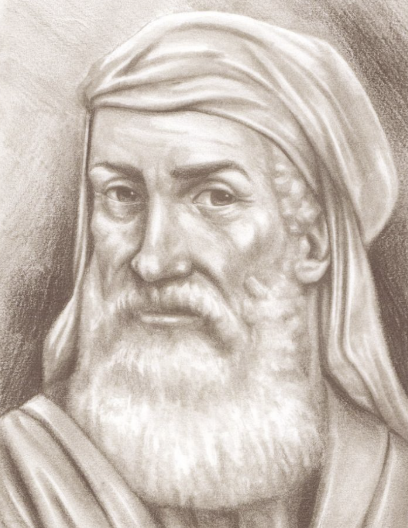
Hear first the four roots of all things: shining Zeus, life-bringing Hera, Aidoneus, and Nestis, who wets with tears the mortal wellspring.
▼
Source
source
fr. 6

3 months 2 weeks ago
Let us not forget what befits our present state in the pursuit of vain fancies. Mankind has its place in the sequence of things; childhood has its place in the sequence of human life; the man must be treated as a man and the child as a child. Give each his place, and keep him there. Control human passions according to man's nature; that is all we can do for his welfare. The rest depends on external forces, which are beyond our control.
3 months ago
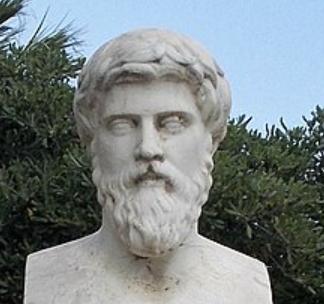
When Demaratus was asked whether he held his tongue because he was a fool or for want of words, he replied, "A fool cannot hold his tongue."
▼
Source
source
Of Demaratus
3 months 3 weeks ago
Look now, this is the starting point of philosophy: the recognition that different people have conflicting opinions, the rejection of mere opinion so that it comes to be viewed with mistrust, an investigation of opinion to determine whether it is rightly held, and the discovery of a standard of judgement, comparable to the balance that we have devised for the determining of weights, or the carpenter's rule for determining whether things are straight or crooked.
▼
Source
source
Book II, ch. 11, 13.

2 months 5 days ago
Did ye never read in the scriptures, The stone which the builders rejected, the same is become the head of the corner: this is the Lord's doing, and it is marvellous in our eyes? Therefore say I unto you, The kingdom of God shall be taken from you, and given to a nation bringing forth the fruits thereof. And whosoever shall fall on this stone shall be broken: but on whomsoever it shall fall, it will grind him to powder.
▼
Source
source
21:27-42 and 44 (KJV)

3 months 2 weeks ago
We live to improve, or we live in vain.
▼
Source
source
Address and Declaration at a Select Meeting of the Friends of Universal Peace and Liberty (August 20, 1791) p. 5
2 months 5 days ago
Loren von Stein thus turned the dialectic into an ensemble of objective laws calling for social reform as the adequate solution of all contradictions and neutralized the critical elements of the dialectic.
▼
Source
source
P. 388
3 months 1 week ago
Those who have been inspired to action by the doctrine of the class war will have acquired the habit of hatred, and will instinctively seek new enemies when the old ones have been vanquished. But in actual fact the psychology of the working man in any of the Western democracies is totally unlike that which is assumed in the Communist Manifesto. He does not by any means feel that he has nothing to lose but his chains, nor indeed is this true. The chains which bind Asia and Africa in subjection to Europe are partly riveted by him. He is himself part of a great system of tyranny and exploitation. Universal freedom would remove, not only his own chains, which are comparatively light, but the far heavier chains which he has helped to fasten upon the subject races of the world.
▼
Source
source
Ch. VI: International Relations
3 months 1 week ago
Looking for God-or Heaven-by exploring space is like reading or seeing all Shakespeare's plays in the hope that you will find Shakespeare as one of the characters or Stratford as one of the places. Shakespeare is in one sense present at every moment in every play.
▼
Source
source
"The Seeing Eye", in Christian Reflections (1967), p. 167

3 months 2 weeks ago
He who remembers the evils he has undergone, and those that have threatened him, and the slight causes that have changed him from one state to another, prepares himself in that way for future changes and for recognizing his condition. The life of Caesar has no more to show us than our own; an emperor's or an ordinary man's, it is still a life subject to all human accidents.
▼
Source
source
Ch. 13

3 months 1 week ago
Perhaps I am more than usually jealous with respect to my freedom. I feel that my connection with and obligation to society are still very slight and transient. Those slight labors which afford me a livelihood, and by which it is allowed that I am to some extent serviceable to my contemporaries, are as yet commonly a pleasure to me, and I am not often reminded that they are a necessity. So far I am successful. But I foresee, that, if my wants should be much increased, the labor required to supply them would become a drudgery. If I should sell both my forenoons and afternoons to society, as most appear to do, I am sure, that, for me, there would be nothing left worth living for. I trust that I shall never thus sell my birthright for a mess of pottage.
▼
Source
source
p. 486
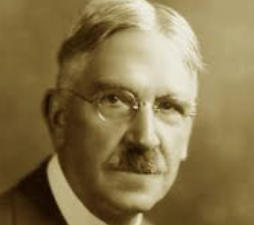
2 months 4 days ago
While they denounce as subversive anarchy signs of independent thought, of thinking for themselves on the part of others lest such thought disturb the conditions by which they profit, they think quite literally for themselves, that is of themselves.
▼
Source
source
Human Nature and Conduct (1921) Part 1 Section IV.
2 weeks 5 days ago
To affirm that humans thrive in many different ways is not to deny that there are universal human values. Nor is it to reject the claim that there should be universal human rights. It is to deny that universal values can only be fully realized in a universal regime. Human rights can be respected in a variety of regimes, liberal and otherwise. Universal human rights are not an ideal constitution for a single regime throughout the world, but a set of minimum standards for peaceful coexistence among regimes that will always remain different.
▼
Source
source
Two Faces of Liberalism (New Press, 2000, ISBN 0-745-62259-3. 168 pages), ch. 1: Liberal Toleration (p. 21)

1 month 3 weeks ago
Society creates the victims that it afterwards vainly attempts to get rid of.
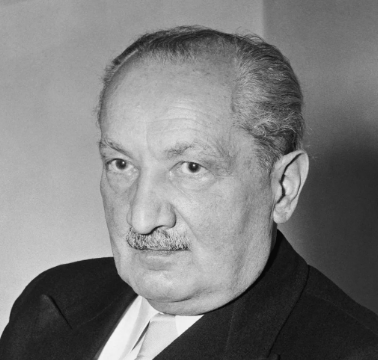
3 months 1 week ago
Being is only Being for Dasein.
▼
Source
source
Macquarrie & Robinson translation

3 months 1 week ago
Athuroglossos is characterized by..: (1) When you have "a mouth like a running spring," you cannot distinguish those occasions when you should speak from those when you should remain silent; or that which must be said from that which must remain unsaid; or the circumstances and situations where speech is required from those where one ought to remain silent. (2) As Plutarch notes... you have no regard for the value of logos, for rational discourse as a means of gaining access to truth.
3 months 1 week ago
One can say that the author is an ideological product, since we represent him as the opposite of his historically real function. (When a historically given function is represented in a figure that inverts it, one has an ideological production.) The author is therefore the ideological figure by which one marks the manner in which we fear the proliferation of meaning.
▼
Source
source
What is an author?
2 months 5 days ago
Happiness is the only sanction of life; where happiness fails, existence remains a mad and lamentable experiment.
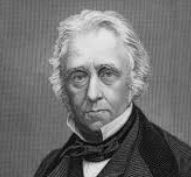
1 month 1 day ago
I say that where the public morality is concerned it may be the duty of the State to interfere with the contracts of individuals... It must then, I think, be admitted that, where health is concerned, and where morality is concerned, the State is justified in interfering with the contracts of individuals.
▼
Source
source
Speech in the House of Commons (22 May 1846), quoted in Speeches of the Right Honourable T. B. Macaulay, M.P. (1854), p. 442

3 months 1 week ago
On the other hand one must not entertain any fantastic illusions on the productive power of the credit system, so far as it supplies or sets in motion money-capital.
▼
Source
source
Vol. II, Ch. XVII, p. 351.

2 months 2 weeks ago
There are two things which a democratic people will always find very difficult-to begin a war and to end it.
▼
Source
source
Book Three, Chapter XXII.

3 months 1 week ago
Mr. Galton ...in his English Men of Science, has given ...cases showing individual variations in the type of memory... Some have it verbal. Others... for facts and figures, others for form. Most say... [it] must first be rationally conceived and assimilated.
▼
Source
source
Ch. 16
3 months 1 week ago
So that is what hell is. I would never have believed it. You remember: the fire and brimstone, the torture. Ah! the farce. There is no need for torture: Hell is other people.
▼
Source
source
Garcin, Act 1, sc. 5
CivilSimian.com created by AxiomaticPanic, CivilSimian, Kalokagathia