

1 month 3 weeks ago
Without narration, life is purely additive.

3 months 2 weeks ago
The typical Westerner wishes to be the cause of as many changes as possible in his environment; the typical Chinaman wishes to enjoy as much and as delicately as possible.
▼
Source
source
The Problem of China (1922), Ch. XII: The Chinese Character

3 months 2 weeks ago
If a workman can conveniently spare those three halfpence, he buys a pot of porter. If he cannot, he contents himself with a pint, and, as a penny saved is a penny got, he thus gains a farthing by his temperance.
▼
Source
source
Chapter II, Part II, Article IV, p. 951.
4 months 2 days ago
Of all people, girls and servants are the most difficult to behave to. If you are familiar with them, they lose their humility. If you maintain a reserve towards them, they are discontented.

3 months 3 days ago
Men have fashioned an image of Chance as an excuse for their own stupidity. For Chance rarely conflicts with intelligence, and most things in life can be set in order by an intelligent sharpsightedness.
▼
Source
source
Freeman (1948), p. 155
1 month 4 weeks ago
No tyranny is more cruel than the one practiced in the shadow of the laws and under color of justice - when, so to speak, one proceeds to drown the unfortunate on the very plank by which they had saved themselves.
▼
Source
source
See Chap. XIV of Considérations sur les causes de la grandeur des Romains et de leur décadence. Considerations on the Causes of the Greatness of the Romans and their Decline (1734), p. 89.
2 months 4 days ago
The notion that one can discover large patterns or regularities in the procession of historical events is naturally attractive to those who are impressed by the success of the natural sciences in classifying, correlating, and above all predicting.

3 months 1 week ago
What would we really know the meaning of? The meal in the firkin; the milk in the pan; the ballad in the street; the news of the boat; the glance of the eye; the form and the gait of the body; - show me the ultimate reason of these matters; show me the sublime presence of the highest spiritual cause lurking, as always it does lurk, in these suburbs and extremities of nature; let me see every trifle bristling with the polarity that ranges it instantly on an eternal law; and the shop, the plough, and the ledger, referred to the like cause by which light undulates and poets sing; - and the world lies no longer a dull miscellany and lumber-room, but has form and order; there is no trifle; there is no puzzle; but one design unites and animates the farthest pinnacle and the lowest trench.
▼
Source
source
par. 40

3 months 2 weeks ago
For a desperate disease a desperate cure.
▼
Source
source
Book II, Ch. 3. The Custom of the Isle of Cea
2 weeks 5 days ago
If our universe is one of many, unlike others in containing observers like ourselves, there is no need to posit a designer. Most universes will be too chaotic to allow the emergence of life or mind. In that case, the fact that humans exist in this universe needs no special explanation.
▼
Source
source
Sweet Morality (p. 222)
1 month 3 weeks ago
Law is the continuous manifestation of God's presence - not reason for believing him absent. Great confusion arises from our using the same word law in two totally distinct senses ... as the cause and the effect. It is said that to "explain away" everything by law is to enable us to do without God. But law is no explanation of anything; law is simply a generalization, a category of facts. Law is neither a cause, nor a reason, nor a power, nor a coercive force. It is nothing but a general formula, a statistical table. Law brings us continually back to God instead of carrying us away from him.
▼
Source
source
Suggestions for Thought : Selections and Commentaries (1994), edited by Michael D. Calabria and Janet A. MacRae, p. 41

1 month 4 weeks ago
And what is its moral proof? We may formulate it thus: Act so that in your own judgment and in the judgment of others you may merit eternity, act so that you may become irreplaceable, act so that you may not merit death. Or perhaps thus: Act as if you were to die tomorrow, but to die in order to survive and be eternalized. The end of morality is to give personal, human finality to the Universe; to discover the finality that belongs to it - if indeed it has any finality - and to discover it by acting.
3 months 2 weeks ago
Government has no other end than the preservation of property.
▼
Source
source
Second Treatise of Government, Ch. VII. sec. 94
4 months 2 days ago
How abundantly do spiritual beings display the powers that belong to them! We look for them, but do not see them; we listen to, but do not hear them; yet they enter into all things, and there is nothing without them.

4 months 2 weeks ago
When someone hides something behind a bush and looks for it again in the same place and finds it there as well, there is not much to praise in such seeking and finding. Yet this is how matters stand regarding seeking and finding "truth" within the realm of reason. If I make up the definition of a mammal, and then, after inspecting a camel, declare "look, a mammal' I have indeed brought a truth to light in this way, but it is a truth of limited value. That is to say, it is a thoroughly anthropomorphic truth which contains not a single point which would be "true in itself" or really and universally valid apart from man. At bottom, what the investigator of such truths is seeking is only the metamorphosis of the world into man.
3 months 1 week ago
Nor mourn the unalterable Days That Genius goes and Folly stays.
▼
Source
source
In Memoriam E. B. E., st. 9
1 week 1 day ago
Friendship ... receives its real sustenance from an equality that, to proceed without a limp, must have its two limbs equal.
▼
Source
source
Part 3
3 months 4 weeks ago
As the soul is the life of the body, so God is the life of the soul. As therefore the body perishes when the soul leaves it, so the soul dies when God departs from it.
▼
Source
source
p. 277
2 months 5 days ago
And this Feare of things invisible, is the naturall Seed of that, which every one in himself calleth Religion; and in them that worship, or feare that Power otherwise than they do, Superstition.
▼
Source
source
The First Part, Chapter 11, p. 51

1 month 3 weeks ago
The self-surmounter can never put up with the man who has ceased to be dissatisfied with himself.
▼
Source
source
p. 139

3 weeks ago
There is no end. There is no beginning. There is only the infinite passion of life.
▼
Source
source
Fellini on Fellini (1976) edited by Anna Keel and Christian Strich; translated by Isabel Quigly.
3 months 2 weeks ago
Morality is not properly the doctrine of how we may make ourselves happy, but how we may make ourselves worthy of happiness.

2 months 2 weeks ago
Nature is none other than God in things... Animals and plants are living effects of Nature; Whence all of God is in all things... Think thus, of the sun in the crocus, in the narcissus, in the heliotrope, in the rooster, in the lion.
▼
Source
source
As quoted in Elements of Pantheism (2004) by Paul A. Harrison
4 months 2 weeks ago
We are, all of us, growing volcanoes that approach the hour of their eruption; but how near or distant that is, nobody knows not even God.

3 months 1 week ago
In France at least, the history of science and thought gives pride of place sciences, sciences of the necessary, all close to philosophy: one can observe in their history the almost uninterrupted emergence of truth and pure reason. The other disciplines, however - those, for example, that concern living beings, languages, or economic facts - are considered too tinged with empirical thought, too exposed to the vagaries of chance or imagery to age old traditions and external events, for it to be supposed that their history could be anything other irregular. At most, they are expected to provide evidence of a state of mind, an intellectual fashion, a mixture of archaism and bold conjecture, of intuition and blindness. But what if empirical knowledge, at a given time and in a given culture, did possess a well defined regularity.
▼
Source
source
Foreword to the English edition

3 months 1 week ago
Capital grows in one place to a huge mass in a single hand, because it has in another place been lost by many. This is centralisation proper, as distinct from accumulation and concentration.
▼
Source
source
Vol. I, Ch. 25, Section 2, pg. 686.
3 months 1 week ago
His imperial muse tosses the creation like a bauble from hand to hand to embody any capricious thought that is uppermost in her mind. The remotest spaces of nature are visited, and the farthest sundered things are brought together by a subtle spiritual connection.
▼
Source
source
p. 237

1 month 1 week ago
Logic is figure without a ground.
▼
Source
source
(p. 241)
1 month 2 weeks ago
Generally speaking, espionage offers each spy an opportunity to go crazy in a way he finds irresistible.

2 months 5 days ago
Thou sayest that I am a king. To this end was I born, and for this cause came I into the world, that I should bear witness unto the truth. Every one that is of the truth heareth my voice.
▼
Source
source
18:37, (KJV)
1 month 3 weeks ago
What can characterize the Outsider is a sense of strangeness, or unreality.
▼
Source
source
Chapter one, The Country of the Blind
3 months 2 weeks ago
The poet presents the imagination with images from life and human characters and situations, sets them all in motion and leaves it to the beholder to let these images take his thoughts as far as his mental powers will permit. This is why he is able to engage men of the most differing capabilities, indeed fools and sages together. The philosopher, on the other hand, presents not life itself but the finished thoughts which he has abstracted from it and then demands that the reader should think precisely as, and precisely as far as, he himself thinks. That is why his public is so small.
▼
Source
source
Vol. 2 "On Philosophy and the Intellect" as translated in Essays and Aphorisms (1970), as translated by R. J. Hollingdale

3 months 1 week ago
But perhaps I lack the gift. I see I've described her as being like a sword. That's true as far as it goes. But utterly inadequate by itself, and misleading. I ought to have said 'But also like a garden. Like a nest of gardens, wall within wall, hedge within hedge, more secret, more full of fragrant and fertile life, the further you explore.' And then, of her, and every created thing I praise, I should say 'in some way, in its unique way, like Him who made it.' Thus up from the garden to the Gardener, from the sword to the Smith. to the life-giving Life and the Beauty that makes beautiful.
3 months 1 week ago
Nor is it the irrationality of the form which is taken as characteristic. On the contrary, one overlooks the irrational.
▼
Source
source
Vol. II, Ch. I, p. 30.
3 months 2 weeks ago
A man may be humble through vainglory.
▼
Source
source
Ch. 17
3 months 2 weeks ago
[S]he became the Mother of God, in which work so many and such great good things are bestowed on her as pass man's understanding. For on this there follows all honor, all blessedness, and her unique place in the whole of mankind, among which she has no equal, namely, that she had a child by the Father in heaven, and such a Child.... Hence men have crowded all her glory into a single word, calling her the Mother of God.... None can say of her nor announce to her greater things, even though he had as many tongues as the earth possesses flowers and blades of grass: the sky, stars; and the sea, grains of sand. It needs to be pondered in the heart what it means to be the Mother of God.
▼
Source
source
Luther's Works, 21:326, cf. 21:346
1 week ago
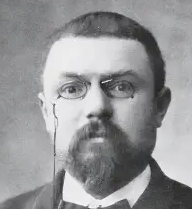
Mathematicians do not study objects, but the relations between objects; to them it is a matter of indifference if these objects are replaced by others, provided that the relations do not change. Matter does not engage their attention, they are interested in form alone.
▼
Source
source
Ch. II: Dover abridged edition (1952), p. 20

4 months 1 week ago
I accept nothing on authority. A hypothesis must be backed by reason, or else it is worthless.
3 months 3 days ago
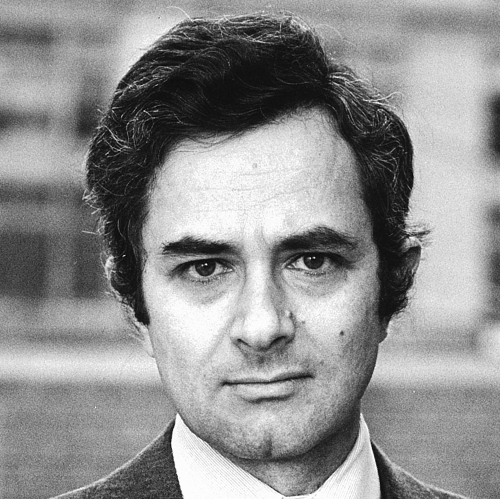
We assume that our own advances in objectivity are steps along a path that extends beyond them and beyond all our capacities. But even allowing unlimited time, or an unlimited number of generations, to take as many successive steps as we like, the process can never be completed. ... What is wanted is some way of making the most objective standpoint the basis of action.
▼
Source
source
pp. 128-129.

2 months 2 weeks ago
For no one's authority ought to rank so high as to set a value on his words and terms even though nothing clear and determinate lies behind them.
▼
Source
source
Paragraph 1
3 months 3 days ago
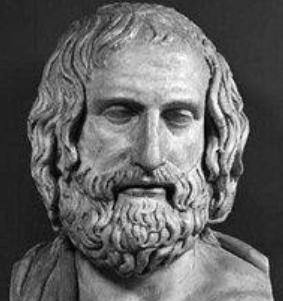
And since these things are so, we must suppose that there are contained many things and of all sorts in the things that are uniting, seeds of all things, with all sorts of shapes and colours and savours.
▼
Source
source
Frag. B 4, quoted in John Burnet's Early Greek Philosophy, (1920), Chapter 6.
3 months 1 week ago
The effects of opposition are wonderful. There are men who rise refreshed on hearing of a threat, - men to whom a crisis which intimidates and paralyzes the majority - demanding, not the faculties of prudence and thrift, but comprehension, immovableness, the readiness of sacrifice - comes graceful and beloved as a bride!
▼
Source
source
p. 189

3 months 2 weeks ago
A single part of physics occupies the lives of many men, and often leaves them dying in uncertainty.
▼
Source
source
"A Madame la Marquise du Châtelet, Avant-Propos," Eléments de Philosophie de Newton, 1738
3 months 2 weeks ago
The merits of democracy are negative: it does not insure good government, but it prevents certain evils.
▼
Source
source
Ch. 18: The Taming of Power PT311 books.google
1 month 4 weeks ago
In books of psychology written from the spiritualist point of view, it is customary to begin the discussion of the existence of the soul as a simple substance, separable from the body, after this style: There is in me a principle which thinks, wills and feels... Now this implies a begging of the question. For it is far from being an immediate truth that there is in me such a principle; the immediate truth is that I think, will and feel. And I - the I that thinks, wills and feels - am immediately my living body with the states of consciousness which it sustains. It is my living body that thinks, wills and feels.
3 months 2 weeks ago
Indeed, history is nothing more than a tableau of crimes and misfortunes.
▼
Source
source
L'Ingénu, ch.10 (1767) Quoted in The End, part 13 of A Series of Unfortunate Events

3 months 1 week ago
You could attach prices to ideas. Some cost a lot some little. ... And how do you pay for ideas? I believe: with courage.
▼
Source
source
p. 60e

2 months 2 weeks ago
By and large the literature of a democracy will never exhibit the order, regularity, skill, and art characteristic of aristocratic literature; formal qualities will be neglected or actually despised. The style will often be strange, incorrect, overburdened, and loose, and almost always strong and bold. Writers will be more anxious to work quickly than to perfect details. Short works will be commoner than long books, wit than erudition, imagination than depth. There will be a rude and untutored vigor of thought with great variety and singular fecundity. Authors will strive to astonish more than to please, and to stir passions rather than to charm taste.
▼
Source
source
Book One, Chapter XIII.

2 months 1 week ago
Beware of thinkers whose minds function only when they are fueled by a quotation.
CivilSimian.com created by AxiomaticPanic, CivilSimian, Kalokagathia