

4 months 2 days ago
Chi Wan thought thrice, and then acted. When the Master was informed of it, he said, "Twice may do."
1 month 3 weeks ago
Heaven knows what seeming nonsense may not to-morrow be demonstrated truth.
▼
Source
source
Ch. 7: "Relativity", p. 161
1 month 1 day ago
There is surely no contradiction in saying that a certain section of the community may be quite competent to protect the persons and property of the rest, yet quite unfit to direct our opinions, or to superintend our private habits.
▼
Source
source
p. 246
3 days ago
"Normal science" means research firmly based upon one or more past scientific achievements, achievements that some particular scientific community acknowledges for a time as supplying the foundation for its further practice.
▼
Source
source
p. 10

3 months 1 week ago
My dear Wormwood, I note what you say about guiding your patient's reading and taking care that he sees a good deal of his materialist friend. But are you not being a trifle naive? It sounds as if you suppose that argument was the way to keep him out of the enemy's clutches. That might have been so if he had lived a few centuries earlier.
▼
Source
source
Letter I
3 months 2 weeks ago
it is absurd ... to hope that maybe another Newton may some day arise, to make intelligible to us even the genesis of but a blade of grass
▼
Source
source
("Dialectic of Teleological Judgment" §75)
2 months 4 days ago
But the individual butterfly or earthquake remains just the unique existence which it is. We forget in explaining its occurrence that it is only the occurrence that is explained, not the thing itself.
2 months 3 weeks ago
Time is the wisest of all things that are; for it brings everything to light.
▼
Source
source
As quoted in Diogenes Laërtius, The Lives and Opinions of Eminent Philosophers, I, 35

1 month 1 week ago
4 ways: Agnosticism, Relativism, Amorality, Morality.
1) I don't know. 2) Everybody is different. 3) Do whatever you can. 4) Do what you should.

2 months 2 weeks ago
Anything we take in the Universe, because it has in itself that which is All in All, includes in its own way, the entire soul of the world, which is entirely in any part of it.
1 month 6 days ago
When truth cannot make itself known in words, it will make itself known in deeds.
▼
Source
source
Should he have spoken?, The New Criterion (September 2006), p. 22; also in The Roger Scruton Reader (2009) edited by Mark Dooley
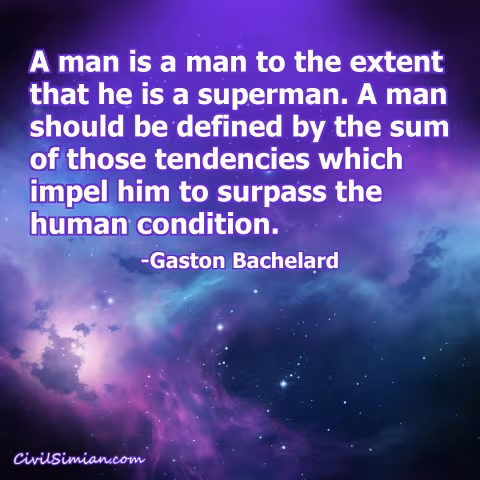

3 months 3 weeks ago
Nothing is terrible except fear itself.
▼
Source
source
De Augmentis Scientiarum, Book II, "Fortitudo"

3 months 1 week ago
Even the best things are not equal to their fame.
▼
Source
source
Pearls of Thought (1881) p. 87
3 months 1 week ago
The frontiers are not east or west, north or south, but wherever a man fronts a fact, though that fact be his neighbor, there is an unsettled wilderness between him and Canada, between him and the setting sun, or, farther still, between him and it.

3 months 1 week ago
The person who screams, or uses the superlative degree, or converses with heat, puts whole drawing-rooms to flight. If you wish to be loved, love measure. You must have genius or a prodigious usefulness if you will hide the want of measure.
▼
Source
source
p. 167

2 months ago
The ascetic morality is a negative morality. And strictly, what is important for a man is not to die, whether he sins or not.

2 months 1 week ago
For my part for one, though I make no doubt of preferring the antient Course, or almost any other to this vile chimera, and sick mans dream of Government yet I could not actively, or with a good heart, and clear conscience, go to the establishment of a monarchical despotism in the place of this system of Anarchy.
▼
Source
source
Letter to Richard Burke (26 September 1791), quoted in Alfred Cobban and Robert A. Smith (eds.), The Correspondence of Edmund Burke, Volume VI: July 1789-December 1791 (1967), p. 414

2 months 3 weeks ago
A solitary man is a God, or a beast.

3 months 2 weeks ago
I once received a letter from an eminent logician, Mrs. Christine Ladd Franklin, saying that she was a solipsist, and was surprised that there were no others. Coming from a logician, this surprise surprised me.
▼
Source
source
Human Knowledge: Its Scope and Limits (1948), Part III, chapter II, "Solipsism", p. 196
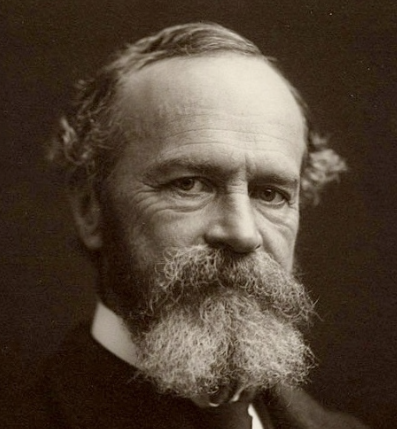
3 months 1 week ago
I wished, by treating Psychology like a natural science, to help her to become one.
▼
Source
source
A Plea for Psychology as a Natural Science, 1892
2 months 1 week ago
Plants are Children of the Earth; we are Children of the Æther. Our Lungs are properly our Root; we live, when we breathe; we begin our life with breathing.

3 months 1 week ago
The monopoly of capital becomes a fetter upon the mode of production, which has sprung up and flourished along with, and under it. Centralisation of the means of production and socialisation of labour at last reach a point where they become incompatible with their capitalist integument. This integument is burst asunder. The knell of capitalist private property sounds. The expropriators are expropriated.
▼
Source
source
Vol. I, Ch. 32, p. 837.

3 months 2 weeks ago
A man who is so exceedingly civil that for the sake of quietude and a peaceable name will silently see the community imposed upon, or their rights invaded, may, in his principles, be a good man, but cannot be stiled a useful one, neither does he come up to the full mark of his duty; for silence becomes a kind of crime when it operates as a cover or an encouragement to the guilty.
▼
Source
source
"To the People of America", Pennsylvania Packet, January 23, 1779

1 month 4 weeks ago
The essential characteristic of the first half of the twentieth century is the growing weakness, and almost the disappearance, of the idea of value.
▼
Source
source
"The responsibility of writers," p. 167
1 month 6 days ago
It seems hard for the American people to believe that anything could be more exciting than the times themselves. What we read daily and view on the TV has thrust imagined forms into the shadow. We are staggeringly rich in facts, in things, and perhaps, like the nouveau riche of other ages, we want our wealth faithfully reproduced by the artist.
▼
Source
source
Facts That Put Fancy to Flight (1962), p. 67
3 months 1 week ago
The Grecian are youthful and erring and fallen gods, with the vices of men, but in many important respects essentially of the divine race. In my Pantheon, Pan still reigns in his pristine glory, with his ruddy face, his flowing beard, and his shaggy body, his pipe and his crook, his nymph Echo, and his chosen daughter Iambe; for the great god Pan is not dead, as was rumored. No god ever dies. Perhaps of all the gods of New England and of ancient Greece, I am most constant at his shrine.
1 month 3 weeks ago
Often things realised in thought are more vivid than than the same things in inattentive physical experience. But the things apprehended as mental are always subject to the condition that we come to a stop when we come to explore ever higher grades of complexity in their realised relationships. We always find tat we have thought of just this - whatever it may be - and of no more.
▼
Source
source
Ch. 10: "Abstraction", p. 239

2 months 5 days ago
And then if any man shall say to you, Lo, here is Christ; or, lo, he is there; believe him not: For false Christs and false prophets shall rise, and shall shew signs and wonders, to seduce, if it were possible, even the elect. But take ye heed: behold, I have foretold you all things. But in those days, after that tribulation, the sun shall be darkened, and the moon shall not give her light, And the stars of heaven shall fall, and the powers that are in heaven shall be shaken. And then shall they see the Son of man coming in the clouds with great power and glory. And then shall he send his angels, and shall gather together his elect from the four winds, from the uttermost part of the earth to the uttermost part of heaven.
▼
Source
source
13:21-27 (KJV)

1 month 3 weeks ago
Crowley wanted to be a magician because he wanted power -- power over other people.
▼
Source
source
p. 157

4 days ago
This Burns appeared under every disadvantage: uninstructed, poor, born only to hard manual toil; and writing, when it came to that, in a rustic special dialect, known only to a small province of the country he lived in. Had he written, even what he did write, in the general language of England, I doubt not he had already become universally recognized as being, or capable to be, one of our greatest men.

3 months 2 weeks ago
The institution of religion exists only to keep mankind in order, and to make men merit the goodness of God by their virtue. Everything in a religion which does not tend towards this goal must be considered foreign or dangerous.
▼
Source
source
"The Ecclesiastical Ministry"

4 months 2 weeks ago
We often contradict an opinion for no other reason than that we do not like the tone in which it is expressed.
3 months 1 week ago
Not from a vain or shallow thought His awful Jove young Phidias brought.
▼
Source
source
The Problem, st. 2
2 months 2 weeks ago
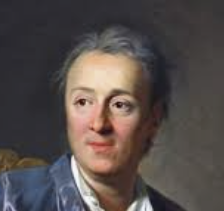
The philosopher has never killed any priests, whereas the priest has killed a great many philosophers.
1 month 3 weeks ago
By relieving the brain of all unnecessary work, a good notation sets it free to concentrate on more advanced problems, and in effect increases the mental power of the race..
▼
Source
source
ch. 5
1 month 1 week ago
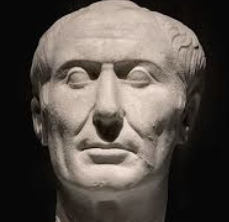
Don't turn back when you are just at the goal.
▼
Source
source
Maxim 580

3 months 1 week ago
Tout existant naît sans raison, se prolonge par faiblesse et meurt par rencontre. Every existing thing is born without reason, prolongs itself out of weakness and dies by chance.
4 days ago
Man's unhappiness, as I construe, comes of his greatness; it is because there is an Infinite in him, which with all his cunning he cannot quite bury under the Finite.
▼
Source
source
Bk. I, ch. 9.

3 months 2 weeks ago
A merchant, it has been said very properly, is not necessarily the citizen of any particular country.
▼
Source
source
Chapter IV, p. 456.

2 months 2 weeks ago
As for me, I am deeply a democrat; this is why I am in no way a socialist. Democracy and socialism cannot go together. You can't have it both ways.
▼
Source
source
Notes for a Speech on Socialism (1848).
3 months 1 week ago
There is no spiritual sustenance in flat equality. It is a dim recognition of this fact which makes much of our political propaganda sound so thin. We are trying to be enraptured by something which is merely the negative condition of the good life. That is why the imagination of people is so easily captured by appeals to the craving for inequality, whether in a romantic form of films about loyal courtiers or in the brutal form of Nazi ideology. The tempter always works on some real weakness in our own system of values - offers food to some need which we have starved.
2 months 1 week ago
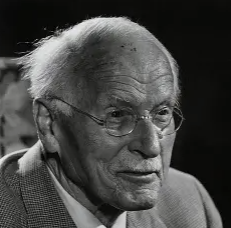
We should not pretend to understand the world only by the intellect; we apprehend it just as much by feeling. Therefore, the judgment of the intellect is, at best, only the half of truth, and must, if it be honest, also come to an understanding of its inadequacy. Variant translation: We should not pretend to understand the world only by the intellect. The judgement of the intellect is only part of the truth.
▼
Source
source
Conclusion, p. 628

1 month 1 week ago
Those attacks upon language and religion in Poland, the Baltic provinces, Alsace, Bohemia, upon the Jews in Russia, in every place that such acts of violence occur-in what name have they been, and are they, perpetrated? In none other than the name of that patriotism which you defend. Ask our savage Russifiers of Poland and the Baltic provinces, ask the persecutors of the Jews, why they act thus. They will tell you it is in defence of their native religion and language; they will tell you that if they do not act thus, their religion and language will suffer-the Russians will be Polonised, Teutonised, Judaised.
▼
Source
source
A Reply to Criticisms
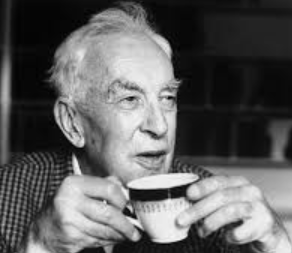
3 weeks 4 days ago
Right and wrong are the same in Palestine as anywhere else. What is peculiar about the Palestine conflict is that the world has listened to the party that has committed the offence and has turned a deaf ear to the victims.
▼
Source
source
Foreword to The Transformation of Palestine
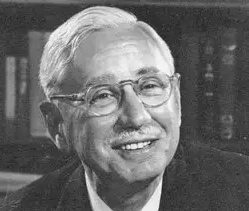
2 days ago
Both Stoicism and Epicureanism - the apathetic acceptance of defeat, and the effort to forget defeat in the arms of pleasure - were theories as to how one might yet be happy though subjugated or enslaved; precisely as the stoicism of Schopenhauer and the despondent epicureanism of Renan were in the nineteenth century the symbols of a shattered revolution and a broken France.
1 month 1 week ago
Many receive advice, few profit by it.
▼
Source
source
Maxim 149
3 months 1 week ago
The Communist Party has one objective: the creation of a socialist economy; and one means: the utilization of the class struggle.
▼
Source
source
Hugo, Act 5, sc. 3
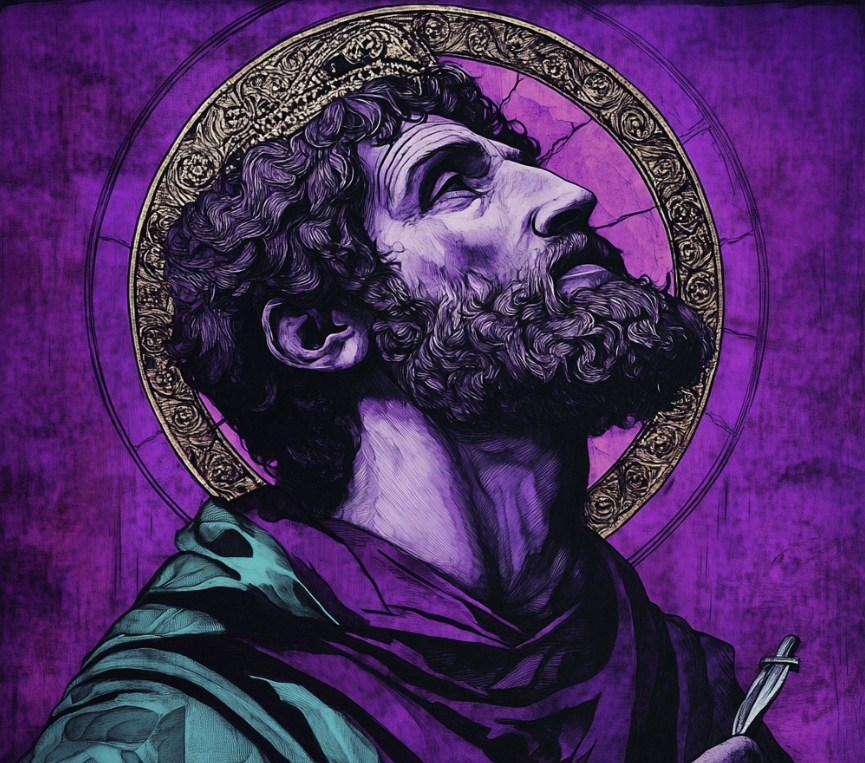
3 months 4 weeks ago
O sons of Peace, sons of the One Catholic [Church], walk in your way, and sing as you walk. Travelers do this in order to keep up their spirits.
▼
Source
source
p.427
CivilSimian.com created by AxiomaticPanic, CivilSimian, Kalokagathia