


3 months 3 weeks ago
Let us cultivate our garden.

3 months 2 weeks ago
At present we are on the outside of the world, the wrong side of the door. We discern the freshness and purity of the morning, but they do not make us fresh and pure. We cannot mingle with the splendours we see. But all the leaves of the New Testament are rustling with the rumour that it will not always be so. Some day, God willing, we shall get in.
3 months 3 weeks ago
All men are liable to error; and most men are, in many points, by passion or interest, under temptation to it.
▼
Source
source
Book IV, Ch. 20, sec. 17

2 weeks 2 days ago
A person who is shallow aspires to depth; one who is ugly aspires to beauty; one who is narrow aspires to breadth; one who is poor aspires to wealth; one who is humble aspires to esteem. Whatever one lacks in oneself he must seek outside.
▼
Source
source
Sources of Chinese Tradition (1999), vol. 1, p. 181

3 months 2 weeks ago
The survival of democracy depends on the ability of large numbers of people to make realistic choices in the light of adequate information.
▼
Source
source
Chapter 6 (p. 47)
2 months 2 weeks ago
Simplify the social system, in the manner which every motive, but those of usurpation and ambition, powerfully recommends; render the plain dictates of justice level to every capacity; remove the necessity of implicit faith; and we may expect the whole species to become reasonable and virtuous.
▼
Source
source
Portable Enlightenment Reader, p. 477

3 months 2 weeks ago
The most taboo issue on U.S. campuses these days, in many instances, has to do with the vicious Israeli occupation of precious Palestinians. It's very difficult to have a respectful, robust conversation about that. And I am unequivocal in my solidarity with Palestinian brothers and sisters... I'm not in any way going to stop talking about the Palestinian plight and predicament.
▼
Source
source
Speaking in Too Radical for Harvard? Cornel West on Failed Fight for Tenure, Biden's First 50 Days & More, Democracy Now!

1 month 2 weeks ago
In former times the chief method of justifying the use of violence and thereby infringing the law of love was by claiming a divine right for the rulers: the Tsars, Sultans, Rajahs, Shahs, and other heads of states. But the longer humanity lived the weaker grew the belief in this peculiar, God-given right of the ruler. That belief withered in the same way and almost simultaneously in the Christian and the Brahman world, as well as in Buddhist and Confucian spheres, and in recent times it has so faded away as to prevail no longer against man's reasonable understanding and the true religious feeling. People saw more and more clearly, and now the majority see quite clearly, the senselessness and immorality of subordinating their wills to those of other people just like themselves, when they are bidden to do what is contrary not only to their interests but also to their moral sense.
▼
Source
source
III

2 months 2 days ago
The free expression of the hopes and aspirations of a people is the greatest and only safety in a sane society.
2 months 2 weeks ago
The plebeian must expect to find himself neglected and despised in proportion as he is remiss in cultivation the objects of esteem; the lord will always be surrounded with sycophants and slaves. The lord therefore has no motive to industry and exertion; no stimulus to rouse him from the lethargic 'oblivious pool', out of which every human intellect originally arose.
▼
Source
source
Book V, Chapter 10, "Of Hereditary Distinction"
3 months 1 week ago
Hear first the four roots of all things: shining Zeus, life-bringing Hera, Aidoneus, and Nestis, who wets with tears the mortal wellspring.
▼
Source
source
fr. 6

2 months 3 days ago
The pornographic body lacks any symbolism. The ritualized body, by contrast, is a splendid stage, with secrets and deities written into it.

2 months 2 weeks ago
Once man loses his faculty of indifference he becomes a potential murderer; once he transforms his idea into a god the consequences are incalculable. We kill only in the name of a god or of his counterfeits: the excesses provoked by the goddess Reason, by the concept of nation, class, or race are akin to those of the Inquisition or of the Reformation.
3 months 3 weeks ago
Superstition sets the whole world in flames; philosophy quenches them.
▼
Source
source
Dictionnaire philosophique (1822), "Superstition"

3 months 2 weeks ago
Those things which now most engage the attention of men, as politics and the daily routine, are, it is true, vital functions of human society, but should be unconsciously performed, like the corresponding functions of the physical body. They are infra-human, a kind of vegetation. I sometimes awake to a half-consciousness of them going on about me, as a man may become conscious of some of the processes of digestion in a morbid state, and so have the dyspepsia, as it is called.
▼
Source
source
p. 495

2 months 3 weeks ago
We vainly accuse the fury of guns, and the new inventions of death; it is in the power of every hand to destroy us, and we are beholden unto every one we meet he doth not kill us.
▼
Source
source
Section 44

4 months 3 weeks ago
What does man actually know about himself? Is he, indeed, ever able to perceive himself completely, as if laid out in a lighted display case? Does nature not conceal most things from him even concerning his own body in order to confine and lock him within a proud, deceptive consciousness, aloof from the coils of the bowels, the rapid flow of the blood stream, and the intricate quivering of the fibers! She threw away the key.
3 months 2 weeks ago
It is better; heavier, crueler. The mouth you wear for hell.
▼
Source
source
Inès to Estelle after she has applied lipstick, Act 1, sc. 5

2 months 2 weeks ago
There is, however, a limit at which forbearance ceases to be a virtue.
▼
Source
source
Observations on a Late Publication on the Present State of the Nation (1769), volume i, p. 273
1 month 2 weeks ago
The slaves of our times are not all those factory and workshop hands only who must sell themselves completely into the power of the factory and foundry-owners in order to exist, but nearly all the agricultural laborers are slaves, working, as they do, unceasingly to grow another's corn on another's field, and gathering it into another's barn; or tilling their own fields only in order to pay to bankers the interest on debts they cannot get rid of. And slaves also are all the innumerable footmen, cooks, porters, housemaids, coachmen, bathmen, waiters, etc., who all their life long perform duties most unnatural to a human being, and which they themselves dislike.
▼
Source
source
Chapter 8: Slavery Exists Among Us
2 months 2 weeks ago
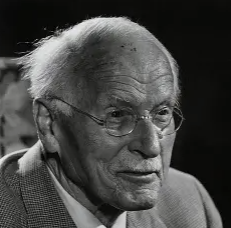
Metaphysical assertions, however, are statements of the psyche, and are therefore psychological. ... Whenever the Westerner hears the word "psychological," it always sounds to him like "only psychological."
▼
Source
source
Psyche and Symbol (1958), p. 285
2 months 5 days ago
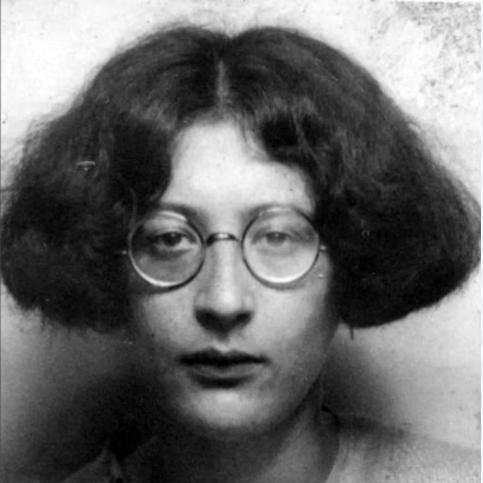
The human soul has need of truth and of freedom of expression. The need for truth requires that intellectual culture should be universally accessible, and that it should be able to be acquired in an environment neither physically remote nor psychologically alien.
1 month 1 week ago
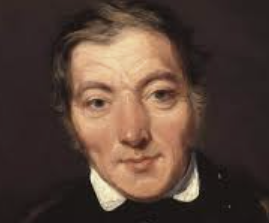
There is but one mode by which man can possess in perpetuity all the happiness which his nature is capable of enjoying, - that is by the union and co-operation of all for the benefit of each. Union and co-operation in war obviously increase the power of the individual a thousand fold. Is there the shadow of a reason why they should not produce equal effects in peace; why the principle of co-operation should not give to men the same superior powers, and advantages, (and much greater) in the creation, preservation, distribution and enjoyment of wealth?

3 months 2 weeks ago
I conceive that the description so often given of a Benthamite, as a mere reasoning machine, though extremely inapplicable to most of those who have been designated by that title, was during two or three years of my life not altogether untrue of me. ...There is nothing very extraordinary in this fact: no youth of the age I then was, can be expected to be more than one thing, and this was the thing I happened to be. Ambition and desire of distinction, I had in abundance; and zeal for what I thought the good of mankind was my strongest sentiment, mixing with and colouring all others. But my zeal was as yet little else, at that period of my life, than zeal for speculative opinions. It had not its root in genuine benevolence, or sympathy with mankind; though these qualities held their due place in my ethical standard. Nor was it connected with any high enthusiasm for ideal nobleness.
▼
Source
source
(pp. 109-110)
2 weeks ago
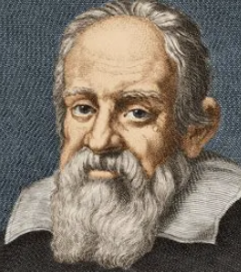
What was observed by us in the third place is the nature or matter of the Milky Way itself, which, with the aid of the spyglass, may be observed so well that all the disputes that for so many generations have vexed philosophers are destroyed by visible certainty, and we are liberated from wordy arguments.
▼
Source
source
Original text as reproduced in Edward Tufte, Beautiful Evidence (Cheshire, Connecticut: Graphics Press LLC, 2006), 101

2 weeks ago
To be free in an age like ours, one must be in a position of authority. That in itself would be enough to make me ambitious.
▼
Source
source
Letter to his elder sister Henriette (1841).

3 months 2 weeks ago
In action, in desire, we must submit perpetually to the tyranny of outside forces; but in thought, in aspiration, we are free, free from our fellowmen, free from the petty planet on which our bodies impotently crawl, free even, while we live, from the tyranny of death.
2 months 2 weeks ago
The first authentic record on this subject (alchemy) is an edict of Diocletian, about 300 years after Christ, ordering a diligent search to be made in Egypt for all the ancient books which treated of the art of making gold and silver, that they might be consigned to the flames. This edict necessarily presumes a certain antiquity to the pursuit; and fabulous history has recorded Solomon, Pythagoras, and Hermes among its distinguished votaries.
▼
Source
source
Quoted by H.P. Blavatsky, in Isis Unveiled: A Master-Key to the Mysteries of Ancient and Modern Science and Theology, Vol. I, (1877) (p. 504)
2 weeks ago
I have been in my bed for five weeks, oppressed with weakness and other infirmities from which my age, seventy four years, permits me not to hope release.
▼
Source
source
Compiled primarily from his correspondence and that of his eldest daughter, Sister Maria Celeste (1870) by Mary Allan-Olney, p. 278

4 months 5 days ago
The weakness of little children's limbs is innocent, not their souls.
▼
Source
source
I, 7
4 months 3 weeks ago
No power can maintain itself if only hypocrites represent it.
3 months 1 week ago
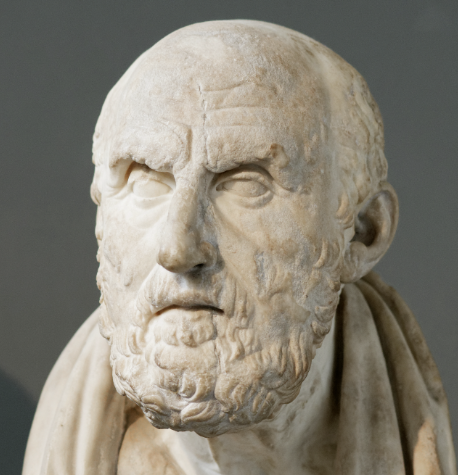
We should infer in the case of a beautiful dwelling-place that it was built for its owners and not for mice; we ought, therefore, in the same way to regard the universe as the dwelling-place of the gods.
▼
Source
source
As quoted in De Natura Deorum by Cicero, iii. 10.
1 month 5 days ago
For every man the world is as fresh as it was at the first day, and as full of untold novelties for him who has the eyes to see them.

3 months 1 week ago
Hearken with your ears to these best counsels,Reflect upon them with illumined judgment.Let each one choose his creed with that freedom of choice each must have at great events.
▼
Source
source
Ahunuvaiti Gatha; Yasna 30, 2.

4 days ago
Who profits by a sin has done the sin.
4 months 2 weeks ago
It is necessary that every thing which is harmonized, should be generated from that which is void of harmony, and that which is void of harmony from that which is harmonized. ...But there is no difference, whether this is asserted of harmony, or of order, or composition... the same reason will apply to all of these.

2 months 3 weeks ago
The debates of that great assembly are frequently vague and perplexed, seeming to be dragged rather than to march, to the intended goal. Something of this sort must, I think, always happen in public democratic assemblies.
▼
Source
source
Book One, Chapter XXI.
3 months 3 weeks ago
Freedom of Men under Government is, to have a standing Rule to live by, common to every one of that Society, and made by the Legislative Power erected in it; a Liberty to follow my own Will in all things, where the Rule prescribes not; and not to be subject to the inconstant, uncertain, unknown, Arbitrary Will of another Man: as Freedom of Nature is, to be under no other restraint but the Law of Nature.
▼
Source
source
Second Treatise of Civil Government, Ch. IV, sec. 21
4 days ago
But both courses are to be avoided; you should not copy the bad simply because they are many, nor should you hate the many because they are unlike you.
4 months 2 weeks ago
It is important to remember that the viciousness and wrongs of life stick out very plainly but that even at the worst times there is a great deal of goodness, kindness, and day-to-day decency that goes unnoticed and makes no headlines.
3 months 2 weeks ago
[My father] impressed upon me from the first, that the manner in which the world came into existence was a subject on which nothing was known: that the question, "Who made me?" cannot be answered, because we have no experience or authentic information from which to answer it; and that any answer only throws the difficulty a step further back, since the question immediately presents itself, "Who made God?"
▼
Source
source
(pp. 42-43)
3 months 2 weeks ago
...in order to change poverty into wealth, one must start by displaying it.
▼
Source
source
p. 420
3 months 1 week ago
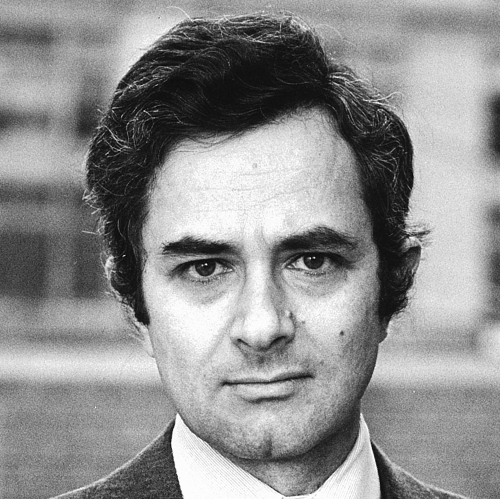
In speaking of the fear of religion, I don't mean to refer to the entirely reasonable hostility toward certain established religions and religious institutions, in virtue of their objectionable moral doctrines, social policies, and political influence. Nor am I referring to the association of many religious beliefs with superstition and the acceptance of evident empirical falsehoods. I am talking about something much deeper-namely, the fear of religion itself. I speak from experience, being strongly subject to this fear myself: I want atheism to be true and am made uneasy by the fact that some of the most intelligent and well-informed people I know are religious believers. It isn't just that I don't believe in God and, naturally, hope that I'm right in my belief. It's that I hope there is no God! I don't want there to be a God; I don't want the universe to be like that.
▼
Source
source
The Last Word, Oxford University Press, 1997, pp. 130-131.

3 months 2 weeks ago
But petitional prayer is only one department of prayer; and if we take the word in the wider sense as meaning every kind of inward communion or conversation with the power recognized as divine, we can easily see that scientific criticism leaves it untouched. Prayer in this wide sense is the very soul and essence of religion.
▼
Source
source
Lecture XIX, "Other Characteristics"
2 months 2 weeks ago
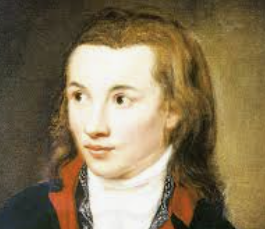
Blood will stream over Europe until the nations become aware of the frightful madness which drives them in circles. And then, struck by celestial music and made gentle, they approach their former altars all together, hear about the works of peace, and hold a great celebration of peace with fervent tears before the smoking altars.
▼
Source
source
As quoted in the Fourth Leaflet of the White Rose
2 months 5 days ago
There is a certain kind of morality which is even more alien to good and evil than amorality is.
▼
Source
source
"The responsibility of writers," p. 169

3 months 3 weeks ago
If women get tired and die of bearing, there is no harm in that; let them die as long as they bear; they are made for that.
▼
Source
source
-- Essays, quoted in Luther On "Woman"
1 month 3 weeks ago
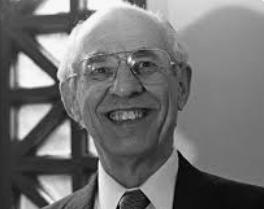
Analytic philosophers - both in the 'constructivist' camp and in the camp that studies 'the ordinary use of words' - are disturbingly unanimous in regarding 2-valued logic as having a privileged position: privileged, not just in the sense of corresponding to the way we do speak, but in the sense of having no serious rival for logical reasons. If the foregoing analysis is correct, this is a prejudice of the same kind as the famous prejudice in favor of a privileged status for Euclidean geometry (a prejudice that survives in the tendency to cite 'space has three dimensions' as some kind of 'necessary' truth). One can go over from a 2-valued to a 3-valued logic without totally changing the meaning of 'true' and 'false'; and not just in silly ways, like the ones usually cited (e.g. equating truth with high probability, falsity with low probability, and middlehood with 'in between' probability).
▼
Source
source
"Three-valued logic"
2 months 1 week ago
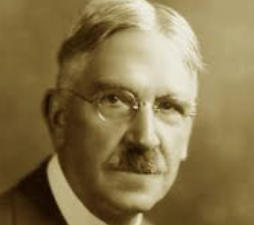
When we come to inanimate elements, the prevailing view has been that time and sequential change are entirely foreign to their nature. According to this view they do not have careers; they simply change their relations is space. We have only to think of the classic conception of atoms. The Newtonian atom, for example, moved and was moved, thus changing its position in space, but it was unchangeable in its own being. ... In itself it was like a God, the same yesterday, today, and forever.
1 month 1 week ago
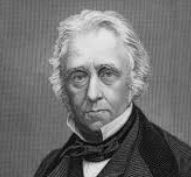
It is surely delightful, Sir, to look forward to that period when a series of liberal and prudent measures shall have delivered islands, so highly favoured by the bounty of Providence, from the curse inflicted on them by the frantic rapacity of man. Then the peasant of the Antilles will no longer crawl in listless and trembling dejection round a plantation from whose fruits he must derive no advantage, and a hut whose door yields him no protection; but, when his cheerful and voluntary labour is performed, he will return with the firm step and erect brow of a British citizen from the field which is his freehold to the cottage which is his castle.
▼
Source
source
Speech to a meeting of the Anti-Slavery Society held in Freemasons' Tavern (25 June 1824), quoted in Report of the Committee of the Society for the Mitigation and Gradual Abolition of Slavery Throughout the British Dominions, Volume I (1824), p. 77
CivilSimian.com created by AxiomaticPanic, CivilSimian, Kalokagathia