

3 months 1 week ago
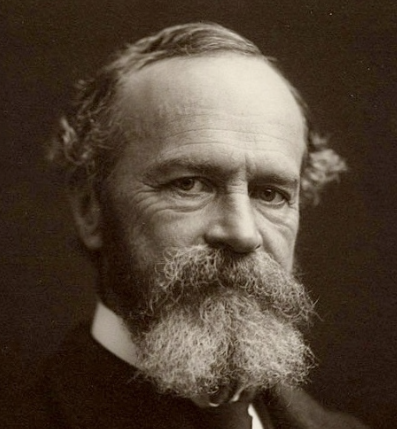
Setting the mind to remember... involves a continual minimal irradiation of excitement into paths which lead thereto... the continued presence of the thing in the 'fringe' of our consciousness. Letting the thing go involves withdrawal of the irradiation, unconsciousness of the thing, and... obliteration of the paths.
▼
Source
source
Ch. 16

3 months 1 week ago
The best way to drive out the devil, if he will not yield to texts of Scripture, is to jeer and flout him, for he cannot bear scorn.
▼
Source
source
Martin Luther, quoted at the beginning of The Screwtape Letters
1 month 4 weeks ago
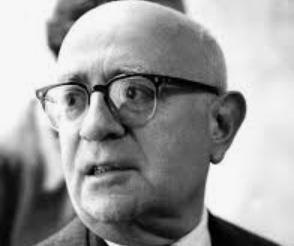
Philosophy ... should not imagine that specialized work in epistemological theory, or whatever else prides itself on being research, is actually philosophy. Yet a philosophy forswearing all of that must in the end be irreconcilably at odds with the dominant consciousness. Nothing else raises it above the suspicion of apologetics. Philosophy that satisfies its own intention, and does not childishly skip behind its own history and the real one, has its lifeblood in the resistance against the common practices of today and what they serve, against the justification of what happens to be the case.
▼
Source
source
p. 6

1 month 3 weeks ago
It seems that thought itself has a power for which it has never been given credit.
▼
Source
source
p. 16
4 weeks ago
I am too much of a sceptic to deny the possibility of anything - especially as I am now so much occupied with theology - but I don't see my way to your conclusion.
▼
Source
source
Letter to Herbert Spencer (22 March 1886); this is often quoted with a variant spelling as: I am too much of a skeptic to deny the possibility of anything.

2 months 2 weeks ago
Solicitation and effort or conation belong properly to animate beings alone. When they are attributed to other things, they must be taken in a metaphorical sense; but a philosopher should abstain from metaphor.
▼
Source
source
Paragraph 3
3 months 2 days ago
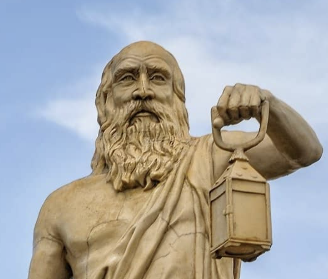
The noblest people are those despising wealth, learning, pleasure and life; esteeming above them poverty, ignorance, hardship and death.
▼
Source
source
Stobaeus, iv. 29a. 19
2 months 5 days ago
The empiricist thinks he believes only what he sees, but he is much better at believing than at seeing.
▼
Source
source
"Objections to Belief in Substance", p. 201

3 months 2 weeks ago
How many things served us yesterday for articles of faith, which today are fables for us?
▼
Source
source
Ch. 27. Of Friendship
3 months 1 week ago
There is no worse lie than a truth misunderstood by those who hear it.
▼
Source
source
Lectures XIV and XV, "The Value of Saintliness"
3 months 2 days ago
On reaching Athens he fell in with Antisthenes. Being repulsed by him, because he never welcomed pupils, by sheer persistence Diogenes wore him out. Once when he stretched out his staff against him, the pupil offered his head with the words, "Strike, for you will find no wood hard enough to keep me away from you, so long as I think you've something to say."
▼
Source
source
Diogenes Laërtius, vi. 21,
2 months 2 weeks ago
Thus the social position of women is in this respect very similar to that of philosophers and of the working classes. And we now see why these three elements should be united. It is their combined action which constitutes the moral or modifying force of society.
▼
Source
source
p. 235

4 months 2 days ago
Men are at variance with the one thing with which they are in the most unbroken communion, the reason that administers the whole universe.

2 months 1 week ago
Virtue can only flourish amongst equals.
▼
Source
source
A Vindication of the Rights of Men

3 months 3 weeks ago
They are ill discoverers that think there is no land, when they can see nothing but sea.
▼
Source
source
Book II, vii, 5
3 months 1 week ago
Supply and demand constantly determine the prices of commodities; never balance, or only coincidentally; but the cost of production, for its part, determines the oscillations of supply and demand.
▼
Source
source
Notebook I, The Chapter on Money, p. 58.
2 months 1 week ago
While all these are disturbed and divided by the multifarious objects to which their thoughts must be applied, the Philosopher pursues, in solitary silence and in unbroken concentration of mind, his single and undeviating course towards the Good, the Beautiful, and the True; and that is his daily labour, to which others can only resort at times for rest and refreshment after toil.
▼
Source
source
P. 17
1 month 6 days ago
The working classes may be injuriously degraded and oppressed in three ways: 1st - When they are neglected in infancy 2nd - When they are overworked by their employer, and are thus rendered incompetent from ignorance to make a good use of high wages when they can procure them. 3rd - When they are paid low wages for their labour.
▼
Source
source
Two Memorials on Behalf of the Working Classes

1 month 2 weeks ago
High school is closer to the core of the American experience than anything else I can think of.
▼
Source
source
Introduction to Our Time Is Now: Notes From the High School Underground, John Birmingham, ed.
3 months 2 weeks ago
It is a thorny undertaking, and more so than it seems, to follow a movement so wandering as that of our mind, to penetrate the opaque depths of its innermost folds, to pick out and immobilize the innumerable flutterings that agitate it.
▼
Source
source
Ch. 6. Of Preparation, tr. E. J. Trechmann, 1927
2 months 1 week ago
Some minds will jump here jump to the conclusion that a past idea cannot in any sense be present. But that is hasty and illogical. How extravagant too, to pronounce our whole knowledge of the past to be mere delusion! Yet it would seem that the past is completely beyond the bounds of possible experience as a Kantian thing-in-itself.
3 months 1 week ago
Friendship, I have said, is born at the moment when one man says to another "What! You too? I thought that no one but myself..."

3 months 4 weeks ago
The Catholic faith, I now realized could be maintained without presumption. This was especially true after I had heard one or two parts of the Old Testament explained allegorically, whereas before this, when I had interpreted them literally, they had killed me spiritually.
▼
Source
source
A. Outler, trans. (Dover: 2002), Book 5, Chapter 14, p. 81.

1 month 1 week ago
I am very conscious that you can't condemn people of an earlier era by the standards of ours. Just as we don't look back at the 18th and 19th centuries and condemn people for racism in the same way as we would condemn a modern person for racism, I look back a few decades to my childhood and see things like caning, like mild pedophilia, and can't find it in me to condemn it by the same standards as I or anyone would today.
▼
Source
source
Giles Whittell, "The world according to Richard Dawkins" (2013-09-07), The Times

4 months 1 day ago
For when every judgement is the act of hym that judgeth, it behoveth that every man performe hys worke and purpose, not by any forayne or straunge power or facultie, but by his owne proper power, and strength.

3 months 1 week ago
The soul active sees absolute truth; and utters truth, or creates.
▼
Source
source
par. 17

3 days ago
Consider, for example, the state of Science generally, in Europe, at this period. It is admitted, on all sides, that the Metaphysical and Moral Sciences are falling into decay, while the Physical are engrossing, every day, more respect and attention. In most of the European nations there is now no such thing as a Science of Mind; only more or less advancement in the general science, or the special sciences, of matter.

3 months 2 weeks ago
It is said that God is always on the side of the big battalions.
▼
Source
source
Letter to François-Louis-Henri Leriche (6 February 1770) Note: In his Notebooks (c.1735-c.1750)


2 months 1 week ago
That fear which gives birth to thoughts, and the fear of thoughts...
3 months 2 weeks ago
I have here only made a nosegay of culled flowers, and have brought nothing of my own but the thread that ties them together.
▼
Source
source
Book III, Ch. 12. Of Physiognomy

4 months 2 days ago
I hear and I forget. I see and I remember. I do and I understand.
2 months 1 week ago
Instinct is blind;-a consciousness without insight. Freedom, as the opposite of Instinct, is thus seeing, and clearly conscious of the grounds of its activity.
▼
Source
source
p. 7
3 months 1 week ago
The church is a sort of hospital for men's souls, and as full of quackery as the hospital for their bodies. Those who are taken into it live like pensioners in their Retreat or Sailors' Snug Harbor, where you may see a row of religious cripples sitting outside in sunny weather.
▼
Source
source
Pearls of Thought (1881) p. 43

1 month 2 weeks ago
When a man is taken in a mystical sense, his qualities are often signified by his actions, and by the circumstances of things about him. So a Ruler is signified by his riding on a beast; a Warrior and Conqueror, by his having a sword and bow; a potent man, by his gigantic stature; a Judge, by weights and measures... the affliction or persecution which a people suffers in laboring to bring forth a new kingdom, by the pain of a woman in labor to bring forth a man-child; the dissolution of a body politic or ecclesiastic, by the death of a man or beast; and the revival of a dissolved dominion, by the resurrection of the dead.
▼
Source
source
Vol. I, Ch. 2: Of the Prophetic Language

3 months 2 weeks ago
The value of money is in proportion to the quantity of the necessaries of life which it will purchase.
▼
Source
source
Chapter II, Part II, Article IV.

3 months 1 week ago
Either we must have war against Russia, before she has the atom bomb, or we will have to lie down and let them govern us. ... Anything is better than submission.
▼
Source
source
Speech quoted in The Observer (21 November 1948), quoted in Robert Skildesky, Oswald Mosley (1981), p. 542 and Martin Ceadel, Thinking about Peace and War (1987), p. 52

2 months 1 week ago
Old religious factions are volcanoes burnt out.
▼
Source
source
Speech on the Petition of the Unitarians

3 months 3 days ago
We appear to be faced with a general difficulty about psychophysical reduction. In other areas the process of reduction is a move in the direction of greater objectivity, toward a more accurate view of the real nature of things. ... The less it depends on a specifically human viewpoint, the more objective is our description. ...Experience itself, however, does not seem to fit the pattern. ... If the subjective character of experience is fully comprehensible only from one point of view, then any shift to greater objectivity - that is, less attachment to a specific viewpoint - does not take us nearer to the real nature of the phenomenon: it takes us further away from it.
▼
Source
source
p. 174.

1 month 3 weeks ago
It is a safe rule to apply that, when a mathematical or philosophical author writes with a misty profundity, he is talking nonsense.
▼
Source
source
ch. 15.

2 months 2 weeks ago
Égalité is an expression of envy. It means, in the real heart of every Republican, " No one shall be better off than I am;" and while this is preferred to good government, good government is impossible.
▼
Source
source
Conversation with Nassau William Senior, 22 May 1850 Nassau, p. 94

7 months 2 weeks ago
Canned laughter: After some supposedly funny or witty remark you can hear the laughter and applause included in the soundtrack of the show itself - here we have the exact counterpart of the Chorus in classical tragedy; it is here that we have to look for 'living Antiquity.' That is to say, why this laughter? The first possible answer - that it serves to remind us when to laugh - is interesting enough, because it implies the paradox that laughter is a matter of duty and not of some spontaneous feeling; but this answer is not sufficient because we do not usually laugh. The only correct answer would be that the Other - embodied in the television set - is relieving us even of our duty to laugh - is instead laughing for us. So even if, tired from a hard days stupid work, all evening we did nothing but gaze drowsily into the television screen, we can say afterwards that objectively, through the medium of the other, we had a really good time.

4 months 1 week ago
The vicious lover is the follower of earthly Love who desires the body rather than the soul; his heart is set on what is mutable and must therefore be inconstant. And as soon as the body he loves begins to pass the first flower of its beauty, he "spreads his wings and flies away," giving the lie to all his pretty speeches and dishonoring his vows, whereas the lover whose heart is touched by moral beauties is constant all his life, for he has become one with what will never fade.
1 month 3 weeks ago
Rightness of limitation is essential for growth of reality.Unlimited possibility and abstract creativity can procure nothing. The limitation, and the basis arising from what is already actual, are both of them necessary and interconnected.
▼
Source
source
Religion in the Making (February 1926), Lecture IV: "Truth and Criticism".

4 months 1 week ago
Self-education is, I firmly believe, the only kind of education there is.

2 months 3 weeks ago
Truth is so great a perfection, that if God would render himself visible to men, he would choose light for his body and truth for his soul.
▼
Source
source
As quoted in A Dictionary of Thoughts: Being a Cyclopedia of Laconic Quotations from the Best Authors of the World, both Ancient and Modern (1908) by Tyron Edwards, p. 592
3 months 1 week ago
I feel like that intellectual but plain-looking lady who was warmly complimented on her beauty. In accepting his Nobel Prize, in December 1950; Russell denied that he had contributed anything in particular to literature.
▼
Source
source
Quoted in LIFE, Editorials: "A great mind is still annoying and adorning our age", 26 May 1952
3 months 1 week ago
We are born helpless. As soon as we are fully conscious we discover loneliness. We need others physically, emotionally, intellectually; we need them if we are to know anything, even ourselves. Introduction

3 months 2 weeks ago
To love truth for truth's sake is the principal part of human perfection in this world, and the seed-plot of all other virtues.
▼
Source
source
Letter to Anthony Collins, 29 October 1703
CivilSimian.com created by AxiomaticPanic, CivilSimian, Kalokagathia