

2 months 1 week ago
The only satisfied rationalists today are blinkered scientists or Marxists.
▼
Source
source
Ch. 7, p. 113

3 months 2 weeks ago
Nature is no sentimentalist, - does not cosset or pamper us. We must see that the world is rough and surly, and will not mind drowning a man or a woman, but swallows your ships like a grain of dust. The cold, inconsiderate of persons, tingles your blood, benumbs your feet, freezes a man like an apple. The diseases, the elements, fortune, gravity, lightning, respect no persons.
▼
Source
source
p. 182
3 months 4 weeks ago
Nature, which alone is good, is wholly familiar and common.
3 months 3 days ago
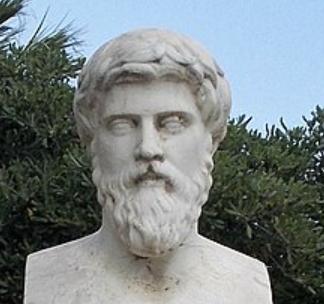
Lycurgus the Lacedæmonian brought long hair into fashion among his countrymen, saying that it rendered those that were handsome more beautiful, and those that were deformed more terrible. To one that advised him to set up a democracy in Sparta, "Pray," said Lycurgus, "do you first set up a democracy in your own house."
▼
Source
source
57 Lycurgus

1 week 4 days ago
So this is something... we see happening... in the war in Ukraine. A lot of people raise the question, "Why are Ukrainians resisting the Russian invasion as ferociously as they are?" and there's been a little bit of a debate over whether this is due to the fact that Ukrain is democratic, a liberal democracy, and Russia is not, or whether it's simply a fight over sovereignty... I think that that's a false dichotomy because you really don't fight for liberalism as an abstract principle. You fight for it as it is embedded in... your nation... From my... frequent visits to Ukraine... I believe... that's what's really going on, that Ukrainians want their sovereignty, but the reason they want it so desperately is that they want to have a free Ukraine and not Putin's Ukraine, not a... centralized dictatorship, and that's why they're willing to fight so tenaciously.
▼
Source
source
25:44:00

3 months 2 weeks ago
The militarily-patriotic and the romantic-minded everywhere, and especially the professional military class, refuse to admit for a moment that war may be a transitory phenomenon in social evolution. The notion of a sheep's paradise like that revolts, they say, our higher imagination. Where then would be the steeps of life? If war had ever stopped, we should have to re-invent it, on this view, to redeem life from flat degeneration. Reflective apologists for war at the present day all take it religiously. It is a sort of sacrament. It's profits are to the vanquished as well as to the victor; and quite apart from any question of profit, it is an absolute good, we are told, for it is human nature at its highest dynamic.

3 months 2 weeks ago
All mortals tend to turn into the thing they are pretending to be.
▼
Source
source
Letter X
4 months 2 weeks ago
When people are friends, they have no need of justice, but when they are just, they need friendship in addition.
3 months 6 days ago
Let hopes and sorrows, fears and angers be, and think each day that dawns the last you'll see; For so the hour that greets you unforeseen, will bring with it enjoyment twice as keen.
▼
Source
source
Book I, epistle iv, line 12 (translated by John Conington)

3 months 3 weeks ago
There is nothing more notable in Socrates than that he found time, when he was an old man, to learn music and dancing, and thought it time well spent.
▼
Source
source
Book III, Ch. 13
4 months ago
Were I a nightingale, I would act the part of a nightingale; were I a swan, the part of a swan.
▼
Source
source
Book I, ch. 16, 20.

3 months 2 weeks ago
I do not believe that science per se is an adequate source of happiness, nor do I think that my own scientific outlook has contributed very greatly to my own happiness, which I attribute to defecating twice a day with unfailing regularity.
▼
Source
source
Letter to W. W. Norton (publisher), 27 January, 1931

1 week ago
It is a most important social act; nay, at bottom, the one important social act. Given the men a People choose, the People itself, in its exact worth and worthlessness, is given. A heroic people chooses heroes, and is happy; a valet or flunkey people chooses sham-heroes, what are called quacks, thinking them heroes, and is not happy.

1 month 2 weeks ago
What began as a "Romantic reaction" towards organic wholeness may or may not have hastened the discovery of electro-magnetic waves. But certainly the electro-magnetic discoveries have recreated the simultaneous "field" in all human affairs so that the human family now exists under conditions of a "global village." We live in a single constricted space resonant with tribal drums. So that concern with the "primitive" today is as banal as nineteenth-century concern with "progress," and as irrelevant to our problems. The new electronic interdependence recreates the world in the image of a global village.
▼
Source
source
(p. 36)

2 months 1 week ago
O woman, great is thy faith: be it unto thee even as thou wilt.
▼
Source
source
15:28 (KJV)

1 month 4 weeks ago
Considered as a whole, Hesse's achievement can hardly be matched in modern literature; it is the continually rising trajectory of an idea, the fundamentally religious idea of how to 'live more abundantly'. Hesse has little imagination in the sense that Shakespeare or Tolstoy can be said to have imagination, but his ideas have a vitality that more than makes up for it. Before all, he is a novelist who used the novel to explore the problem: What should we do with our lives? The man who is interested to know how he should live instead of merely taking life as it comes, is automatically an Outsider.
▼
Source
source
p. 77

1 month 4 weeks ago
And this in turn makes it plain that the Right Man problem is a problem of highly dominant people. Dominance is a subject of enormous importance to biologists and zoologists because the percentage of dominant animals - or human beings - seems to be amazingly constant. Bernard Shaw once asked the explorer H. M. Stanley how many other men could take over leadership of the expedition if Stanley himself fell ill; Stanley replied promptly: "One in twenty." "Is that exact or approximate?" asked Shaw. "Exact." And biological studies have confirmed this as a fact. For some odd reason, precisely five per cent - one in twenty - of any animal group are dominant - have leadership qualities. During the Korean War, the Chinese made the interesting discovery that if they separated out the dominant five per cent of American prisoners of war, and kept them in separate compound, the remaining ninety-five per cent made no attempt to escape.
▼
Source
source
p. 216
3 months 3 weeks ago
Women are the most charitable creatures, and the most troublesome. He who shuns women passes up the trouble, but also the benefits. He who puts up with them gains the benefits, but also the trouble. As the saying goes, there's no honey without bees.
▼
Source
source
Act III, scene iv
2 months 2 days ago
The phrase, the world wants to be deceived, has become truer than had ever been intended. People are not only, as the saying goes, falling for the swindle; if it guarantees them even the most fleeting gratification they desire a deception which is nonetheless transparent to them. They force their eyes shut and voice approval, in a kind of self-loathing, for what is meted out to them, knowing fully the purpose for which it is manufactured. Without admitting it they sense that their lives would be completely intolerable as soon as they no longer clung to satisfactions which are none at all.
▼
Source
source
Section 10

2 months 2 days ago
A society like the Church, which claims to be Divine is perhaps more dangerous on account of the ersatz good which it contains then on account of the evil which sullies it. Something of the social labelled divine: an intoxicating mixture which carries with it every sort of license.
▼
Source
source
Devil disguised. p. 122
3 months 6 days ago
One should attend to one's enemies, for they are the first persons to detect one's errors.
▼
Source
source
§ 5

1 month 3 weeks ago
Nothing can contribute more to peace of soul than the lack of any opinion whatever.
▼
Source
source
E 11

4 months 2 weeks ago
Creationists make it sound as though a "theory" is something you dreamt up after being drunk all night.
3 months 2 weeks ago
Of all the ways whereby children are to be instructed, and their manners formed, the plainest, easiest, and most efficacious, is, to set before their eyes the examples of those things you would have them do, or avoid; which, when they are pointed out to them, in the practice of persons within their knowledge, with some reflections on their beauty and unbecomingness, are of more force to draw or deter their imitation, than any discourses which can be made to them.
▼
Source
source
Sec. 82
1 month 3 weeks ago
That man is the noblest creature may also be inferred from the fact that no other creature has yet contested this claim.
▼
Source
source
D 58 The proof that man is the noblest of all creatures is that no other creature has ever denied it.
3 months 6 days ago
For why do you hasten to remove things that hurt your eyes, but if anything gnaws your mind, defer the time of curing it from year to year?
▼
Source
source
Book I, epistle ii, lines 37-39; translation by C. Smart
1 month 2 weeks ago
Indeed it may be only by risking the incoherence of identity that connection is possible.
▼
Source
source
Bodies That Matter: On the Discursive Limits of "Sex"
2 months 1 week ago
The demagogues, impresarios of alteracion, who have already caused the death of several civilizations, harass men so that they shall not reflect, see to it that they are kept herded together in crowds so that they cannot reconstruct their individuality in the one place where it can be reconstructed, which is in solitude.
▼
Source
source
p. 33

3 months 1 week ago
The appearance in nineteenth-century psychiatry, jurisprudence, and literature of a whole series of discourses on the species and subspecies of homosexuality, inversion, pederasty, and "psychic hermaphroditism" made possible a strong advance of social controls into this area of "perversity"; but it also made possible the formation of a "reverse" discourse: homosexuality began to speak in its own behalf, to demand that its legitimacy or "naturality" be acknowledged, often in the same vocabulary, using the same categories by which it was medically disqualified.
▼
Source
source
Vol. I, p. 101
3 months 2 weeks ago
We are apt to imagine that this hubbub of Philosophy, Literature, and Religion, which is heard in pulpits, lyceums, and parlors, vibrates through the universe, and is as catholic a sound as the creaking of the earth's axle. But if a man sleeps soundly, he will forget it all between sunset and dawn.
▼
Source
source
January 6, 1842
2 months 1 week ago
But the individual butterfly or earthquake remains just the unique existence which it is. We forget in explaining its occurrence that it is only the occurrence that is explained, not the thing itself.
1 month 3 weeks ago
What we have is a device for producing sentences in response to sentences. But none of these sentences is at all connected to the real world. If one coupled two of these machines and let them play the Imitation Game with each other, then they would go on 'fooling' each other forever, even if the rest of the world disappeared! There is no more reason to regard the machine's talk of apples as referring to real world apples than there is to regard the ant's 'drawing' as referring to Winston Churchill.
▼
Source
source
Chap. 1 : Brains in a vat
4 months 2 weeks ago
People are entirely too disbelieving of coincidence. They are far too ready to dismiss it and to build arcane structures of extremely rickety substance in order to avoid it. I, on the other hand, see coincidence everywhere as an inevitable consequence of the laws of probability, according to which having no unusual coincidence is far more unusual than any coincidence could possibly be.

2 months 3 days ago
"God does not think, He creates; He does not exist, He is eternal," wrote Kierkegaard (Afslutende uvidenskabelige Efterskrift); but perhaps it is more exact to say with Mazzini, the mystic of the Italian city, that "God is great because his thought is action" (Ai giovani d'Italila), because with Him to think is to create, and He gives existence to that which exists in His thought by the mere fact of thinking it, and the impossible is unthinkable by God. It is not written in the Scriptures that God creates with His word - that is to say, with His thought - and that by this, by His Word, He made everything that exists? And what God has once made does He ever forget? May it not be that all the thoughts that have ever passed through the Supreme Consciousness still subsist therein? In Him, who is eternal, is not all existence eternalized?
1 week 1 day ago
Investigate what is, and not what pleases.
▼
Source
source
Der Versuch als Vermittler von Objekt und Subjekt (The Attempt as Mediator of Object and Subject)
1 month 4 weeks ago
The Orient that appears in Orientalism, then, is a system of representations framed by a whole set of forces that brought the Orient into Western learning, Western consciousness, and later, Western empire. ... The Orient is the stage on which the whole East is confined. On this stage will appear the figures whose role it is to represent the larger whole from which they emanate. The Orient then seems to be, not an unlimited extension beyond the familiar European world, but rather a closed field, a theatrical stage affixed to Europe.
2 months 2 weeks ago
Whoever does not philosophize for the sake of philosophy, but rather uses philosophy as a means, is a sophist.
▼
Source
source
"Selected Aphorisms from the Athenaeum (1798)", Dialogue on Poetry and Literary Aphorisms, Ernst Behler and Roman Struc, trans. (Pennsylvania University Press:1968) #96
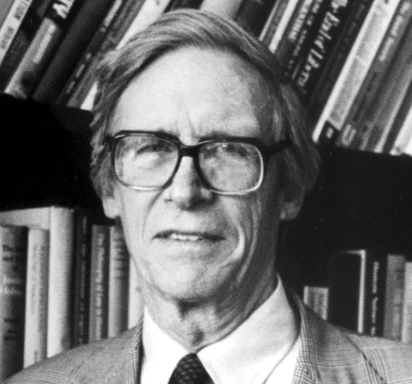
3 months 2 weeks ago
There are infinitely many variations of the initial situation and therefore no doubt indefinitely many theorems of moral geometry.
▼
Source
source
Chapter III, Section 21, pg. 126
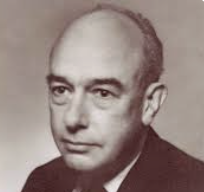
2 months 2 days ago
Life is agid. Life is fulgid. Life is a burgeoning, a quickening of the dim primordial urge in the murky wastes of time. Life is what the least of us make most of us feel the least of us make the most of.
▼
Source
source
Quine's response in 1988 when asked his philosophy of life. (He invented the word "agid".) It makes up the entire Chapter 54 in Quine in Dialogue (2008).
3 months 1 week ago
[W]hen a philosopher addresses himself to... a tyrant, and tells him... tyranny is incompatible with justice, then the philosopher speaks... [and] believes he is speaking the truth, and... takes a risk...
▼
Source
source
[T]hat was Plato's situation with Dionysius in Syracuse... reference... Plato's Seventh Letter, and... The Life of Dion by Plutarch. Ref: 1) Ludwig Edelstein, Plato's seventh letter (1966) 2) Plutarch, Life of Dion

3 months 2 weeks ago
The circulation of capital realizes value, while living labour creates value.
▼
Source
source
Notebook V, The Chapter on Capital, p. 463.
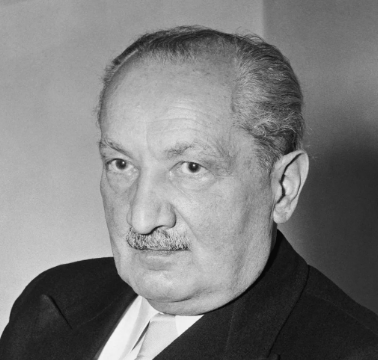
3 months 1 week ago
Enjoyment of the work consists in participation in the creative state of the artist.
▼
Source
source
p. 117
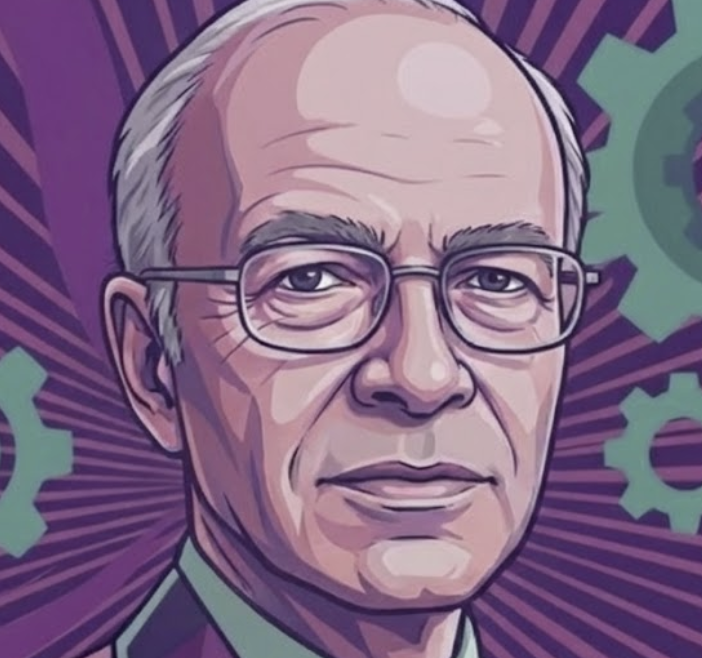
3 months 6 days ago
I regard Peter as one of the great moralists, because I suspect that more than anyone he has helped to change the attitudes of very many people to the sufferings of animals. Peter is a utilitarian in normative ethics, and a humane attitude to animals is a natural corollary of utilitarianism. Utilitarian concern for animals goes back to Bentham, who, presumably alluding to the Kantians, said that the question was not whether animals can reason, but whether they can suffer.
▼
Source
source
J. J. C. Smart, Reply to Singer, in Philip Pettit, Richard Sylvan and Jean Norman (eds.), Metaphysics and Morality: Essays in Honour of J. J. C. Smart, Oxford, 1987, p. 192
6 days ago
See him, the newborn, dirty but marvelous, ridiculous in actuality, infinite in possibility, capable of that ultimate miracle, growth.
▼
Source
source
Ch. 1 : Our life begins
1 month 2 weeks ago
Once animals had a more sacred, more divine character than men. There is not even a reign of the "human" in primitive societies, and for a long time the animal order has been the order of reference. Only the animal is worth being sacrificed, as a god, the sacrifice of man only comes afterward, according to a degraded order. Men qualify only by their affiliation to the animal: the Bororos "are" macaws. "
▼
Source
source
The Animals: Territory and Metamorphoses," p. 133
1 month 2 weeks ago
Science fiction is like other writing. It is just novels and short stories with machines.
3 months 2 weeks ago
When the basic structure of society is publicly known to satisfy its principles for an extended period of time, those subject to these arrangements tend to develop a desire to act in accordance with these principles and to do their part in institutions which exemplify them.
▼
Source
source
Chapter III, Section 29, pg.177
1 week 4 days ago
The mob has always behaved in this way-eagerly open to bribes that cannot be honorably accepted, and dissolutely callous to degradation and insult that cannot be honorably endured.
▼
Source
source
Part 2
CivilSimian.com created by AxiomaticPanic, CivilSimian, Kalokagathia