


1 month 2 weeks ago
Casting my perils before swains.

2 months 3 weeks ago
I believe in God, although I live very happily with atheists... It is very important not to mistake hemlock for parsley; but not at all so to believe or not in God.
▼
Source
source
As quoted in Against the Faith (1985) by Jim Herrick, p. 75

4 months 1 week ago
The kingdom, its states, and its families, may be perfectly ruled; dignities and emoluments may be declined; naked weapons may be trampled under the feet; but the course of the Mean cannot be attained to.
1 month 1 week ago
The culture of a civilization is the art and literature through which it rises to consciousness of itself and defines its vision of the world.
▼
Source
source
"What is Culture?" (p. 2)

4 months 1 week ago
With regard to the abuse of authority, this also may come about in two ways. First, when what is ordered by an authority is opposed to the object for which that authority was constituted (if, for example, some sinful action is commanded or one which is contrary to virtue, when it is precisely for the protection and fostering of virtue that authority is instituted). In such a case, not only is there no obligation to obey the authority, but one is obliged to disobey it, as did the holy martyrs who suffered death rather than obey the impious commands of tyrants. Secondly, when those who bear such authority command things which exceed the competence of such authority; as, for example, when a master demands payment from a servant which the latter is not bound to make, and other similar cases. In this instance the subject is free to obey or disobey.
▼
Source
source
in Aquinas: Selected Political Writings (Basil Blackwell: 1974), p. 183

3 months 3 weeks ago
A minister of state is excusable for the harm he does when the helm of government has forced his hand in a storm; but in the calm he is guilty of all the good he does not do.
▼
Source
source
Le Siècle de Louis XIV, ch. VI: "État de la France jusqu'à la mort du cardinal Mazarin en 1661" (1752)

4 months 2 weeks ago
The true discovery of America by mankind came when those first hunting bands crossed over from Siberia 25,000 years ago. This, however, never seems to count. When people speak of the "discovery of America" they invariably mean its discovery by Europeans.
3 months 3 weeks ago
Descartes is rightly regarded as the father of modern philosophy primarily and generally because he helped the faculty of reason to stand on its own feet by teaching men to use their brains in place whereof the Bible, on the one hand, and Aristotle, on the other, had previously served.
▼
Source
source
E. Payne, trans. (1974) Vol. 1, p. 3
4 months 1 week ago
The silent treasuring up of knowledge; learning without satiety; and instructing others without being wearied: which one of these things belongs to me? To keep silently in mind what one has seen and heard, to study hard and never feel contented, to teach others tirelessly; have I done (all of) these things?

1 month 2 weeks ago
Go - take the mother's soul, and learn three truths: Learn What dwells in man, What is not given to man, and What men live by. When thou hast learnt these things, thou shalt return to heaven.
▼
Source
source
Ch. IV

4 weeks 1 day ago
When Bernard Marx tells the Savage he will try to secure permission for him and his mother to visit the Other Place, John is initially pleased and excited. Echoing Miranda in The Tempest, he exclaims: "O brave new world that has such people in it." Heavy irony. Like innocent Miranda, he is eager to embrace a way of life he neither knows nor understands. And of course he comes unstuck. Yet if we swallow such fancy literary conceits, then ultimately the joke is on us. It is only funny in the sense there are "jokes" about Auschwitz. For it is Huxley who neither knows nor understands the glory of what lies ahead. A utopian society in which we are sublimely happy will be far better than we can presently imagine, not worse. And it is we, trapped in the emotional squalor of late-Darwinian antiquity, who neither know nor understand the lives of the god-like super-beings we are destined to become. "Brave New World? A Defence of Paradise-Engineering", BLTC Research, 1998

3 months 2 weeks ago
I have nothing but contempt for you idiotic chosen ones who have the heart to rejoice when there are the damned in Hell and the poor on earth; as for me, I am on the side of men and I will not leave it.
▼
Source
source
Act 6, sc. 6
1 month 2 weeks ago
Every one excels in something in which another fails.
▼
Source
source
Maxim 17

2 months 6 days ago
The human soul has need of consented obedience and of liberty. Consented obedience is what one concedes to an authority because one judges it to be legitimate. It is not possible in relation to a political power established by conquest or coup d'etat nor to an economic power based upon money. Liberty is the power of choice within the latitude left between the direct constraint of natural forces and the authority accepted as legitimate. The latitude should be sufficiently wide for liberty to be more than a fiction, but it should include only what is innocent and should never be wide enough to permit certain kinds of crime.
2 months 1 week ago
The pathfinders of modern thought did not derive what is good from the law. ... Their role in history was not that of adapting their words and actions to the text of old documents or generally accepted doctrines: they themselves created the documents and brought about the acceptance of their doctrines.
▼
Source
source
p. 33.

2 months 3 weeks ago
But how shall we expect charity towards others, when we are uncharitable to ourselves? Charity begins at home, is the voice of the world, yet is every man his greatest enemy, and as it were, his own executioner.
▼
Source
source
Section 4

3 months 3 weeks ago
Apart from logical cogency, there is to me something a little odd about the ethical valuations of those who think that an omnipotent, omniscient, and benevolent Deity, after preparing the ground by many millions of years of lifeless nebulae, would consider Himself adequately rewarded by the final emergence of Hitler and Stalin and the H-bomb.
▼
Source
source
Preface

2 months 3 days ago
This is the Outsider's extremity. He does not prefer not to believe; he doesn't like feeling that futility gets the last word in the universe; his human nature would like to find something it can answer to with complete assent. But honesty prevents his accepting a solution that he cannot reason about.
▼
Source
source
Chapter Five, The Pain Threshold

1 month 3 days ago
Instead of water belonging to millions of local communities, water too is to be controlled by five or six global water giants. These are recipes that use economic systems to appropriate for the few the base of survival of the majority.
4 months 2 weeks ago
We face eternity now. We have no universe left, no outside phenomena, no emotions, no passions. Nothing but ourselves and thought. We face an eternity of introspection, when all through history we have never known what to do with ourselves on a rainy Sunday.
2 months 1 week ago
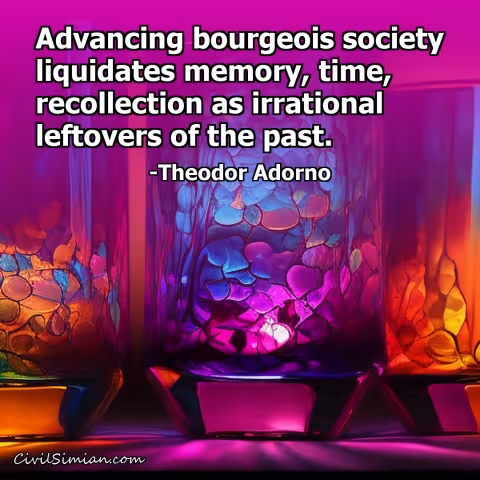
The disparagement of empirical evidence in favor of a metaphysical world of illusion has its origin in the conflict between the emancipated individual of bourgeois society and his fate within that society.
▼
Source
source
p. 138.
2 months 4 days ago
Without doubt, if we are to go back to that ultimate, integral experience, unwarped by the sophistications of theory, that experience whose elucidation is the final aim of philosophy, the flux of things is one ultimate generalization around which we must weave our philosophical system.
▼
Source
source
Pt. II, ch. 10, sec. 1.
3 months 3 weeks ago
It may be observed, that provinces amid the vicissitudes to which they are subject, pass from order into confusion, and afterward recur to a state of order again; for the nature of mundane affairs not allowing them to continue in an even course, when they have arrived at their greatest perfection, they soon begin to decline. In the same manner, having been reduced by disorder, and sunk to their utmost state of depression, unable to descend lower, they, of necessity, reascend; and thus from good they gradually decline to evil, and from evil again return to good. The reason is, that valor produces peace; peace, repose; repose, disorder; disorder, ruin; so from disorder order springs; from order virtue, and from this, glory and good fortune.
▼
Source
source
Book V, Chapter 1

2 months 2 weeks ago
The advantage of meditating upon life and death is being able to say anything at all about them.
2 months 3 days ago
It seemed perfectly possible that, in spite of my certainty of my own genius, I might die of some illness, or perhaps even in a street accident, before I had ever glimpsed the meaning of life. My moods of happiness and self-confidence convinced me that I had a "destiny" to become a famous writer, and to be remembered as one of the most important thinkers of the century.
▼
Source
source
p. 67
1 month 3 weeks ago
[When Vonnegut tells his wife he's going out to buy an envelope] Oh, she says, well, you're not a poor man. You know, why don't you go online and buy a hundred envelopes and put them in the closet? And so I pretend not to hear her. And go out to get an envelope because I'm going to have a hell of a good time in the process of buying one envelope. I meet a lot of people. And, see some great looking babes. And a fire engine goes by. And I give them the thumbs up. And, and ask a woman what kind of dog that is. And, and I don't know. The moral of the story is, is we're here on Earth to fart around. And, of course, the computers will do us out of that. And, what the computer people don't realize, or they don't care, is we're dancing animals. You know, we love to move around. And, we're not supposed to dance at all anymore.
▼
Source
source
Interview by David Brancaccio, NOW (PBS)
2 months 3 weeks ago
The long habit of living indisposeth us for dying.
▼
Source
source
Chapter V

3 months 2 weeks ago
This year, or this month, or, more likely, this very day, we have failed to practise ourselves the kind of behaviour we expect from other people.
▼
Source
source
Book I, Chapter 1, "The Law of Human Nature"
2 months 2 weeks ago
The doctrine of the transmigration of souls was indigenous to India and was brought into Greece by Pythagoras.
▼
Source
source
quoted in Londhe, S. (2008). A tribute to Hinduism: Thoughts and wisdom spanning continents and time about India and her culture. New Delhi: Pragun Publication.

1 week 4 days ago
Nothing that was worthy in the past departs; no truth or goodness realized by man ever dies, or can die.
3 months 1 week ago
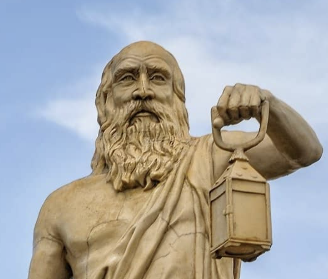
When some one reminded him that the people of Sinope had sentenced him to exile, he said, "And I sentenced them to stay at home."
▼
Source
source
Diogenes Laërtius, vi. 49

2 months 2 weeks ago
I hate tyranny, at least I think I do; but I hate it most of all where most are concerned in it. The tyranny of a multitude is a multiplied tyranny. If, as society is constituted in these large countries of France and England, full of unequal property, I must make my choice (which God avert!) between the despotism of a single person, or of the many, my election is made. As much injustice and tyranny has been practised in a few months by a French democracy, as in all the arbitrary monarchies in Europe in the forty years of my observation.
▼
Source
source
Letter to Captain Thomas Mercer (26 February 1790), quoted in Alfred Cobban and Robert A. Smith (eds.), The Correspondence of Edmund Burke, Volume VI: July 1789-December 1791 (1967), p. 96
3 months 2 weeks ago
Every story of conversion is the story of a blessed defeat.
▼
Source
source
Foreword to Joy Davidman's Smoke on the Mountain, 1954
1 week 4 days ago
The great law of culture is: Let each become all that he was created capable of being.
▼
Source
source
Richter.

3 months 3 weeks ago
The guardians who have kindly undertaken the supervision will see to it that by far the largest part of mankind, including the entire "beautiful sex," should consider the step into maturity, not only as difficult but as very dangerous. After having made their domestic animals dumb and having carefully prevented these quiet creatures from daring to take any step beyond the lead-strings to which they have fastened them, these guardians then show them the danger which threatens them, should they attempt to walk alone.
2 months 1 week ago
Blessed is the lion which becomes man when consumed by man; and cursed is the man whom the lion consumes, and the lion becomes man. (7) This saying has been interpreted by some as referring to such anger as consumes a man…(rather than is consumed by him, through his reason and love), 'til that man is the lion of Anger. Other more mystical interpretations might also be found or devised that have merit.
1 month 2 weeks ago
Although meaningless in a tribal context, numbers and statistics assume mythic and magical qualities of infallibility in literate societies.
▼
Source
source
(p. 114)
2 months 1 week ago
Spinoza, for example, thought that insight into the essence of reality, into the harmonious structure of the eternal universe, necessarily awakens love for this universe. For him, ethical conduct is entirely determined by such insight into nature, just as our devotion to a person may be determined by insight into his greatness or genius. Fears and petty passions, alien to the great love of the universe, which is logos itself, will vanish, according to Spinoza, once our understanding of reality is deep enough.
▼
Source
source
p. 14.
2 months 2 weeks ago
The flesh spreads, further and further, like a gangrene upon the surface of the globe. It cannot impose limits upon itself, it continues to be rife despite its rebuffs, it takes its defeats for conquests, it has never learned anything. It belongs above all to the realm of the Creator, and it is indeed in the flesh that He has projected His maleficent instincts.
2 months 2 weeks ago
This means that no state, howsoever democratic its forms, not even the reddest political republic - a people's republic only in the sense of the lie known as popular representation - is capable of giving the people what they need: the free organization of their own interests from below upward, without any interference, tutelage, or coercion from above. That is because no state, not even the most republican and democratic, not even the pseudo-popular state contemplated by Marx, in essence represents anything but government of the masses from above downward, by an educated and thereby privileged minority which supposedly understands the real interests of the people better than the people themselves.

3 months 2 weeks ago
When nature removes a great man, people explore the horizon for a successor; but none comes, and none will. His class is extinguished with him. In some other and quite different field the next man will appear.
▼
Source
source
Uses of Great Men
3 months 4 weeks ago
For Christ is Joy and Sweetness to a broken heart. Christ is a Lover of poor sinners, and such a Lover that He gave Himself for us. Now if this is true, and it is true, then are we never justified by our own righteousness.
▼
Source
source
Chapter 3, verse 20
4 months 5 days ago
In order to understand the Scriptures, it is absolutely necessary to know the whole, complete Christ, that is, Head and members. For sometimes Christ speaks in the name of the Head alone, sometimes in the name of His body, which is the holy Church spread over the entire earth. And we are in His body, and we hear ourselves speaking in it, for the Apostle tells us: We are members of His body (Eph. 5:30). In many places does the Apostle tell us this.
▼
Source
source
p. 419

3 months 2 weeks ago
Philosophy is like trying to open a safe with a combination lock: each little adjustment of the dials seems to achieve nothing, only when everything is in place does the door open.
▼
Source
source
Philosophical Occasions 1912-1951 (1993) edited by James Carl Klagge and Alfred Nordmann
3 months 3 weeks ago
Fools admire everything in an author of reputation.
2 months 1 week ago
Men have been released from [concentration] camps who have taken over the jargon of their jailers and with cold reason and mad consent (the price, as it were, of their survival) tell their story as if it could not have been otherwise than it was, contending that they have not been treated so badly after all.
▼
Source
source
p. 45.
4 months 2 days ago
There are some men who expose themselves to damnation so foolishly by avarice, by brutality, by debauches, by violence, by excesses, by blasphemies! ...it is always a great folly for a man to expose himself to damnation... He must despise desire and its kingdom, and aspire to that kingdom of love in which all the subjects breathe nothing but love, and desire nothing but the benefits of love.

3 months 2 weeks ago
The need of black conservatives to gain the respect of their white peers deeply shapes certain elements of their conservatism. In this regard, they simply want what most people want, to be judged by the quality of their skills, not by the color of their skin. But the black conservatives overlook the fact that affirmative action policies were political responses to the pervasive refusal of most white Americans to judge black Americans on that basis.
▼
Source
source
(p52)
2 months 1 week ago
I am he that liveth, and was dead; and, behold, I am alive for evermore, Amen; and have the keys of hell and of death. Write the things which thou hast seen, and the things which are, and the things which shall be hereafter.
▼
Source
source
Revelation 1:18-19

CivilSimian.com created by AxiomaticPanic, CivilSimian, Kalokagathia