

1 month 2 weeks ago
Philosophy is said to have taken the 'linguistic turn' in this century. One hundred years ago, a philosopher would think in terms of mind, spirit, experience, consciousness; now the by-word is language.
▼
Source
source
Chapter 2, Metaphysics and Metaphor, p. 26
2 months 3 days ago
I am extremely pleased by Daniel Fincke's article, which says exactly what I SHOULD have said and, to my regret, didn't make sufficiently clear in my Reason Rally speech. The best way to summarise it would be to modify the quotation from Johann Hari. Johann said, "I respect you too much to respect your ridiculous beliefs". From now on, my version will be, "I respect you too much to accept that you really believe anything so ridiculous as you claim. Please either defend those beliefs and explain why they are not ridiculous, or else declare that you do not hold them and publicly disown the church to which you claim loyalty."
▼
Source
source
comment on Daniel Fincke (2 April 2012), "In Defense of Dawkins's Reason Rally Speech", RichardDawkins.net, retrieved on 1 May 2012

2 months 2 weeks ago
The effects of mescalin or LSD can be, in some respects, far more satisfying than those of alcohol. To begin with, they last longer; they also leave behind no hangover, and leave the mental faculties clear and unimpaired. They stimulate the faculties and produce the ideal ground for a peak experience.
▼
Source
source
p. 88
2 months 2 days ago
The cruelest lies are often told in silence. A man may have sat in a room for hours and not opened his teeth, and yet come out of that room a disloyal friend or a vile calumniator. And how many loves have perished because, from pride, or spite, or diffidence, or that unmanly shame which withholds a man from daring to betray emotion, a lover, at the critical point of the relation, has but hung his head and held his tongue?
▼
Source
source
Truth of Intercourse.

3 months 3 weeks ago
The pleasure is only for a little moment, and it [passes] like a dream, and a man at the end thereof finds death through knowing it.
▼
Source
source
Maxim no. 18. Translated by Sir E. A. Wallis Budge, Teaching Of Amenem Apt Son Of Kanekht (London: Martin Hopkinson and Company Ltd, 1924) p. 58

4 months 1 week ago
I am sorry to say that at the moment I am so busy as to be convinced that life has no meaning whatever... I do not see that we can judge what would be the result of the discovery of truth, since none has hitherto been discovered.
▼
Source
source
Letter to Will Durant, 20 June, 1931
2 months 1 week ago
Distinctive signs, full signs, never seduce us.
▼
Source
source
(p. 59)

4 months 1 week ago
Men will always be mad, and those who think they can cure them are the maddest of all.
▼
Source
source
Letter to Louise Dorothea of Meiningen, duchess of Saxe-Gotha Madame, 30 January 1762

3 months 3 days ago
The first character of a general idea so resulting is that it is living feeling. A continuum of this feeling, infinitesimal in duration, but still embracing innumerable parts, and also, though infinitesimal, entirely unlimited, is immediately present. And in its absence of boundedness a vague possibility of more than is present is directly felt.
2 months 3 weeks ago
Being, in whose name Heidegger's philosophy increasingly concentrates itself, is for him-as a pure self-presentation to passive consciousness-just as immediate, just as independent of the mediations of the subject as the facts and the sensory data are for the positivists. In both philosophical movements thinking becomes a necessary evil and is broadly discredited. Thinking loses its element of independence. The autonomy of reason vanishes: the part of reason that exceeds the subordinate reflection upon and adjustment to pre-given data. With it, however, goes the conception of freedom and, potentially, the self-determination of human society.
▼
Source
source
p. 9

3 months 6 days ago
Education has for its object the formation of character. To curb restive propensities, to awaken dormant sentiments, to strengthen the perceptions, and cultivate the tastes, to encourage this feeling and repress that, so as finally to develop the child into a man of well proportioned and harmonious nature - this is alike the aim of parent and teacher.
▼
Source
source
Pt. II, Ch. 17 : The Rights of Children

3 months 3 days ago
The first thinker was, without a doubt, the first man obsessed by why. An unaccustomed mania, not at all contagious: rare indeed are those who suffer from it, who are a prey to questioning, and who can accept no given because they were born in consternation.

1 month 1 day ago
A Muslim who knows French will never be a dangerous Muslim.
▼
Source
source
quoted in Arvidsson, Stefan (2006), Aryan Idols: Indo-European Mythology as Ideology and Science, translated by Sonia Wichmann, Chicago and London: The University of Chicago Press.'(107)
2 months 3 days ago
Ten years ago, you could have traveled thousands of miles through the United States and never seen a baseball cap turned back to front. Today, the reverse baseball cap is ubiquitous. I do not know what the pattern of geographical spread of the reverse baseball cap precisely was, but epidemiology is certainly among the professions primarily qualified to study it.
2 months 1 week ago
Never would the humanities or psychoanalysis have existed if it had been miraculously possible to reduce man to his "rational" behaviors.
▼
Source
source
"The Animals: Territory and Metamorphoses," p. 132
3 months 4 days ago
In a word, we reject all legislation, all authority, and all privileged, licensed, official, and legal influence, even though arising from universal suffrage, convinced that it can turn only to the advantage of a dominant minority of exploiters against the interest of the immense majority in subjection to them. This is the sense in which we are really Anarchists.

4 months 5 days ago
I think He made one law of that kind in order that there might be obedience. In all these other matters what you call obeying Him is but doing what seems good in your eyes also. Is love content with that? You do them, indeed, because they are His will, but not only because they are his will. Where can you taste the joy of obeying unless he bids you do something for which His bidding is the only reason?
4 months 1 week ago
I have received, sir, your new book against the human species, and I thank you for it. You will please people by your manner of telling them the truth about themselves, but you will not alter them. The horrors of that human society-from which in our feebleness and ignorance we expect so many consolations-have never been painted in more striking colours: no one has ever been so witty as you are in trying to turn us into brutes: to read your book makes one long to go on all fours. Since, however, it is now some sixty years since I gave up the practice, I feel that it is unfortunately impossible for me to resume it: I leave this natural habit to those more fit for it than are you and I.
▼
Source
source
Letter to Jean-Jacques Rousseau, August 30, 1755 referring to Rousseau's Discourse on Inequality.

1 month 1 week ago
In Kleist's essay humans are caught between the graceful automatism of the puppet and the conscious freedom of a god. The jerky, stuttering quality of their actions comes from their feeling that they must determine the course of their lives. Other animals live without having to choose their path through life. Whatever uncertainty they may feel sniffing their way through the world is not a permanent condition; once they reach a place of safety, they are at rest. In contrast, human life is spent anxiously deciding how to live.
▼
Source
source
The Faith of Puppets: Leopardi and the Souls of Machines (p.25-6)

4 months 1 week ago
In all determinations of morality, this circumstance of public utility is ever principally in view; and wherever disputes arise, either in philosophy or common life, concerning the bounds of duty, the question cannot, by any means, be decided with greater certainty, than by ascertaining, on any side, the true interests of mankind. If any false opinion, embraced from appearances, has been found to prevail; as soon as farther experience and sounder reasoning have given us juster notions of human affairs, we retract our first sentiment, and adjust anew the boundaries of moral good and evil.
▼
Source
source
§ 2.17 : Of Benevolence, Pt. 2

6 days ago
I deplore with you the putrid state into which our newspapers have passed, and the malignity, the vulgarity, & mendacious spirit of those who write for them: and I enclose you a recent sample, the production of a New England judge, as a proof of the abyss of degradation into which we are fallen. These ordures are rapidly depraving the public taste and lessening its relish for sound food. As vehicles of information and a curb on our functionaries, they have rendered themselves useless by forfeiting all title to belief. That this has in a great degree been produced by the violence and malignity of party spirit I agree with you...
▼
Source
source
Letter to Walter Jones (2 January 1814)
2 weeks 1 day ago
In dealing with relationships, not only man-to-man, but also State-to-State and race-to-race, it is necessary to be able to conceive again of that obedience which does not humiliate but exalts, that command or leadership which commits one to superiority and a precise responsibility.
▼
Source
source
p. 117

2 months 1 week ago
The sense in which an automatic door "understands instructions" from its photoelectric cell is not at all the sense in which I understand English.

3 months 1 week ago
In America a woman loses her independence for ever in the bonds of matrimony. While there is less constraint on girls there than anywhere else, a wife submits to stricter obligations. For the former, her father's house is a home of freedom and pleasure; for the latter, her husband's is almost a cloister.
▼
Source
source
Book Three, Chapter X.
4 months 1 week ago
A European who goes to New York and Chicago sees the future... when he goes to Asia he sees the past.
▼
Source
source
Ch. 8: Eastern and Western Ideals of Happiness
4 months 5 days ago
An intolerant sect has no right to complain when it is denied an equal liberty. ... A person's right to complain is limited to principles he acknowledges himself.
▼
Source
source
p. 217

3 months 3 weeks ago
The resolute one who moved by the principles of Thy FaithExtends the prosperity of order to his neighbors And works the land the evil now hold desolate, Earns through Righteousness, the Blessed Recompense Thy Good Mind has promised in Thy Kingdom of Heaven.
▼
Source
source
Spenta Mainyu Gatha; Yasna 50, 3.

2 months 4 weeks ago
The kingdom of heaven can be compared to a king who wanted to settle accounts with his slaves.
▼
Source
source
18:23

4 months 2 weeks ago
By the law is the knowledge of sin [Rom 3:20], so the word of grace comes only to those who are distressed by a sense of sin and tempted to despair.
▼
Source
source
p. 168
4 months 5 days ago
It comes, it comes!' they sang. 'Sleepers awake! It comes, it comes, it comes.' One dreadful glance over my shoulder I essayed - not long enough to see (or did I see?) the rim of the sunrise that shoots Time dead with golden arrows and puts to flight all phantasmal shapes. Screaming, I buried my face in the fold of the Teacher's robe. 'The morning! The morning!' I cried. 'I am caught by the morning and I am a ghost.'
▼
Source
source
Ch. 14

4 months 1 week ago
I needed to be made to feel that there was real, permanent happiness in tranquil contemplation. Wordsworth taught me this, not only without turning away from, but with a greatly increased interest in the common feelings and common destiny of human beings.
▼
Source
source
(p. 148)
3 months 3 days ago
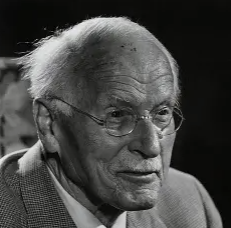
Every civilized human being, whatever his conscious development, is still an archaic man at the deeper levels of his psyche. Just as the human body connects us with the mammals and displays numerous relics of earlier evolutionary stages going back to even the reptilian age, so the human psyche is likewise a product of evolution which, when followed up to its origins, show countless archaic traits.
▼
Source
source
p. 126

2 months 4 days ago
Renaissance Italy became a kind of Hollywood collection of sets of antiquity, and the new visual antiquarianism of the Renaissance provided an avenue to power for men of any class.
▼
Source
source
(p. 136)

4 months 6 days ago
There are always two parties, the party of the Past and the party of the Future: the Establishment and the Movement. At times the resistance is reanimated, the schism runs under the world and appears in Literature, Philosophy, Church, State and social customs.
▼
Source
source
p. 529, col. 1
3 weeks 1 day ago
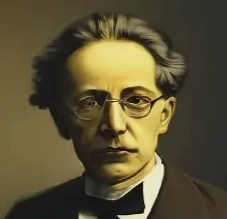
Political freedom means this: that the polis, the state, is free; religious freedom this: that religion is free, just as freedom of conscience indicates that conscience is free; thus, it does not that I am free from state, from religion, from conscience, or that I am rid of them. It does not mean my freedom, but the freedom of a power that rules and vanquishes me; it means that one of my oppressors, like state, religion, conscience, is free.
▼
Source
source
Landstreicher, p. 76
2 months 1 week ago
A series of accidents creates a positively lighthearted state.
▼
Source
source
Chapter 4
2 weeks 3 days ago
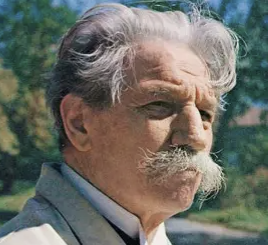
Every start upon an untrodden path is a venture which only in unusual circumstances looks sensible and likely to be successful.
▼
Source
source
Ch. 9 : I Resolve to Become a Jungle Doctor

4 months 5 days ago
It is the good children, Madame, who make the most terrible revolutionaries. They say nothing, they do not hide under the table, they eat only one sweet at a time, but later on, they make Society pay dearly for it!
▼
Source
source
Jessica, Act 3, sc. 1

3 months 3 weeks ago
O Fortune, cruellest of heavenly powers, why make such game of this poor life of ours?
▼
Source
source
Book II, satire viii, line 61 (trans. Conington)
2 months 1 week ago
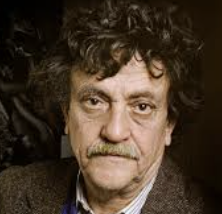
You learn about life by the accidents you have, over and over again, and your father is always in your head when that stuff happens. Writing, most of the time, for most people, is an accident and your father is there for that, too. You know, I taught writing for a while and whenever somebody would tell me they were going to write about their dad, I would tell them they might as well go write about killing puppies because neither story was going to work. It just doesn't work. Your father won't let it happen.
▼
Source
source
Interviewed by J. Rentilly, "The Best Jokes Are Dangerous", McSweeny's
2 months 4 weeks ago
Every thinker puts some portion of an apparently stable world in peril and no one can wholly predict what will emerge in its place.
▼
Source
source
Ch. VI: Nature, Mind and the Subject
3 months 3 days ago
The entire universe is perfused with signs, if it is not composed exclusively of signs.
▼
Source
source
Quoted in Essays in Zoosemiotics (1990) by Thomas A. Sebeok
2 months 1 week ago
For it is with the same imperialism that present-day simulators try to make the real, all of the real, coincide with their simulation models.
▼
Source
source
"The Precession of Simulacra," pp. 1-2
4 months 1 week ago
That man should think of God as nothingness must at first sight seem astonishing, must appear to us a most peculiar idea. But, considered more closely, this determination means that God is absolutely nothing determined. He is the Undetermined; no determinateness of any kind pertains to God; He is the Infinite. This is equivalent to saying that God is the negation of all particularity.
▼
Source
source
Hegel, Georg Wilhelm Friedrich, Lectures on the philosophy of religion, together with a work on the proofs of the existence of God. Vol 2 Translated from the 2d German ed. 1895 Ebenezer Brown Speirs 1854-1900, and J Burdon Sanderson p. 51
3 months 1 week ago
In the United States, except for slaves, servants and the destitute fed by townships, everyone has the vote and this is an indirect contributor to law-making. Anyone wishing to attack the law is thus reduced to adopting one of two obvious courses: they must either change the nation's opinion or trample its wishes under foot.
▼
Source
source
Chapter XIV.
3 weeks 5 days ago
Time, subjectively, is the conscious sequence of perceptions.
▼
Source
source
Ch. 6 : Our Souls
2 months 2 weeks ago
Delight at having understood a very abstract and obscure system leads most people to believe in the truth of what it demonstrates.
▼
Source
source
J 77
CivilSimian.com created by AxiomaticPanic, CivilSimian, Kalokagathia