


4 months 5 days ago
And suddenly I had an inkling of what it must feel like to be mad.

5 months 2 days ago
Perhaps we cannot prevent this world from being a world in which children are tortured. But we can reduce the number of tortured children. And if you don't help us, who else in the world can help us do this?
1 month 1 day ago
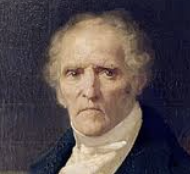
Hitherto men have speculated vaguely on the unity of universes; it is now about to be demonstrated by reasoning from the passional world to material, guided by the analogy which exists between the two.
▼
Source
source
L'attraction passioneé, Harmonian Man: Selected Writings of Charles Fourier, p. 54

3 weeks 5 days ago
No nation ever had so bad a neighbour as Germany has had in France for the last 400 years; bad in all manner of ways; insolent, rapacious, insatiable, unappeasable, continually aggressive. ... Germany, after 400 years of ill-usage, and generally ill-fortune, from that neighbour, has had at last the great happiness to see its enemy fairly down in this manner; and Germany, I do clearly believe, would be a foolish nation not to think of raising up some secure boundary-fence between herself and such a neighbour now that she has the chance.
▼
Source
source
Letter to The Times on the Franco-Prussian War and Germany's annexation of Alsace-Lorraine (18 November 1870), p. 8
3 weeks 5 days ago
It has ever been held the highest wisdom for a man not merely to submit to Necessity,-Necessity will make him submit,-but to know and believe well that the stern thing which Necessity had ordered was the wisest, the best, the thing wanted there. To cease his frantic pretension of scanning this great God's-World in his small fraction of a brain; to know that it had verily, though deep beyond his soundings, a Just Law, that the soul of it was Good;-that his part in it was to conform to the Law of the Whole, and in devout silence follow that; not questioning it, obeying it as unquestionable.

4 months 1 week ago
But though all the general rules of art are founded only on experience and on the observation of the common sentiments of human nature, we must not imagine, that, on every occasion, the feelings of men will be conformable to these rules.
4 months 1 week ago
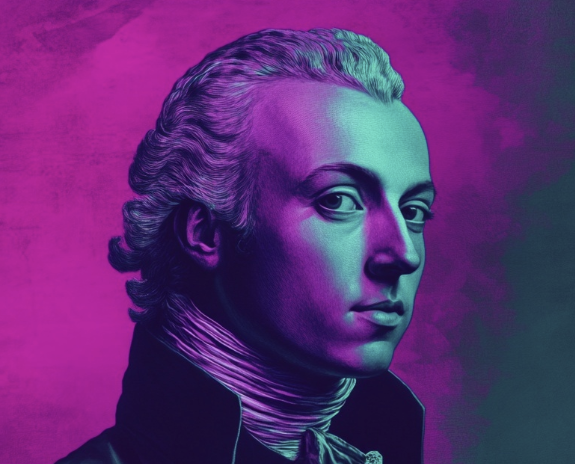
The second is the partiality for unity proper to the philosophical mind, whence this wide-spread canon has flown forth: principles are not to be multiplied beyond supreme necessity, to which we give in our adhesion, not because we have insight into causal unity in the world either by reason or experience, but as seeking it by an impulse of the intellect which seems to itself to have by thus much advanced in the explication of phenomena, by as much as it is granted to it to descend from the same principle to a greater number of consequences,
3 months 2 weeks ago
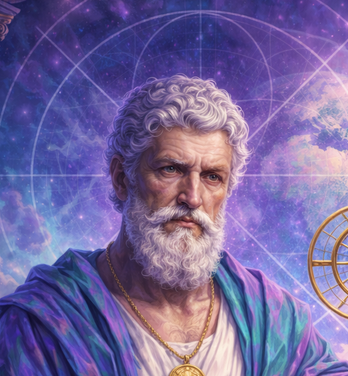
All things are full of gods.
▼
Source
source
As quoted in Aristotle, De Anima, 411a
4 weeks ago
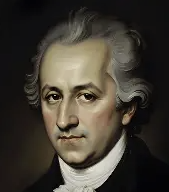
All poetry is supposed to be instructive but in an unnoticeable manner; it is supposed to make us aware of what it would be valuable to instruct ourselves in; we must deduce the lesson on our own, just as with life.
▼
Source
source
Letter to Carl Friedrich Zelter

4 months 1 week ago
There is nothing so easy, so sweet, and so favourable, as the divine law: it calls and invites us to her, guilty and abominable as we are; extends her arms and receives us into her bosom, foul and polluted as we at present are, and are for the future to be. But then, in return, we are to look upon her with a respectful eye; we are to receive this pardon with all gratitude and submission, and for that instant at least, wherein we address ourselves to her, to have the soul sensible of the ills we have committed, and at enmity with those passions that seduced us to offend her.
▼
Source
source
Ch. 56, tr. Cotton, rev. W. Carew Hazlitt, 1877

5 days ago
Louisiana, as ceded by France to the United States, is made a part of the United States; its white inhabitants shall be citizens, and stand, as to their rights and obligations, on the same footing with other citizens of the United States, in analogous situations.
▼
Source
source
Draft of proposed Amendment to the Constitution by Jefferson, who thought an amendment would be necessary to authorize the Louisiana Purchase to be incorporated into the United States

4 months 6 days ago
It is obvious that "obscenity" is not a term capable of exact legal definition; in the practice of the Courts, it means "anything that shocks the magistrate."
▼
Source
source
Ch. 10: Recrudescence of Puritanism
4 months 4 days ago
The real nature of the present revealed itself: it was what exists, all that was not present did not exist.

3 months 1 day ago
Death makes no sense except to people who have passionately loved life. How can one die without having something to part from? Detachment is a negation of both life and death. Whoever has overcome his fear of death has also triumphed over life. For life is nothing but another word for this fear.
4 months 6 days ago
In the part of this universe that we know there is great injustice, and often the good suffer, and often the wicked prosper, and one hardly knows which of those is the more annoying.
▼
Source
source
"The Argument for the Remedying of Injustice"

2 months 3 weeks ago
Just as eunuchs will never know aesthetics as applied to the selection of beautiful women, so neither will pure rationalists ever know ethics, nor will they ever succeed in defining happiness, for happiness is a thing that is lived and felt, not a thing that is reasoned or defined.
4 months 5 days ago
What the cinema can do better than literature or the spoken drama is to be fantastic.
▼
Source
source
"Where are the Movies Moving?" in Essays Old and New, 1926

3 months 1 week ago
We vainly accuse the fury of guns, and the new inventions of death; it is in the power of every hand to destroy us, and we are beholden unto every one we meet he doth not kill us.
▼
Source
source
Section 44

4 months 1 week ago
To Americans. That some desperate wretches should be willing to steal and enslave men by violence and murder for gain, is rather lamentable than strange. But that many civilized, nay, christianized people should approve, and be concerned in the savage practice, is surprising; and still persist, though it has been so often proved contrary to the light of nature, to every principle of Justice and Humanity, and even good policy, by a succession of eminent men, and several late publications.
2 months 3 weeks ago
In order to be able to go on living it is possible that the bankrupt peoples will have to enter on a new path of self-denial, by curbing their covetousness and putting a check on the indefinite expansion of their wants, and by having smaller families.
▼
Source
source
p. 94
3 weeks 5 days ago
Consider how, even in the meanest sorts of Labour, the whole soul of a man is composed into a kind of real harmony, the instant he sets himself to work! Doubt, Desire, Sorrow, Remorse, Indignation, Despair itself, all these like helldogs lie beleaguering the soul of the poor dayworker, as of every man: but he bends himself with free valour against his task, and all these are stilled, all these shrink murmuring far off into their caves. The man is now a man. The blessed glow of Labour in him, is it not as purifying fire, wherein all poison is burnt up, and of sour smoke itself there is made bright blessed flame!

4 months 1 week ago
Virtue is a state of war, and to live in it means one always has some battle to wage against oneself.
▼
Source
source
Julie ou la Nouvelle Héloïse (French), Sixième partie, Lettre VII Réponse (1761) Julie, or The New Heloise (English), Part Six, Letter VII Response, pg 560
4 months 1 week ago
If, while hurrying ostensibly to the temple of truth, we hand the reins over to our personal interests which look aside at very different guiding stars, for instance at the tastes and foibles of our contemporaries, at the established religion, but in particular at the hints and suggestions of those at the head of affairs, then how shall we ever reach the high, precipitous, bare rock whereon stands the temple of truth?
▼
Source
source
E. Payne, trans. (1974) Vol. 1, pp. 22-23

4 months 5 days ago
The world of our experience consists at all times of two parts, an objective and a subjective part, of which the former may be incalculably more extensive than the latter, and yet the latter can never be omitted or suppressed. The objective part is the sum total of whatsoever at any given time we may be thinking of, the subjective part is the inner "state" in which the thinking comes to pass.
▼
Source
source
Lecture XX, "Conclusions"
4 weeks 1 day ago
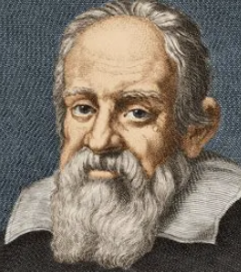
My purpose is to set forth a very new science dealing with a very ancient subject. There is, in nature, perhaps nothing older than motion, concerning which the books written by philosophers are neither few nor small; nevertheless I have discovered by experiment some properties of it which are worth knowing and which have not hitherto been either observed or demonstrated. Some superficial observations have been made, as, for instance, that the free motion [naturalem motum] of a heavy falling body is continuously accelerated; but to just what extent this acceleration occurs has not yet been announced; for so far as I know, no one has yet pointed out that the distances traversed, during equal intervals of time, by a body falling from rest, stand to one another in the same ratio as the odd numbers beginning with unity.
▼
Source
source
Author, Third Day. Change of Position
5 days ago
With respect to modern languages, French, as I have before observed, is indispensible. Next to this the Spanish is most important to an American. Our connection with Spain is already important and will become daily more so. Besides this the antient part of American history is written chiefly in Spanish.
3 months 3 weeks ago
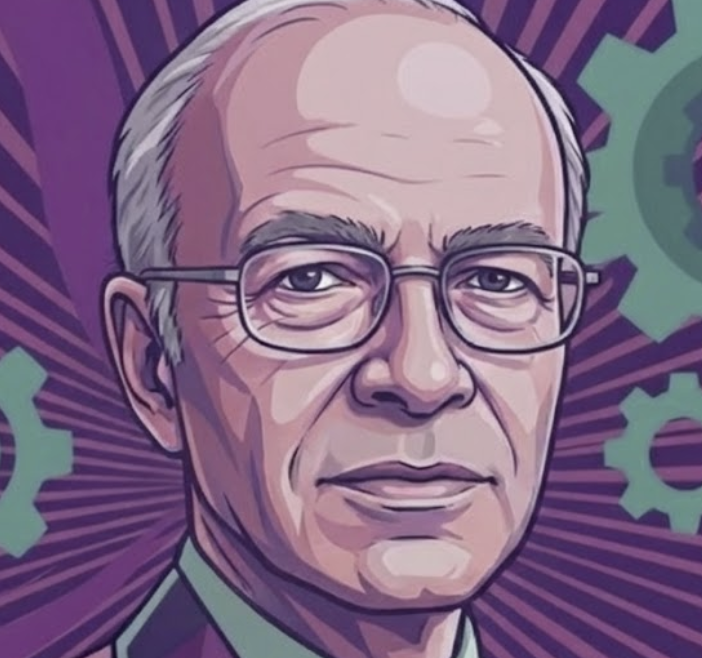
Remember Bostrom's definition of existential risk, which refers to the annihilation not of human beings, but of "Earth-originating intelligent life." The replacement of our species by some other form of conscious intelligent life is not in itself, impartially considered, catastrophic. Even if the intelligent machines kill all existing humans, that would be...a very small part of the loss of value that Parfit and Bostrom believe would be brought about by the extinction of Earth-originating intelligent life. The risk posed by the development of AI, therefore, is not so much whether it is friendly to us, but whether it is friendly to the idea of promoting wellbeing in general, for all sentient beings it encounters, itself included.
▼
Source
source
Chapter 15: Preventing Human Extinction (p. 176)

2 months 2 weeks ago
Ritual society is a society of rules. It is based not on virtues but on a passion for rules.
2 days ago
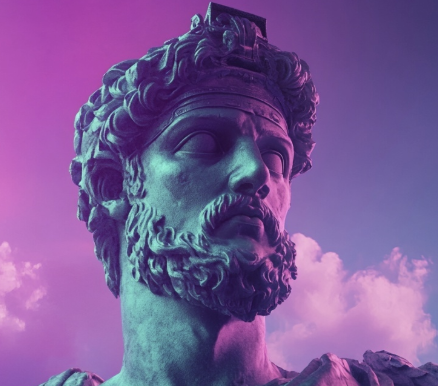
Concentrate every minute like a Roman-like a man-on doing what's in front of you with precise and genuine seriousness, tenderly, willingly, with justice. And on freeing yourself from all other distractions.
▼
Source
source
(Hays translation) II, 5
1 month 4 weeks ago
Kant's position is extremely subtle - so subtle, indeed, that no commentator seems to agree with any other as to what it is.
▼
Source
source
Some More -isms (p. 25)

4 months ago
It is ugly to be punishable, but there is no glory in punishing. Hence the double system of protection that justice has set up between itself and the punishment it imposes.
▼
Source
source
pp. 10

3 months 6 days ago
I gave up caring about anything, and all the problems disappeared. And it was after that that I found out the truth. I learnt the truth last November - on the third of November, to be precise - and I remember every instant since.
2 months 2 weeks ago
The quest for certainty blocks the search for meaning. Uncertainty is the very condition to impel man to unfold his powers.
▼
Source
source
Ch. 3
5 days ago
Whether the succeeding generation is to be more virtuous than their predecessors, I cannot say; but I am sure they will have more worldly wisdom, and enough, I hope, to know that honesty is the first chapter in the book of wisdom.
▼
Source
source
Letter to Nathaniel Macon

3 months 6 days ago
By adverting to the dignity of this high calling our ancestors have turned a savage wilderness into a glorious empire: and have made the most extensive, and the only honorable conquests, not by destroying, but by promoting the wealth, the number, the happiness of the human race.

2 months 3 weeks ago
It is because of my wretchedness that I am "I." It is on account of the wretchedness of the universe that, in a sense, God is "I" (that is to say a person).
▼
Source
source
p. 83
4 months 6 days ago
Perhaps the best hope for the future of mankind is that ways will be found of increasing the scope and intensity of sympathy.
4 months 2 weeks ago
Everything has two handles, the one by which it may be carried, the other by which it cannot. If your brother acts unjustly, don't lay hold on the action by the handle of his injustice, for by that it cannot be carried; but by the opposite, that he is your brother, that he was brought up with you; and thus you will lay hold on it, as it is to be carried.
▼
Source
source
(43).
1 month 4 weeks ago
You never have to change anything you got up in the middle of the night to write.
▼
Source
source
As quoted in The #1 New York Times Bestseller (1992) by John Bear, p. 93
4 weeks 1 day ago
The advance of science is not comparable to the changes of a city, where old edifices are pitilessly torn down to give place to new, but to the continuous evolution of zoologic types which develop ceaselessly and end by becoming unrecognizable to the common sight, but where an expert eye finds always traces of the prior work of the centuries past. One must not think then that the old-fashioned theories have been sterile or vain.

2 months 2 weeks ago
I must confess that my estimate of Lovecraft would not have pleased his most ardent admirers. The view I expressed in that book was that, while Lovecraft was distinctly a creative genius in his own way, his pessimism should not be taken too seriously; that it was the pessimism of a sick recluse, and had about it an element of rassentiment, a kind of desire to take revenge on the world that rejected him. In short, Lovecraft was a 19th century romantic, born in the wrong time. Most men of genius dislike their own age, but the really great ones impose their own vision on the age. The weak ones turn away into a world of gloomy fantasy.
▼
Source
source
p. 2
3 weeks ago
Yes, so it is that knowledge itself must die in order to blossom forth again in death as will; the freedom of thought, belief, and conscience, these wonderful flowers of three centuries will sink back into the lap of mother earth so that a new freedom, the freedom will, will be nourished with its most noble juices.
▼
Source
source
p. 19

2 months 2 weeks ago
Forty years ago Germany proclaimed the slogan: "Germany above everything. Germany for the Germans, first, last and always. We want peace; therefore we must prepare for war. Only a well armed and thoroughly prepared nation can maintain peace, can command respect, can be sure of its national integrity." And Germany continued to prepare, thereby forcing the other nations to do the same. The terrible European war is only the culminating fruition of the hydra-headed gospel, military preparedness.
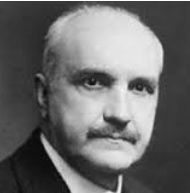
2 months 4 weeks ago
To understand oneself is the classic form of consolation; to elude oneself is the romantic.
▼
Source
source
p. 51
3 months 6 days ago
Good order is the foundation of all good things.

2 weeks 6 days ago
Unjust dominion cannot be eternal.
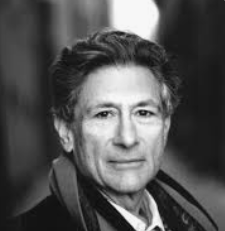
2 months 2 weeks ago
The central fact for me is, I think, that the [role of the] intellectual ... cannot be played without a sense of being someone whose place it is publicly to raise embarrassing questions, to confront orthodoxy and dogma (rather than to produce them), to be someone who cannot easily be co-opted by governments or corporations, and whose raison d'être is to represent all those people and issues that are routinely forgotten or swept under the rug. Representation of the Intellectual
▼
Source
source
1994
4 months 1 week ago
It is a great mortification to the vanity of man, that his utmost art and industry can never equal the meanest of nature's productions, either for beauty or value. Art is only the under-workman, and is employed to give a few strokes of embellishment to those pieces, which come from the hand of the master.
▼
Source
source
Part I, Essay 15: The Epicurean

4 months 1 day ago
"Everything is already there in...." How does it come about that [an] arrow points? Doesn't it seem to carry in it something besides itself? - "No, not the dead line on paper; only the psychical thing, the meaning, can do that." - That is both true and false. The arrow points only in the application that a living being makes of it.
▼
Source
source
§ 454
2 weeks 1 day ago
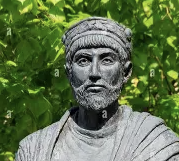
The trial that begins Awards to him who wins The fairest prize to-day. And lo, the hour is here And summons you. Appear! Ye may no more delay. Come hear the herald's call Ye princes one and all. Many tribes of men Submissive to you then! How keen in war your swords! But now 'tis wisdom's turn; Now let your rivals learn How keen can be your words.
CivilSimian.com created by AxiomaticPanic, CivilSimian, Kalokagathia