


2 days ago
Botany is the school for patience, and it's amateurs learn resignation from daily disappointments.
▼
Source
source
Thomas Jefferson, in letter to Madame de Tessé (25 Apr 1788). In Thomas Jefferson Correspondence: Printed from the Originals (1916), 7.
2 weeks 4 days ago
If the press was to be free, nothing would be so important as precisely its liberation from every coercion that could be put on it in the name of a law. And, that it might come to that, I my own self should have to have absolved myself from obedience to the law.
▼
Source
source
Cambridge 1995, p. 249
4 months 1 week ago
Wars begin when you will, but they do not end when you please. Variant translation: Wars are begun at will but not ended at will.
▼
Source
source
Book III, Chapter 7.

4 months 3 days ago
The soldier is applauded who refuses to serve in an unjust war by those who do not refuse to sustain the unjust government which makes the war; is applauded by those whose own act and authority he disregards and sets at naught; as if the state were penitent to that degree that it hired one to scourge it while it sinned, but not to that degree that it left off sinning for a moment.
2 days ago
Let what will be said or done, preserve your sang-froid immovably, and to every obstacle, oppose patience, perseverance, and soothing language.
▼
Source
source
Letter to William Short


4 months 6 days ago
In every country it always is and must be the interest of the great body of the people to buy whatever they want of those who sell it cheapest. The proposition is so very manifest that it seems ridiculous to take any pains to prove it; nor could it ever have been called in question had not the interested sophistry of merchants and manufacturers confounded the common sense of mankind. Their interest is, in this respect, directly opposite to that of the great body of the people.
▼
Source
source
Chapter III, Part II, p. 531.
4 months 2 weeks ago
The verdict of the world is conclusive.
▼
Source
source
III, 24

2 months 2 weeks ago
The STATE IDEA, the authoritarian principle, has been proven bankrupt by the experience of the Russian Revolution. If I were to sum up my whole argument in one sentence I should say: The inherent tendency of the State is to concentrate, to narrow, and monopolize all social activities; the nature of revolution is, on the contrary, to grow, to broaden, and disseminate itself in ever-wider circles. In other words, the State is institutional and static; revolution is fluent, dynamic. These two tendencies are incompatible and mutually destructive. The State idea killed the Russian Revolution and it must have the same result in all other revolutions, unless the libertarian idea prevail.
1 month 4 weeks ago
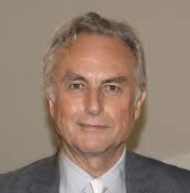
I'm not one of those who wants to stop Christian traditions. This is historically a Christian country. I'm a cultural Christian the same way as many of my friends call themselves cultural Jews or cultural Muslims. So, yes, I love singing carols along with everybody else. I'm not one of those who wants to purge our society of our Christian history.
▼
Source
source
BBC's Have Your Say

4 months 2 days ago
Luxury is the opposite of the naturally necessary.
▼
Source
source
Notebook V, The Chapter on Capital, p. 448.
4 months 2 days ago
We suffer not only from the development of capitalist production, but also from the incompleteness of that development. Alongside the modern evils, we are oppressed by a whole series of inherited evils, arising from the passive survival of archaic and outmoded modes of production, with their accompanying train of anachronistic social and political relations. We suffer not only from the living, but from the dead.
▼
Source
source
Preface to the First Edition, Capital Volume 1, Peinguin Classics edition 1976.
2 weeks 3 days ago
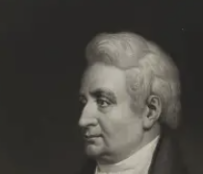
He was a one-book man. Some men have only one book in them; others, a library.
▼
Source
source
Vol. I, ch. 11, p. 402
Just now
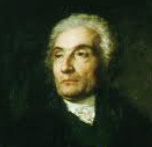
Man is an enigma whose knot has not ceased to occupy observers. The contradictions that he contains astonish reason and impose silence on it. So what is this inconceivable being who carries within him powers that clash and who is obliged to hate himself in order to esteem himself?

5 months ago
The foundation of all technology is fire.
1 month 1 week ago
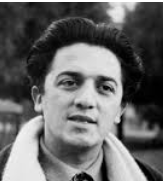
There is no end. There is no beginning. There is only the infinite passion of life.
▼
Source
source
Fellini on Fellini (1976) edited by Anna Keel and Christian Strich; translated by Isabel Quigly.

4 months 2 days ago
Write it on your heart that every day is the best day in the year.
▼
Source
source
Works and Days

1 month 2 weeks ago
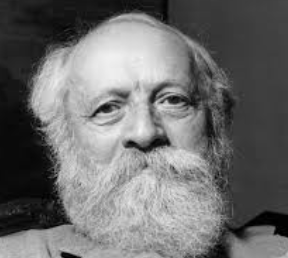
Many conflicts within Third World countries are related to the practice of exploiting resources faster than nature can renew them or diverting them away from where people need them. Dams in every society have become major sources of conflict. As water scarcity grows, neighbors, families turn against each other.
2 months 3 weeks ago
When we rise out of [the night] into the new life and there begin to receive the signs, what can we know of that which - of him who gives them to us? Only what we experience from time to time from the signs themselves. If we name the speaker of this speech God, then it is always the God of a moment, a moment God.
▼
Source
source
Between Man and Man (1965), p. 15

3 weeks 6 days ago
Jesus, in some respects, was an anarchist, for he had no idea of civil government. That government seems to him purely and simply an abuse.
▼
Source
source
Ch. 7.
4 months 2 days ago
Something that is merely negative creates nothing.
▼
Source
source
Notebook VI, The Chapter on Capital, p. 532.

4 months 6 days ago
People who invented the word charity, and used it in a good sense, inculcated more clearly, and much more efficaciously, the precept, Be charitable, than any pretended legislator or prophet, who should insert such a maxim in his writings.
▼
Source
source
Part I, Essay 22: Of the Standard of Taste

4 months 2 days ago
To the gross senses the chair seems solid and substantial. But the gross senses and be refined by means of instruments. Closer observations are made, as the result of which we are forced to conclude that the chair is "really" a swarm of electric charges whizzing about in empty space. ... While the substantial chair is an abstraction easily made from the memories of innumerable sensations of sight and touch, the electric charge chair is a difficult and far-fetched abstraction from certain visual sensations so excessively rare (they can only come to us in the course of elaborate experiments) that not one man in a million has ever been in the position to make it for himself. The overwhelming majority of us accept the electric-charge chair on authority, as good Catholics accept transubstantiation.
▼
Source
source
"One and Many," pp. 8-9
2 days ago
I would rather be exposed to the inconveniences attending too much liberty, than those attending too small a degree of it.
▼
Source
source
Letter to Archibald Stuart , Philadelphia
1 week 6 days ago
The clock of communism has stopped striking. But its concrete building has not yet come crashing down. For that reason, instead of freeing ourselves, we must try to save ourselves from being crushed by its rubble.
▼
Source
source
How We Must Rebuild Russia in Komsomolskaya Pravda
4 months 3 days ago
While we are reading these sentences, this fair modern world seems only a reprint of the Laws of Menu with the gloss of Culluca. Tried by a New England eye, or the mere practical wisdom of modern times, they are the oracles of a race already in its dotage, but held up to the sky, which is the only impartial and incorruptible ordeal, they are of a piece with its depth and serenity, and I am assured that they will have a place and significance as long as there is a sky to test them by.

4 months 1 day ago
Lord, you have cursed Cain and Cain's children: thy will be done. You have allowed men's hearts to be corrupted, that their intentions be rotten, that their actions putrefy and stink: thy will be done.
▼
Source
source
Act 1
2 months 5 days ago
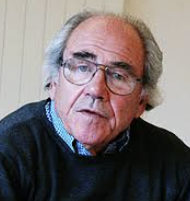
The end of history is, alas, also the end of the dustbins of history. There are no longer any dustbins for disposing of old ideologies, old regimes, old values. Where are we going to throw Marxism, which actually invented the dustbins of history? (Yet there is some justice here since the very people who invented them have fallen in.) Conclusion: if there are no more dustbins of history, this is because History itself has become a dustbin. It has become its own dustbin, just as the planet itself is becoming its own dustbin.
▼
Source
source
The Illusion of the End (1992) (L'Illision de la Fin) Tr. Chris Turner, 1994, Stanford University Press, ISBN 0804725012, p. 26, "The Event Strike"
4 months 1 day ago
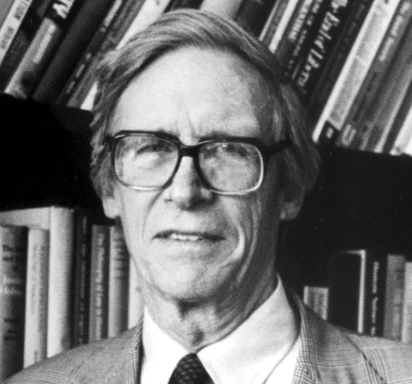
Men resign themselves to their position should it ever occur to them to question it; and since all may view themselves as assigned their vocation, everyone is held to be equally fated and equally noble in the eyes of providence.
▼
Source
source
Chapter IX, Section 82, p. 547
2 months 4 days ago
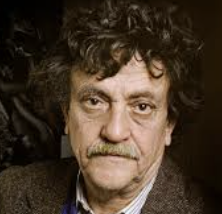
I sometimes wondered what the use of any of the arts was. The best thing I could come up with was what I call the canary in the coal mine theory of the arts. This theory says that artists are useful to society because they are so sensitive. They are super-sensitive. They keel over like canaries in poison coal mines long before more robust types realize that there is any danger whatsoever.
▼
Source
source
Physicist, Purge Thyself in the Chicago Tribune Magazine

3 months 3 weeks ago
'Tis not in strength of body nor in gold that men find happiness, but in uprightness and in fulness of understanding.
4 months 6 days ago
The man who barely abstains from violating either the person, or the estate, or the reputation of his neighbours, has surely very little positive merit. He fulfils, however, all the rules of what is peculiarly called justice, and does every thing which his equals can with propriety force him to do, or which they can punish him for not doing. We may often fulfil all the rules of justice by sitting still and doing nothing.
▼
Source
source
Section II, Chap. I.
3 months 2 days ago
Demonstrating is therefore only the means through which I strip my thought of the form of "mine-ness" so that the other person may recognize it as his own.
▼
Source
source
Z. Hanfi, trans., in The Fiery Brook (1972), p. 66
1 week 4 days ago
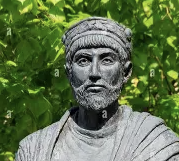
Know all ye mortals who have entered this contest, that according to our laws and decrees the victor is allowed to exult but the vanquished must not complain. Depart then wherever you please, and in future live every one of you under the guidance of the gods. Let every man choose his own guardian and guide.
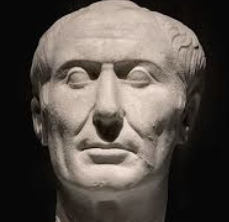
1 month 4 weeks ago
Avarice is as destitute of what it has, as what it has not.
▼
Source
source
Maxim 927
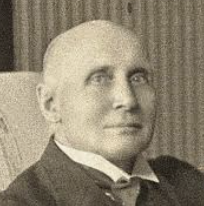
2 months 2 weeks ago
The ultimate metaphysical principle is the advance from disjunction to conjunction, creating a novel entity other than the entities given in disjunction.
▼
Source
source
Pt. I, ch. 2, sec. 2.
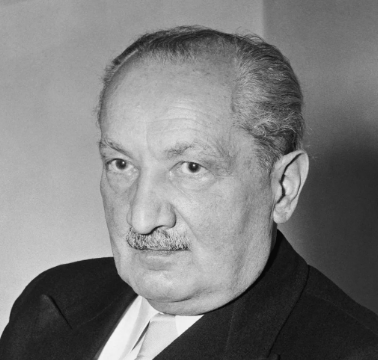
3 months 3 weeks ago
But in fact there is no circle at all in the formulation of our question. Beings can be determined in their being without the explicit concept of the meaning of being having to be already available. If this were not so there could not have been as yet any ontological knowledge. And probably no one would deny the factual existence of such knowledge. It is true that "being" is "presupposed" in all previous ontology, but not as an available concept-not as the sort of thing we are seeking.
▼
Source
source
Introduction: The Exposition of the Question of the Meaning of Being (Stambaugh translation)
2 months 1 week ago
At the time of its initial publication, Public Administration helped to define this field of study and practice by introducing two major new emphases: an orientation toward human behavior and human relations in organizations, and an emphasis on the interaction between administration, politics, and policy. Without neglecting more traditional concerns with organization structure, Simon, Thompson, and Smithburg viewed administration in its behavioral and political contexts. The viewpoints they express still are at the center of public administration's concerns.
▼
Source
source
Book abstract, 1991
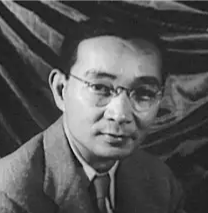
1 week 3 days ago
Those who are wise won't be busy, and those who are too busy can't be wise.
▼
Source
source
p. 150
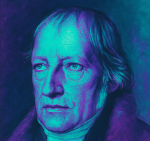
4 months 3 days ago
The external embodiment of an act is composed of many parts, and may be regarded as capable of being divided into an infinite number of particulars. An act may be looked on as in the first instance coming into contact with only one of these particulars. But the truth of the particular is the universal. A definite act is not confined in its content to one isolated point of the varied external world, but is universal, including these varied relations within itself. The purpose, which is the product of thought and embraces not the particular only but also the universal side, is intention.
▼
Source
source
Georg Wilhelm Friedrich Hegel, Philosophy of Right translated by SW Dyde Queen's University Canada 1896 p. 114-115

2 months 4 weeks ago
Our place is somewhere between being and nonbeing - between two fictions.

3 months 1 week ago
Consider any individual at any period of his life, and you will always find him preoccupied with fresh plans to increase his comfort.
▼
Source
source
Book Three, Chapter XXI.

4 months 2 days ago
So our self-feeling in this world depends entirely on what we back ourselves to be and do.
▼
Source
source
Ch. 10

3 months 3 weeks ago
The problem... Democracy is founded by a politeia, a constitution, where the demos, the people, exercise power, and... everyone is equal in front of the law. Such a constitution... is condemned to give equal place to all forms of parrhesia, even the worst. Because parrhesia is given even to the worst citizens, the overwhelming influence of bad, immoral, or ignorant speakers may lead... into tyranny, or... otherwise endanger the city. Hence parrhesia may be dangerous for democracy itself.

2 months 3 weeks ago
What man shall there be among you, that shall have one sheep, and if it fall into a pit on the sabbath day, will he not lay hold on it, and lift it out? How much then is a man better than a sheep? Wherefore it is lawful to do well on the sabbath days.
▼
Source
source
12:11-12 (KJV) Said to the Pharisees.
4 months 2 days ago
Money is itself a product of circulation.
▼
Source
source
Notebook VI, The Chapter on Capital, p. 579.

4 months 4 days ago
A thing, moderately good, is not so good as it ought to be. Moderation in temper, is always a virtue; but moderation in principle, is a species of vice.
4 months 4 days ago
One good schoolmaster is of more use than a hundred priests.
▼
Source
source
Worship and Church Bells, 1797
CivilSimian.com created by AxiomaticPanic, CivilSimian, Kalokagathia