


3 months 5 days ago
We have unmistakable proof that throughout all past time, there has been a ceaseless devouring of the weak by the strong.
▼
Source
source
Vol. I, Part III, Ch. 2 General Aspects of the Special-Creation-Hypothesis
4 months 3 weeks ago
The Heavenly City outshines Rome, beyond comparison. There, instead of victory, is truth; instead of high rank, holiness; instead of peace, felicity; instead of life, eternity.
▼
Source
source
Book II, Chapter 29

2 months 3 days ago
Treat your friend as if he might become an enemy.
▼
Source
source
Maxim 401

2 months 5 days ago
When the woman showed her love for the children that were not her own, and wept over them, I saw in her the living God, and understood What men live by.
▼
Source
source
Ch. XI
2 weeks 2 days ago
I am amazed that Congressmen can pass a bill imposing severe penalties on anyone who burns the American flag, whereas they are responsible for burning that for which the flag stands: the United States as a territory, as a people, and as a biological manifestation. That is an example of our perennial confusion of symbols with realities.
▼
Source
source
Audio lecture "Individual and Society"

2 months 2 weeks ago
"Why do you not say how things will be operated under Anarchism?" is a question I have had to meet thousands of times. Because I believe that Anarchism can not consistently impose an iron-clad program or method on the future. The things every new generation has to fight, and which it can least overcome, are the burdens of the past, which holds us all as in a net. Anarchism, at least as I understand it, leaves posterity free to develop its own particular systems, in harmony with its needs. Our most vivid imagination can not foresee the potentialities of a race set free from external restraints. How, then, can any one assume to map out a line of conduct for those to come? We, who pay dearly for every breath of pure, fresh air, must guard against the tendency to fetter the future. If we succeed in clearing the soil from the rubbish of the past and present, we will leave to posterity the greatest and safest heritage of all ages.

4 months 1 week ago
It was truly very good reason that we should be beholden to God only, and to the favour of his grace, for the truth of so noble a belief, since from his sole bounty we receive the fruit of immortality, which consists in the enjoyment of eternal beatitude.... The more we give and confess to owe and render to God, we do it with the greater Christianity.
▼
Source
source
Ch. 12
2 months 3 weeks ago
The world is not divine sport, it is divine destiny. There is divine meaning in the life of the world, of man, of human persons, of you and of me. Creation happens to us, burns itself into us, recasts us in burning - we tremble and are faint, we submit. We take part in creation, meet the Creator, reach out to Him, helpers and companions.
3 months 5 days ago
Ethical ideas and sentiments have to be considered as parts of the phenomena of life at large. We have to deal with man as a product of evolution, with society as a product of evolution, and with moral phenomena as products of evolution.
▼
Source
source
Ch. 1, Introductory

4 months 2 weeks ago
Like the body the soul can be healthy, youthful, and so on. It can undergo pain, thirst, and hunger. In this physical life, that is, in the visible world, we avoid whatever would defile or deform the body; how much more, then, ought we to avoid that which would tarnish the soul?
1 week 6 days ago
A vague uncritical idealism always lends itself to ridicule and too much of it might be a danger to mankind, leading it round in a futile wild-goose chase for imaginary ideals.
▼
Source
source
Ch. I : The Awakening, p. 4

4 months 5 days ago
They reckon ill who leave me out; When me they fly, I am the wings; I am the doubter and the doubt; And I the hymn the Brahmin sings.
▼
Source
source
Brahma, st. 3
5 days ago
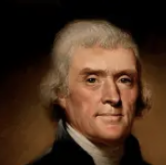
The system of banking we have both equally and ever reprobated. I contemplate it as a blot left in all our Constitutions, which, if not covered, will end in their destruction, which is already hit by the gamblers in corruption, and is sweeping away in its progress the fortunes and morals of our citizens. Funding I consider as limited, rightfully, to a redemption of the debt within the lives of a majority of the generation contracting it; every generation coming equally, by the laws of the Creator of the world, to the free possession of the earth he made for their subsistence, unincumbered by their predecessors, who, like them, were but tenants for life.
▼
Source
source
Letter to John Taylor (28 May 1816) ME 15:18: The Writings of Thomas Jefferson "Memorial Edition" (20 Vols., 1903-04) edited by Andrew A. Lipscomb and Albert Ellery Bergh, Vol. 15, p. 18

2 months 3 days ago
The potential of any new technology is always dissipated by its users involvement in its predecessors.
▼
Source
source
(p. 210)

3 months 1 week ago
All those who seek to destroy the liberties of a democratic nation ought to know that war is the surest and shortest means to accomplish it.
▼
Source
source
Book Three, Chapter XXII.

4 months ago
From whence are these "rights of individuals" derived, and why should we care? Unless we presume the existence of some greater power that determines what is good, isn't it arbitrary to posit that human survival is more important than private property rights, an equally artificially construed concept? Isn't it arbitrary to assume that some sort of equality is preferable to a system where, say, the poor are assumed to have bad karma? If these 'rights of individuals' are derived only from shared humanity, then do 'individuals' (a thoroughly meaningless term, by the way), begin to lose them when they act inhumanely? And isn't it totally arbitrary to grant rights to humans rather than other creatures anyway?
▼
Source
source
Lecture in New Haven, On Constructed Rights
5 days ago
The 'Logic of Induction' consists in stating the Facts and the Inference in such a manner, that the evidence of the Inference is manifest; just as the Logic of Deduction consists in stating the Premises and the Conclusion in such a manner that the Evidence of the Conclusion is manifest.


4 months 1 day ago
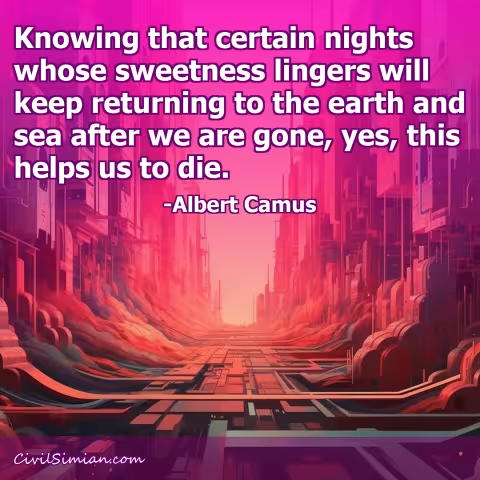
I am my world.
▼
Source
source
(The microcosm.) (5.63) Original German: Ich bin meine welt (Der Mikrokosmos.)

4 months 6 days ago
In capitalist society however where social reason always asserts itself only post festum great disturbances may and must constantly occur.
▼
Source
source
Vol. II, Ch. XVI, p. 319.

2 months 2 weeks ago
We all observe that the reality of sexual intercourse is far from perfect; yet this does not convince us that sex is a greatly overrated occupation. Every time a man glimpses a pretty girl pulling up her stocking, he catches a glimpse of what might be called the "primal sexual vision." It is unfortunate that there seems to be a certain disparity between this primal vision and most ordinary sexual experience. But it dances in front of us like a will-o'-the-wisp, luring us into tormented effort. It can lead novelists to write novels, poets to write poems, and musicians to write symphonies.
▼
Source
source
p. 39

3 months 2 weeks ago
A fool is known by his Speech; and a wise man by Silence.

2 months 4 weeks ago
The absolute idea is the subject in its final form, thought. The otherness and negation is the object, being. The absolute idea now has to be interpreted as objective being. Hegel's Logic thus ends where it began, with the category of being. This, however is a different being that can no longer be explained thought he concepts applied in the analysis that opened the Logic. For being now is understood in its notion that is, as a concrete totality wherein all particular forms subsist as the essential distinctions and relations of on comprehensive principle. Thus comprehended, being is nature, and dialectical thought passes on to the Philosophy of Nature.
▼
Source
source
P. 165-166

4 months 1 week ago
Hypothetical liberty is allowed to everyone who is not a prisoner and in chains
▼
Source
source
§ 8.23

2 months 1 day ago
There has been progress in design, but not progress in accomplishment.
▼
Source
source
Chapter 7 "Constructive Evolution" (p. 186)
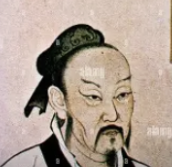
3 weeks 6 days ago
It would be better to be without the Shu-King than to believe every word of it.
▼
Source
source
"Knowledge and Wisdom", no. 131 · "Celebration and Worship", no. 587
4 months 5 days ago
To live without duties is obscene.
▼
Source
source
Aristocracy

4 months 5 days ago
It is an odd circumstance that neither the old nor the new, by itself, is interesting; the absolutely old is insipid; the absolutely new makes no appeal at all. The old in the new is what claims the attention,-the old with a slightly new turn.
▼
Source
source
Chapter XI: Attention

4 months 1 week ago
Two conflicting types of educational systems spring from these conflicting aims. One is public and common to many, the other private and domestic. If you wish to know what is meant by public education, read Plato's Republic. Those who merely judge books by their titles take this for a treatise on politics, but it is the finest treatise on education ever written. In popular estimation the Platonic Institute stands for all that is fanciful and unreal. For my own part I should have thought the system of Lycurgus far more impracticable had he merely committed it to writing. Plato only sought to purge man's heart; Lycurgus turned it from its natural course. The public institute does not and cannot exist, for there is neither country nor patriot. The very words should be struck out of our language. The reason does not concern us at present, so that though I know it I refrain from stating it.

4 months 5 days ago
First Shakespeare sonnets seem meaningless; first Bach fugues, a bore; first differential equations, sheer torture. But training changes the nature of our spiritual experiences. In due course, contact with an obscurely beautiful poem, an elaborate piece of counterpoint or of mathematical reasoning, causes us to feel direct intuitions of beauty and significance. It is the same in the moral world.
▼
Source
source
Ch. 14, p. 333 [2012 reprint]

3 months 6 days ago
Circumstances (which with some gentlemen pass for nothing) give in reality to every political principle its distinguishing colour, and discriminating effect. The circumstances are what render every civil and political scheme beneficial or noxious to mankind.

4 months 4 days ago
Our aim is precisely to establish the human kingdom as a pattern of values in distinction from the material world. But the subjectivity which we thus postulate as the standard of truth is no narrowly individual subjectivism, for as we have demonstrated, it is not only one's own self that one discovers in the cogito, but those of others too. Contrary to the philosophy of Descartes, contrary to that of Kant, when we say "I think" we are attaining to ourselves in the presence of the other, and we are just as certain of the other as we are of ourselves. Thus the man who discovers himself directly in the cogito also discovers all the others, and discovers them as the condition of his own existence. He realizes that he can't be anything unless others recognize him as such. I cannot obtain any truth whatsoever about myself, except through the mediation of another. The other is indispensable to my existence, and equally so to any knowledge I can have of myself.
▼
Source
source
p. 45
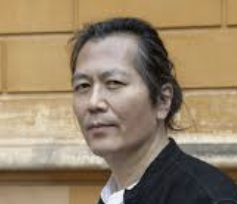
2 months 2 weeks ago
Eros, erotic desire, conquers depression. It delivers us from the inferno of the same to the utopia, indeed utopia, of the wholly other.

4 months 1 week ago
Psychologists have hitherto failed to realize that imagination is a necessary ingredient of perception itself.
▼
Source
source
A 120
4 months 1 week ago
A mind of slow apprehension is therefore not necessarily a weak mind. The one who is alert with abstractions is not always profound, he is more often very superficial.
▼
Source
source
Kant, Immanuel (1996), page 99

3 weeks 5 days ago
Such parliamentary bagpipes I myself have heard play tunes, much to the satisfaction of the people.

4 months 1 week ago
No doubt, when modesty was made a virtue, it was a very advantageous thing for the fools, for everybody is expected to speak of himself as if he were one.
▼
Source
source
Vol. 1, Ch. 3, Section 2: Pride
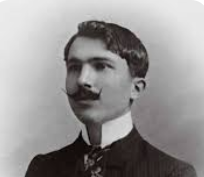
6 days ago
A magical portal opened inside my mind and conducted me into an astonishing world. ... Before this moment I had divined but had never known with such positiveness that the world is extremely large and that suffering and toil are the companions and fellow warriors not only of Cretan, but of every man. ... that by means of poetry all this suffering and effort could be transformed into dream; no matter how much of the ephemeral existed, poetry could immortalize it by turning it into song.
▼
Source
source
Naxos, Ch. 11, p. 96
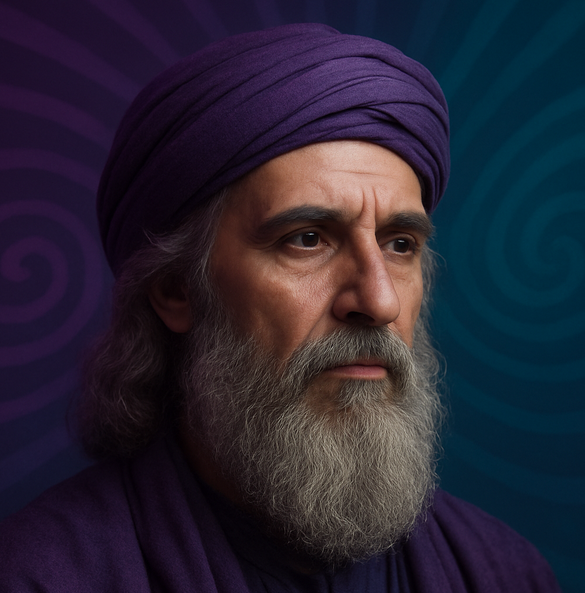
3 months 3 weeks ago
Make thyself pure, 0 righteous man! Anyone in the world here below can win purity for himself, namely, when he cleanses himself with Good Thoughts, Good Words, and Good Deeds.

3 months 1 day ago
Third, these general ideas are not mere words, nor do they consist in this, that certain concrete facts will every time happen under certain descriptions of conditions; but they are just as much, or rather far more, living realities than the feelings themselves out of which they are concreted. And to say that mental phenomenon are governed by law does not mean merely that they are describable by a general formula; but that there is a living idea, a conscious continuum of feeling which pervades them, and to which they are docile.
3 weeks 5 days ago
The most remarkable piece of reading that you may be recommended to take and try if you can study is a book by Goethe-one of his last books, which he wrote when he was an old man, about seventy years of age-I think one of the most beautiful he ever wrote, full of mild wisdom, and which is found to be very touching by those who have eyes to discern and hearts to feel it. It is one of the pieces in "Wilhelm Meister's Travels." I read it through many years ago; and, of course, I had to read into it very hard when I was translating it (applause), and it has always dwelt in my mind as about the most remarkable bit of writing that I have known to be executed in these late centuries. I have often said, there are ten pages of that which, if ambition had been my only rule, I would rather have written than have written all the books that have appeared since I came into the world.

2 months 3 weeks ago
For what is specific in the Catholic religion is immortalization and not justification, in the Protestant sense. Rather is this latter ethical. It is from Kant, in spite of what orthodox Protestants may think of him, that Protestantism derived its penultimate conclusions - namely, that religion rests upon morality, and not morality upon religion, as in Catholicism.

3 months 1 day ago
Lord, give me the capacity of never praying, spare me the insanity of all worship, let this temptation of love pass from me which would deliver me forever unto You. Let the void spread between my heart and heaven! I have no desire to people my deserts by Your presence, to tyrannize my nights by Your light, to dissolve my Siberias beneath Your sun.
2 months 4 weeks ago
In the state of nature, Profit is the measure of Right.
▼
Source
source
De Cive
2 months 4 weeks ago
The office of the sovereign, be it a monarch or an assembly, consisteth in the end for which he was trusted with the sovereign power, namely the procuration of the safety of the people, to which he is obliged by the law of nature, and to render an account thereof to God, the Author of that law, and to none but Him. But by safety here is not meant a bare preservation, but also all other contentments of life, which every man by lawful industry, without danger or hurt to the Commonwealth, shall acquire to himself. And this is intended should be done, not by care applied to individuals, further than their protection from injuries when they shall complain; but by a general providence, contained in public instruction, both of doctrine and example; and in the making and executing of good laws to which individual persons may apply their own cases.
▼
Source
source
The Second Part, Chapter 30: Of the Office of the Sovereign Representative
1 month 2 weeks ago
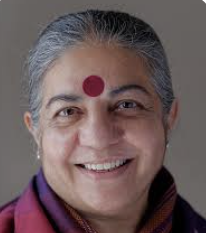
I've had letters from Chinese scientists at the peak of the SARS epidemic who said the problem is a hybridization between the viruses planted into GMO feed, which is then fed to animals, then the virus jumped from the animals to humans. We're going to see more and more of these kinds of risks. I think the whole issue of the H1N1 virus was the fact that it had genes for three influenza types--human, chicken, pig. All of these crossings are becoming possible because of the crossing of genes across species barriers.
▼
Source
source
On the SARS epidemic, as quoted in "A Visit to My Kitchen: Vandana Shiva", The Huffington Post
4 months 1 week ago
Christianity possesses the great advantage over Judaism of being represented as coming from the mouth of the first Teacher not as a statutory but as a moral religion, and as thus entering into the closest relation with reason so that, through reason, it was able of itself, without historical learning, to be spread at all times and among all peoples with the greatest trustworthiness.
▼
Source
source
Book IV, Part 1, Section 1, "The Christian religion as a learned religion"
2 months 4 weeks ago
But if one Subject giveth Counsell to another, to do anything contrary to the Lawes, whether that Counsell proceed from evil intention, or from ignorance onely, it is punishable by the Common-wealth; because ignorance of the Law, is no good excuse, where every man is bound to take notice of the Lawes to which he is subject.
▼
Source
source
The Second Part, Chapter 25, p. 132

4 months 6 days ago
I wanted certainty in the kind of way in which people want religious faith. I thought that certainty is more likely to be found in mathematics than elsewhere. But I discovered that many mathematical demonstrations, which my teachers expected me to accept, were full of fallacies, and that, if certainty were indeed discoverable in mathematics, it would be in a new field of mathematics, with more solid foundations than those that had hitherto been thought secure. But as the work proceeded, I was continually reminded of the fable about the elephant and the tortoise. having constructed an elephant upon which the mathematical world could rest, I found the elephant tottering, and proceeded to construct a tortoise to keep the elephant from falling. But the tortoise was no more secure than the elephant, and after some twenty years of very arduous toil, I came to the conclusion that there was nothing more that I could do in the way of making mathematical knowledge indubitable.
▼
Source
source
p. 53
CivilSimian.com created by AxiomaticPanic, CivilSimian, Kalokagathia