

2 months 2 weeks ago
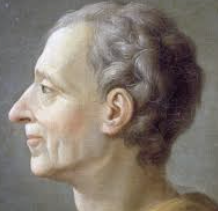
No tyranny is more cruel than the one practiced in the shadow of the laws and under color of justice - when, so to speak, one proceeds to drown the unfortunate on the very plank by which they had saved themselves.
▼
Source
source
See Chap. XIV of Considérations sur les causes de la grandeur des Romains et de leur décadence. Considerations on the Causes of the Greatness of the Romans and their Decline (1734), p. 89.
2 months 2 weeks ago
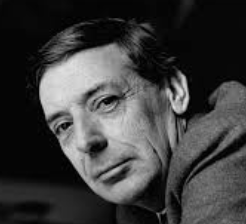
If the passion for truthfulness is merely controlled and stilled without being satisfied, it will kill the activities it is supposed to support. This may be one of the reasons why, at the present time, the study of the humanities runs a risk of sliding from professional seriousness, through professionalization, to a finally disenchanted careerism.
▼
Source
source
p. 3

2 months 3 weeks ago
On fact, the whole machinery of our intelligence, our general ideas and laws, fixed and external objects, principles, persons, and gods, are so many symbolic, algebraic expressions. They stand for experience; experience which we are incapable of retaining and surveying in its multitudinous immediacy. We should flounder hopelessly, like the animals, did we not keep ourselves afloat and direct our course by these intellectual devices.
▼
Source
source
Theory helps us to bear our ignorance of fact. Pt. III, Form; § 30: "The average modified in the direction of pleasure.", p. 125

1 month 4 weeks ago
The media have substituted themselves for the older world. "Education, Language, and Media". Cycle 7, 1973, p. 232

5 months 2 days ago
Forgetting when God does it in relation to sin, is the opposite of creating, since to create is to bring forth from nothing and to forget is to take back into nothing. What is hidden from my eyes, that I have never seen; but what is hidden behind my back, that I have seen. The one who loves forgives in this way; he forgives, he forgets, he blots out the sin, in love he turns toward the one he forgives; but when he turns toward him, he of course, cannot see what is lying behind his back.

4 months 2 days ago
[My father] impressed upon me from the first, that the manner in which the world came into existence was a subject on which nothing was known: that the question, "Who made me?" cannot be answered, because we have no experience or authentic information from which to answer it; and that any answer only throws the difficulty a step further back, since the question immediately presents itself, "Who made God?"
▼
Source
source
(pp. 42-43)

3 weeks 1 day ago
Mahomet himself, after all that can be said about him, was not a sensual man. We shall err widely if we consider this man as a common voluptuary, intent mainly on base enjoyments, - nay on enjoyments of any kind. His household was of the frugalest; his common diet barley-bread and water: sometimes for months there was not a fire once lighted on his hearth. They record with just pride that he would mend his own shoes, patch his own cloak. A poor, hard-toiling, ill-provided man; careless of what vulgar men toil for.

2 months 2 weeks ago
By committing a crime, a man places himself, of his own accord, outside the chain of eternal obligations which bind every human being to every other one. Punishment alone can weld him back again; fully so, if accompanied by consent on his part; otherwise only partially so. Just as the only way of showing respect for somebody suffering from hunger is to give him something to eat, so the only way of showing respect for somebody who has placed himself outside the law is to reinstate him inside the law by subjecting him to the punishment ordained by law.The need for punishment is not satisfied where, as is generally the case, the penal code is merely a method of exercising pressure through fear.
▼
Source
source
p. 103
1 month 4 weeks ago
Writing turned a spotlight on the high, dim Sierras of speech; writing was the visualization of acoustic space. It lit up the dark.
▼
Source
source
(p. 14)

4 months 5 days ago
Good roads, canals, and navigable rivers, by diminishing the expence of carriage, put the remote parts of the country more nearly upon a level with those of the neighbourhood of the town. They are upon that the greatest of all improvements.
▼
Source
source
Chapter XI, Part I, p. 174.

4 months 3 days ago
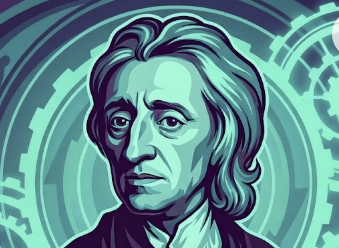
To this I answer: That force is to be opposed to nothing, but to unjust and unlawful force. Whoever makes any opposition in any other case, draws on himself a just condemnation, both from God and man...
▼
Source
source
Second Treatise of Government, Ch. XVIII, sec. 204

1 day ago
Put down the banks, and if this country could not be carried through the longest war against her most powerful enemy without ever knowing the want of a dollar, without dependence on the traitorous classes of her citizens, without bearing hard on the resources of the people, or loading the public with an indefinite burden of debt, I know nothing of my countrymen. Not by any novel project, not by any charlatanerie, but by ordinary and well-experienced means; by the total prohibition of all private paper at all times, by reasonable taxes in war aided by the necessary emissions of public paper of circulating size, this bottomed on special taxes, redeemable annually as this special tax comes in, and finally within a moderate period.
▼
Source
source
Letter to Albert Gallatin, 1815. ME 14:356
4 months 4 days ago
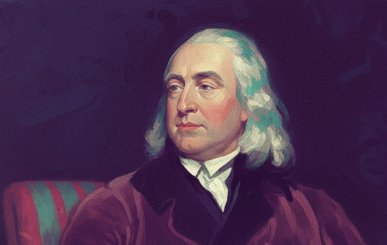
That which has no existence cannot be destroyed - that which cannot be destroyed cannot require anything to preserve it from destruction. Natural rights is simple nonsense: natural and imprescriptible rights, rhetorical nonsense - nonsense upon stilts. But this rhetorical nonsense ends in the old strain of mischievous nonsense for immediately a list of these pretended natural rights is given, and those are so expressed as to present to view legal rights. And of these rights, whatever they are, there is not, it seems, any one of which any government can, upon any occasion whatever, abrogate the smallest particle. The often-quoted phrase 'nonsense upon stilts' is often modernised to 'nonsense on stilts'.

2 months 3 weeks ago
The mind that puts everything in question, reaches, after a thousand interrogations, an almost total inertia, a situation which the inert, in fact, knows from the start, by instinct. For what is inertia but a congenital perplexity?
3 months 1 day ago
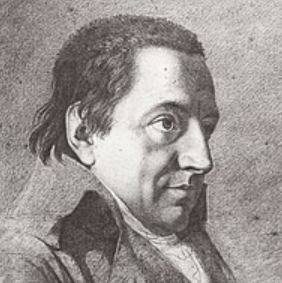
Of what I am, I know no more than that I am, but here no tie is necessary between subject and object. My own being is this tie, I am at once the subject knowing, and the object known of; and this reflection or return of the knowledge on itself is what I designate by the term I, if I have any determinate meaning.
▼
Source
source
Jane Sinnett, trans 1846 p. 50
2 months 1 week ago
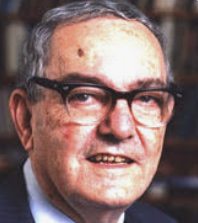
Economic man deals with the "real world" in all its complexity. Administrative man recognizes that the world he perceives is a drastic simplified model... He makes his choices using a simple picture of the situation that takes into account just a few of the factors that he regards as most relevant and crucial.
▼
Source
source
p. xxix; As cited in: Jesper Simonsen (1994) Administrative Behavior: How Organizations can be Understood in Terms of Decision Processes. Roskilde Universitet.

5 months 4 days ago
The man who is guided by concepts and abstractions only succeeds by such means in warding off misfortune, without ever gaining any happiness for himself from these abstractions. And while he aims for the greatest possible freedom from pain, the intuitive man, standing in the midst of a culture, already reaps from his intuition a harvest of continually inflowing illumination, cheer, and redemption in addition to obtaining a defense against misfortune. To be sure, he suffers more intensely, when he suffers; he even suffers more frequently, since he does not understand how to learn from experience and keeps falling over and over again into the same ditch.

3 months 3 weeks ago
The task of universal pragmatics is to identify and reconstruct universal conditions of possible mutual understanding.
▼
Source
source
p. 21
3 months 3 weeks ago
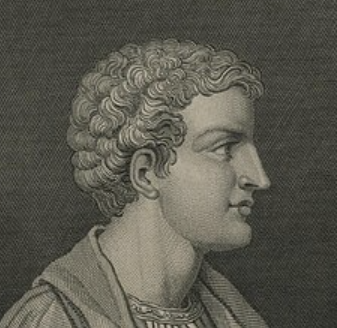
To have a great man for an intimate friend seems pleasant to those who have never tried it; those who have, fear it.
▼
Source
source
Book I, epistle xviii, line 86
2 months 3 weeks ago
We have reached the point where the Objective Logic turns into the Subjective Logic, or, where subjectivity emerges as the true form of objectivity. We may sum up Hegel's analysis in the following schema: The true form of reality requires freedom. Freedom requires self-consciousness and knowledge of the truth. Self-consciousness and knowledge of the truth are the essentials of the subject. The form of reality must be conceived as subject.
▼
Source
source
P. 154-155
3 weeks 4 days ago
When an astronomer tells me that some stellar phenomenon, which his telescope reveals to him at this moment, happened... fifty years ago... I... ask... how he has measured the velocity of light.

2 weeks 2 days ago
You must die erect and unyielding.
1 week 5 days ago
This is the real secret of life-to be completely engaged with what you are doing in the here and now. And instead of calling it work, realize it is play.
▼
Source
source
The Essence of Alan Watts

4 months 1 day ago
The stronghold of the determinist argument is the antipathy to the idea of chance...This notion of alternative possibility, this admission that any one of several things may come to pass is, after all, only a roundabout name for chance.
▼
Source
source
The Dilemma of Determinism (1884) p.153

4 months ago
The Value of myth is that it takes all the things you know and restores to them the rich significance which has been hidden by the veil of familiarity.
▼
Source
source
p. 90
2 months 3 weeks ago
So long as you "have" yourself, have yourself as an object, your experience of man is only as of a thing among things.
▼
Source
source
p. 148
5 months 2 days ago
The truth is always in the minority, and the minority is always stronger than the majority, because as a rule the minority is made up of those who actually have an opinion, while the strength of the majority is illusory, formed of that crowd which has no opinion - and which therefore the next moment (when it becomes clear that the minority is the stronger) adopts the latter's opinion, which now is in the majority, i.e. becomes rubbish by having the whole retinue and numerousness on its side, while the truth is again in a new minority.
4 months 2 days ago
A command can express no more than an ought or a shall, because it is a universal, but it does not express an 'is'; and this at once makes plain its deficiency. Against such commands Jesus sets virtue, i.e., a loving disposition, which makes the content of the command superfluous and destroys its form as a command, because that form implies an opposition between a commander and something resisting the command.

4 months 5 days ago
This endeavour to do a thing or leave it undone, solely in order to please men, we call ambition, especially when we so eagerly endeavour to please the vulgar, that we do or omit certain things to our own or another's hurt : in other cases it is generally called kindliness.
▼
Source
source
Part III, Prop. XXIX
4 months 4 days ago
The sensuous may be exceedingly distinct, while intellectual concepts are extremely confused. The former we observe in the prototype of sensuous knowledge geometry; the latter, in the organon of all intellectual concepts, metaphysics. It is evident how much toil the latter is expending to dispel the fogs of confusion darkening the common intellect, though not always with the happy success of the former science.
3 weeks 3 days ago
Getting along with women, Knocking around with men, Having more credit than money, Thus one goes through the world.
▼
Source
source
Claudine von Villa Bella
3 weeks 1 day ago
And yet I will venture to believe that in no time, since the beginnings of Society, was the lot of those same dumb millions of toilers so entirely unbearable as it is even in the days now passing over us. It is not to die, or even to die of hunger, that makes a man wretched; many men have died; all men must die,-the last exit of us all is in a Fire-Chariot of Pain. But it is to live miserable we know not why; to work sore and yet gain nothing; to be heart-worn, weary, yet isolated, unrelated, girt in with a cold universal Laissez-faire: it is to die slowly all our life long, imprisoned in a deaf, dead, Infinite Injustice, as in the accursed iron belly of a Phalaris' Bull! This is and remains forever intolerable to all men whom God has made. Do we wonder at French Revolutions, Chartisms, Revolts of Three Days? The times, if we will consider them, are really unexampled.
4 months ago
The most dangerous thing you can do is to take any one impulse of your own nature and set it up as the thing you ought to follow at all costs. There is not one of them which will not make us into devils if we set it up as an absolute guide. You might think love of humanity in general was safe, but it is not. If you leave out justice you will find yourself breaking agreements and faking evidence in trials "for the sake of humanity", and become in the end a cruel and treacherous man.
▼
Source
source
Book I, Chapter 2, "Some Objections"

4 months ago
I have nothing but contempt for you idiotic chosen ones who have the heart to rejoice when there are the damned in Hell and the poor on earth; as for me, I am on the side of men and I will not leave it.
▼
Source
source
Act 6, sc. 6
4 months 2 weeks ago
If you would be a good reader, read; if a writer, write.
▼
Source
source
Book II, ch. 18, 1.

4 months 2 days ago
In reality, the labourer belongs to capital before he has sold himself to capital.
▼
Source
source
Vol. I, Ch. 23, pg. 633.

2 months 3 days ago
The move from a structuralist account in which capital is understood to structure social relations in relatively homologous ways to a view of hegemony in which power relations are subject to repetition, convergence, and rearticulation brought the question of temporality into the thinking of structure, and marked a shift from a form of Althusserian theory that takes structural totalities as theoretical objects to one in which the insights into the contingent possibility of structure inaugurate a renewed conception of hegemony as bound up with the contingent sites and strategies of the rearticulation of power.
▼
Source
source
"Further Reflections on the Conversations of Our Time" (1997), which received first place in the Philosophy and Literature Bad Writing Contest

3 months 1 week ago
No evil is honorable; but death is honorable; therefore death is not evil.
▼
Source
source
As quoted in Epistles No. 82, by Seneca the Younger

3 months 1 week ago
That neither our Thoughts, nor Passions, nor Ideas formed by the Imagination, exist without the Mind, is what every Body will allow. And it seems no less evident that the various Sensations or Ideas imprinted on the Sense... cannot exist otherwise than in a Mind perceiving them... For as to what is said of the absolute Existence of unthinking Things without any relation to their being perceived, that seems perfectly unintelligible. Their Esse is Percipi, nor is it possible they should have any Existence, out of the Minds or thinking Things which perceive them.

3 months 3 weeks ago
The blues is relevant today because when we look down through the corridors of time, the black American interpretation of tragicomic hope in the face of dehumanizing hate and oppression will be seen as the only kind of hope that has any kind of maturity in a world of overwhelming barbarity and bestiality. That barbarity is found not just in the form of terrorism but in the form of the emptiness of our lives - in terms of the wasted human potential that we see around the world. In this sense, the blues is a great democratic contribution of black people to world history.
▼
Source
source
(p20)
1 week 5 days ago
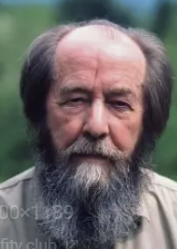
I am of course confident that I will fulfil my tasks as a writer in all circumstances - from my grave even more successfully and more irrefutably than in my lifetime. No one can bar the road to truth, and to advance its cause I am prepared to accept even death. But may it be that repeated lessons will finally teach us not to stop the writer's pen during his lifetime? At no time has this ennobled our history.
▼
Source
source
Open letter to the Fourth Soviet Writers' Congress (16 May 1967); as translated in Solzhenitsyn: A Documentary Record (1970) edited by Leopold Labedz
2 months 3 weeks ago
When you have understood that nothing is, that things do not even deserve the status of appearances, you no longer need to be saved, you are saved, and miserable forever.
4 months 4 days ago
...they cudgel their brains with absurd questions, such as, for instance, why God did not make the world many centuries earlier. They persuade themselves that it is easy to conceive, to be sure, how God may discern what is present, that is, what is actual in the time in which he is, but how He may foresee what is future, that is, what is actual in the time in which He is not yet, they deem an intellectual difficulty; as if the existence of the Necessary Being descended through all the moments of an imaginary time, and, having already exhausted a part of His duration, saw before Him the eternity He was yet to live simultaneously with the present events of the world. All these difficulties upon proper insight into the notion of time vanish like smoke.
4 months 2 days ago
The Philosophy of Nature takes up the material, prepared for it by physics out of experience, at the point to which physics has brought it, and again transforms it, without basing it ultimately on the authority of experience. Physics therefore must work into the hands of philosophy, so that the latter may translate into a true comprehension (Begriff) the abstract universal transmitted to it, showing how it issues from that comprehension as an intrinsically necessary whole.
2 months 3 weeks ago
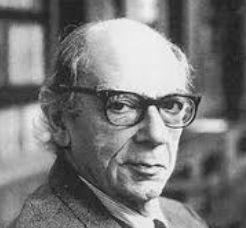
All forms of tampering with human beings, getting at them, shaping them against their will to your own pattern, all thought control and conditioning is, therefore, a denial of that in men which makes them men and their values ultimate.

3 months 6 days ago
I cannot help fearing that men may reach a point where they look on every new theory as a danger, every innovation as a toilsome trouble, every social advance as a first step toward revolution, and that they may absolutely refuse to move at all.
▼
Source
source
Book Three, Chapter XXI.
3 months 3 weeks ago
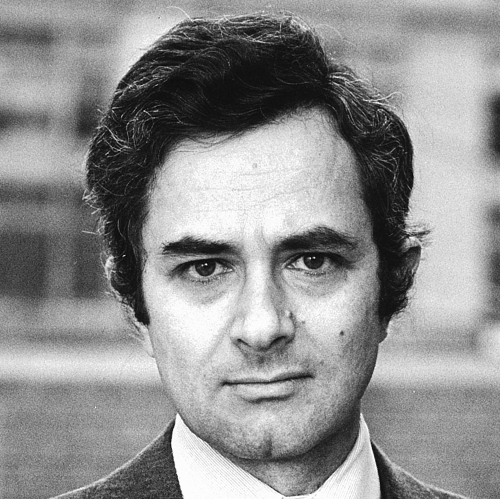
Eventually, I believe, current attempts to understand the mind by analogy with man-made computers that can perform superbly some of the same external tasks as conscious beings will be recognized as a gigantic waste of time.
▼
Source
source
p. 16.
5 months 2 days ago
Anxiety may be compared with dizziness. He whose eye happens to look down into the yawning abyss becomes dizzy. But what is the reason for this? It is just as much in his own eye as in the abyss, for suppose he had not looked down. Hence, anxiety is the dizziness of freedom, which emerges when the spirit wants to posit the synthesis and freedom looks down into its own possibility, laying hold of finiteness to support itself. Freedom succumbs to dizziness. Further than this, psychology cannot and will not go. In that very moment everything is changed, and freedom, when it again rises, sees that it is guilty. Between these two moments lies the leap, which no science has explained and which no science can explain. He who becomes guilty in anxiety becomes as ambiguously guilty as it is possible to become.
2 months 3 weeks ago
And the Science of them, is the true and onely Moral Philosophy. For Moral Philosophy is nothing else but the Science of what is Good, and Evill, in the conversation, and Society of mankind. Good, and Evill, are names that signify our Appetites, and Aversions; which in different tempers, customes, and doctrines of men, are different.
▼
Source
source
The First Part, Chapter 15, p. 79
CivilSimian.com created by AxiomaticPanic, CivilSimian, Kalokagathia