

1 month 1 week ago
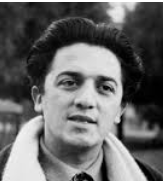
Even if I set out to make a film about a fillet of sole, it would be about me.
▼
Source
source
On the autobiographical nature of his films, in The Atlantic
2 days ago
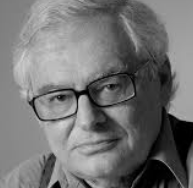
The degree of confirmation assigned to any given hypothesis is sensitive to properties of the entire belief system ... simplicity, plausibility, and conservatism are properties that theories have in virtue of their relation to the whole structure of scientific beliefs taken collectively. A measure of conservatism or simplicity would be a metric over global properties of belief systems.
▼
Source
source
p. 107-108 as cited in: Philip Robbins, "Modularity of Mind", The Stanford Encyclopedia of Philosophy (Summer 2010 Edition), Edward N. Zalta (ed.)

5 months 1 week ago
Woe to the thinker who is not the gardener but only the soil of the plants that grow in him!
1 month 1 week ago
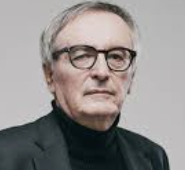
The British state has defaulted on its core functions while attempting to remake society.
▼
Source
source
New Statesman, 9 October 2024
2 months 1 day ago
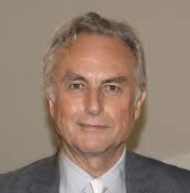
There is one particular property of living things, however, that I want to single out as explicable only by Darwinian selection. This property is the one that has been the recurring topic of this book: adaptive complexity.
▼
Source
source
Chapter 11 "Doomed Rivals" (p. 288)

3 days ago
The metaphysical image that a definite epoch forges of the world has the same structure as what the world immediately understands to be appropriate as a form of its political organization.
4 months 6 days ago
This life affords no solid satisfaction, but in the consciousness of having done well, and the hopes of another life.
▼
Source
source
Letter to Anthony Collins (23 August 1704), in The Works of John Locke, Vol. X (London, 1823), p. 298; quoted by William Julius Mickle in Voltain in the Shades (London, 1770), p. 7
3 months 5 days ago
The doctrine of the transmigration of souls was indigenous to India and was brought into Greece by Pythagoras.
▼
Source
source
quoted in Londhe, S. (2008). A tribute to Hinduism: Thoughts and wisdom spanning continents and time about India and her culture. New Delhi: Pragun Publication.

4 months 3 days ago
I tell you in truth: all men are Prophets or else God does not exist.
▼
Source
source
Act 1
2 months 2 days ago
Confession of our faults is the next thing to innocence.
▼
Source
source
Maxim 1060
2 months 2 weeks ago
The uniting of Orthodoxy with state absolutism came about on the soil of a non-belief in the Divineness of the earth, in the earthly future of mankind; Orthodoxy gave away the earth into the hands of the state because of its own non-belief in man and mankind, because of its nihilistic attitude towards the world. Orthodoxy does not believe in the religious ordering of human life upon the earth, and it compensates for its own hopeless pessimism by a call for the forceful ordering of it by state authority.
▼
Source
source
Nihilism On A Religious Soil
5 months 2 days ago
It is only afterward that a new idea seems reasonable. To begin with, it usually seems unreasonable.

4 months 5 days ago
How does it become a man to behave toward this American government today? I answered that he cannot without disgrace be associated with it.
1 month 1 week ago
The true goal of the bourgeois life, in other words, is not self-enactment, but diversion. Most people need the organised distraction of work (if they can find it). Idleness - the life of the playboy who doesn't answer the phone - is simply too demanding. "
▼
Source
source
A difficult business," New Statesman

2 months 2 weeks ago
Those who keep the masses of men in subjection by exercising force and cruelty deprive them at once of two vital foods, liberty and obedience; for it is no longer within the power of such masses to accord their inner consent to the authority to which they are subjected. Those who encourage a state of things in which the hope of gain is the principal motive take away from men their obedience, for consent which is its essence is not something which can be sold.
▼
Source
source
p. 97
5 months 2 days ago
The fact is that I've never called myself a genius, and I think the term has been cheapened by overuse into meaninglessness. If other people want to call me that, that's their problem.

4 months 5 days ago
Thee will find out in time that I have a great love of professing vile sentiments, I don't know why, unless it springs from long efforts to avoid priggery.
▼
Source
source
Letter to Alys Pearsall Smith (1894). Smith was a Quaker, thus the archaic use of "Thee" in this and other letters to her.
2 months 3 weeks ago
Strictly speaking, the mass, as a psychological fact, can be defined without waiting for individuals to appear in mass formation. In the presence of one individual we can decide whether he is "mass" or not. The mass is all that which sets no value on itself - good or ill - based on specific grounds, but which feels itself "just like everybody," and nevertheless is not concerned about it; is, in fact, quite happy to feel itself as one with everybody else.
▼
Source
source
Chap.I: The Coming Of The Masses

2 months 4 days ago
Now about your family. Do you know that since your daughter came out everyone has been enraptured by her? They say she is amazingly beautiful.
▼
Source
source
Bk. I, Ch. I
2 weeks 6 days ago
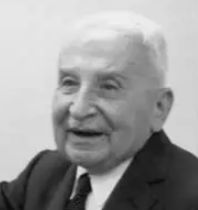
The characteristic feature of militarism is not the fact that a nation has a powerful army or navy. It is the paramount role assigned to the army within the political structure. Even in peacetime the army is supreme; it is the predominant factor in political life. The subjects must obey the government as soldiers must obey their superiors. Within a militarist community there is no freedom; there are only obedience and discipline.
▼
Source
source
Omnipotent Government: The Rise of the Total State and Total War
3 days ago
Nobody can valuate without devaluating, revaluating, and serving one's interests. Whoever sets a value, takes position against a disvalue by that very action. The boundless tolerance and the neutrality of the standpoints and viewpoints turn themselves very quickly into their opposite, into enmity, as soon as the enforcement is carried out in earnest. The valuation pressure of the value is irresistible, and the conflict of the valuator, devaluator, revaluator, and implementor, inevitable.
2 weeks 5 days ago
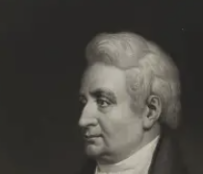
I do not mean to be disrespectful, but the attempt of the Lords to stop the progress of reform reminds me very forcibly of the great storm at Sidmouth, and of the conduct of the excellent Mrs Partington on that occasion. In the winter of 1824 there set in a great flood upon that town - the tide rose to an incredible height - the waves rushed in upon the houses, and everything was threatened with destruction. In the midst of this sublime and terrible storm, Dame Partington, who lived upon the beach, was seen at the door of her house with mop and pattens, trundling her mop, squeezing out the sea-water, and vigorously pushing away the Atlantic Ocean. The Atlantic was roused; Mrs. Partington's spirit was up. But I need not tell you that the contest was unequal.
▼
Source
source
The Atlantic Ocean beat Mrs. Partington. Speech at Taunton

2 months 3 weeks ago
Because the peculiarity of man is that his machinery for reaction on external things has involved an imaginative transcript of these things, which is preserved and suspended in his fancy; and the interest and beauty of this inward landscape, rather than any fortunes that may await his body in the outer world, constitute his proper happiness. By their mind, its scope, quality, and temper, we estimate men, for by the mind only do we exist as men, and are more than so many storage-batteries for material energy. Let us therefore be frankly human. Let us be content to live in the mind.
▼
Source
source
p. 64
2 weeks ago
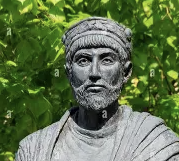
I have observed that even the barbarians across the Rhine sing savage songs composed in language not unlike the croaking of harsh-voiced birds, and that they delight in such songs. For I think it is always the case that inferior musicians, though they annoy their audiences, give very great pleasure to themselves.
▼
Source
source
On the songs of the early Germans, in his Mispogon, 337-338
3 months 3 weeks ago
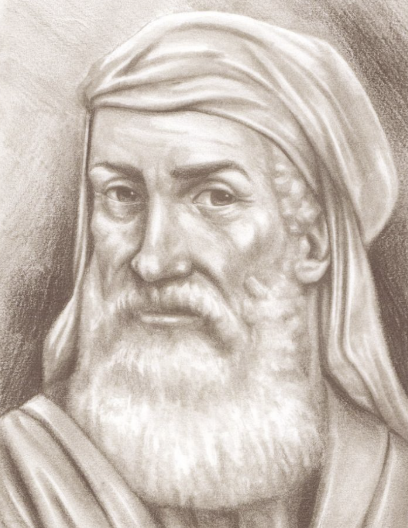
The sight of both eyes becomes one.
▼
Source
source
fr. 88
2 weeks 1 day ago
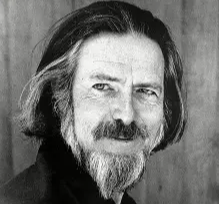
One sees that all explicit opposites are implicit allies-correlative in the sense that they "gowith" each other and cannot exist apart. This, rather than any miasmic absorption of differences into acontinuum of ultimate goo, is the metaphysical unity underlying the world. For this unity is not mere one-ness as opposed to multiplicity, since these two terms are themselves polar. The unity, or inseparability, of one and many is therefore referred to in Vedanta philosophy as "nonduality" (advaita) to distinguish it from simple uniformity.
▼
Source
source
p. 107-108
Just now
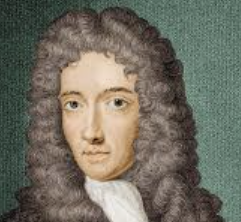
I must confess (sayes Eleutherius) I have, in the reading of Paracelsus and other Chymical Authors, been troubled to find, that such hard Words and Equivocal Expressions, as You justly complain of, do even when they treat of Principles, seem to be studiously affected by those Writers; whether to make themselves to be admir'd by their Readers, and their Art appear more Venerable and Mysterious, or, (as they would have us think) to conceal from them a Knowledge themselves judge inestimable.
4 months 6 days ago
He will better comprehend the foundations and measures of decency and justice, and have livelier, and more lasting impressions of what he ought to do, by giving his opinion on cases propos'd, and reasoning with his tutor on fit instances, than by giving a silent, negligent, sleepy audience to his tutor's lectures; and much more than by captious logical disputes, or set declamations of his own, upon any question. The one sets the thoughts upon wit and false colours, and not upon truth; the other teaches fallacy, wrangling, and opiniatry; and they are both of them things that spoil the judgment, and put a man out of the way of right and fair reasoning; and therefore carefully to be avoided by one who would improve himself, and be acceptable to others.
▼
Source
source
Sec. 98
4 days ago
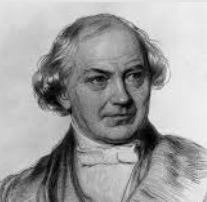
An 'Artificial System' is one in which the 'smaller' groups (the Genera) are 'natural'; and in which the 'wider' divisions (Classes, Orders) are constructed by the 'peremptory' application of selected Characters

3 weeks 4 days ago
This poor amphibious Pope too gives loaves to the Poor; has in him more good latent than he is himself aware of. His poor Jesuits, in the late Italian Cholera, were, with a few German Doctors, the only creatures whom dastard terror had not driven mad: they descended fearless into all gulfs and bedlams; watched over the pillow of the dying, with help, with counsel and hope; shone as luminous fixed stars, when all else had gone out in chaotic night: honour to them!

3 months ago
Only thoughts that are randomly born die. The other thoughts we carry with us without knowing them. They have abandoned themselves to forgetfulness so that they can be with us all the time.
4 months 5 days ago
What modern apologists call 'true' Christianity is something depending upon a very selective process. It ignores much that is to be found in the Gospels: for example, the parable of the sheep and the goats, and the doctrine that the wicked will suffer eternal torment in Hell fire. It picks out certain parts of the Sermon on the Mount, though even these it often rejects in practice. It leaves the doctrine of non-resistance, for example, to be practised only by non-Christians such as Gandhi. The precepts that it particularly favours are held to embody such a lofty morality that they must have had a divine origin. And yet ... these precepts were uttered by Jews before the time of Christ.
▼
Source
source
"Can Religion Cure Our Troubles?", in Stockholm newspaper Dagens Nyheter, part II., 11/11/1954

4 months 1 week ago
Men are most apt to believe what they least understand.
▼
Source
source
Book III, Ch. 11. Of Cripples

3 months 4 days ago
Music must take rank as the highest of the fine arts - as the one which, more than any other, ministers to human welfare.
▼
Source
source
On the Origin and Function of Music
4 months 5 days ago
Freedom is the greatest of political goods. I do not say freedom is the greatest of all goods: the best things come from within-they are such things as creative art, and love, and thought. Such things can be helped or hindered by political conditions, but not actually produced by them; and freedom is, both in itself and in its relation to these other goods the best thing that political and economic conditions can secure.
▼
Source
source
Ch. V: Government and Law, p. 75

2 months 3 weeks ago
Apart from the fact there is no normal standard of health, nobody has proved that man is necessarily cheerful by nature. And further, man, by the very fact of being man, of possessing consciousness, is, in comparison with the ass or the crab, a diseased animal. Consciousness is a disease.
5 months 1 week ago
Our destiny exercises its influence over us even when, as yet, we have not learned its nature: it is our future that lays down the law of our today.
2 months 2 weeks ago
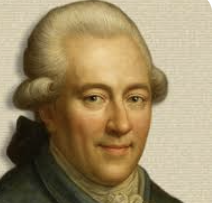
The journalists have constructed for themselves a little wooden chapel, which they also call the Temple of Fame, in which they put up and take down portraits all day long and make such a hammering you can't hear yourself speak.
▼
Source
source
D 20
4 months 1 week ago
What of a truth that is bounded by these mountains and is falsehood to the world that lives beyond?
▼
Source
source
Ch. 12
3 months 2 days ago
I shall in no time forget that moment. We felt as if we had had in our souls a clear passing glimpse into this wondrous World.

4 months 3 weeks ago
A wise man, who puts himself under the government of reason, will be able to receive an injury with calmness, and to treat the person who committed it with lenity; for he will rank injuries among the casual events of life, and will prudently reflect that he can no more stop the natural current of human passions, than he can curb the stormy winds.
2 months 3 weeks ago
The Greek word for philosopher (philosophos) connotes a distinction from sophos. It signifies the lover of wisdom (knowledge) as distinguished from him who considers himself wise in the possession of knowledge. This meaning of the word still endures: the essence of philosophy is not the possession of the truth but the search for truth. ... Philosophy means to be on the way. Its questions are more essential than its answers, and every answer becomes a new question.
▼
Source
source
Way to Wisdom: An Introduction to Philosophy (1951) as translated by Ralph Mannheim, Ch. 1, What is Philosophy?, p. 12

4 months 5 days ago
I now saw, that a science is either deductive or experimental, according as, in the province it deals with, the effects of causes when conjoined, are or are not the sums of the effects which the same causes produce when separate. It followed that politics must be a deductive science. It thus appeared, that both Macaulay and my father were wrong; the one in assimilating the method of philosophising in politics to the purely experimental method of chemistry; while the other, though right in adopting a deductive method, had made a wrong selection of one, having taken as the type of deduction, not the appropriate process, that of the deductive branches of natural philosophy, but the inappropriate one of pure geometry, which, not being a science of causation at all, does not require or admit of any summing-up of effects.
▼
Source
source
(pp. 160-161)
2 months 3 weeks ago
The characteristic of the hour is that the commonplace mind, knowing itself to be commonplace, has the assurance to proclaim the rights of the commonplace and to impose them wherever it will. As they say in the United States: "to be different is to be indecent." The mass crushes beneath it everything that is different, everything that is excellent, individual, qualified and select. Anybody who is not like everybody, who does not think like everybody, runs the risk of being eliminated. And it is clear, of course, that this "everybody" is not "everybody." "Everybody" was normally the complex unity of the mass and the divergent, specialised minorities. Nowadays, "everybody" is the mass alone.
▼
Source
source
Chap.I: The Coming Of The Masses
4 months 5 days ago
There are other letters for the child to learn than those which Cadmus invented.

3 months 4 weeks ago
Navigation brought man face to face with the uncertainty of destiny, where each is left to himself and every departure might always be the last. The madman on his crazy boat sets sail for the other world, and it is from the other world that he comes when he disembarks. This enforced navigation is both rigorous division and absolute Passage, serving to underline in real and imaginary terms the liminal situation of the mad in medieval society. It was a highly symbolic role, made clear by the mental geography involved, where the madman was confined at the gates of the cities. His exclusion was his confinement, and if he had no prison other than the threshold itself he was still detained at this place of passage. In a highly symbolic position he is placed on the inside of the outside, or vice versa. A posture that is still his today, if we admit that what was once the visible fortress of social order is now the castle of our own consciousness.
▼
Source
source
Part One: 1. Stultifera Navis

3 months 5 days ago
I go to spread the tidings, I want to spread the tidings - of what? Of the truth, for I have seen it, have seen it with my own eyes, have seen it in all its glory.

4 days ago
Freedom of the press, subject only to liability for personal injuries. This formidable censor of the public functionaries, by arraigning them at the tribunal of public opinion, produces reform peaceably, which must otherwise be done by revolution. It is also the best instrument for enlightening the mind of man, and improving him as a rational, moral, and social being.
CivilSimian.com created by AxiomaticPanic, CivilSimian, Kalokagathia