


4 months 3 days ago
Fear? If I have gained anything by damning myself, it is that I no longer have anything to fear.
▼
Source
source
Act 1
4 days ago
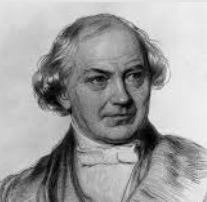
We perceive by 'means' of a medium and 'by means' of impressions on the nerves: but we do not (by our senses,) perceive either the medium or the impressions on the nerves.

4 months 1 week ago
I want death to find me planting my cabbages.
▼
Source
source
Ch. 20. Of the Force of Imagination (tr. Donald M. Frame)

2 weeks 5 days ago
I propose to value them according to their character, and not according to their duties. Each man acquires his character for himself, but accident assigns his duties.
4 days ago
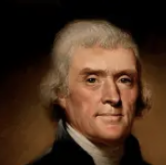
I agree ... that a professorship of Theology should have no place in our institution. But we cannot always do what is absolutely best. Those with whom we act, entertaining different views, have the power and the right of carrying them into practice. Truth advances, and error recedes step by step only; and to do to our fellow men the most good in our power, we must lead where we can, follow where we cannot, and still go with them, watching always the favorable moment for helping them to another step.
▼
Source
source
Comment on establishing the University of Virginia, in a letter to Thomas Cooper (7 October 1814); published in The Writings of Thomas Jefferson (1905) edited by Andrew Adgate Lipscomb and Albert Ellery Bergh, Vol VII, p. 200

2 months 2 weeks ago
We have all experienced the moments that William James calls melting moods, when it suddenly becomes perfectly obvious that life is infinitely fascinating. And the insight seems to apply retrospectively. Periods of my life that seemed confusing and dull at the time now seem complex and rather charming. It is almost as if some other person a more powerful and mature individual has taken over my brain. This higher self views my problems and anxieties with kindly detachment, but entirely without pity. Looking at problems through his eyes, I can see I was a fool to worry about them.
▼
Source
source
pp. 2-3

3 months 1 week ago
Useful undertakings which require sustained attention and vigorous precision in order to succeed often end up by being abandoned, for, in America, as elsewhere, the people move forward by sudden impulses and short-lived efforts.
▼
Source
source
Chapter V
3 months 1 day ago
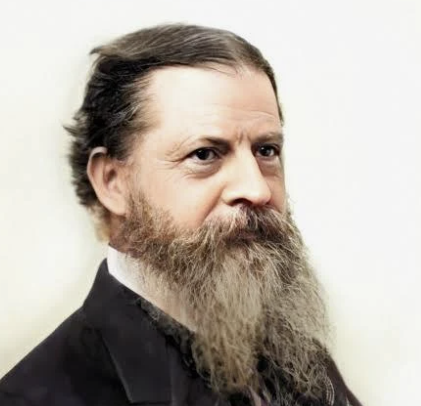
In fact, this infinitesimally spread-out consciousness is a direct feeling of its contents as spread out. In an infinitesimal interval we directly perceive the temporal sequence of its beginning, middle, and end... Now upon this interval follows another, whose beginning is the middle of the former, and whose middle is the end of the former. Here we have an immediate perception of the temporal sequence of its beginning, middle and end, or say, of the second, third, and fourth instants.

3 months 4 weeks ago
Nihilism is not overcome by arguments or analyses; it is tamed by love and care. Any disease of the soul must be conquered by a turning of one's soul.
▼
Source
source
(p19)

4 months 4 days ago
Who lives longer? the man who takes heroin for two years and dies, or a man who lives on roast beef, water and potatoes 'till 95? One passes his 24 months in eternity. All the years of the beefeater are lived only in time.
▼
Source
source
The Shortcut: 20 Stories To Get You From Here To There (2006) by Kevin A Fabiano, p. 179
3 weeks 6 days ago
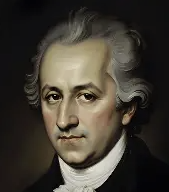
Young Schopenhauer, a zealous and thorough-going Kantian, tried to explain that light would cease to exist along with the seeing eye. "What!" he said, according to Schopenhauer's own report, "looking at him with his Jove-like eyes,"-"You should rather say that you would not exist if the light could not see you?"
▼
Source
source
As quoted by Friedrich Jodl, "Goethe and Kant," The Monist (1901) f. Edward C. Hegeler, ed. Paul Carus, Vol. 11, p. 264. As translated from Professor Jodl's MS. by W. H. Carruth, of the University of Kansas.

4 months 5 days ago
Life consists with wildness. The most alive is the wildest. Not yet subdued to man, its presence refreshes him.
3 months ago
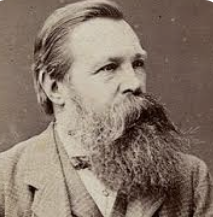
The class of big capitalists, who, in all civilized countries, are already in almost exclusive possession of all the means of subsistance and of the instruments (machines, factories) and materials necessary for the production of the means of subsistence. This is the bourgeois class, or the bourgeoisie.
4 months 1 week ago
I should like you to consider that these functions (including passion, memory, and imagination) follow from the mere arrangement of the machine's organs every bit as naturally as the movements of a clock or other automaton follow from the arrangement of its counter-weights and wheels.
▼
Source
source
Descartes, Rene, L'Homme (The Treatise on Man) (1662) p. 108

4 months 5 days ago
Whatever crushes individuality is despotism, by whatever name it may be called, and whether it professes to be enforcing the will of God or the injunctions of men.
▼
Source
source
Ch. III: Of Individuality, As One of the Elements of Well-Being

4 months 2 weeks ago
The Idols of the Cave are the idols of the individual man. For everyone (besides the errors common to human nature in general) has a cave or den of his own, which refracts and discolors the light of nature, owing either to his own proper and peculiar nature; or to his education and conversation with others; or to the reading of books, and the authority of those whom he esteems and admires; or to the differences of impressions, accordingly as they take place in a mind preoccupied and predisposed or in a mind indifferent and settled; or the like. So that the spirit of man (according as it is meted out to different individuals) is in fact a thing variable and full of perturbation, and governed as it were by chance. Whence it was well observed by Heraclitus that men look for sciences in their own lesser worlds, and not in the greater or common world.
▼
Source
source
Aphorism 42
3 months 1 week ago
What a hell of an economic system! Some are replete with everything while others, whose stomachs are no less demanding, whose hunger is just as recurrent, have nothing to bite on. The worst of it is the constrained posture need puts you in. The needy man does not walk like the rest; he skips, slithers, twists, crawls.
4 months 3 days ago
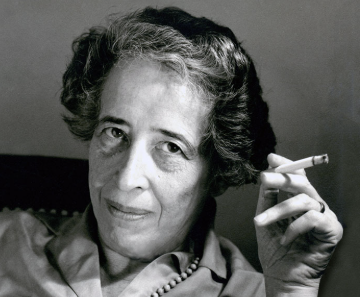
The point, as Marx saw it, is that dreams never come true.
▼
Source
source
"On Violence"


2 months 3 weeks ago
The neo-conservative critics of leftist critics of mass culture ridicule the protest against Bach as background music in the kitchen, against Plato and Hegel, Shelley and Baudelaire, Marx and Freud in the drugstore. Instead, they insist on recognition of the fact that the classics have left the mausoleum and come to life again, that people are just so much more educated. True, but coming to life as classics, they come to life as other than themselves; they are deprived of their antagonistic force, of the estrangement which was the very dimension of their truth.
▼
Source
source
p. 64
1 month 2 weeks ago
There is no such thing as gratitude in international politics.
▼
Source
source
Abridgement of Vols. 7-10 by D. C. Somervell
3 months ago
The Austrian Germans and Magyars will be set free and wreak a bloody revenge on the Slav barbarians. The general war which will then break out will smash this Slav Sonderbund and wipe out all these petty hidebound nations, down to their very names. The next world war will result in the disappearance from the face of the earth not only of reactionary classes and dynasties, but also of entire reactionary peoples. And that, too, is a step forward.
▼
Source
source
The Magyar Struggle in Neue Rheinische Zeitung (13 January 1849) Referring to the Serb uprising of 1848-49
1 month ago
I do not admire myself as a person. My successes do not override my shortcomings.
▼
Source
source
Journal of Humanistic Psychology (Spring 1991) Vol. 31 No. 2, p. 112

3 months 4 weeks ago
The problem... Democracy is founded by a politeia, a constitution, where the demos, the people, exercise power, and... everyone is equal in front of the law. Such a constitution... is condemned to give equal place to all forms of parrhesia, even the worst. Because parrhesia is given even to the worst citizens, the overwhelming influence of bad, immoral, or ignorant speakers may lead... into tyranny, or... otherwise endanger the city. Hence parrhesia may be dangerous for democracy itself.

5 months 5 days ago
Alas, time comes and time goes, it subtracts little by little; then it deprives a person of a good, the loss of which he indeed feels, and his pain is great. Alas, and he does not discover that long ago it has already taken away from him the most important thing of all-the capacity to make a resolution-and it has made him so familiar with this condition that there is no consternation over it, the last thing that could help gain new power for renewed resolution!

4 months 1 week ago
I have resolved to demonstrate by a certain and undoubted course of argument, or to deduce from the very condition of human nature, not what is new and unheard of, but only such things as agree best with practice.
▼
Source
source
Ch. 1, Introduction

4 months 5 days ago
When people begin to philosophize they seem to think it necessary to make themselves artificially stupid.
▼
Source
source
Theory of Knowledge, 1913
2 months 2 weeks ago
You've got the temperament of a scholar, and you live on your own and write books. You don't have anything to do with civilization. You've been in London a few days and you can't wait to get back home. But how about the people who can't write books -- people there's no outlet for in this civilization? What about your new men who don't know what to do?
▼
Source
source
p. 200

2 months 2 weeks ago
Emptiness is not a denial of the proper but an affirmation of it.
2 weeks 5 days ago
Do you seek Alcides' equal? None is, except himself.
▼
Source
source
line 84; (Juno)

4 months 4 days ago
The advance of liberalism, so-called, in Christianity, during the past fifty years, may fairly be called a victory of healthy-mindedness within the church over the morbidness with which the old hell-fire theology was more harmoniously related. We have now whole congregations whose preachers, far from magnifying our consciousness of sin, seem devoted rather to making little of it. They ignore, or even deny, eternal punishment, and insist on the dignity rather than on the depravity of man. They look at the continual preoccupation of the old-fashioned Christian with the salvation of his soul as something sickly and reprehensible rather than admirable; and a sanguine and 'muscular' attitude, which to our forefathers would have seemed purely heathen, has become in their eyes an ideal element of Christian character. I am not asking whether or not they are right, I am only pointing out the change.
▼
Source
source
Lectures IV and V, "The Religion of Healthy-Mindedness"
5 months 5 days ago
For the purposes of poetry a convincing impossibility is preferable to an unconvincing possibility.
3 months 5 days ago
All those countless battles-those endless, and... for the greater part, useless wars, of which... fills up for so many thousand years... are but little atoms compared with the great whole of human destiny.
4 months 3 days ago
Intuitionism is not constructive, perfectionism is unacceptable.
▼
Source
source
Chapter I, Section 9, pg. 52

Just now
Legislative reform and revolution are not different methods of historic development that can be picked out at the pleasure from the counter of history, just as one chooses hot or cold sausages. Legislative reform and revolution are different factors in the development of class society. They condition and complement each other, and are at the same time reciprocally exclusive, as are the north and south poles, the bourgeoisie and proletariat.
▼
Source
source
Ch. 8
3 months 1 day ago
The traditional disputes of philosophers are, for the most part, as unwarranted as they are unfruitful. The surest way to end them is to establish beyond question what should be the purpose and method of a philosophical enquiry. And this is by no means so difficult a task as the history of philosophy would lead one to suppose. For if there are any questions which science leaves it to philosophy to answer, a straightforward process of elimination must lead to their discovery.
▼
Source
source
Ch. 1, first lines.
4 months 1 week ago
To understand political power aright, and derive from it its original, we must consider what estate all men are naturally in, and that is, a state of perfect freedom to order their actions, and dispose of their possessions and persons as they think fit, within the bounds of the law of Nature, without asking leave or depending upon the will of any other man.
▼
Source
source
Second Treatise of Government, Ch. II, sec. 4

4 months 3 days ago
I can imagine no man who will look with more horror on the End than a conscientious revolutionary who has, in a sense sincerely, been justifying cruelties and injustices inflicted on millions of his contemporaries by the benefits which he hopes to confer on future generations: generations who, as one terrible moment now reveals to him, were never going to exist. Then he will see the massacres, the faked trials, the deportations, to be all ineffaceably real, an essential part, his part, in the drama that has just ended: while the future Utopia had never been anything but a fantasy.
2 months 1 week ago
The criterion of efficiency dictates that choice of alternatives which produces the largest result for the given application of resources.
▼
Source
source
Simon (1945, p. 179); As cited in: Harry M. Johnson (1966) Sociology: A Systematic Introduction. p. 287.

4 months 1 week ago
The directors of such [joint-stock] companies, however, being the managers rather of other people's money than of their own, it cannot well be expected, that they should watch over it with the same anxious vigilance with which the partners in a private copartnery frequently watch over their own.... Negligence and profusion, therefore, must always prevail, more or less, in the management of the affairs of such a company.
▼
Source
source
Chapter I, Part III, Article I, orig.p. 233.
4 months 5 days ago
We thus have a kind of see-saw: first, pure persuasion leading to the conversion of a minority; then force exerted to secure that the rest of the community shall be exposed to the right propaganda; and finally a genuine belief on the part of the great majority, which makes the use of force again unnecessary.
▼
Source
source
Ch. 9: Power over opinion
4 months 1 week ago
There is the name and the thing: the name is a voice which denotes and signifies the thing; the name is no part of the thing, nor of the substance; 'tis a foreign piece joined to the thing, and outside it. God, who is all fulness in Himself and the height of all perfection, cannot augment or add anything to Himself within; but His name may be augmented and increased by the blessing and praise we attribute to His exterior works: which praise, seeing we cannot incorporate it in Him, forasmuch as He can have no accession of good, we attribute to His name, which is the part out of Him that is nearest to us. Thus is it that to God alone glory and honour appertain; and there is nothing so remote from reason as that we should go in quest of it for ourselves; for, being indigent and necessitous within, our essence being imperfect, and having continual need of amelioration, 'tis to that we ought to employ all our endeavour.
▼
Source
source
Ch. 16

4 months 5 days ago
Success treads on every right step. For the instinct is sure, that prompts him to tell his brother what he thinks. He then learns, that in going down into the secrets of his own mind, he has descended into the secrets of all minds. He learns that he who has mastered any law in his private thoughts, is master to that extent of all men whose language he speaks, and of all into whose language his own can be translated.
▼
Source
source
par. 35

3 months 5 days ago
Nothing is so fatal to Religion as indifference which is, at least, half Infidelity.
▼
Source
source
Letter to William Smith, Member of the Irish Parliament (29 January 1795), quoted in R. B. McDowell (ed.)
4 months 5 days ago
Cure the drunkard, heal the insane, mollify the homicide, civilize the Pawnee, but what lessons can be devised for the debaucher of sentiment?
▼
Source
source
p. 236
4 months 3 days ago
The devil...the prowde spirit...cannot endure to be mocked.
▼
Source
source
Thomas More, quoted at the beginning of The Screwtape Letters

3 months 4 days ago
If there be an order in which the human race has mastered its various kinds of knowledge, there will arise in every child an aptitude to acquire these kinds of knowledge in the same order. So that even were the order intrinsically indifferent, it would facilitate education to lead the individual mind through the steps traversed by the general mind. But the order is not intrinsically indifferent; and hence the fundamental reason why education should be a repetition of civilization in little.

2 months 2 days ago
African audiences cannot accept our passive consumer role in the presence of film.
▼
Source
source
(p. 44)

5 months 2 days ago
It is the nature of science that answers automatically pose new and more subtle questions.
4 months 5 days ago
So much of modern mathematical work is obviously on the border-line of logic, so much of modern logic is symbolic and formal, that the very close relationship of logic and mathematics has become obvious to every instructed student. The proof of their identity is, of course, a matter of detail: starting with premisses which would be universally admitted to belong to logic, and arriving by deduction at results which as obviously belong to mathematics, we find that there is no point at which a sharp line can be drawn, with logic to the left and mathematics to the right. If there are still those who do not admit the identity of logic and mathematics, we may challenge them to indicate at what point, in the successive definitions and deductions of Principia Mathematica, they consider that logic ends and mathematics begins. It will then be obvious that any answer must be quite arbitrary.
▼
Source
source
Ch. 18: Mathematics and Logic
CivilSimian.com created by AxiomaticPanic, CivilSimian, Kalokagathia