


4 months 4 days ago
Words are good servants but bad masters.
▼
Source
source
As quoted by Laura Huxley, in conversation with Alan Watts about her memoir This Timeless Moment (1968), in Pacifica Archives #BB2037

1 month 2 weeks ago
I cannot think of any circumstances in which advertising would not be an evil.
▼
Source
source
In David Ogilvy, Confessions of an Advertising Man (New York: Atheneum, 1963) ch. 11

3 months 5 days ago
Toleration is good for all, or it is good for none.
▼
Source
source
Speech on the Bill for the Relief of Protestant Dissenters

2 weeks 5 days ago
Perhaps its destruction has been brought about only that it may be raised up again to a better destiny. Oftentimes a reverse has but made room for more prosperous fortune. Many structures have fallen only to rise to a greater height.

5 months 1 week ago
One has attained to mastery when one neither goes wrong nor hesitates in the performance.

2 months 2 weeks ago
But many of us seek community solely to escape the fear of being alone. Knowing how to be solitary is central to the art of loving. When we can be alone, we can be with others without using them as a means of escape.
▼
Source
source
All About Love: New Visions, 1999

4 months 1 week ago
The laws of conscience, which we pretend to be derived from nature, proceed from custom.
▼
Source
source
Ch. 22. Of Custom, tr. Cotton, rev. W. Hazlitt, 1842
4 months 5 days ago
The inclination to act as the laws command, a virtue, is a synthesis in which the law ... loses its universality and the subject its particularity; both lose their opposition, while in the Kantian conception of virtue this opposition remains, and the universal becomes the master and the particular the mastered.
2 months 1 week ago
Today's terrorism is not the product of a traditional history of anarchism, nihilism, or fanaticism. It is instead the contemporary partner of globalization.
▼
Source
source
The Spirit of Terrorism (2003) "The Violence of the Global"

4 weeks 1 day ago
Liberal values like tolerance and individual freedom are prized most intensely when they are denied: People who live in brutal dictatorships want the simple freedom to speak, associate, and worship as they choose. But over time life in a liberal society comes to be taken for granted and its sense of shared community seems thin.
2 weeks 2 days ago
The ethic of Reverence for Life is the ethic of Love widened into universality.
▼
Source
source
Epilogue, p. 235
3 months ago
Industry controlled by society as a whole, and operated according to a plan, presupposes well-rounded human beings, their faculties developed in balanced fashion, able to see the system of production in its entirety.

1 day ago
As for the Mystical Writers scrupling to Communicate their Knowledge, they might less to their own Disparagement, and to the trouble of their Readers, have conceal'd it by writing no Books, then by Writing bad ones. If Themistius were here, he would not stick to say that Chymists write thus darkly, not because they think their Notions too precious to be explain'd, but because they fear that if they were explain'd, men would discern, that they are farr from being precious.
3 months 2 days ago
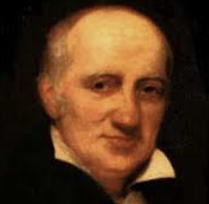
A common mortal periodically selected by his fellow-citizens to watch over their own interests, can never be supposed to possess this stupendous virtue.
▼
Source
source
Book III, Chapter 9

4 months 6 days ago
The scientific attitude of mind involves a sweeping away of all other desires in the interests of the desire to know-it involves suppression of hopes and fears, loves and hates, and the whole subjective emotional life, until we become subdued to the material, able to see it frankly, without preconceptions, without bias, without any wish except to see it as it is, and without any belief that what it is must be determined by some relation, positive or negative, to what we should like it to be, or to what we can easily imagine it to be.
3 days ago
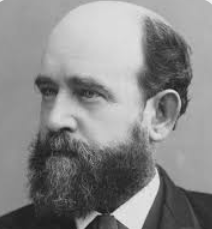
More is given to us than to any people at any time before; and, therefore, more is required of us. We have made, and still are making, enormous advances on material lines. It is necessary that we commensurately advance on moral lines. Civilization, as it progresses, requires a higher conscience, a keener sense of justice, a warmer brotherhood, a wider, loftier, truer public spirit. Falling these, civilization must pass into destruction. It cannot be maintained on the ethics of savagery. For civilization knits men more and more closely together, and constantly tends to subordinate the individual to the whole, and to make more and more important social conditions.
▼
Source
source
Ch. 21 : Conclusion

2 months 2 weeks ago
Give us back our suffering, we cry to Heaven in our hearts - suffering rather than indifferentism; for out of nothing comes nothing. But out of suffering may come the cure. Better have pain than paralysis! A hundred struggle and drown in the breakers. One discovers the new world. But rather, ten times rather, die in the surf, heralding the way to that new world, than stand idly on the shore!

4 months 3 days ago
...the impossible must be supposed in order to explain the superdetermination of the event
▼
Source
source
p. 301

4 months 3 weeks ago
The way of the superior man may be compared to what takes place in traveling, when to go to a distance we must first traverse the space that is near, and in ascending a height, when we must begin from the lower ground.

4 months 1 week ago
A person must take care to exercise moderate discipline over the body and subject it to the Spirit by means of fasting, vigils, and labor. The goal is to have the body obey and conform - and not hinder - the inner person and faith. Unless it is held in check, we know it is the nature of the body to undermine faith and the inner person.
▼
Source
source
pp. 71-72

4 months 4 days ago
The trail of the human serpent is thus over everything.
▼
Source
source
Lecture II, What Pragmatism Means

1 month 1 week ago
Before Christianity suicide was not in any way troubling. Our lives were our own, and when we tired of them we were at liberty to end them. One might think that as Christianity has declined, this freedom would be reclaimed. Instead secular creeds have sprung up, in which each person's life belongs to everyone else. To hand back the gift of life because it does not please is still condemned as a kind of blasphemy, though the offended deity is now humanity instead of God.
▼
Source
source
Sweet Morality (p. 231-2)

4 months 3 weeks ago
If teleological study of the world is philosophy, and if the Law commands such a study, then the Law commands philosophy.

4 months 5 days ago
By quarrelling amongst themselves, instead of confederating, Germans and Scandinavians, both of them belonging to the same great race, only prepare the way for their hereditary enemy, the Slav.
▼
Source
source
The Eastern Question: A Reprint of Letters written 1853 -1856 dealing with the events of the Crimean War, edit., Eleanor Marx Aveling, London, Swan Sonnenschein & Co. (1897) p. 90
2 months 3 weeks ago
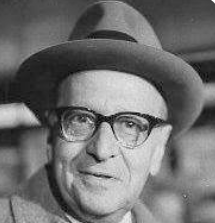
In the face of the idea that truth might afford the opposite of satisfaction and turn out to be completely shocking to humanity at any given historical moment, ... the fathers of pragmatism made the satisfaction of the subject the criterion of truth. For such a doctrine there is no possibility of rejecting or even criticizing any species of belief that is enjoyed by its adherents.
▼
Source
source
p. 52.

3 months 1 day ago
To think is to run after insecurity, to be demoralized for grandiose trifles, to immure oneself in abstractions with a martyr's avidity, to hunt up complications the way others pursue collapse or gain. The thinker is by definition keen for torment.
4 months 6 days ago
In the welter of conflicting fanaticisms, one of the few unifying forces is scientific truthfulness, by which I mean the habit of basing our beliefs upon observations and inferences as impersonal, and as much divested of local and temperamental bias, as is possible for human beings.
▼
Source
source
Chapter XXXI "The Philosophy of Logical Analysis"

3 months 5 days ago
They say in the grave there is peace, and peace and the grave are one and the same.
▼
Source
source
Act I.

3 weeks 5 days ago
It was a rude gross error, that of counting the Great Man a god. Yet let us say that it is at all times difficult to know what he is, or how to account of him and receive him!

3 months 3 weeks ago
Verily we know nothing. Truth is buried deep.
▼
Source
source
(Another translation: "Of truth we know nothing, for truth is in a well." Diogenes Laertius, Lives of Eminent Philosophers R.D. Hicks, Ed.)



3 months 1 day ago
Nothing proves that we are more than nothing.
2 months 3 weeks ago
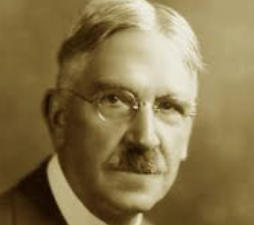
All the cases in which means and ends are external to one another are non-esthetic.
▼
Source
source
p. 205

5 months 5 days ago
Man is a synthesis of psyche and body, but he is also a synthesis of the temporal and the eternal. In the former, the two factors are psyche and body, and spirit is the third, yet in such a way that one can speak of a synthesis only when the spirit is posited. The latter synthesis has only two factors, the temporal and the eternal. Where is the third factor? And if there is no third factor, there really is no synthesis, for a synthesis that is a contradiction cannot be completed as a synthesis without a third factor, because the fact that the synthesis is a contradiction asserts that it is not. What, then, is the temporal?

5 days ago
It is an axiom in my mind, that our liberty can never be safe but in the hands of the people themselves, and that too of the people with a certain degree of instruction. This it is the business of the State to effect, and on a general plan.
▼
Source
source
Letter to George Washington
3 months 3 weeks ago
If I knew that it was fated for me to be sick, I would even wish for it; for the foot also, if it had intelligence, would volunteer to get muddy.
▼
Source
source
As quoted by Epictetus, Discourses, ii. 6. 10.
3 months 1 day ago
What does the future, that half of time, matter to the man who is infatuated with eternity?
2 weeks 5 days ago
It would be some consolation for the feebleness of ourselves and our works, if all things should perish as slowly as they come into being; but as it is, increases are of sluggish growth, but the way to ruin is rapid.
▼
Source
source
Letters to Lucilius, letter 91, page 294.

2 days ago
Reason can make little headway on its own and struggles to be heard; often it has to be - so to speak - armed by the fearsome epigram. French wit pricks like a needle, so that the thread goes through the hole.
▼
Source
source
Sixth Dialogue, p. 160
5 days ago
When governments fear the people, there is liberty. When the people fear the government, there is tyranny.
▼
Source
source
Thomas Jefferson Encyclopedia. It first appears in 1914, in Barnhill, John Basil (1914). "Indictment of Socialism No. 3" (PDF). Barnhill-Tichenor Debate on Socialism. Saint Louis, Missouri: National Rip-Saw Publishing. pp. p. 34. Retrieved on 2008-10-16.
4 months 5 days ago
We assert then that nothing has been accomplished without interest on the part of the actors; and - if interest be called passion, inasmuch as the whole individuality, to the neglect of all other actual or possible interests and claims, is devoted to an object with every fibre of volition, concentrating all its desires and powers upon it - we may affirm absolutely that nothing great in the World has been accomplished without passion. Often abbreviated to: Nothing great in the World has been accomplished without passion. Variant translation: We may affirm absolutely that nothing great in the world has ever been accomplished without enthusiasm.
4 months 1 week ago
There is as much difference between us and ourselves as between us and others.
▼
Source
source
Ch. 1. Of the Inconstancy of Our Actions, tr. Cotton, rev. W. Carew Hazlitt, 1877

2 months 2 weeks ago
If we love God while thinking that he does not exist, he will manifest his existence.
▼
Source
source
p. 260

2 months 3 weeks ago
Man must be free of it all, of his bad conscience and of the bad salvation from this conscience in order to become in truth the way. Now, he no longer promises others the fulfillment of his duties, but promises himself the fulfillment of man.
▼
Source
source
p. 178

4 months 5 days ago
I am as desirous of being a good neighbor as I am of being a bad subject.

3 months 5 days ago
Your worst sin is that you have destroyed and betrayed yourself for nothing.

4 months 5 days ago
Every genuine work of art has as much reason for being as the earth and the sun.
▼
Source
source
Art
CivilSimian.com created by AxiomaticPanic, CivilSimian, Kalokagathia