



3 months 3 weeks ago
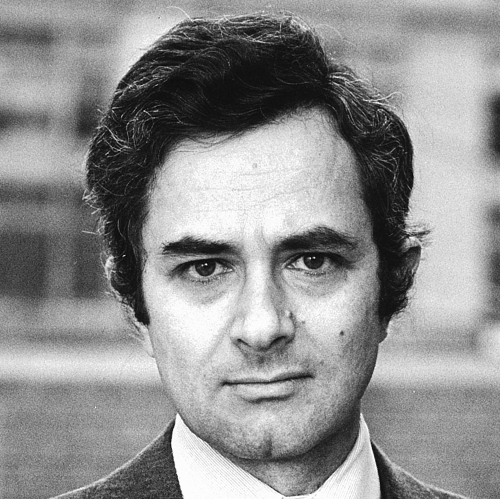
Leading a human life is a full-time occupation, to which everyone devotes decades of intense concern.
▼
Source
source
"The Absurd" (1971), p. 15.

4 months 1 week ago
A good marriage would be between a blind wife and a deaf husband.
▼
Source
source
Book III, Ch. 5


3 months ago
Lord, give me the capacity of never praying, spare me the insanity of all worship, let this temptation of love pass from me which would deliver me forever unto You. Let the void spread between my heart and heaven! I have no desire to people my deserts by Your presence, to tyrannize my nights by Your light, to dissolve my Siberias beneath Your sun.

4 months 5 days ago
It seems to me that science has a much greater likelihood of being true in the main than any philosophy hitherto advanced (I do not, of course, except my own). In science there are many matters about which people are agreed; in philosophy there are none. Therefore, although each proposition in a science may be false, and it is practically certain that there are some that are false, yet we shall be wise to build our philosophy upon science, because the risk of error in philosophy is pretty sure to be greater than in science. If we could hope for certainty in philosophy, the matter would be otherwise, but so far as I can see such a hope would be chimerical.
▼
Source
source
Logical Atomism, 1924

3 months 5 days ago
I could show, that the same faction has, in one reign, promoted popular seditions, and, in the next, been a patron of tyranny; I could show, that they have all of them betrayed the public safety at all times, and have very frequently with equal perfidy made a market of their own cause, and their own associates. I could show how vehemently they have contended for names, and how silently they have passed over things of the last importance.

3 months 4 days ago
We have, indeed, in the part taken by many scientific men in this controversy of "Law versus Miracle," a good illustration of the tenacious vitality of superstitions. Ask one of our leading geologists or physiologists whether he believes in the Mosaic account of the creation, and he will take the question as next to an insult. Either he rejects the narrative entirely, or understands it in some vague non-natural sense. ...Whence ...this notion of "special creations"...Why, after rejecting all the rest of the story, he should strenuously defend this last remnant of it, as though he had received it on valid authority, he would be puzzled to say.
3 months 3 weeks ago
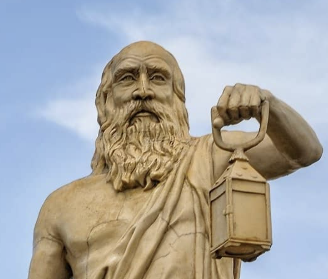
Perdiccas threatened to put him to death unless he came to him, "That's nothing wonderful," Diogenes said, "for a beetle or a tarantula would do the same."
▼
Source
source
Diogenes Laërtius, vi. 44
3 months ago
Speech and silence. We feel safer with a madman who talks than with one who cannot open his mouth.
1 month 3 weeks ago
Many evils, no doubt, were produced by the civil war. They were the price of our liberty.
▼
Source
source
p. 39

4 months ago
When I am furious about something, I sometimes beat the ground or a tree with my walking stick. But I certainly do not believe that the ground is to blame or that my beating can help anything... And all rites are of this kind.
▼
Source
source
Ch. 7 : Remarks on Frazer's Golden Bough, p. 131

4 months 4 days ago
The union of the mathematician with the poet, fervor with measure, passion with correctness, this surely is the ideal.
▼
Source
source
Ch. 11 - Clifford's Lectures and Essays, 1879
3 months 5 days ago
All the time that this horrid scene was acting or avenging, as well as for some time before, and ever since, the wicked instigators of this unhappy multitude, guilty, with every aggravation, of all their crimes, and screened in a cowardly darkness from their punishment, continued without interruption, pity, or remorse, to blow up the blind rage of the populace, with a continued blast of pestilential libels, which infected and poisoned the very air we breathed in.
▼
Source
source
Speech at Bristol Previous to the Election, referring to the Gordon Riots (6 September 1780), quoted in The Works of the Right Honourable Edmund Burke, Vol. II (1855), pp. 158-159

3 months 3 weeks ago
Now his principal doctrines were these. That atoms and the vacuum were the beginning of the universe; and that everything else existed only in opinion. (trans. Yonge 1853) The first principles of the universe are atoms and empty space; everything else is merely thought to exist.
▼
Source
source
(trans. by Robert Drew Hicks 1925) Often paraphrased as "Nothing exists except atoms and empty space; everything else is opinion."
4 months 6 days ago
Rascals are always sociable - more's the pity! and the chief sign that a man has any nobility in his character is the little pleasure he takes in others' company.
▼
Source
source
Vol. 1, Ch. 5, § 9
2 months 1 week ago
To conclude: there are two well-known minor ways in which language has mattered to philosophy. On the one hand there is a belief that if only we produce good definitions, often marking out different senses of words that are confused in common speech, we will avoid the conceptual traps that ensnared our forefathers. On the other hand is a belief that if only we attend sufficiently closely to our mother tongue and make explicit the distinctions there implicit, we shall avoid the conceptual traps. One or the other of these curiously contrary beliefs may nowadays be most often thought of as an answer to the question Why does language matter to philosophy? Neither seems to me enough.
▼
Source
source
Ian Hacking (1975), Why Does Language Matter to Philosophy?, p. 7.

2 months 2 weeks ago
If you are going to build something in the air it is always better to build castles than houses of cards.
▼
Source
source
F 39

1 day ago
This thou must always bear in mind, what is the nature of the whole...
▼
Source
source
II, 9

4 months 1 week ago
But by far the greatest hindrance and aberration of the human understanding proceeds from the dullness, incompetency, and deceptions of the senses; in that things which strike the sense outweigh things which do not immediately strike it, though they be more important. Hence it is that speculation commonly ceases where sight ceases; insomuch that of things invisible there is little or no observation.
▼
Source
source
Aphorism 50
2 months 2 weeks ago
Necessity resides in the way we talk about things, not in the things we talk about.
▼
Source
source
Ways of Paradox and Other Essays (1976), p. 174

3 months 3 weeks ago
Satisfaction linked with dishonor or with harm to others is a prison for the seeker.
▼
Source
source
Vahishto-Ishti Gatha; Yasna 53, 6.
4 weeks ago
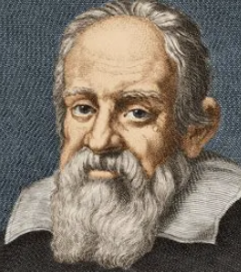
Indeed, I think we may concede to our Academician, without flattery, his claim that in the principle [principio, i. e., accelerated motion] laid down in this treatise he has established a new science dealing with a very old subject. Observing with what ease and clearness he deduces from a single principle the proofs of so many theorems, I wonder not a little how such a question escaped the attention of Archimedes, Apollonius, Euclid and so many other mathematicians and illustrious philosophers, especially since so many ponderous tomes have been devoted to the subject of motion.
▼
Source
source
(Galileo referred to himself as the/our Academician in his dialogue) Sagredo, Third Day P. 242

3 months 1 week ago
The greatness of America lies not in being more enlightened than any other nation, but rather in her ability to repair her faults.
▼
Source
source
Chapter XIII.
1 day ago
How many together with whom I came into the world are already gone out of it.
▼
Source
source
VI, 56

4 months 1 week ago
What is prudence in the conduct of every private family, can scarce be folly in that of a great kingdom.
▼
Source
source
Chapter II, p. 490.
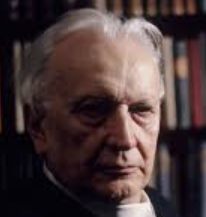
2 months 3 weeks ago
At the parting of ways in the life-order, where the question is between the new creation or decay, that man will be decisive for new creation who is able on his own initiative to seize the helm and steer a course of his own choosing - even if that course be opposed to the will of the masses. Should the emergence of such persons become impossible a lamentable shipwreck will be inevitable.

8 months 1 week ago
Tibetan prayer wheels: you write a prayer on a paper, put the rolled paper on a wheel, and turn it automatically, without thinking. In this way, the wheel itself is praying for me, instead of me - or more precisely, I myself am praying through the medium of the wheel. The beauty of it all is that in my psychological inferiority I can think about whatever I want, I can yield to the most dirty and obscene fantasies, and it does not matter because - to use a good old Stalinist expression - 'whatever I am thinking, objectively I am praying.'

4 months 4 days ago
Children are nowhere taught, in any systematic way, to distinguish true from false, or meaningful from meaningless, statements. Why is this so? Because their elders, even in the democratic countries, do not want them to be given this kind of education.
▼
Source
source
Chapter 11 (p. 106)

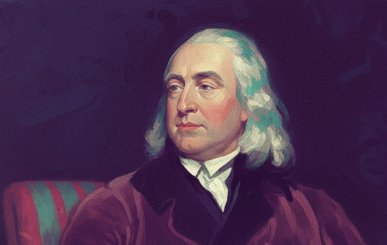
4 months 1 week ago
In principle and in practice, in a right track and in a wrong one, the rarest of all human qualities is consistency.
▼
Source
source
Ch. 1: Of the Principle of Utility
1 day ago
He would be the finer gentleman that should leave the world without having tasted of lying or pretence of any sort, or of wantonness or conceit.
▼
Source
source
IX, 2
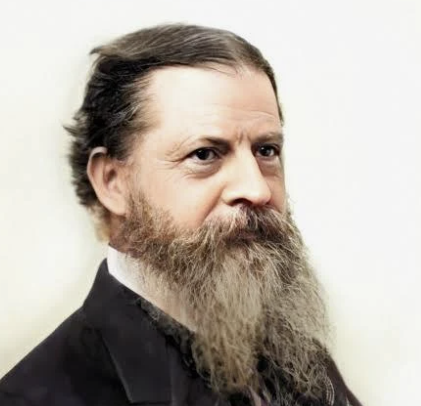
3 months ago
Wherever ideas come together they tend to weld into general ideas; and whenever they are generally connected, general ideas govern the connection; and these general ideas are living feelings spread out.

4 months 3 days ago
If you are tired of the real landscape, look at it in a mirror. By putting bread, gold, horse, apple, or the very roads into a myth, we do not retreat from reality: we rediscover it. As long as the story lingers in our mind, the real things are more themselves. This book applies the treatment not only to bread or apple but to good and evil, to our endless perils, our anguish, and our joys. By dipping them in myth we see them more clearly.
4 months 5 days ago
In the visible world, the Milky Way is a tiny fragment; within this fragment, the solar system is an infinitesimal speck, and of this speck our planet is a microscopic dot. On this dot, tiny lumps of impure carbon and water, of complicated structure, with somewhat unusual physical and chemical properties, crawl about for a few years, until they are dissolved again into the elements of which they are compounded. They divide their time between labour designed to postpone the moment of dissolution for themselves and frantic struggles to hasten it for others of their kind.
▼
Source
source
Dreams and Facts, 1919
3 months 1 week ago
There are at the present time two great nations in the world-allude to the Russians and the Americans- All other nations seem to have nearly reached their national limits, and have only to maintain their power; these alone are proceeding-along a path to which no limit can be perceived.
▼
Source
source
Chapter XVIII.
3 months 5 days ago
If we command our wealth, we shall be rich and free; if our wealth commands us, we are poor indeed.
▼
Source
source
No. 1
3 months ago
Every utopia about to be realized resembles a cynical dream.
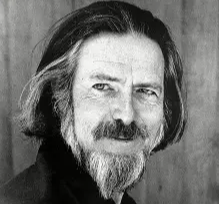
2 weeks 1 day ago
The more we struggle for life (as pleasure), the more we are actually killing what we love.
▼
Source
source
p. 32

4 days ago
I see too many proofs of the imperfection of human reason, to entertain wonder or intolerance at any difference of opinion on any subject; and acquiesce in that difference as easily as on a difference of feature or form; experience having long taught me the reasonableness of mutual sacrifices of opinion among those who are to act together for any common object, and the expediency of doing what good we can, when we cannot do all we would wish.
▼
Source
source
Letter to John Randolph (1 December 1803), published in The Works of Thomas Jefferson in Twelve Volumes, Federal Edition, Paul Leicester Ford, ed., New York: G. P. Putnam's Sons, 1904, Vol. 109, pp. 54

4 weeks 1 day ago
The polarization has a number of different roots. The economic... fact that many working class voters have been left behind by the prosperity of globalization. ...The more important division is a cultural one ...the feeling on the part of many populist voters, that they are not being respected by the elites that are running the country... [H]ere, all of the identity issues... play themselves out.
▼
Source
source
22:57

2 months 4 days ago
The most difficult subjects can be explained to the most slow-witted man if he has not formed any idea of them already; but the simplest thing cannot be made clear to the most intelligent man if he is firmly persuaded that he knows already, without a shadow of doubt, what is laid before him.
▼
Source
source
Chapter III, Christianity Misunderstood by Believers

2 weeks 5 days ago
Let words proceed as they please, provided only your soul keeps its own sure order, provided your soul is great and holds unruffled to its ideals, pleased with itself on account of the very things which displease others, a soul that makes life the test of its progress, and believes that its knowledge is in exact proportion to its freedom from desire and its freedom from fear.
1 month 1 week ago
To understand how indirect communication is possible we must grasp what it is about ordinary communication that is being changed.
▼
Source
source
Chapter 6, Indirect Communication, p. 110

2 months 3 weeks ago
And then if any man shall say to you, Lo, here is Christ; or, lo, he is there; believe him not: For false Christs and false prophets shall rise, and shall shew signs and wonders, to seduce, if it were possible, even the elect. But take ye heed: behold, I have foretold you all things. But in those days, after that tribulation, the sun shall be darkened, and the moon shall not give her light, And the stars of heaven shall fall, and the powers that are in heaven shall be shaken. And then shall they see the Son of man coming in the clouds with great power and glory. And then shall he send his angels, and shall gather together his elect from the four winds, from the uttermost part of the earth to the uttermost part of heaven.
▼
Source
source
13:21-27 (KJV)
4 months 3 days ago
Being happy involves both a certain achievement in action and a rational assurance about the outcome.
▼
Source
source
Chapter IX, Section 83, p. 549
4 weeks ago
Nature ... is inexorable and immutable; she never transgresses the laws imposed upon her, or cares a whit whether her abstruse reasons and methods of operation are understandable to men. For that reason it appears that nothing physical which sense-experience sets before our eyes, or which necessary demonstrations prove to us, ought to be called in question (much less condemned) upon the testimony of biblical passages which may have some different meaning beneath their words. For the Bible is not chained in every expression to conditions as strict as those which govern all physical effects; nor is God any less excellently revealed in Nature's actions than in the sacred statements of the Bible.

3 weeks 4 days ago
The spoken Word, the written Poem, is said to be an epitome of the man; how much more the done Work. Whatsoever of morality and of intelligence; what of patience, perseverance, faithfulness, of method, insight, ingenuity, energy; in a word, whatsoever of Strength the man had in him will lie written in the Work he does. To work: why, it is to try himself against Nature, and her everlasting unerring Laws; these will tell a true verdict as to the man.
CivilSimian.com created by AxiomaticPanic, CivilSimian, Kalokagathia