


4 months 1 day ago
The place of the father in the modern suburban family is a very small one - particularly if he plays golf, which he usually does.
▼
Source
source
Introduction to The New Generation, 1930
3 months 4 weeks ago
Political questions are far too serious to be left to the politicians.
▼
Source
source
Men in Dark Times

4 months 4 days ago
It is the highest impertinence and presumption, therefore, in kings and ministers, to pretend to watch over the economy of private people, and to restrain their expence, either by sumptuary laws, or by prohibiting the importation of foreign luxuries. They are themselves always, and without any exception, the greatest spendthrifts in the society. Let them look well after their own expence, and they may safely trust private people with theirs. If their own extravagance does not ruin the state, that of their subjects never will.
▼
Source
source
Chapter III, p. 381.

3 months 1 week ago
Since I have spread my wings to purpose high, The more beneath my feet the clouds I see, The more I give the winds my pinions free, Spurning the earth and soaring to the sky.
▼
Source
source
As quoted in "Giordano Bruno" by Thomas Davidson, in The Index Vol. VI. No. 36 (4 March 1886), p. 429
4 months 1 day ago
Probably in time physiologists will be able to make nerves connecting the bodies of different people; this will have the advantage that we shall be able to feel another man's tooth aching.
▼
Source
source
Human Knowledge: Its Scope and Limits (1948), p. 493

4 months 1 week ago
Finally, every man will become dear and pleasing to every other man; all will be beloved by all! and, what is still more desirable, beloved also by Christ; to become acceptable to whom is the highest felicity of human nature.
1 week 2 days ago
I have observed that even the barbarians across the Rhine sing savage songs composed in language not unlike the croaking of harsh-voiced birds, and that they delight in such songs. For I think it is always the case that inferior musicians, though they annoy their audiences, give very great pleasure to themselves.
▼
Source
source
On the songs of the early Germans, in his Mispogon, 337-338

2 months 3 weeks ago
In relation to any act of life, the mind acts as a killjoy.

4 months 1 week ago
Thus he had a double thought: the one by which he acted as king, the other by which he recognized his true state, and that it was accident alone that had placed him in his present condition.

2 months 1 week ago
The real importance of Swedenborg lies in the doctrines he taught, which are the reverse of the gloom and hell-fire of other breakaway sects. He rejects the notion that Jesus died on the cross to atone for the sin of Adam, declaring that God is neither vindictive nor petty-minded, and that since he is God, he doesn't need atonement. It is remarkable that this common-sense view had never struck earlier theologians. God is Divine Goodness, and Jesus is Divine Wisdom, and Goodness has to be approached through Wisdom. Whatever one thinks about the extraordinary claims of its founder, it must be acknowledged that there is something very beautiful and healthy about the Swedenborgian religion. Its founder may have not been a great occultist, but he was a great man.
▼
Source
source
p. 280
4 months 1 week ago
Of how much more passion than reason has Jupiter composed us? putting in, as one would say, "scarce half an ounce to a pound."

5 months 3 days ago
...and woe betide fateful curiosity should it ever succeed in peering through a crack in the chamber of consciousness, out and down into the depths, and thus gain an intimation of the fact that humanity, in the indifference of its ignorance, rests on the pitiless, the greedy, the insatiable, the murderous clinging in dreams, as it were, to the back of a tiger.
2 months 3 weeks ago
The nineteenth century, utilitarian throughout, set up a utilitarian interpretation of the phenomenon of life which has come down to us and may still be considered as the commonplace of everyday thinking. ... An innate blindness seems to have closed the eyes of this epoch to all but those facts which show life as a phenomenon of utility.
▼
Source
source
p. 16

3 months 2 weeks ago
A transition, therefore, is not undeservedly made from sense to consideration, and from this to the nobler energies of intellect. Hence, as the certain knowledge of numbers received its origin among the Phœnicians, on account of merchandise and commerce, so geometry was found out among the Egyptians from the distribution of land. When Thales, therefore, first went into Egypt, he transferred this knowledge from thence into Greece: and he invented many things himself, and communicated to his successors the principles of many. Some of which were, indeed, more universal, but others extended to sensibles.
▼
Source
source
Chap. IV.
1 day ago
The wife of my God is matter; they wrestle with each other, they laugh and weep, they cry out in the nuptial bed of flesh. They spawn and are dismembered. They fill sea, land, and air with species of plants, animals, men, and spirits. This primordial pair embraces, is dismembered, and multiplies in every living creature. All the concentrated agony of the Universe bursts out in every living thing. God is imperiled in the sweet ecstasy and bitterness of flesh. But he shakes himself free, he leaps out of brains and loins, then clings to new brains and new loins until the struggle for liberation again breaks out from the beginning.

2 months 2 weeks ago
In a sense, all explanation must end in an ultimate arbitrariness.
▼
Source
source
Ch. 5: "The Romantic Reaction", p. 130

4 months 2 weeks ago
If what the philosophers say be true,—that all men's actions proceed from one source; that as they assent from a persuasion that a thing is so, and dissent from a persuasion that it is not, and suspend their judgment from a persuasion that it is uncertain, so likewise they seek a thing from a persuasion that it is for their advantage.
▼
Source
source
Book I, ch. 18, 1.
2 months 3 weeks ago
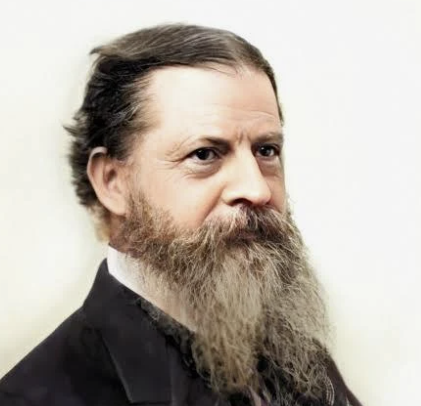
Here we must make one of those inductive applications of the law of continuity which have produced such great results in all of the positive sciences. We must extend the law of insistency into the future. Plainly, the insistency of a future idea with reference to the present is a quantity affected by the minus sign; for it is the present that affects the future, if there be any effect, not the future that affects the present.

2 months 3 weeks ago
He that dippeth his hand with me in the dish, the same shall betray me. The Son of man goeth as it is written of him: but woe unto that man by whom the Son of man is betrayed! it had been good for that man if he had not been born.
▼
Source
source
26:23-24 (KJV)
4 months 4 days ago
A merchant, it has been said very properly, is not necessarily the citizen of any particular country.
▼
Source
source
Chapter IV, p. 456.
2 months 2 weeks ago
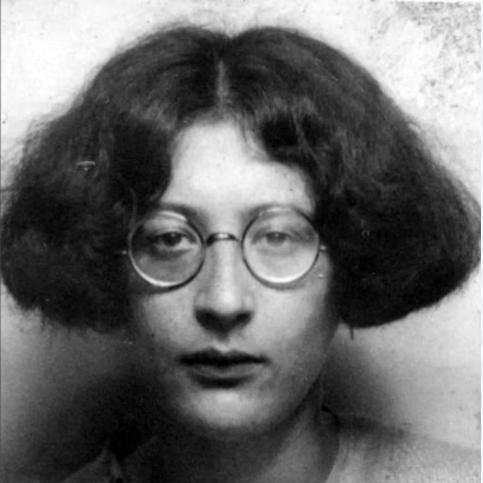
Might is that which makes a thing of anybody who comes under its sway. When exercised to the full, it makes a thing of man in the most literal sense, for it makes him a corpse.
▼
Source
source
in The Simone Weil Reader, p. 153

3 months 2 weeks ago
Men in their prayers beg the gods for health, not knowing that this is a thing they have in their own power. Through their incontinence undermining it, they themselves become, because of their passions, the betrayers of their own health.
5 months 3 days ago
We produce these representations in and from ourselves with the same necessity with which the spider spins. If we are forced to comprehend all things only under these forms, then it ceases to be amazing that in all things we actually comprehend nothing but these forms. For they must all bear within themselves the laws of number, and it is precisely number which is most astonishing in things. All that conformity to law, which impresses us so much in the movement of the stars and in chemical processes, coincides at bottom with those properties which we bring to things. Thus it is we who impress ourselves in this way
2 months 3 weeks ago
I can prove now, for instance, that two human hands exist. How? By holding up my two hands, and saying, as I make a certain gesture with the right hand, "Here is one hand," and adding, as I make a certain gesture with the left, "and here is another." And if, by doing this, I have proved ipso facto the existence of external things, you will all see that I can also do it now in numbers of other ways: there is no need to multiply examples.
▼
Source
source
"Proof of an External World," Proceedings of the British Academy 25 (1939).

3 months 1 week ago
It is better wither to be silent, or to say things of more value than silence. Sooner throw a pearl at hazard than an idle or useless word; and do not say a little in many words, but a great deal in a few.
▼
Source
source
As quoted in A Dictionary of Thoughts: Being a Cyclopedia of Laconic Quotations from the Best Authors of the World, both Ancient and Modern (1908) by Tyron Edwards, p. 525
4 months 1 week ago
I have turned my entire attention to Greek. The first thing I shall do, as soon as the money arrives, is to buy some Greek authors; after that, I shall buy clothes.
▼
Source
source
Letter to Jacob Batt (12 April 1500); Collected Works of Erasmus Vol 1 (1974)

4 months ago
The unitive knowledge of the Divine Ground has, as its necessary condition, self-abnegation and charity. Only by means of self-abnegation and charity can we clear away the evil, folly and ignorance which constitute the thing we call our personality and prevent us from becoming aware of the spark of divinity illuminating the inner man.

4 months 1 day ago
Consider the Koran... this wretched book was sufficient to start a world-religion, to satisfy the metaphysical need of countless millions for twelve hundred years, to become the basis of their morality and of a remarkable contempt for death, and also to inspire them to bloody wars and the most extensive conquests. In this book we find the saddest and poorest form of theism. Much may be lost in translation, but I have not been able to discover in it one single idea of value.
▼
Source
source
E. Payne, trans., Vol. II, Ch. XVII: On Man's Need for Metaphysics
2 months 3 weeks ago
To act is to anchor in the imminent future.

2 weeks 1 day ago
Next, if you choose to view its results and the mischief that it does, no plague has cost the human race more dear
2 months 1 week ago
To conclude: there are two well-known minor ways in which language has mattered to philosophy. On the one hand there is a belief that if only we produce good definitions, often marking out different senses of words that are confused in common speech, we will avoid the conceptual traps that ensnared our forefathers. On the other hand is a belief that if only we attend sufficiently closely to our mother tongue and make explicit the distinctions there implicit, we shall avoid the conceptual traps. One or the other of these curiously contrary beliefs may nowadays be most often thought of as an answer to the question Why does language matter to philosophy? Neither seems to me enough.
▼
Source
source
Ian Hacking (1975), Why Does Language Matter to Philosophy?, p. 7.

4 months 4 days ago
The most perfect philosophy of the natural kind only staves off our ignorance a little longer: as perhaps the most perfect philosophy of the moral or metaphysical kind serves only to discover larger portions of it. Thus the observation of human blindness and weakness is the result of all philosophy, and meets us at every turn, in spite of our endeavours to elude or avoid it.
▼
Source
source
Section 4 : Sceptical Doubts Concerning The Operations of The Understanding
4 months 2 days ago
You must do nothing before him, which you would not have him imitate. If any thing escape you, which you would have pass as a fault in him, he will be sure to shelter himself under your example, and shelter himself so as that it will not be easy to come at him, to correct it in him the right way.
▼
Source
source
Sec. 71
4 months 2 days ago
New opinions are always suspected, and usually opposed, without any other reason but because they are not already common.
▼
Source
source
Dedicatory epistle, as quoted in Fred R Shapiro (2006). The Yale Book of Quotations. Yale University Press. p. 468. ISBN 0-300-10798-6.
4 months 1 day ago
One who believes, as I do, that the free intellect is the chief engine of human progress, cannot but be fundamentally opposed to Bolshevism, as much as to the Church of Rome.
▼
Source
source
Part I, Ch. 9: International Policy
1 month 2 weeks ago
Logical consequences are the scarecrows of fools and the beacons of wise men.
1 day ago
The rosy mountain peaks laughed like high lustrous thoughts,and Helen, speechless, raised her pale hands toward the sunand joyed to feel its warm rays falling on her frozen palms.
▼
Source
source
Book IV, line 1361
2 months 2 weeks ago
All things in nature become identical with the phenomena they present when submitted to the practices of our laboratories, whose problems no less than their apparatus express in turn the problems and interests of society as it is. This view may be compared with that of a criminologist maintaining that trustworthy knowledge of a human being can be obtained only by the well-tested and streamlined examining methods applied to a suspect in the hands of the metropolitan police.
▼
Source
source
describing the pragmatist view, p. 49.
3 months 3 weeks ago
We do not have to make self- sacrifice a necessary element of altruism. We can regard people as altruists because of the kind of interests they have rather than because they are sacrificing their interests.
▼
Source
source
Chapter 9: Altruism and Happiness (p. 103)
1 month 2 weeks ago
Let us endeavour for a moment to disconnect our thinking selves from the mask of humanity; let us imagine ourselves scientific Saturnians, if you will, fairly acquainted with such animals as now inhabit the Earth, and employed in discussing the relations they bear to a new and singular 'erect and featherless biped,' which some enterprising traveller, overcoming the difficulties of space and gravitation, has brought from that distant planet for our inspection, well preserved, may be, in a cask of rum.
▼
Source
source
Ch.2, p. 85
2 months 3 weeks ago
The history of the Roman Empire is also the history of the uprising of the Empire of the Masses, who absorb and annul the directing minorities and put themselves in their place. Then, also, is produced the phenomenon of agglomeration, of "the full." For that reason, as Spengler has very well observed, it was necessary, just as in our day, to construct enormous buildings. The epoch of the masses is the epoch of the colossal.
▼
Source
source
Chap.II: The Rise Of The Historic Level
3 months 2 weeks ago
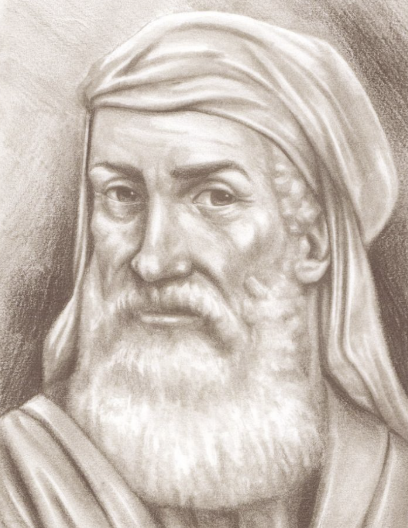
As it has long been and shall be, not ever, I think, will unfathomable time be emptied of either. This quote refers to Love and Strife, the fundamental opposing and ordering forces in Empedocles' model of the cosmos.
▼
Source
source
fr. 16
2 months 3 days ago
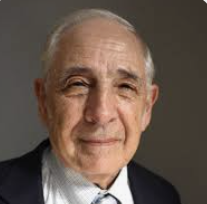
The student should have enough knowledge of his or her cultural tradition to know how it got to be the way it is. This involves both political and social history, on the one hand, as well as the mastery of some of the great philosophical and literary texts of the culture on the other. It involves reading not only texts that are of great value, like those of Plato, but many less valuable that have been influential, such as the works of Marx. For the United States, the dominant tradition is, and for the foreseeable future, will remain the European tradition. The United States is, after all, a product of the European Enlightenment. However, you do not understand your own tradition if you do not see it in relation to others. Works from other cultural traditions need to be studied as well.

2 months ago
To be good and lead a good life means to give to others more than one takes from them.
▼
Source
source
Ch. VII

4 months ago
Great men are they who see that spiritual is stronger than any material force, that thoughts rule the world. No hope so bright but is the beginning of its own fulfillment.
▼
Source
source
July 18, 1867, Progress of Culture Phi Beta Kappa Address

5 months 1 day ago
While both are dear, Piety requires us to honor truth above our friends.

1 month 1 week ago
The mass political movements of the 20th century were vehicles for myths inherited from religion, and it is no accident that religion is reviving now that these movements have collapsed.

4 months 2 weeks ago
The more man meditates upon good thoughts, the better will be his world and the world at large.

4 months ago
Wherever the want of clothing forced them to it, the human race made clothes for thousands of years, without a single man becoming a tailor.
▼
Source
source
Vol. I, Ch. 1, Section 2, pg. 49.
4 months 1 week ago
If, being duke and peer, you would not be contented with my standing uncovered before you, but should also wish that I should esteem you, I should ask you to show me the qualities that merit my esteem. If you did this, you would gain it, and I could not refuse it to you with justice; but if you did not do it, you would be unjust to demand it of me; and assuredly you would not succeed, were you the greatest prince in the world.
CivilSimian.com created by AxiomaticPanic, CivilSimian, Kalokagathia