

4 months 2 days ago
I have in this treatise followed the mathematical method, if not with all strictness, at least imitatively, not in order, by a display of profundity, to procure a better reception for it, but because I believe such a system to be quite capable of it, and that perfection may in time be obtained by a cleverer hand, if stimulated by this sketch, mathematical investigators of nature should find it not unimportant to treat the metaphysical portion, which anyway cannot be got rid of, as a special fundamental department of general physics, and to bring it into unison with the mathematical doctrine of motion.
▼
Source
source
Preface, Tr. Bax, 1883

2 months 3 weeks ago
The total victimization of the individual that takes place is encouraged for the specific benefit of the industrial and political bureaucracy. It therefore cannot be justified on the ground of the individual's true interest. National Socialist ideology simply states that true human existence consists in unconditional sacrifice, that it is of the essence of the individual's life to abbey and to serve-'service which never comes to an end because service and life coincide.'
▼
Source
source
P. 416

2 months 2 weeks ago
Feeling does not succeed in converting consolation into truth, nor does reason succeed in converting truth into consolation.

1 month 6 days ago
Though it is often assumed that naturalism must be hostile to religion, the opposite is true. Enemies of religion think of it as an intellectual error, which humanity will eventually grow out of. It is hard to square this view with Darwinian science - why should religion be practically universal, if it has no evolutionary value?
▼
Source
source
Sweet Morality (p. 224)
1 month 3 weeks ago
Evidence is the only good reason to believe anything.
▼
Source
source
Interview shown in AlJazeera ,

4 months 1 week ago
It is always necessary that the substance or essence of a person be good before there can be any good works and that good works follow and proceed from a person who is already good. Christ says in Matthew 7:18: "A good tree cannot bear bad fruit, nor can a bad tree bear good fruit." ... The fruit does not make the tree good or bad but the tree itself is what determines the nature of the fruit. In the same way, a person first must be good or bad before doing a good or bad work.
▼
Source
source
pp. 74-75
4 months 1 day ago
One can forget everything, everything, only not oneself, one's own being.

2 months 3 weeks ago
The more intense a spiritual leader's appetite for power, the more he is concerned to limit it to others.

3 months ago
You had that action and counteraction which, in the natural and in the political world, from the reciprocal struggle of discordant powers draws out the harmony of the universe.
▼
Source
source
Volume iii, p. 277
3 months ago
I have no idea of a liberty unconnected with honesty and justice. Nor do I believe, that any good constitutions of government, or of freedom, can find it necessary for their security to doom any part of the people to a permanent slavery. Such a constitution of freedom, if such can be, is in effect no more than another name for the tyranny of the strongest faction; and factions in republics have been, and are, full as capable as monarchs, of the most cruel oppression and injustice.
▼
Source
source
Speech at Bristol Previous to the Election (6 September 1780), quoted in The Works of the Right Honourable Edmund Burke, Vol. II (1855), p. 163
2 weeks 6 days ago
The scientific enterprise as a whole does from time to time prove useful, open up new territory, display order, and test long-accepted belief. Nevertheless, the individual engaged on a normal research problem is almost never doing any one of these things. Once engaged, his motivation is of a rather different sort. What then challenges him is the conviction that, if only he is skillful enough, he will succeed in solving a puzzle that no one before has solved or solved so well.
▼
Source
source
p. 38.

4 months 3 weeks ago
An optimistic view of the future would indicate that before long, the clear necessity of expanding humanity's horizons would cause ... space settlements to be built. The construction would also serve as a great project that not only would be clearly of great benefit, but might induce human cooperation in something large enough to fire the heart and mind, and make people forget the petty quarrels that have engaged them for thousands of years in wars over insignificant scraps of earthly territory.

2 weeks 6 days ago
Democracy, which means despair of finding any Heroes to govern you, and contented putting up with the want of them,-alas, thou too, mein Lieber, seest well how close it is of kin to Atheism, and other sad Isms: he who discovers no God whatever, how shall he discover Heroes, the visible Temples of God?
4 months 1 week ago
Let us not flutter too high, but remain by the manger and the swaddling clothes of Christ, in whom dwelleth all the fulness of the Godhead bodily.
▼
Source
source
50
4 months 2 weeks ago
Only after Winter comes do we know that the pine and the cypress are the last to fade.
2 months 3 weeks ago
Let us not pretend to doubt in philosophy what we do not doubt in our hearts.
▼
Source
source
Vol. V, par. 265

3 months 3 weeks ago
I squander untold effort making an arrangement of my thoughts that may have no value whatever.
▼
Source
source
p. 33e
3 months 4 weeks ago
We must frankly confess, then, using our empirical common sense and ordinary practical prejudices, that in the world that actually is, the virtues of sympathy, charity, and non-resistance may be, and often have been, manifested in excess. ... You will agree to this in general, for in spite of the Gospel, in spite of Quakerism, in spite of Tolstoi, you believe in fighting fire with fire, in shooting down usurpers, locking up thieves, and freezing out vagabonds and swindlers.
▼
Source
source
Lectures XIV and XV, "The Value of Saintliness"

4 months 1 day ago
The best is the enemy of the good.
5 months ago
Irony is a qualification of subjectivity.

3 months 4 weeks ago
Things added to things, as statistics, civil history, are inventories. Things used as language are inexhaustibly attractive.
▼
Source
source
Plato; or, The Philosopher
1 month 2 weeks ago
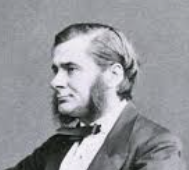
As if to demonstrate, by a striking example, the impossibility of erecting any cerebral barrier between man and the apes, Nature has provided us, in the latter animals, with an almost complete series of gradations from brains little higher than that of a Rodent, to brains little lower than that of Man.
▼
Source
source
Ch.2, p. 115

3 months 4 weeks ago
All gods are homemade, and it is we who pull their strings, and so, give them the power to pull ours Vijaya in Island.
▼
Source
source
1962

2 months 3 weeks ago
The Kingdom is like a wise fisherman who cast his net into the sea and drew it up from the sea full of small fish. Among them the wise fisherman found a fine large fish. He threw all the small fish back into the sea and chose the large fish without difficulty. Whoever has ears to hear, let him hear.
3 months 2 weeks ago
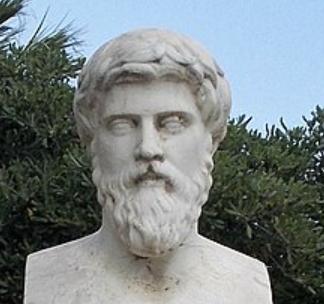
Phocion compared the speeches of Leosthenes to cypress-trees. "They are tall," said he, "and comely, but bear no fruit."
▼
Source
source
56 Phocion
2 months 4 weeks ago
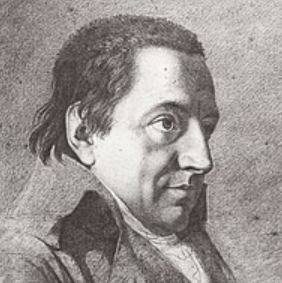
The correct relationship between the higher and lower classes, the appropriate mutual interaction between the two is, as such, the true underlying support on which the improvement of the human species rests. The higher classes constitute the mind of the single large whole of humanity; the lower classes constitute its limbs; the former are the thinking and designing part, the latter the executive part.
▼
Source
source
The System of Ethics According to the Principles of the Wissenschaftslehre (1798; Cambridge, 2005), p. 320.
3 months 4 weeks ago
The person who screams, or uses the superlative degree, or converses with heat, puts whole drawing-rooms to flight. If you wish to be loved, love measure. You must have genius or a prodigious usefulness if you will hide the want of measure.
▼
Source
source
p. 167
4 months ago
It is easier to discover a deficiency in individuals, in states, and in providence, than to see their real import or value.
2 months 2 weeks ago
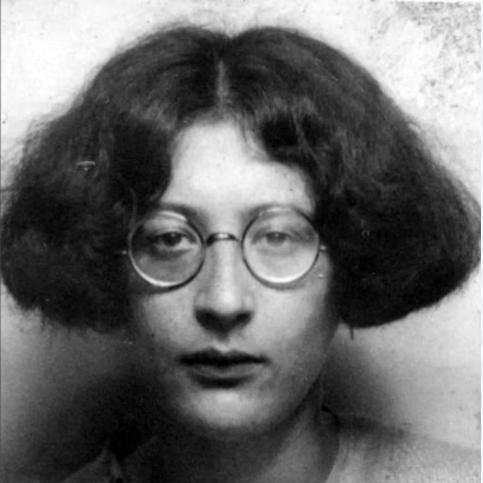
To wish to escape from solitude is cowardice. Friendship is not to be sought, not to be dreamed, not to be desired; it is to be exercised (it is a virtue).
▼
Source
source
p. 274

4 months 3 weeks ago
It's better to bet on this life than on the next.
1 week 1 day ago
The question "cui bono" to what practical end and advantage do your researches tend? is one which the speculative philosopher who loves knowledge for its own sake, and enjoys, as a rational being should enjoy, the mere contemplation of harmonious and mutually dependent truths, can seldom hear without a sense of humiliation. He feels that there is a lofty and disinterested pleasure in his speculations which ought to exempt them from such questioning; communicating as they do to his own mind the purest happiness (after the exercise of the benevolent and moral feelings) of which human nature is susceptible, and tending to the injury of no one, he might surely allege this as a sufficient and direct reply to those who, having themselves little capacity, and less relish for intellectual pursuits, are constantly repeating upon him this enquiry.
3 months 3 weeks ago
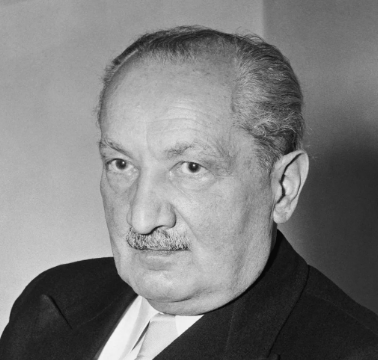
Everywhere we remain unfree and chained to technology, whether we passionately affirm or deny it. But we are delivered over to it in the worst possible way when we regard it as something neutral; for this conception of it, to which today we particularly like to do homage, makes us utterly blind to the essence of technology.
▼
Source
source
The Question Concerning Technology
2 months 2 weeks ago
It is the furious longing to give finality to the Universe, to make it conscious and personal, that has brought us to believe in God, to wish that God may exist, to create God, in a word. To create Him, yes! This saying ought not to scandalize even the most devout theist. For to believe in God is, in a certain sense, to create Him, although He first creates us. It is He who is continually creating Himself.
2 weeks ago
No furniture so charming as books.
▼
Source
source
Vol. I, ch. 9, p. 289
1 month 3 weeks ago
Powerful indeed is the empire of habit.
▼
Source
source
Maxim 305
3 months 4 weeks ago
The nature of power is such that even those who have not sought it, but have had it forced upon them, tend to acquire a taste for more.
▼
Source
source
Chapter 1 (p. 12)

4 months ago
We later learned that all the nineteen passengers in the non-smoking compartment had been killed. When the plane had hit the water a hole had been made in the plane and the water had rushed in. I had told a friend at Oslo who was finding me a place that he must find me a place where I could smoke, remarking jocularly, 'If I cannot smoke, I shall die'. Unexpectedly, this turned out to be true.
2 months 3 weeks ago
To detach yourself elegantly from the world; to give contour and grace to sadness; a solitude in style; a walk that gives cadence to memories; stepping towards the intangible; with the breath in the trembling margins of things; the past reborn in the overflow of fragrances; the smell, through which we conquer time; the contour of the invisible things; the forms of the immaterial; to deepen yourself in the intangible; to touch the world airborne by smell; aerial dialogue and gliding dissolution; to bathe in your own reflecting fragmentation...
4 months ago
To choose one sock from each of infinitely many pairs of socks requires the Axiom of Choice, but for shoes the Axiom is not needed.
▼
Source
source
As quoted in Williams' Weighing the Odds: A Course in Probability and Statistics (2001), p. 498
1 week 3 days ago
Time is the primitive form of the stream of consciousness. ...If we project ourselves outside the stream of consciousness and represent its content as an object, it becomes an event happening in time, the separate stages of which stand to one another in the relations of earlier and later.
▼
Source
source
Introduction
4 months 2 days ago
Since the narrower or wider community of the peoples of the earth has developed so far that a violation of rights in one place is felt throughout the world, the idea of a cosmopolitan right is not fantastical, high-flown or exaggerated notion. It is a complement to the unwritten code of the civil and international law, necessary for the public rights of mankind in general and thus for the realization of perpetual peace.
▼
Source
source
Perpetual Peace: A Philosophical Sketch, 1795
3 months 2 weeks ago
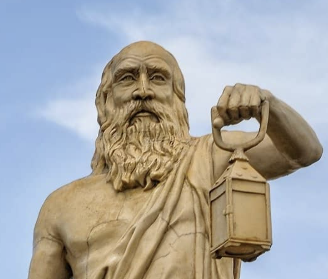
One day, observing a child drinking out of his hands, he cast away the cup from his wallet with the words, "A child has beaten me in plainness of living."
▼
Source
source
Diogenes Laërtius, vi. 37
4 months 1 week ago
Don't discuss yourself, for you are bound to lose; if you belittle yourself, you are believed; if you praise yourself, you are disbelieved.
▼
Source
source
Book III, Ch. 8
2 months 2 weeks ago
I know well that many of my readers do not think as I do. This also is most natural and confirms the theorem. For although my opinion turn out erroneous, there will always remain the fact that many of those dissentient readers have never given five minutes' thought to this complex matter. How are they going to think as I do? But by believing that they have a right to an opinion on the matter without previous effort to work one out for themselves, they prove patently that they belong to that absurd type of human being which I have called the "rebel mass." It is precisely what I mean by having one's soul obliterated, hermetically closed. Here it would be the special case of intellectual hermetism.
▼
Source
source
Chap. VIII: The Masses Intervene In Everything, And Why Their Intervention Is Solely By Violence
3 months 2 weeks ago
Animal Liberation is Human Liberation too.
▼
Source
source
Preface

3 months 3 weeks ago
This dysfunction of power was related to a central excess: what might be called the monarchical 'super-power', which identified the right to punish with the personal power of the sovereign.
▼
Source
source
Chapter Two, pp.80
3 months ago
Laws, like houses, lean on one another.
▼
Source
source
From the Tracts Relative to the Laws Against Popery in Ireland (c. 1766), not published during Burke's lifetime.
4 months 1 day ago
Truth that is naked is the most beautiful, and the simpler its expression the deeper is the impression it makes; this is partly because it gets unobstructed hold of the hearer's mind without his being distracted by secondary thoughts, and partly because he feels that here he is not being corrupted or deceived by the arts of rhetoric, but that the whole effect is got from the thing itself.

3 months ago
Russia was a slave in Europe but would be a master in Asia.
▼
Source
source
As quoted in "Dilemmas of Empire 1850-1918: Power, Territory, Identity" by Dominic Livien in Journal of Contemporary History, Vol. 34, No.2 (April 1999), pp. 180
3 months ago
You talk of Paine with more respect than he deserves: He is utterly incapable of comprehending his subject. He has not even a moderate portion of learning of any kind. He has learnd the instrumental part of literature, a style, and a method of disposing his ideas, without having ever made a previous preparation of Study or thinking-for the use of it. ... [Paine] possesses nothing more than what a man whose audacity makes him careless of logical consequences, and his total want of honour and morality makes indifferent as to political consequences, may very easily write. They indeed who seriously write upon a principle of levelling ought to be answerd by the Magistrate-and not by the Speculatist.
▼
Source
source
Letter to William Cusac Smith (22 July 1791), quoted in Alfred Cobban and Robert A. Smith (eds.), The Correspondence of Edmund Burke, Volume VI: July 1789-December 1791 (1967), pp. 303-304
CivilSimian.com created by AxiomaticPanic, CivilSimian, Kalokagathia