


1 month 1 week ago
I mean to lead a simple life, to choose a simple shell I can carry easily - like a hermit crab. But I do not. I find that my frame of life does not foster simplicity. My husband and five children must make their way in the world. The life I have chosen as a wife and mother entrains a whole caravan of complications.

4 months 2 weeks ago
I too have sworn heedlessly and all the time, I have had this most repulsive and death-dealing habit. I'm telling your graces; from the moment I began to serve God, and saw what evil there is in forswearing oneself, I grew very afraid indeed, and out of fear I applied the brakes to this old, old, habit.
▼
Source
source
180:10:1

1 month 4 weeks ago
The revolutionaries say: "The government organization is bad in this and that respect; it must be destroyed and replaced by this and that." But a Christian says: "I know nothing about the governmental organization, or in how far it is good or bad, and for the same reason I do not want to support it."
▼
Source
source
Chapter IX, The Acceptance of the Christian Conception of Life will Emancipate Men from the Miseries of our Pagan Life

3 months 2 weeks ago
And what he fears he cannot make attractive with his touch he abandons.
▼
Source
source
Line 149 (tr. H. R. Fairclough)
4 months 2 weeks ago
Were I a nightingale, I would act the part of a nightingale; were I a swan, the part of a swan.
▼
Source
source
Book I, ch. 16, 20.
4 months ago
Whatever crushes individuality is despotism, by whatever name it may be called, and whether it professes to be enforcing the will of God or the injunctions of men.
▼
Source
source
Ch. III: Of Individuality, As One of the Elements of Well-Being
1 month 3 weeks ago
Conservatism is a philosophy of inheritance and stewardship; it does not squander resources but strives to enhance them and pass them on.
▼
Source
source
Stand up for the real meaning of freedom, The Spectator
2 weeks 1 day ago
There is no means of avoiding the final collapse of a boom brought about by credit expansion. The alternative is only whether the crisis should come sooner as the result of voluntary abandonment of further credit expansion, or later as a final and total catastrophe of the currency system involved.
▼
Source
source
Chapter XX: Interest, Credit Expansion, The Trade Cycle, § 8 : The Monetary or Circulation Theory of the Trade Cycle


2 weeks 6 days ago
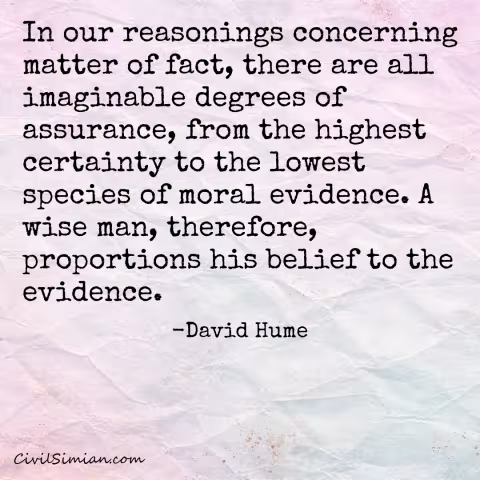
He who would write heroic poems should make his whole life a heroic poem.
▼
Source
source
Life of Schiller.
1 month 4 weeks ago
While imprisoned in the shed Pierre had learned not with his intellect but with his whole being, by life itself, that man is created for happiness, that happiness is within him, in the satisfaction of simple human needs, and that all unhappiness arises not from privation but from superfluity. And now during these last three weeks of the march he had learned still another new, consolatory truth- that nothing in this world is terrible. He had learned that as there is no condition in which man can be happy and entirely free, so there is no condition in which he need be unhappy and lack freedom. He learned that suffering and freedom have their limits and that those limits are very near together....
▼
Source
source
Bk. XIV, ch. 12

2 months 1 week ago
However, the disappearance of domination does not entail freedom. Instead, it makes freedom and constraint coincide. Thus, the achievement-subject gives itself over to compulsive freedom--that is, to the free constraint of maximizing achievement. Excess work and performance escalate into auto-exploitation.
▼
Source
source
Source: Page 11

4 months ago
You will have seen that my brother died suddenly in Marseilles. I inherit from him a title, but not a penny of money, as he was bankrupt. A title is a great nuisance to me, and I am at a loss what to do, but at any rate I do not wish it employed in connection with any of my literary work. There is, so far as I know, only one method of getting rid of it, which is to be attainted of high treason, and this would involve my head being cut off on Tower Hill. This method seems to me perhaps somewhat extreme...
▼
Source
source
Letter to W. W. Norton, 11 March, 1931
2 weeks 6 days ago
A million blockheads looking authoritatively into one man of what you call genius, or noble sense, will make nothing but nonsense out of him and his qualities, and his virtues and defects, if they look till the end of time. He understands them, sees what they are; but that they should understand him, and see with rounded outline what his limits are,-this, which would mean that they are bigger than he, is forever denied them. Their one good understanding of him is that they at last should loyally say, "We do not quite understand thee; we perceive thee to be nobler and wiser and bigger than we, and will loyally follow thee."
Just now
While experiencing happiness, we have difficulty in being conscious of it. Only when the happiness is past and we look back on it we do suddenly realize - sometimes with astonishment - how happy we had been.
▼
Source
source
Ch. 6

3 months 4 days ago
I discuss with myself questions of politics, love, taste, or philosophy. I let my mind rove wantonly, give it free rein to follow any idea, wise or mad that may present itself. ... My ideas are my harlots.

3 months 4 weeks ago
What the cinema can do better than literature or the spoken drama is to be fantastic.
▼
Source
source
"Where are the Movies Moving?" in Essays Old and New, 1926

3 months 4 days ago
Consider any individual at any period of his life, and you will always find him preoccupied with fresh plans to increase his comfort.
▼
Source
source
Book Three, Chapter XXI.

3 months 4 weeks ago
Daughters of Time, the hypocritic Days, Muffled and dumb like barefoot dervishes, And marching single in an endless file, Bring diadems and fagots in their hands.
▼
Source
source
Days
5 months ago
That which is desirable on its own account and for the sake of knowing it is more of the nature of wisdom than that which is desirable on account of its results.

2 months 3 weeks ago
The deepest and most organic death is death in solitude, when even light becomes a principle of death. In such moments you will be severed from life, from love, smiles, friends and even from death. And you will ask yourself if there is anything besides the nothingness of the world and your own nothingness.
3 months 4 weeks ago
No congress, nor mob, nor guillotine, nor fire, nor all together, can avail, to cut out, burn, or destroy the offense of superiority in persons. The superiority in him is inferiority in me.
▼
Source
source
p. 65
1 week 3 days ago
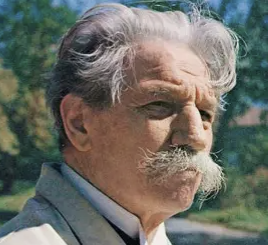
The deepest thinking is humble. It is only concerned that the flame of truth which it keeps alive should burn with the strongest and purest heat; it does not trouble about the distance to which its brightness penetrates.
▼
Source
source
Ch. XVI : Looking Backward and Forward, p. 257

2 weeks ago
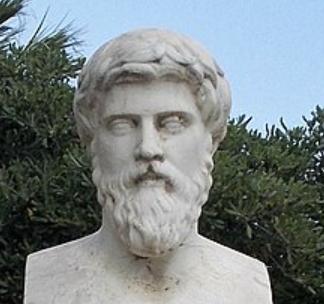
When the changes of our times gave you an opportunity, you restored to the use of man that genius of your father for which he had suffered, and made him in real truth immortal by publishing as an eternal memorial of him those books which that bravest of men had written with his own blood. You have done a great service to Roman literature: a large part of Cordus's books had been burned; a great service to posterity, who will receive a true account of events, which cost its author so dear; and a great service to himself, whose memory flourishes and ever will flourish, as long as men set any value upon the facts of Roman history, as long as anyone lives who wishes to review the deeds of our fathers, to know what a true Roman was like - one who still remained unconquered when all other necks were broken in to receive the yoke of Sejanus, one who was free in every thought, feeling, and act.
3 months 2 weeks ago
About Pontus there are some creatures of such an extempore being that the whole term of their life is confined within the space of a day; for they are brought forth in the morning, are in the prime of their existence at noon, grow old at night, and then die.

2 months 1 week ago
There is no reason whatever to assume that woman, in her climb to emancipation, has been, or will be, helped by the ballot.
2 months 1 week ago
Twenty-first-century society is no longer a disciplinary society, but rather an achievement society.
3 months 4 weeks ago
Conversation is an art in which a man has all mankind for his competitors, for it is that which all are practising every day while they live.
▼
Source
source
Considerations by the Way
3 months 4 weeks ago
The profit of books is according to the sensibility of the reader. The profoundest thought or passion sleeps as in a mine until an equal mind and heart finds and publishes it.
▼
Source
source
Quotation and Originality
1 month 1 week ago
The punctuation of anniversaries is terrible, like the closing of doors, one after another between you and what you want to hold on to.
▼
Source
source
Diary entry on the first anniversary of the kidnapping and death of her son Charles Augustus Lindbergh III (1 March 1932)

3 months ago
A people who are still, as it were, but in the gristle, and not yet hardened into the bone of manhood.
1 month 4 weeks ago
In the spiritual realm nothing is indifferent: what is not useful is harmful.
▼
Source
source
VII

4 months 2 days ago
Is it reasonable to assume a purposiveness in all the parts of nature and to deny it to the whole?
▼
Source
source
Seventh Thesis

4 months 3 days ago
There is no method of reasoning more common, and yet none more blameable, than, in philosophical disputes, to endeavour the refutation of any hypothesis, by a pretence of its dangerous consequences to religion and morality. When any opinion leads to absurdities, it is certainly false; but it is not certain that an opinion is false, because it is of dangerous consequence. Such topics, therefore, ought entirely to be forborne; as serving nothing to the discovery of truth, but only to make the person of an antagonist odious.
▼
Source
source
Of Liberty and Necessity, Part II
2 months 3 weeks ago
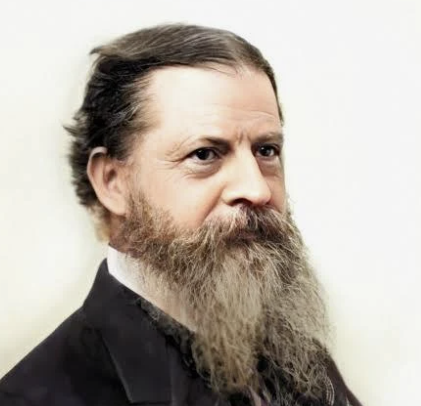
First then, we find that when we regard ideas from a nominalistic, individualistic, sensualistic way, the simplest facts of mind become utterly meaningless. That one idea should resemble another or influence another, or that one state of mind should so much as be thought of in another is, from that standpoint, sheer nonsense.

4 months 3 weeks ago
Some say that the body is the "tomb" of the soul, their notion being that the soul is buried in the present life; and again, because by its means the soul gives any signs which it gives, it is for this reason also properly called "sign". But I think it most likely that the Orphic poets gave this name, with the idea that the soul is undergoing punishment for something; they think it has the body as an enclosure to keep it safe, like a prison, and this is, as the name itself denotes, the "safe" for the soul, until the penalty is paid, and not even a letter needs to be changed.
2 weeks 6 days ago
This poor amphibious Pope too gives loaves to the Poor; has in him more good latent than he is himself aware of. His poor Jesuits, in the late Italian Cholera, were, with a few German Doctors, the only creatures whom dastard terror had not driven mad: they descended fearless into all gulfs and bedlams; watched over the pillow of the dying, with help, with counsel and hope; shone as luminous fixed stars, when all else had gone out in chaotic night: honour to them!
2 weeks 5 days ago
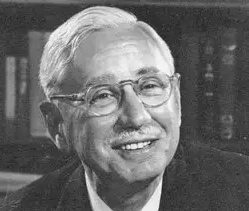
Life is that which is discontent, which struggles and seeks, which suffers and creates.
▼
Source
source
Ch. 1 : Our life begins
2 weeks 1 day ago
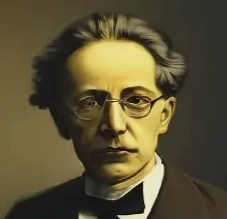
The divine is God's concern; the human, man's. My concern is neither the divine nor the human, not the true, good, just, free, etc., but solely what is mine, and it is not a general one, but is - unique, as I am unique. Nothing is more to me than myself!
▼
Source
source
Cambridge 1995, p. 7

4 months 3 weeks ago
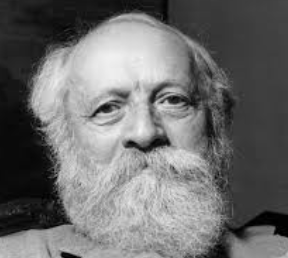
It is only afterward that a new idea seems reasonable. To begin with, it usually seems unreasonable.
2 months 2 weeks ago
Some would deny any legitimate use of the word God because it has been misused so much. Certainly it is the most burdened of all human words. Precisely for that reason it is the most imperishable and unavoidable. And how much weight has all erroneous talk about God's nature and works (although there never has been nor can be any such talk that is not erroneous) compared with the one truth that all men who have addressed God really meant him? For whoever pronounces the word God and really means Thou, addresses, no matter what his delusion, the true Thou of his life that cannot be restricted by any other and to whom he stands in a relationship that includes all others.
2 months 2 weeks ago
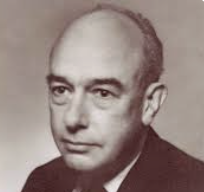
Tactically, conceptualism is no doubt the strongest position of the three; for the tired nominalist can lapse into conceptualism and still allay his puritanic conscience with the reflection that he has not quite taken to eating lotus with the Platonists.
▼
Source
source
"Logic and the Reification of Universals"

1 month 1 week ago
Today, status quo bias runs deep. Conservation biology is an ideology masquerading as a science. Many researchers seek to extend the tenets of conservation biology to humans. By contrast, a benevolent superintelligence might view Darwinian life on Earth as an infestation of biological malware and act accordingly. The amount of suffering caused by Homo sapiens is hard to quantify. But the suffering is immense and growing daily with the spread of industrialised animal abuse. Reply to "Why would someone want to end humanity?"
▼
Source
source
, Quora, 10 Mar. 2018

2 months 1 day ago
Be kind. Don't kill for any reason. Don't even kill out of self-defense. Really - I mean that. Don't take any more than you need of anything. Help others.
▼
Source
source
From a speech given on 20 January 1969 at the University of Michigan, about two months before Slaughterhouse Five was published
5 months ago
As for the life of money-making, it is one of constraint, and wealth is manifestly not the good of which we are in search, for it is only useful as a means to something else, and for this reason there is less to be said for it than for the ends mentioned before, which are, at any rate, desired for their own sakes.

4 months 2 weeks ago
The superior man accords with the course of the Mean. Though he may be all unknown, unregarded by the world, he feels no regret. It is only the sage who is able for this.

4 months 1 week ago
The ceaseless labour of your life is to build the house of death.
▼
Source
source
Book I, Ch. 20
4 months 1 week ago
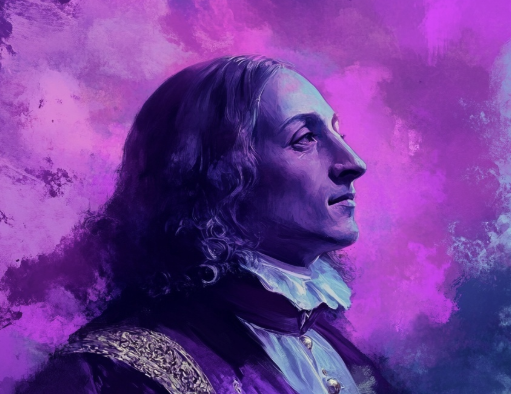
If it is pleasing to observe in nature her desire to paint God in all his works, in which we see some traces of him because they are his images, how much more just is it to consider in the productions of minds the efforts which they make to imitate the essential truth, even in shunning it, and to remark wherein they attain it and wherein they wander from it, as I have endeavored to do in this study.
4 months 2 weeks ago
Yet God hath not only granted these faculties, by which we may bear every event without being depressed or broken by it, but like a good prince and a true father, hath placed their exercise above restraint, compulsion, or hindrance, and wholly within our own control.
▼
Source
source
Book I, ch. 6, 40.
CivilSimian.com created by AxiomaticPanic, CivilSimian, Kalokagathia