


2 months 3 weeks ago
If death is as horrible as is claimed, how is it that after the passage of a certain period of time we consider happy any being, friend or enemy, who has ceased to live?

4 months 2 days ago
Phenomena of the external sense are examined and set forth in physics; those of the internal sense in empirical psychology. Pure mathematics considers space in geometry and time in pure mechanics. To these is to be added a certain concept, intellectual to be sure in itself, but whose becoming actual in the concrete requires the auxiliary notions of time and space in the successive addition and simultaneous juxtaposition of separate units, which is the concept of number treated in arithmetic.

2 months 3 weeks ago
The methods of logical procedure are very different in ancient and modem logic, but behind all difference is the construction of a universally valid order of thought, neutral with respect to material content. Long before technological man and technological nature emerged as the objects of rational control and calculation, the mind was made susceptible to abstract generalization. Terms which could be organized into a coherent logical system, free from contradiction or with manageable contradiction, were separated from those which could not. Distinction was made between the universal, calculable, "objective" and the particular, incalculable, subjective dimension of thought.
▼
Source
source
pp. 137-138
1 month 2 weeks ago
His imagination resembled the wings of an ostrich. It enabled him to run, though not to soar.
▼
Source
source
p. 223

2 weeks 6 days ago
Get, by six hundred and fifty-eight votes, or by no vote at all, by the silent intimation of your own eyesight and understanding given you direct out of Heaven, and more sacred to you than anything earthly, and than all things earthly,-a correct image of the fact in question, as God and Nature have made it: that is the one thing needful; with that it shall be well with you in whatsoever you have to do with said fact. Get, by the sublimest constitutional methods, belauded by all the world, an incorrect image of the fact: so shall it be other than well with you; so shall you have laud from able editors and vociferous masses of mistaken human creatures; and from the Nature's Fact, continuing quite silently the same as it was, contradiction, and that only. What else?
2 months 3 weeks ago
Whenever government assumes to deliver us from the trouble of thinking for ourselves, the only consequences it produces are those of torpor and imbecility.
▼
Source
source
Vol. 2, bk. 6, ch. 1
1 month 3 weeks ago
Train any population rationally, and they will be rational. Furnish honest and useful employments to those so trained, and such employments they will greatly prefer to dishonest or injurious occupations. It is beyond all calculation the interest of every government to provide that training and that employment; and to provide both is easily practicable.
1 month 3 weeks ago
This is still the strangest thing in all man's travelling, that he should carry about with him incongruous memories.
▼
Source
source
Pt. II, ch. III.
2 months 3 weeks ago
Tragic paradox of freedom: the mediocre men who alone make its exercise possible cannot guarantee its duration.

2 months 1 week ago
What is obscene about pornography is not an excess of sex, but the fact that it contains no sex at all.

4 months 2 weeks ago
The superfluities of the rich are the necessaries of the poor. They who possess superfluities, possess the goods of others.
▼
Source
source
Patrologia Latina, vol. 37, p. 1922
2 months 2 weeks ago
Thought must be judged by something that is not thought, by its effect on production or its impact on social conduct, as art today is being ultimately gauged in every detail by something that is not art, be it box-office or propaganda value.
▼
Source
source
describing the pragmatist view, p. 51.

1 month 3 weeks ago
Interface, of the resonant interval as 'where the action is', whether chemical, psychic or social, involves touch.
▼
Source
source
p. 102

3 months 4 weeks ago
Olympian bards who sung Divine ideas below, Which always find us young And always keep us so.
▼
Source
source
Ode to Beauty, st. 2

4 months 1 day ago
Such arguments ill become us, since the time of reformation came, under Gospel light. All distinctions of nations, and privileges of one above others, are ceased; Christians are taught to account all men their neighbours; and love their neighbours as themselves; and do to all men as they would be done by; to do good to all men; and Man-stealing is ranked with enormous crimes. Is the barbarous enslaving our inoffensive neighbours, and treating them like wild beasts subdued by force, reconcilable with all these Divine precepts? Is this doing to them as we would desire they should do to us? If they could carry off and enslave some thousands of us, would we think it just?-One would almost wish they could for once; it might convince more than Reason, or the Bible.
2 months 1 week ago
A major task in organizing is to determine, first, where the knowledge is located that can provide the various kinds of factual premises that decisions require.
▼
Source
source
p. 24.

4 months 3 days ago
That the sun will not rise to-morrow is no less intelligible a proposition, and implies no contradiction, than the affirmation, that it will rise.
▼
Source
source
§ 4.8

3 months 4 weeks ago
Everyone who knows anything of history also knows that great social revolutions are impossible without the feminine ferment. Social progress may be measured precisely by the social position of the fair sex (plain ones included).
▼
Source
source
Letter to Ludwig Kugelmann, dated 12 December 1868.

3 months 4 weeks ago
The way for a person to develop a [writing] style is (a) to know exactly what he wants to say, and (b) to be sure he is saying exactly that. The reader, we must remember, does not start by knowing what we mean. If our words are ambiguous, our meaning will escape him. I sometimes think that writing is like driving sheep down a road. If there is any gate open to the left or the right the readers will most certainly go into it.
▼
Source
source
As quoted in part 2 of Sherwood Eliot Wirt in "The Final Interview of C. S. Lewis", 1963

4 months 3 weeks ago
The preceding merely defines a way of thinking. But the point is to live.

3 months 4 weeks ago
My life is like a stroll upon the beach, As near the ocean's edge as I can go.
▼
Source
source
"The Fisher's Boy", in Edmund Clarence Stedman (ed.) An American Anthology, 1787-1900, Boston and New York: Houghton, Mifflin and Co., 1900

2 months 2 weeks ago
To wish to escape from solitude is cowardice. Friendship is not to be sought, not to be dreamed, not to be desired; it is to be exercised (it is a virtue).
▼
Source
source
p. 274
2 months 6 days ago
The real significance of the Russell paradox, from the standpoint of the modal-logic picture, is this: it shows that no concrete structure can be a standard model for the naive conception of the totality of all sets; for any concrete structure has a possible extension that contains more 'sets'. (If we identify sets with the points that represent them in the various possible concrete structures, we might say: it is not possible for all possible sets to exist in any one world!) Yet set theory does not become impossible. Rather, set theory becomes the study of what must hold in, e.g. any standard model for Zermelo set theory.
▼
Source
source
Mathematics without foundations

1 month 4 weeks ago
The hero of my tale, whom I love with all the power of my soul, whom I have tried to portray in all his beauty, who has been, is, and will be beautiful, is Truth.
▼
Source
source
Sevastopol in May (1855), Ch. 16
3 months 3 weeks ago
The particularity (Jeweiligkeit) of the places and their manifoldness are grounded in space, and the particularity of the time points is grounded in time. That basic characteristic of the thing, that essential determination of the thingness of the thing to be this one (je dieses), is grounded in the essence of space and time. Our question "What is a thing?" includes, therefore, the questions "What is space?" and "What is time?" It is customary The particularity (Jeweiligkeit) os the places.
▼
Source
source
p. 16
3 weeks ago
All poetry is supposed to be instructive but in an unnoticeable manner; it is supposed to make us aware of what it would be valuable to instruct ourselves in; we must deduce the lesson on our own, just as with life.
▼
Source
source
Letter to Carl Friedrich Zelter



3 months 4 weeks ago
Our psychological experiences are all equally facts. There is nothing to choose between them. No psychological experience is "truer," so far as we are concerned, than any other. For even if one should correspond more closely to things in themselves as perceived by some hypothetical non-human being, it would be impossible for us to discover which it was. Science is no "truer" than common sense, or lunacy, or art, or religion. It permits us to organize our experience profitably; but tells us nothing about the real nature of the world to which our experiences are supposed to refer. From the internal reality, by which I mean the totality of psychological experiences, it actually separates us. Art, for example, deals with many more aspects of this internal reality than does science, which confines itself deliberately and by convention to the study of one very limited class of experiences - the experiences of sense.
▼
Source
source
"One and Many," p. 5-6
1 month 1 week ago
I have repeatedly stressed that the rape of the Earth and rape of women are intimately linked - both metaphorically, in shaping world-views, and materially, in shaping women's everyday lives. The deepening economic vulnerability of women makes them more vulnerable to all forms of violence, including sexual assault, as we found out during a series of public hearings on the impact of economic reforms on women organized by the National Commission on Women and the Research Foundation for Science, Technology and Ecology.
▼
Source
source
Ecofeminism, by Maria Mies and Vandana Shiva, 1993, (full text pdf)
2 months 2 weeks ago
It is precisely those artists and writers who are most inclined to think of their art as the manifestation of their personality who are in fact the most in bondage to public taste.
▼
Source
source
p. 57
2 months 2 weeks ago
If people were told: what makes carnal desire imperious in you is not its pure carnal element. It is the fact that you put into it the essential part of yourself-the need for Unity, the need for God - they wouldn't believe it. To them it seems obvious that the quality of imperious need belongs to the carnal desire as such. In the same way it seems obvious to the miser that the quality of desirability belongs to gold as such, and not to its exchange value.

3 months 3 weeks ago
Human beings have a physical need to tell themselves when at work: "Let's have done with it now," and it's having constantly to go on thinking in the face of this need when philosophizing that makes this work so strenuous.
▼
Source
source
p. 86e

3 months 1 week ago
Happiness is a good flow of life.
▼
Source
source
As quoted by Stobaeus, ii. 77.
3 months 4 weeks ago
The chief reason warfare is still with us is neither a secret death-wish of the human species, nor an irrepressible instinct of aggression, nor, finally and more plausibly, the serious economic and social dangers inherent in disarmament, but the simple fact that no substitute for this final arbiter in international affairs has yet appeared on the political scene.
▼
Source
source
"On Violence"

1 month 3 weeks ago
Even when there is no law, there is conscience.
▼
Source
source
Maxim 237

2 months 3 weeks ago
Every civilized human being, whatever his conscious development, is still an archaic man at the deeper levels of his psyche. Just as the human body connects us with the mammals and displays numerous relics of earlier evolutionary stages going back to even the reptilian age, so the human psyche is likewise a product of evolution which, when followed up to its origins, show countless archaic traits.
▼
Source
source
p. 126

3 weeks 3 days ago
After World War II, liberal rights were not something that were only deserved by white Europeans. ...There was a recognition that the black and brown peoples being held in colonial bondage could not consistently be held in that bondage, because liberalism was a universal doctrine. ...That's the other respect in which we can defend liberalism, a moral one.
▼
Source
source
10:30
2 months 3 weeks ago
So that every Crime is a sinne; but not every sinne a Crime.
▼
Source
source
The Second Part, Chapter 27, p. 151

2 weeks ago
Octavia lost Marcellus, whom both his father-in-law and his uncle had begun to depend upon, and to place upon his shoulders the weight of the empire - a young man of keen intelligence and firm character, frugal and moderate in his desires to an extent which deserved especial admiration in one so young and so wealthy, strong to endure labour, averse to indulgence, and able to bear whatever burden his uncle might choose to lay, or I may say to pile upon his shoulders. Augustus had well chosen him as a foundation, for he would not have given way under any weight, however excessive.
2 months 2 weeks ago
If it were not for the founder of the school, Charles S. Pierce, who has told us that he 'learned philosophy out of Kant,' one might be tempted to deny any philosophical pedigree to a doctrine that holds not that our expectations are fulfilled and our actions successful because our ideas are true, but rather that our ideas are true because our expectations are fulfilled and our actions successful. describing the pragmatist view,
▼
Source
source
p. 42.
3 months 4 weeks ago
In actions of enthusiasm, this drawback appears: but in those lower activities, which have no higher aim than to make us more comfortable and more cowardly, in actions of cunning, actions that steal and lie, actions that divorce the speculative from the practical faculty, and put a ban on reason and sentiment, there is nothing else but drawback and negation.
▼
Source
source
Goethe; or, The Writer
4 months 1 week ago
A doubtful balance is made between truth and pleasure, and... the knowledge of one and the feeling of the other stir up a combat the success of which is very uncertain, since, in order to judge of it, it would be necessary to know all that passes in the innermost spirit of the man, of which man himself is scarcely ever conscious.
1 month 3 weeks ago
Headlines are icons, not literature.
▼
Source
source
(p. 5)
3 months 3 weeks ago
Like everything metaphysical the harmony between thought and reality is to be found in the grammar of the language.
▼
Source
source
§ 112
1 week 3 days ago
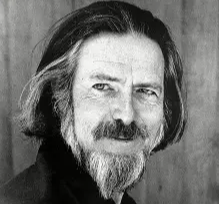
Speaking as of today, I do not consider it intellectually respectable to be a partisan in matters of religion. I see religion as I see such other basic fascinations as art and science, in which there is room for many different approaches, styles, techniques, and opinions. Thus I am not formally a committed member of any creed or sect and hold no particular religious view or doctrine as absolute. I deplore missionary zeal, and consider excessive dedication to and advocacy of any particular religion, as either the best or the only true way, an almost irreligious arrogance. Yet my work and my life are fully concerned with religion, and the mystery of being is my supreme fascination, though, as a shameless mystic, I am more interested in religion as feeling and experience than as conception and theory.
▼
Source
source
p. 61
2 weeks 6 days ago
To reconcile Despotism with Freedom:-well, is that such a mystery? Do you not already know the way? It is to make your Despotism just. Rigorous as Destiny; but just too, as Destiny and its Laws. The Laws of God: all men obey these, and have no 'Freedom' at all but in obeying them. The way is already known, part of the way;-and courage and some qualities are needed for walking on it!
2 weeks 4 days ago
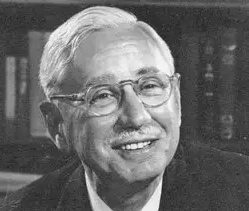
India was the motherland of our race, and Sanskrit the mother of Europe's languages: she was the mother of our philosophy; mother, through the Arabs, of much of our mathematics; mother, through the Buddha, of the ideals embodied in Christianity; mother, through the village community, of self-government and democracy. Mother India is in many ways the mother of us all.

4 months 1 week ago
Cato said the best way to keep good acts in memory was to refresh them with new.
▼
Source
source
No. 247
1 month 2 weeks ago
A single breaker may recede; but the tide is evidently coming in.
▼
Source
source
pp. 266-267

2 months 1 week ago
The free expression of the hopes and aspirations of a people is the greatest and only safety in a sane society.
CivilSimian.com created by AxiomaticPanic, CivilSimian, Kalokagathia