


3 months 2 weeks ago
What can be said can and should always be said more and more simply and clearly.

3 months 3 weeks ago
Few men have been admired by their own households.
▼
Source
source
Ch. 2

4 months 4 days ago
What is food to one, is to others bitter poison.
▼
Source
source
Book IV, line 637 (reported in Bartlett's Familiar Quotations) Compare: "What's one man's poison, signor, / Is another's meat or drink", Beaumont and Fletcher, Love's Cure (1647), Act III, scene 2
2 months 2 weeks ago
I did not hate the author of my misfortunes - truth and justice acquit me of that; I rather pitied the hard destiny to which he seemed condemned. But I thought with unspeakable loathing of those errors, in consequence of which every man is fated to be, more or less, the tyrant or the slave. I was astonished at the folly of my species, that they did not rise up as one man, and shake off chains so ignominious, and misery so insupportable. So far as related to myself, I resolved - and this resolution has never been entirety forgotten by me - to hold myself disengaged from this odious scene, and never fill the part either of the oppressor or the sufferer.
2 months 1 day ago
The quest for certainty blocks the search for meaning. Uncertainty is the very condition to impel man to unfold his powers.
▼
Source
source
Ch. 3

3 months 2 weeks ago
I soon perceived that she possessed in combination, the qualities which in all other persons whom I had known I had been only too happy to find singly. In her, complete emancipation from every kind of superstition (including that which attributes a pretended perfection to the order of nature and the universe), and an earnest protest against many things which are still part of the established constitution of society, resulted not from the hard intellect, but from strength of noble and elevated feeling, and co-existed with a highly reverential nature.
▼
Source
source
(p. 186)

2 months 1 week ago
He that is not with me is against me: and he that gathereth not with me scattereth.
▼
Source
source
Luke 11:23 (KJV)
4 days ago
In fact, when a nation has become free, it is extremely difficult to persuade them that their freedom is only to be preserved by perpetual and minute jealousy. They do not observe that there is a constant, perhaps an unconscious, effort on the part of their governors to diminish, and so ultimately to destroy, that freedom.
▼
Source
source
Characters of Mr. Fox (review of Characters of the late Charles James Fox, edited by Philopatris Varvicensis, 2 vols), in The Edinburgh Review
3 months 2 weeks ago
The law of progress holds that everything now must be better than what was there before. Don't you see if you want something better, and better, and better, you lose the good? The good is no longer even being measured.
▼
Source
source
Interview with French writer Roger Errera in New York Review of Books
3 months 1 week ago
The fact that no one has come up with a really convincing reason for giving greater moral weight to members of our own species, simply because they are members of our species, strongly suggests that there is no such reason. Like racism and sexism, speciesism is wrong.
▼
Source
source
p. 343

3 months 2 weeks ago
So long as the product is sold, everything is taking its regular course from the standpoint of the capitalist producer.
▼
Source
source
Vol. II, Ch. II, p. 78.
2 months 2 weeks ago
Every change in the social order, every revolution in property relations, is the necessary consequence of the creation of new forces of production which no longer fit into the old property relations. Private property has not always existed. When, towards the end of the Middle Ages, there arose a new mode of production which could not be carried on under the then existing feudal and guild forms of property, this manufacture, which had outgrown the old property relations, created a new property form, private property. And for manufacture and the earliest stage of development of big industry, private property was the only possible property form; the social order based on it was the only possible social order.
3 months 3 weeks ago
There is only one inborn erroneous notion ... that we exist in order to be happy ... So long as we persist in this inborn error ... the world seems to us full of contradictions. For at every step, in great things and small, we are bound to experience that the world and life are certainly not arranged for the purpose of maintaining a happy existence ... hence the countenances of almost all elderly persons wear the expression of ... disappointment.
▼
Source
source
Vol II "On the Road to Salvation"

2 months 5 days ago
We should desire neither the immortality nor the death of any human being, whoever he may be, with whom we have to do.
▼
Source
source
p. 260
2 months 2 weeks ago
It is the man of science, eager to have his every opinion regenerated, his every idea rationalized, by drinking at the fountain of fact, and devoting all the energies of his life to the cult of truth, not as he understands it, but as he does not yet understand it, that ought properly to be called a philosopher. To an earlier age knowledge was power - merely that and nothing more; to us it is life and the summum bonum. Emancipation from the bonds of self, of one's own prepossessions, importunately sought at the hands of that rational power before which all must ultimately bow, - this is the characteristic that distinguishes all the great figures of nineteenth-century science from those of former periods.
▼
Source
source
"The Century's Great Men in Science" in The 19th Century : A Review of Progress During the Past One Hundred Years in the Chief Departments of Human Activity (1901), published by G. P. Putnam's Sons.

3 months 2 weeks ago
Of course, he who has put forth his total strength in fit actions, has the richest return of wisdom.
▼
Source
source
par. 28
4 months 5 days ago
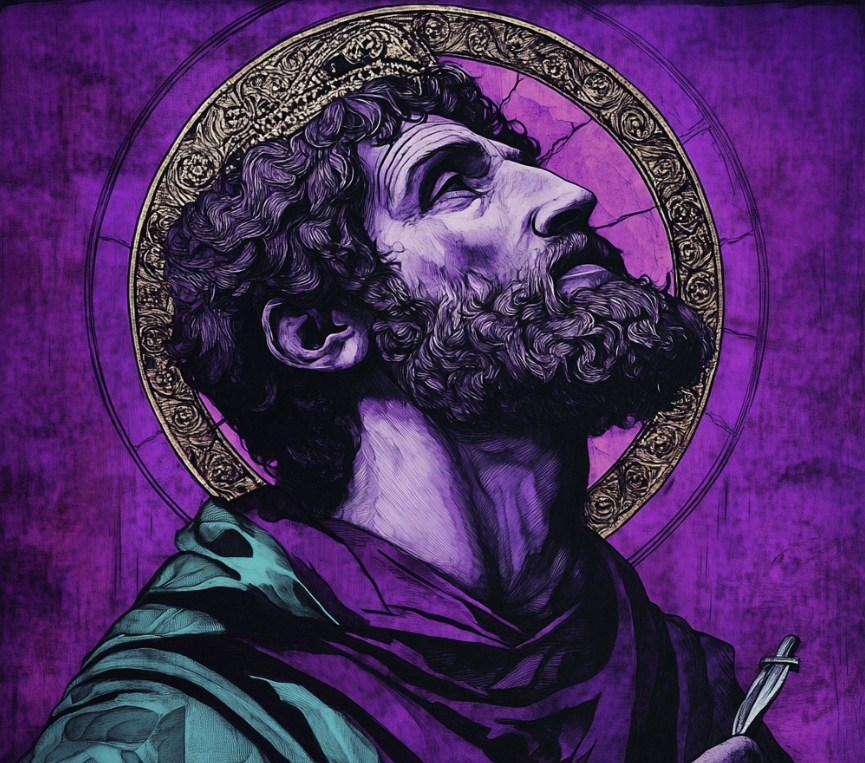
Wonderful is the depth of Thy oracles, whose surface is before us, inviting the little ones; and yet wonderful is the depth, O my God, wonderful is the depth. It is awe to look into it; and awe of honour, and a tremor of love. The enemies thereof I hate vehemently. Oh, if Thou wouldest slay them with Thy two-edged sword, that they be not its enemies! For thus do I love, that they should be slain unto themselves that they may live unto Thee.
▼
Source
source
XII, 14
3 months 2 weeks ago
The heart is everywhere, and each part of the organism is only the specialized force of the heart itself.
2 months 5 days ago
Dadaism and surrealism ... represented the intoxication of total license, the intoxication in which the mind wallows when it has made a clean sweep of value and surrendered to the immediate. The good is the pole towards which the human spirit is necessarily oriented, not only in action but in every effort, including the effort of pure intelligence. The surrealists have set up non-oriented thought as a model; they have chosen the total absence of value as their supreme value. Men have always been intoxicated by license, which is why, throughout history, towns have been sacked. But there has not always been a literary equivalent for the sacking of towns. Surrealism is such an equivalent.
▼
Source
source
"The responsibility of writers," p. 167

1 month 2 weeks ago
The error arises from the learned jurists deceiving themselves and others, by asserting that government is not what it really is, one set of men banded together to oppress another set of men, but, as shown by science, is the representation of the citizens in their collective capacity.
▼
Source
source
Chapter VI, Attitude of Men of the Present Day to War Variant translation: Government is an association of men who do violence to the rest of us.
2 months 1 week ago
The significance of God, cause, number, substance or soul consists, as James asserts, in nothing but the tendency of the given concept to make us act or think. If the world should reach a point at which it ceases to care not only about such metaphysical entities but also about murders perpetrated behind closed frontiers or simply in the dark, one would have to conclude that the concepts of such murders have no meaning, that they represent no 'distinct ideas' or truths, since they do not make any 'sensible difference to anybody.
▼
Source
source
describing the pragmatist view, pp. 46-47.
4 months 1 week ago
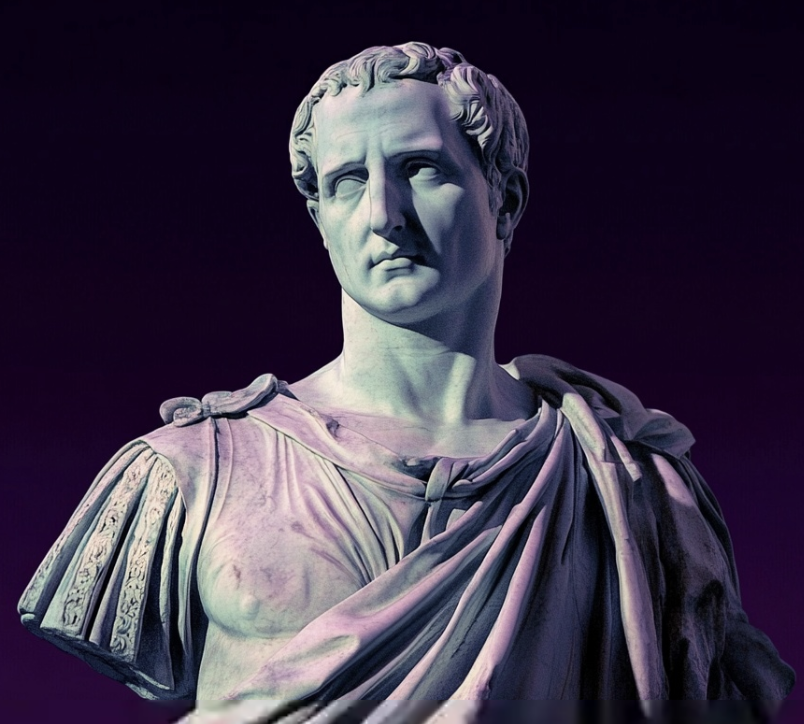
O immortal gods! Men do not realize how great a revenue parsimony can be!
▼
Source
source
Paradoxa Stoicorum; Paradox VI, 49

2 months 2 days ago
Once again, I experienced that overwhelming joy in the universe that I had felt in London outside the V and A. But this time, my consciousness of the world seemed larger, more complex. It was the mystic's sensation of oneness, of everything blending into everything else. Everything I looked at reminded me of something else, which also became present to my consciousness, as if I were simultaneously seeing a million worlds and smelling a million scents and hearing a million sounds-- not mixed up, but each separate and clear. I was overwhelmed with a sense of my smallness in the face of this vast, beautiful, objective universe, this universe whose chief miracle is that it exists, as well as myself. It is no dream, but a great garden in which life is trying to obtain a foothold. I experienced a desire to burst into tears of gratitude; then I controlled it, and the feeling subsided into a calm sense of immense, infinite beauty.
▼
Source
source
pp. 237-238
4 months 2 weeks ago
Moreover, there is a victory and defeat, the first and best of victories, the lowest and worst of defeat, which each man gains or sustains at the hands, not of another, but of himself; this shows that there is a war against ourselves going on within every one of us. Book I Sometimes paraphrased as "The first and best victory is to conquer self".
4 months 5 days ago
What is the Church? She is the body of Christ. Join to it the Head, and you have one man: The Head and the body make up one man. Who is the head? He who was born of the Virgin Mary. And what is His body? It is His Spouse, that is, the Church.... The Father willed that these two, the God Christ and the Church, should be one man. All men are one man in Christ, and the unity of the Christians constitutes but one man. And this man is all men, all men are this man; for all are one, since Christ is one.
▼
Source
source
p. 414
1 month 2 weeks ago
Just because science can't in practice explain things like the love that motivates a poet to write a sonnet, that doesn't mean that religion can. It's a simple and logical fallacy to say, 'If science can't do something, therefore religion can'.

3 months 3 weeks ago
There is not a negro from the coast of Africa who does not, in this respect, possess a degree of magnanimity which the soul of his sordid master is too often scarce capable of conceiving. Fortune never exerted more cruelly her empire over mankind, than when she subjected those nations of heroes to the refuse of the jails of Europe, to wretches who possess the virtues neither of the countries which they come from, nor of those which they go to, and whose levity, brutality, and baseness, so justly expose them to the contempt of the vanquished.
▼
Source
source
Chap. II.
3 months 3 weeks ago
Unless I am convinced by the testimony of the Scriptures or by clear reason (for I do not trust either in the pope or in councils alone, since it is well known that they have often erred and contradicted themselves), I am bound by the Scriptures I have quoted and my conscience is captive to the Word of God. I cannot and will not recant anything, since it is neither safe nor right to go against conscience. May God help me. Amen.
▼
Source
source
Statement in defense of his writings at the Diet of Worms (19 April 1521), as translated in The Nature of Protestantism (1963) by Karl Heim, p. 78
1 month 2 weeks ago
Evidence is the only good reason to believe anything.
▼
Source
source
Interview shown in AlJazeera ,
3 months 3 weeks ago
A little of all things, but nothing of everything, after the French manner.
▼
Source
source
Chapter 26. Of the Education of Children
2 months 2 weeks ago
The end of the philosophical dialogue lies in itself; it can never serve a purpose outside of itself. Just as a sculptor does not cease to be a work of art even if it lies at the bottom of the sea, so indeed every work of philosophy endures, even if uncomprehended in its own time. One would be grateful if it were merely a matter of incomprehension. Instead, the work is usually refitted and appropriated by various entities-some playing the part of the opponent; others, that of the proponent.
▼
Source
source
P.3-4
2 months 2 weeks ago
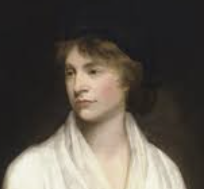
I am a strange compound of weakness and resolution! However, if I must suffer, I will endeavour to suffer in silence. There is certainly a great defect in my mind - my wayward heart creates its own misery - Why I am made thus I cannot tell; and, till I can form some idea of the whole of my existence, I must be content to weep and dance like a child - long for a toy, and be tired of it as soon as I get it.
▼
Source
source
Undated letter to Joseph Johnson (October? 1792), published in The Collected Letters of Mary Wollstonecraft (2004), edited by Janet Todd, p. 206.
4 days ago
Among the smaller duties of life I hardly know any one more important than that of not praising where praise is not due.
▼
Source
source
Lecture IX : On the Conduct of the Understanding

4 days ago
If you set a high value on liberty, you must set a low value on everything else.
1 month 2 weeks ago
How do we account for the current paranormal vogue in the popular media? Perhaps it has something to do with the millennium - in which case it's depressing to realise that the millennium is still three years away.
2 months 2 weeks ago
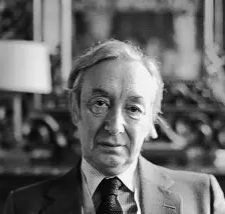
I see philosophy as a fairly abstract activity, as concerned mainly with the analysis of criticism and concepts, and of course most usefully of scientific concepts.
▼
Source
source
As quoted in Profile of Sir Alfred Ayer (June 1971) by Euro-Television, quoted in A.J. Ayer: A Life (1999), p. 2
7 months 3 weeks ago
1 month 3 weeks ago
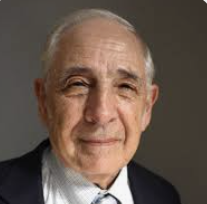
I have only one real message in this lecture, and that is: consciousness is a biological phenomenon, like photosynthesis, digestion, mitosis-you know all the biological phenomena-and once you accept that, most, if not all about the hard problems of consciousness simply evaporate.

3 months 3 weeks ago
Thus it may be said that not only the soul, the mirror of an indestructible universe, is indestructible, but also the animal itself, though its mechanism may often perish in part and take off or put on an organic slough.
▼
Source
source
La monadologie (77). Sometimes paraphrased as: The soul is the mirror of an indestructible universe.

3 months 2 weeks ago
Gratitude looks to the past and love to the present; fear, avarice, lust, and ambition look ahead.
▼
Source
source
Letter XVI
3 months 3 weeks ago
Oatmeal indeed supplies the common people of Scotland with the greatest and best part of their food, which is in general much inferior to that of their neighbours of the same rank in England.
▼
Source
source
Chapter VIII, p. 91 (Oatmeal in England makes for great horses, in Scotland Great Men).

2 months 2 weeks ago
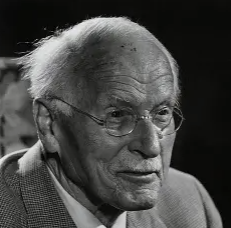
We are living in what the Greeks called the right time for a "metamorphosis of the gods," i.e. of the fundamental principles and symbols. This peculiarity of our time, which is certainly not of our conscious choosing, is the expression of the unconscious man within us who is changing. Coming generations will have to take account of this momentous transformation if humanity is not to destroy itself through the might of its own technology and science.
▼
Source
source
p 110
4 months 2 weeks ago
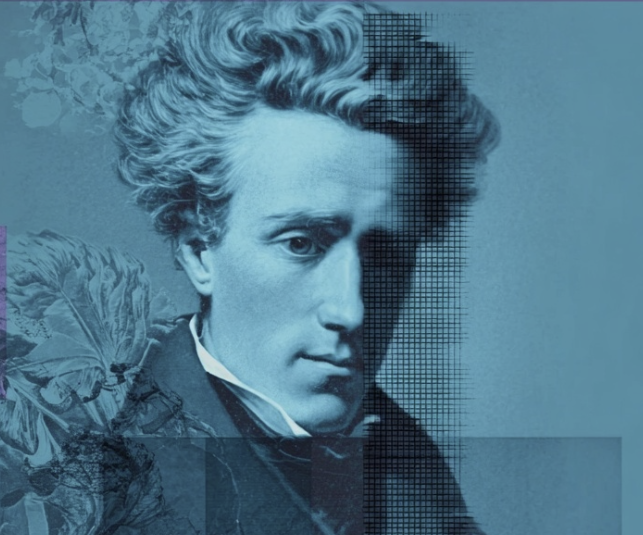
Even Plato assumes that the genuinely perfect condition of man means no sex distinction (and how strange this is for people like Feuerbach who are so occupied with affirming sex-differentiation, regarding which they would do best to appeal to paganism). He assumes that originally there was only the masculine (and when there is no thought of femininity, sex-distinction is undifferentiated), but through degeneration and corruption the feminine appeared. He assumes that base and cowardly men became women in death, but he still gives them hope of being elevated again to masculinity. He thinks that in the perfect life the masculine, as originally, will be the only sex, that is, that sex-distinction is a matter of indifference. So it is in Plato, and this, the idea of the state notwithstanding, was the culmination of his philosophy. How much more so, then, the Christian view.

3 months 2 weeks ago
I was looking at my furniture, not as the utilitarian who has to sit on chairs, to write at desks and tables, and not as the cameraman or scientific recorder, but as the pure aesthete whose concern is only with forms and their relationships within the field of vision or the picture space. But as I looked, this purely aesthetic, Cubist's-eye view gave place to what I can only describe as the sacramental vision of reality. I was back where I had been when I was looking at the flowers-back in a world where everything shone with the Inner Light, and was infinite in its significance.
▼
Source
source
describing his experiment with mescaline, p. 22

2 months 4 days ago
Modern science has imposed on humanity the necessity for wandering. Its progressive thought and its progressive technology make the transition through time, from generation to generation, a true migration into uncharted seas of adventure.
▼
Source
source
Ch. 13: "Requisites for Social Progress", p. 291

3 months 3 weeks ago
Prejudice is an opinion without judgement.
▼
Source
source
"Prejudices", 1764
4 months 2 weeks ago
[I]t's gravity is the cause; and that which is heavy abides in the middle, and the earth is in the middle: in like manner also, the infinite will abide in itself, through some other cause... and will itself support itself. ...[T]he places of the whole and the part are of the same species; as of the whole earth and a clod, the place is downward; and of the whole of fire, and a spark, the place is upward. So that if the place of the infinite is in itself, there will be the same place also of a part of the infinite.
Just now
The divergent scales of values scream in discordance, they dazzle and daze us, and in order that it might not be painful we steer clear of all other values, as though from insanity, as though from illusion, and we confidently judge the whole world according to our own home values. Which is why we take for the greater, more painful and less bearable disaster not that which is in fact greater, more painful and less bearable, but that which lies closest to us. Everything which is further away, which does not threaten this very day to invade our threshold - with all its groans, its stifled cries, its destroyed lives, even if it involves millions of victims - this we consider on the whole to be perfectly bearable and of tolerable proportions.
2 months 4 days ago
In the study of ideas, it is necessary to remember that insistence on hard-headed clarity issues from sentimental feeling, as if it were a mist, cloaking the perplexities of fact. Insistence on clarity at all costs is based on sheer superstition as to the mode in which human intelligence functions. Our reasoning grasps at straws for premises and floats on gossamer for deductions.
▼
Source
source
p. 91.
CivilSimian.com created by AxiomaticPanic, CivilSimian, Kalokagathia