

6 days ago
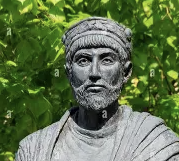
Who then is the Mother of the Gods? She is the Source of the Intelligible and Creative Powers, which direct the visible ones; she that gave birth to and copulated with the mighty Jupiter: she that exists as a great goddess next to the Great One, and in union with the Great Creator; she that is dispenser of all life; cause of all birth; most easily accomplishing all that is made; generating without passion; creating all that exists in concert with the Father; herself a virgin, without mother, sharing the throne of Jupiter, the mother in very truth of all the gods; for by receiving within herself the causes of all the intelligible deities that be above the world, she became the source to things the objects of intellect.

2 months 2 weeks ago
Take, eat; this is my body. And he took the cup, and gave thanks, and gave it to them, saying, Drink ye all of it; For this is my blood of the new testament, which is shed for many for the remission of sins. But I say unto you, I will not drink henceforth of this fruit of the vine, until that day when I drink it new with you in my Father's kingdom.
▼
Source
source
26:26-29 (KJV)

2 months 3 weeks ago
Justice was in all countries originally administered by the priesthood; nor indeed could laws in their first feeble state have either authority or sanction, so as to compel men to relinquish their natural independence, had they not appeared to come down to them enforced by beings of more than human power. The first openings of civility have been everywhere made by religion. Amongst the Romans, the custody and interpretation of the laws continued solely in the college of the pontiffs for above a century.
▼
Source
source
An Essay towards an Abridgment of English History (1757-c. 1763), quoted in The Works of the Right Honourable Edmund Burke, Vol. VI (1856), p. 196
2 months 3 weeks ago
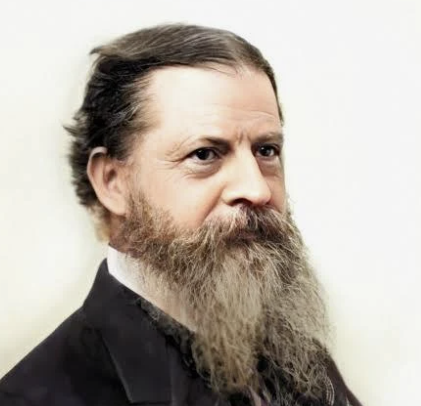
Fifth, in what measure this unification acts, seems to be regulated only by special rules; or, at least, we cannot in our present knowledge say how far it goes. But it may be said that, judging by appearances, the amount of arbitrariness in the phenomenon of human minds is neither altogether trifling nor very prominent.
1 week 1 day ago
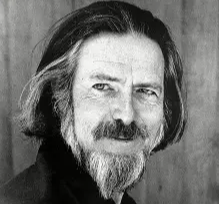
In an autobiography one must surely be allowed to boast, just for fun. I have, at a range of twenty feet, shot the tobacco out of a cigarette and left the paper intact. At a range of thirty feet, I have split a target, edge towards me, with an air pistol. I am also the world's champion in a game called "You Are the Target," in which anyone better than I would be dead. The game is to shoot an arrow straight up and see how near to you it can be allowed to land. You have to watch its fall very carefully, but I have had it hit the ground exactly between my feet. Of course, there were no witnesses. Had there been, they would forcefully have discouraged the experiment. I was using a fifty-five pound bow.
▼
Source
source
p. 18


3 weeks ago
But there has also been the rise of populist movements within existing liberal democracies, and particularly within the United States and Britain, which were... the leaders of the neoliberal revolution... in the 1980s...
▼
Source
source
20:01

3 months 2 weeks ago
Coition is a slight attack of apoplexy. For man gushes forth from man, and is separated by being torn apart with a kind of blow.
▼
Source
source
Freeman (1948), p. 150
4 months 4 weeks ago
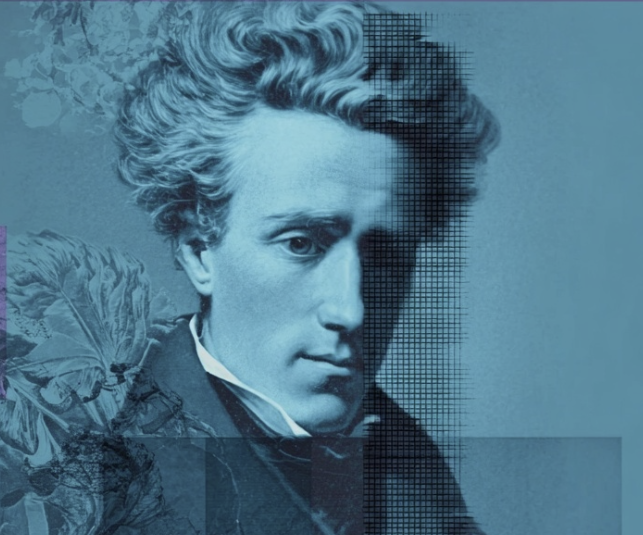
Aristotle's view that philosophy begins with wonder, not as in our day with doubt, is a positive point of departure for philosophy. Indeed, the world will no doubt learn that it does not do to begin with the negative, and the reason for success up to the present is that philosophers have never quite surrendered to the negative and thus have never earnestly done what they have said. They merely flirt with doubt.
2 months 3 weeks ago
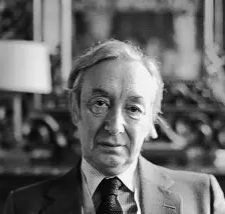
The criterion which we use to test the genuineness of apparent statements of fact is the criterion of verifiability. We say that a sentence is factually significant to any given person, if, and only if, he knows how to verify the proposition which it purports to express - that is, if he knows what observations would lead him, under certain conditions, to accept the proposition as being true, or reject it as being false.
▼
Source
source
p. 16.
3 months 4 weeks ago
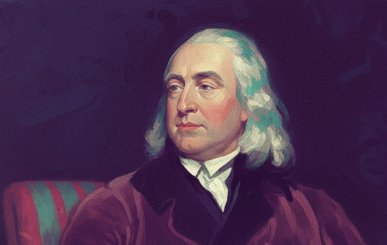
In principle and in practice, in a right track and in a wrong one, the rarest of all human qualities is consistency.
▼
Source
source
Ch. 1: Of the Principle of Utility
3 weeks 1 day ago
The more progress that has been made toward eradicating social injustices, the more intolerable the remaining injustices seem, and thus the moral imperative to mobilizing to correct them.

4 months ago
If a workman can conveniently spare those three halfpence, he buys a pot of porter. If he cannot, he contents himself with a pint, and, as a penny saved is a penny got, he thus gains a farthing by his temperance.
▼
Source
source
Chapter II, Part II, Article IV, p. 951.

3 months 3 weeks ago
Worry means always and invariably inhibition of associations and loss of effective power. Of course, the sovereign cure for worry is religious faith; and this, of course, you also know. The turbulent billows of the fretful surface leave the deep parts of the ocean undisturbed, and to him who has a hold on vaster and more permanent realities the hourly vicissitudes of his personal destiny seem relatively insignificant things. The really religious person is accordingly unshakable and full of equanimity, and calmly ready for any duty that the day may bring forth.
▼
Source
source
"The Gospel of Relaxation"

1 month 3 weeks ago
I have just discovered that without her father's consent this sweet, trusting, gullible six-year-old is being sent, for weekly instruction, to a Roman Catholic nun. What chance has she?
2 months 1 week ago
What is patriotism? Is it love of one's birthplace, the place of childhood's recollections and hopes, dreams and aspirations? Is it the place where, in childlike naïveté, we would watch the passing clouds, and wonder why we, too, could not float so swiftly? The place where we would count the milliard glittering stars, terror-stricken lest each one "an eye should be," piercing the very depths of our little souls?
1 month 1 week ago
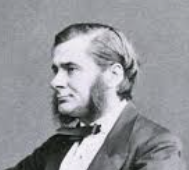
Our reverence for the nobility of manhood will not be lessened by the knowledge, that Man, is in substance and in structure, one with the brutes; for, he alone possesses the marvellous endowment of intelligible and rational speech, whereby, in the secular period of his existence, he has slowly accumulated and organized the experience which is almost wholly lost with the cessation of every individual life in other animals; so that now he stands raised upon it as on a mountain top, far above the level of his humble fellows, and transfigured from his grosser nature by reflecting, here and there, a ray from the infinite source of truth.
▼
Source
source
Ch.2, p. 132
1 week 4 days ago
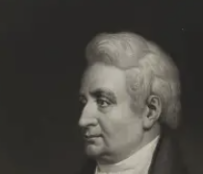
The object of preaching is, constantly to remind mankind of what mankind are constantly forgetting; not to supply the defects of human intelligence, but to fortify the feebleness of human resolutions.
▼
Source
source
"The Judge That Smites Contrary to the Law: A Sermon Preached...March 28, 1824", in The Works of the Rev. Sydney Smith (1860) p. 428
3 months 4 weeks ago
Secrecy is an instrument of conspiracy; it ought not, therefore, to be the system of a regular government.
▼
Source
source
On Publicity from The Works of Jeremy Bentham volume 2, part 2, 1839
1 month 4 weeks ago
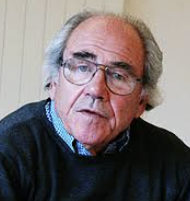
The world is not dialectical -- it is sworn to extremes, not to equilibrium, sworn to radical antagonism, not to reconciliation or synthesis. This is also the principle of evil.
▼
Source
source
Jean Baudrillard in: Eldon Taylor What Does That Mean?: Exploring Mind, Meaning, and Mysteries, Hay House, Inc, 15 January 2010, p. 171
1 week ago
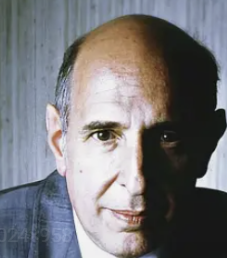
Adeimantus, in what amounts to an accusation of Socrates, asserts that the philosophers appear to be either useless or vicious. Plato, as I have suggested, teaches that ultimately this is an appearance that cannot be reversed, and this insures the philosophers' permanent marginality. They appear as useless because they are. They are neither artisans, nor statesmen, nor rhetoricians. They are idlers who contribute nothing to security or posterity. Their peculiar contemplative pleasures are not accessible to the majority of mankind, and they do not provide for the popular pleasures as do the poets.
▼
Source
source
Commerce and Culture, p. 285.

2 months 2 weeks ago
A terrible thing is intelligence. It tends to death as memory tends to stability. The living, the absolutely unstable, the absolutely individual, is strictly unintelligible. Logic tends to reduce everything to identities and genera, to each representation having no more than one self-same content in whatever place, time or relation it may occur to us. And there is nothing that remains for two successive moments of its existence. My idea of God is different each time that I conceive it. Identity, which is death, is the goal of the intellect. The mind seeks what is dead, for what is living escapes it; it seeks to congeal the flowing stream in blocks of ice; it seeks to arrest it. In order to analyze a body it is necessary to extenuate or destroy it. In order to understand anything it is necessary to kill it, to lay it out rigid in the mind.
2 months 3 weeks ago
Falsehood has a perennial spring.
3 months 3 weeks ago
No particular results then, so far, but only an attitude of orientation, is what the pragmatic method means. The attitude of looking away from first things, principles, 'categories,' supposed necessities; and of looking towards last things, fruits, consequences, facts.
▼
Source
source
Lecture II, What Pragmatism Means
3 months 3 weeks ago
Need and struggle are what excite and inspire us; our hour of triumph is what brings the void. Not the Jews of the captivity, but those of the days of Solomon's glory are those from whom the pessimistic utterances in our Bible come.
▼
Source
source
"Is Life Worth Living?"

2 months 6 days ago
He was always smoothing and polishing himself, and in the end he became blunt before he was sharp.
▼
Source
source
L 70
2 months 2 weeks ago
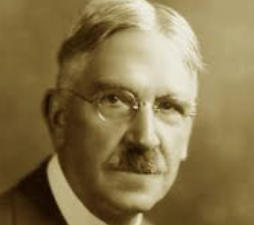
Artist and perceiver alike begin with what may be called a total seizure, an inclusive qualitative whole not yet articulated, not distinguished into members.
▼
Source
source
p. 199
6 days ago
My own belief is, if philosophers be entitled to any credit, that the Sun is the common parent of all men, to use a comprehensive term. It is a true proverb, "Man begets man, and so does the Sun:" but souls that luminary showers down upon earth, both out of himself, and out of the other gods: which souls show to what end they were propagated by the kind of life that they pursue. But well is it for that man who, from the third generation backwards, and a long succession of years, has been dedicated to the service of this god; yet neither is that person's condition to be despised who, feeling in his own nature that he is a servant of this deity, alone, or with few on his side, shall have devoted himself to his worship.
2 months 3 weeks ago
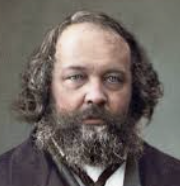
All religions are cruel, all founded on blood; for all rest principally on the idea of sacrifice - that is, on the perpetual immolation of humanity to the insatiable vengeance of divinity.

2 months 3 weeks ago
And what is it in us that is mellowed by civilization? All it does, I'd say, is to develop in man a capacity to feel a greater variety of sensations. And nothing, absolutely nothing else. And through this development, man will yet learn how to enjoy bloodshed. Why, it has already happened....Civilization has made man, if not always more bloodthirsty, at least more viciously, more horribly bloodthirsty.
▼
Source
source
Part 1, Chapter 7

2 months 1 week ago
Emptiness is not a denial of the proper but an affirmation of it.

4 months 2 weeks ago
Medicine considers the human body as to the means by which it is cured and by which it is driven away from health.

3 months 3 days ago
Heroic love is the property of those superior natures who are called insane not because they do not know, but because they over-know.
▼
Source
source
As quoted in The Tragic Sense of Life (1913), by Miguel de Unamuno, as translated by J. E. Crawford
1 month 3 weeks ago
To explain the origin of the DNA/protein machine by invoking a supernatural Designer is to explain precisely nothing, for it leaves unexplained the origin of the Designer.
▼
Source
source
Chapter 6 "Origins and Miracles" (p. 141)
5 days ago
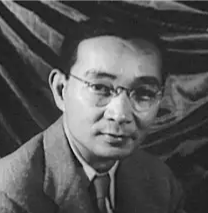
If life is all subjective, why not be subjectively happy rather than subjectively sad?
▼
Source
source
On the Wisdom of America (1950), p. 155

3 months 3 weeks ago
I now saw, that a science is either deductive or experimental, according as, in the province it deals with, the effects of causes when conjoined, are or are not the sums of the effects which the same causes produce when separate. It followed that politics must be a deductive science. It thus appeared, that both Macaulay and my father were wrong; the one in assimilating the method of philosophising in politics to the purely experimental method of chemistry; while the other, though right in adopting a deductive method, had made a wrong selection of one, having taken as the type of deduction, not the appropriate process, that of the deductive branches of natural philosophy, but the inappropriate one of pure geometry, which, not being a science of causation at all, does not require or admit of any summing-up of effects.
▼
Source
source
(pp. 160-161)
1 month 3 weeks ago
Each generation is a filter, a sieve; good genes tend to fall through the sieve into the next generation; bad genes tend to end up in bodies that die young or without reproducing.

3 months 4 weeks ago
Too little liberty brings stagnation, and too much brings chaos.
▼
Source
source
Authority and the Individual (1949), p. 37
3 weeks 2 days ago
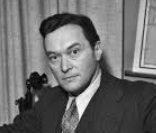
Ideals are imaginative understanding of that which is desirable in that which is possible.
▼
Source
source
Ch. XII: "The Business of the Great Society", §9, p. 259
2 months 2 weeks ago
The source of every Crime, is some defect of the Understanding; or some error in Reasoning, or some sudden force of the Passions. Defect in the Understanding, is Ignorance; in Reasoning, Erroneous Opinion.
▼
Source
source
The Second Part, Chapter 27, p. 152
3 months 3 weeks ago
As the brain-changes are continuous, so do all these consciousnesses melt into each other like dissolving views. Properly they are but one protracted consciousness, one unbroken stream.
▼
Source
source
Ch. 9
2 months ago
I wish we could derive the rest of the phenomena of nature by the same kind of reasoning from mechanical principles; for I am induced by many reasons to suspect that they may all depend upon certain forces by which the particles of bodies, by some causes hitherto unknown, are either mutually impelled towards each other, and cohere in regular figures, or are repelled and recede from each other; which forces being unknown, philosophers have hitherto attempted the search of nature in vain; but I hope the principles here laid down will afford some light either to that or some truer method of philosophy.
▼
Source
source
Preface

4 months 1 day ago
Beauty is no quality in things themselves: It exists merely in the mind which contemplates them; and each mind perceives a different beauty. One person may even perceive deformity, where another is sensible of beauty; and every individual ought to acquiesce in his own sentiment, without pretending to regulate those of others.
▼
Source
source
Part I, Essay 23: Of The Standard of Taste
1 month 4 weeks ago
Nothing is wholly obvious without becoming enigmatic. Reality itself is too obvious to be true.

4 months 2 weeks ago
Better a diamond with a flaw than a pebble without.

3 months 3 weeks ago
You must always be puzzled by mental illness. The thing I would dread most, if I became mentally ill, would be your adopting a common sense attitude; that you could take it for granted that I was deluded.
▼
Source
source
Conversation of 1947 or 1948
2 months 1 week ago
Psychological disorders are symptoms of a blocked story... The patient is cured the moment she narrates herself free.

3 months 1 day ago
Men sometimes submit to shame, to tyranny, to conquest, but they never long suffer anarchy. There is no people so barbarous that they escape this general law of humanity.
▼
Source
source
Second letter on Algeria (1837), Travels in Algeria p. 38

4 months 3 weeks ago
Beholding beauty with the eye of the mind, he will be enabled to bring forth, not images of beauty, but realities (for he has hold not of an image but of a reality), and bringing forth and nourishing true virtue to become the friend of God and be immortal, if mortal man may.
3 months 1 week ago
Things essentially incorporeal, because they are more excellent than all body and place, are every where, not with interval, but impartibly. Things essentially incorporeal are not locally present with bodies but are present with them when they please; by verging towards them so far as they are naturally adapted so to verge. They are not, however, present with them locally, but through habitude, proximity, and alliance. Things essentially incorporeal, are not present with bodies, by hypostasis and essence; for they are not mingled with bodies. But they impart a certain power which is proximate to bodies, through verging towards them. For tendency constitutes a certain secondary power proximate to bodies.
CivilSimian.com created by AxiomaticPanic, CivilSimian, Kalokagathia