


2 months 3 weeks ago
I find in myself as much evil as in anyone, but detesting action - mother of all vices - I am the cause of no one's suffering.

3 months 3 weeks ago
I must plunge into the water of doubt again and again.
▼
Source
source
Ch. 7 : Remarks on Frazer's Golden Bough, p. 119

3 months 3 weeks ago
Passing from quantity to quality of population, we come to the question of eugenics. We may perhaps assume that, if people grow less superstitious, government will acquire the right to sterilize those who are not considered desirable as parents. This power will be used, at first, to diminish imbecility, a most desirable object. But probably, in time, opposition to the government will be taken to prove imbecility, so that rebels of all kinds will be sterilized. Epileptics, consumptives, dipsomaniacs and so on will gradually be included; in the end, there will be a tendency to include all who fail to pass the usual school examinations. The result will be to increase the average intelligence; in the long run, it may be greatly increased. But probably the effect upon really exceptional intelligence will be bad. Mr. Micawber, who was Dickens's father, would hardly have been regarded as a desirable parent. How many imbeciles ought to outweigh one Dickens I do not profess to know.
1 month 4 weeks ago
To dissimulate is to pretend not to have what one has. To simulate is to feign to have what one doesn't have. One implies a presence, the other an absence. But it is more complicated than that because simulating is not pretending: "Whoever fakes an illness can simply stay in bed and make everyone believe he is ill. Whoever simulates an illness produces in himself some of the symptoms" (Littré). Therefore, pretending, or dissimulating, leaves the principle of reality intact: the difference is always clear, it is simply masked, whereas simulation threatens the difference between the "true" and the "false," the "real" and the "imaginary."
▼
Source
source
"The Precession of Simulacra," p. 3


1 month 3 weeks ago
Seize the moments of happiness, love and be loved! That is the only reality in the world, all else is folly. It is the one thing we are interested in here.
▼
Source
source
Book IV, Ch. 11

4 months 2 weeks ago
Men all say, "We are wise"; but being driven forward and taken in a net, a trap, or a pitfall, they know not how to escape. Men all say, "We are wise"; but happening to choose the course of the Mean, they are not able to keep it for a round month.
2 months 3 weeks ago
Ambition is a drug that makes its addicts potential madmen.
3 months 3 weeks ago
There is one very serious defect to my mind in Christ's moral character, and that is that He believed in hell. I do not myself feel that any person who is really profoundly humane can believe in everlasting punishment.
▼
Source
source
"The Moral Problem"

2 months 3 weeks ago
It is the love of the people; it is their attachment to their government, from the sense of the deep stake they have in such a glorious institution, which gives you both your army and your navy, and infuses into both that liberal obedience, without which your army would be a base rabble, and your navy nothing but rotten timber.

4 months 4 days ago
We only labor to stuff the memory, and leave the conscience and the understanding unfurnished and void.
▼
Source
source
Book I, Ch. 25

3 months 3 weeks ago
To whomever gives a kiss or a blowRender a kiss or blow, but to whomever gives when you are unable to return, offer all the hatred in your hear, for you were slaves and he enslaves you.
▼
Source
source
Acts 8 & 9

3 months 4 weeks ago
The cheapest sort of pride is national pride; for if a man is proud of his own nation, it argues that he has no qualities of his own of which he can be proud; otherwise he would not have recourse to those which he shares with so many millions of his fellowmen. The man who is endowed with important personal qualities will be only too ready to see clearly in what respects his own nation falls short, since their failings will be constantly before his eyes. But every miserable fool who has nothing at all of which he can be proud adopts, as a last resource, pride in the nation to which he belongs; he is ready and glad to defend all its faults and follies tooth and nail, thus reimbursing himself for his own inferiority.
▼
Source
source
Vol. 1, Ch. 3, Section 2: Pride
2 months 3 weeks ago
It cannot be denied that the early Indians possessed knowledge of God. All their writings are replete with sentiments and expressions, noble, clear, severely grand, as deeply conceived in any human language in which men have spoken of their God.
▼
Source
source
quoted in Knapp, Stephen Proof of Vedic Culture s Global Existence. Published byThe World Relief Network Detroit 2000. p. vii as quoted in Londhe, S. (2008)

2 months 2 weeks ago
Kierkegaard's individualistic interpretation of 'the negation of philosophy' inevitably developed a fierce opposition to Western rationalism. .... According to Kierkegaard, the individual is not the knowing but only the 'ethically existing subjectivity.' The sole reality that matters to him is his own 'ethical existence'.
▼
Source
source
P. 263-264
3 months 2 weeks ago
He is not poor who has enough of things to use. If it is well with your belly, chest and feet, the wealth of kings can give you nothing more.
▼
Source
source
Book I, epistle xii, line 4
3 months 2 weeks ago
A prating barber asked Archelaus how he would be trimmed. He answered, "In silence."
▼
Source
source
33 Archelaus
2 months 2 weeks ago
The world is so possessed by the power of what is and the efforts of adjustment to it, that the adolescent's rebellion, which once fought the father because his practices contradicted his own ideology, can no longer crop up. ... Psychologically, the father is ... replaced by the world of things.
▼
Source
source
p. 41-42.
2 months 1 week ago
We cannot stem linguistic change, but we can drag our feet. If each of us were to defy Alexander Pope and be the last to lay the old aside, it might not be a better world, but it would be a lovelier language.
▼
Source
source
Quiddities: An Intermittently Philosophical Dictionary (1987), p. 231


1 week 4 days ago
Fortune has taken away, but Fortune has given.

1 month 3 weeks ago
Whatever you can lose, you should reckon of no account.
▼
Source
source
Maxim 191
2 months 3 weeks ago
If one does not understand a person, one tends to regard him as a fool.
▼
Source
source
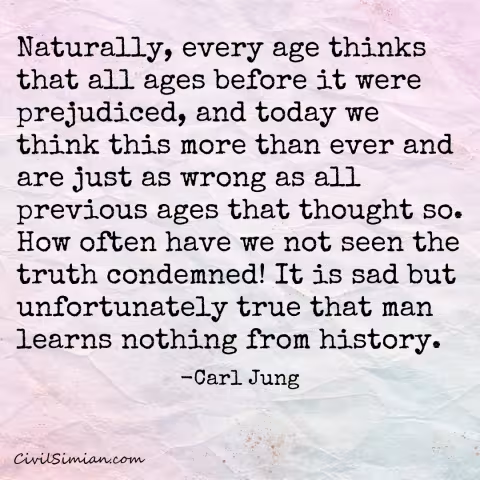
Mysterium Coniunctionis, from The Collected Works of C. G. Jung

3 months 3 days ago
If he is not Nature herself, he is certainly the nature of Nature, and is the soul of the Soul of the world, if he is not the soul herself.
▼
Source
source
As translated by Arthur Imerti

4 months 3 weeks ago
Truth, like light, blinds. Falsehood, on the contrary, is a beautiful twilight that enhances every object.
5 days ago
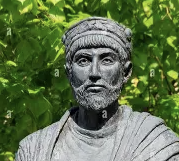
I think he who knows himself will know accurately, not the opinion of others about him, but what he is in reality... he ought to discover within himself what is right for him to do and not learn it from without...
▼
Source
source
Oration to the Cynic Heracleios
4 months 3 weeks ago
Autumn is a second Spring when every leaf is a flower.
6 days ago
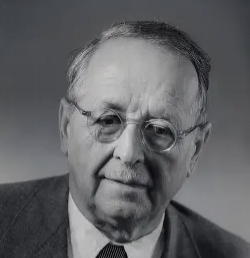
Recognition of the subjectivity of the qualities of sense is found in Galilei (and also in Descartes and Hobbes) in a form closely related to the principle underlying the constructive mathematical method of our modern physics which repudiates" qualities".
▼
Source
source
Introduction
2 months 3 weeks ago
Nothing is a better proof of how far humanity has regressed than the impossibility of finding a single nation, a single tribe, among whom birth still provokes mourning and lamentations.

1 month 3 weeks ago
In this book we turn to the study of new patterns of energy arising from man's physical and psychic artifacts and social organizations. The only method for perceiving process and pattern is by inventory of effects obtained by the comparison and contrast of developing situations.
▼
Source
source
(p. 8)

3 months 3 weeks ago
You can choose whatever name you like for the two types of government. I personally call the type of government which can be removed without violence "democracy", and the other "tyranny".
▼
Source
source
As quoted in Freedom: A New Analysis (1954) by Maurice William Cranston, p. 112

4 months 3 weeks ago
A genius and an Apostle are qualitatively different, they are definitions which each belong in their own spheres: the sphere of immanence, and the sphere of transcendence.
3 months 2 weeks ago
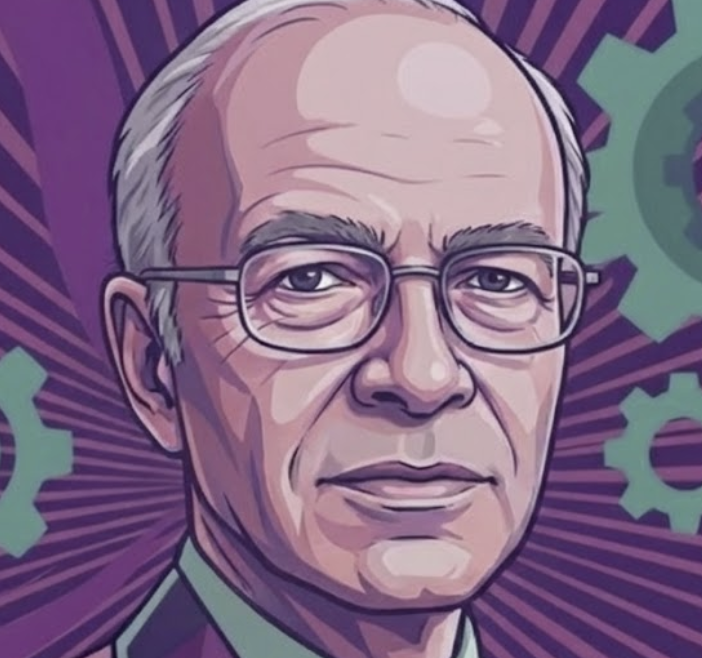
I never believed in a God. [...] There may have been times when I wondered if there might be a God, but it always seemed to me wildly implausible that a God worth worshipping could allow the Holocaust to occur.
▼
Source
source
From an interview, as cited by Dan Goldberg "Peter Singer: is he really the most dangerous man in the world?", The Jewish Chronicle
2 months 3 weeks ago
The more remote and unreal the personal mother is, the more deeply will the son's yearning for her clutch at his soul, awakening that primordial and eternal image of the mother for whose sake everything that embraces, protects, nourishes, and helps assumes maternal form, from the Alma Mater of the university to the personification of cities, countries, sciences and ideals.
▼
Source
source
"Paracelsus as a Spiritual Phenomenon" (1942) In CW 13: Alchemical Studies P.47
2 months 2 weeks ago
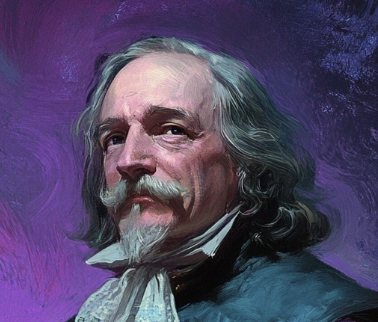
And hereby it comes to passe, that Intemperance, is naturally punished with Diseases; Rashness, with Mischance; Injustice; with Violence of Enemies; Pride, with Ruine; Cowardice, with Oppression; Negligent government of Princes, with Rebellion; and Rebellion with Slaughter.
▼
Source
source
The Second Part, Chapter 31, p. 194
3 months 3 weeks ago
There is only one way to science-or to philosophy... to meet a problem, to see its beauty and fall in love with it; to get married to it, and to live with it happily, till death do ye part-unless you should meet another... more fascinating problem, or... obtain a solution. But even if you do... you may... discover, to your delight, the... a whole family of enchanting... perhaps difficult problem children for whose welfare you may work, with a purpose, to the end of your days.
1 month 2 weeks ago
I would not give up the keys to the granary, because I know that, by doing so, I should turn scarcity into a famine.
▼
Source
source
Sullivan, p. 266

2 months 1 week ago
The order of nature cannot be justified by the mere observation of nature. For there is nothing in the present fact which inherently refers either to the past or to the future.... It illustrates the anti-rationalism of the scientific public that, when Hume did appear, it was only the religious implications of his philosophy which attracted attention. This was because the clergy were in principle rationalists, whereas the men of science were content with a simple faith in the order of nature.
▼
Source
source
Ch. 3: "The Century of Genius", p. 73
4 months 2 weeks ago
Earnest in practicing the ordinary virtues, and careful in speaking about them, if, in his practice, he has anything defective, the superior man dares not but exert himself; and if, in his words, he has any excess, he dares not allow himself such license. Thus his words have respect to his actions, and his actions have respect to his words; is it not just an entire sincerity which marks the superior man?

4 months 2 weeks ago
The wealth required by nature is limited and is easy to procure; but the wealth required by vain ideals extends to infinity.
1 month 3 weeks ago
Practice is the best of all instructors.
▼
Source
source
Maxim 439
2 months 3 weeks ago
Long before physics or psychology were born, pain disintegrated matter, and affliction the soul.

2 months 1 week ago
Our longing to save consciousness, to give personal and human finality to the Universe and to existence, is such that even in the midst of a supreme, an agonizing and lacerating sacrifice, we should still hear the voice that assured us that if our consciousness disappears, it is that the infinite and eternal Consciousness may be enriched thereby, that our souls may serve as a nutriment to the Universal soul.
2 months 3 weeks ago
The will is the living principle of the rational soul, is indeed itself reason, when purely and simply apprehended. That reason is itself active, means, that the pure will, as such, rules and is effectual. The infinite reason alone lies immediately and entirely in the purely spiritual order. The finite being lives necessarily at the same time in a sensuous order; that is to say, in one which presents to him other objects than those of pure reason; a material object, to be advanced by instruments and powers, standing indeed under the immediate command of the will, but whose efficacy is conditional also on its own natural laws.
▼
Source
source
Jane Sinnett, trans 1846 p.104
1 month 2 weeks ago
To teach virtue we must educate the emotions, and this means learning "what to feel" in the various circumstances that prompt them.
▼
Source
source
"Knowledge and Feeling" (p. 37)
2 months 3 weeks ago
What am I, other than a chance in the infinite probabilities of not having been!

3 months 1 week ago
Attempt nothing above thy strength!
1 week 5 days ago
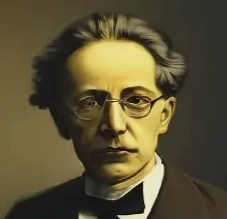
Do I write out of love to men? No, I write because I want to procure for my thoughts an existence in the world; and, even if I foresaw that these thoughts would deprive you of your rest and your peace, even if I saw the bloodiest wars and the fall of many generations springing up from this seed of thought - I would nevertheless scatter it. Do with it what you will and can, that is your affair and does not trouble me.
▼
Source
source
Cambridge 1995, p. 262, 263
2 months 3 weeks ago
Those who give and those who receive arbitrary power are alike criminal; and there is no man but is bound to resist it to the best of his power, wherever it shall show its face to the world. It is a crime to bear it, when it can be rationally shaken off. Nothing but absolute impotence can justify men in not resisting it to the utmost of their ability.
▼
Source
source
Speech in opening the impeachment of Warren Hastings (16 February 1788), quoted in The Works of the Right Honourable Edmund Burke, Volume the Ninth (1899), p. 458
CivilSimian.com created by AxiomaticPanic, CivilSimian, Kalokagathia