

3 months 3 weeks ago
In peace, as a wise man, he should make suitable preparation for war.
▼
Source
source
Book II, satire ii, line 111

2 months 4 weeks ago
When you make the two into one, you will become children of Adam, and when you say, 'Mountain, move from here!' it will move.

4 months 3 weeks ago
If names be not correct, language is not in accordance with the truth of things. Paraphrased as a chinese proverb stating "The beginning of wisdom is to call things by their proper name."

4 months 1 week ago
In such a chain, too, or succession of objects, each part is caused by that which preceded it, and causes that which succeeds it. Where then is the difficulty? But the WHOLE, you say, wants a cause. I answer, that the uniting of these parts into a whole, like the uniting of several distinct countries into one kingdom, or several distinct members into one body, is performed merely by an arbitrary act of the mind, and has no influence on the nature of things. Did I show you the particular causes of each individual in a collection of twenty particles of matter, I should think it very unreasonable, should you afterwards ask me, what was the cause of the whole twenty. This is sufficiently explained in explaining the cause of the parts.
▼
Source
source
Cleanthes to Demea, Part IX
3 months 3 days ago
Fate and temperament are two words for one and the same concept.
▼
Source
source
As quoted in Demian (1965) by Hermann Hesse, trans. Michael Roloff and Michael Lebeck
2 weeks 3 days ago
Sex is no longer a serious taboo. Teenagers sometimes know more about it than adults.
▼
Source
source
Inside Information p. 4

2 months 2 weeks ago
It is clearly absurd to say that if you go on adding atoms together until they have fused into a complex molecule, that molecule will become capable of self-reproduction. It is like saying that a skyscraper is more capable of reproduction than a bungalow. And suppose life did come into being through some accidental interaction of molecules, sun and cosmic rays; why should it not be content to rest passively? Why should it have been possessed of a desire to persist and evolve?
▼
Source
source
p. 259

2 months 3 weeks ago
Whenever one tries to suppress doubt, there is tyranny.
▼
Source
source
Lectures in philosophy [Leçons de philosophie] (1959) as translated by Hugh Price p. 103

6 days ago
Instead of funding issues of paper on the hypothecation of specific redeeming taxes (the only method of anticipating, in a time of war, the resources of times of peace, tested by the experience of nations), we are trusting to tricks of jugglers on the cards, to the illusions of banking schemes for the resources of the war, and for the cure of colic to inflations of more wind.
▼
Source
source
Letter to José Correia da Serra (1814) ME 14:224
2 months 3 weeks ago
The world is so possessed by the power of what is and the efforts of adjustment to it, that the adolescent's rebellion, which once fought the father because his practices contradicted his own ideology, can no longer crop up. ... Psychologically, the father is ... replaced by the world of things.
▼
Source
source
p. 41-42.

2 months 5 days ago
To be good and lead a good life means to give to others more than one takes from them.
▼
Source
source
Ch. VII

2 months 4 days ago
The reader is the content of any poem or of the language he employs, and in order to use any of these forms, he must put them on.
▼
Source
source
"Roles, Masks, and Performances", New Literary History, Vol. 2, No. 3, Performances in Drama, the Arts, and Society (Spring, 1971), p. 520
2 weeks 3 days ago
The transformation of human consciousness through meditation is frustrated, as long as we think of it in terms as something that I, my self can bring about. because it leads to endless games of spiritual oneupmanship, and Guru competitions.

3 months 2 days ago
Whether or not there exists a solution to problems troubles only a minority; that the emotions have no outcome, lead to nothing, vanish into themselves - that is the great unconscious drama, the affective insolubility everyone suffers without even thinking about it.


2 months 5 days ago
When a person is haughty, he distances himself from other people and thereby deprives himself of one of life's biggest pleasures-open, joyful communication with everyone.
▼
Source
source
p. 108

1 month 1 day ago
But there has also been the rise of populist movements within existing liberal democracies, and particularly within the United States and Britain, which were... the leaders of the neoliberal revolution... in the 1980s...
▼
Source
source
20:01

4 months 5 days ago
To believe is to know you believe, and to know you believe is not to believe.

5 days ago
Our Constitution, by its separation of powers and its system of checks and balances, acts as a restraint upon efficiency by denying exclusive power to any branch of government. The logic of governmental efficiency, unchecked, runs straight on, not only to dictatorship, but also to torture, assassination, and other abominations.

5 months 1 week ago
Our destiny exercises its influence over us even when, as yet, we have not learned its nature: it is our future that lays down the law of our today.

5 months 3 days ago
They despised everything but virtue, caring little for their present state of life, and thinking lightly of the possession of gold and other property, which seemed only a burden to them; neither were they intoxicated by luxury; nor did wealth deprive them of their self-control; but they were sober, and saw clearly that all these goods are increased by virtue and friendship with one another, whereas by too great regard and respect for them, they are lost and friendship with them.

4 months 1 day ago
A teacher who can show good, or indeed astounding results while he is teaching, is still not on that account a good teacher, for it may be that, while his pupils are under his immediate influence, he raises them to a level which is not natural to them, without developing their own capacities for work at this level, so that they immediately decline again once the teacher leaves the schoolroom.
▼
Source
source
p. 43e
1 month ago
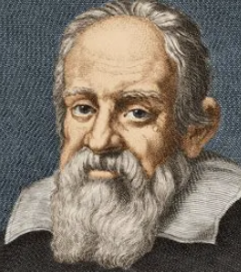
I was obliged to retract, like a good Catholic, this opinion of mine; and as a punishment my dialogue was prohibited; and after five months being dismissed from Rome (at the time that the city of Florence was infected with plague), the habitation which with generous pity was assigned to me, was that of the dearest friend I had in Siena, Monsignor the Archbishop Piccolomini, whose most agreeable conversation I enjoyed with such quite and satisfaction of mind, that having there resumed my studies, I discovered and demonstrated a great number on the mechanical conclusions on the resistance of solids ... after about five months, the pestilence having ceased, the confinement of that house was changed by His Holiness for the freedom of the country so agreeable to me, whence I returned to the villa of Bellosguardo, and afterwards to Arcetri, where I still breathe salubrious air near my dear native-country Florence.
▼
Source
source
Stay sane. p. 251-253

3 weeks ago
The mind must be indulged, and leisure must be given from time to time, which is the place of food and strength.
2 months 4 days ago
I neither approve nor disapprove. I merely try to understand. Sexual freedom is as natural to newly tribalized youth as drugs.
2 months 4 days ago
Paradox is the technique for seizing the conflicting aspects of any problem. Paradox coalesces or telescopes various facets of a complex process in a single instant.
▼
Source
source
(p. 106)

4 months 6 days ago
There is something in human history like retribution; and it is a rule of historical retribution that its instrument be forged not by the offended, but by the offender himself. The first blow dealt to the French monarchy proceeded from the nobility, not from the peasants. The Indian revolt does not commence with the ryots, tortured, dishonoured and stripped naked by the British, but with the sepoys, clad, fed and petted, fatted and pampered by them.
▼
Source
source
In an article written for the New York Daily Tribune, September 16, 1857
2 months 4 weeks ago
But yet they that have no Science, are in better, and nobler condition with their naturall Prudence; than men, that by their mis-reasoning, or by trusting them that reason wrong, fall upon false and absurd generall rules.
▼
Source
source
The First Part, Chapter 5, p. 21


4 months 1 week ago
Out of the crooked timber of humanity, no straight thing was ever made.
▼
Source
source
Idea for a General History with a Cosmopolitan Purpose (1784), Proposition 6.
2 weeks 6 days ago
Have the courage to be ignorant of a great number of things, in order to avoid the calamity of being ignorant of everything.
▼
Source
source
Lecture IX : On the Conduct of the Understanding
2 months 3 weeks ago
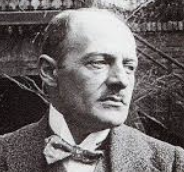
In ressentiment morality, love for the "small," the "poor," the "weak," and the "oppressed" is really disguised hatred, repressed envy, an impulse to detract, etc., directed against the opposite phenomena: "wealth," "strength," "power," "largesse." When hatred does not dare to come out into the open, it can be easily expressed in the form of ostensible love-love for something which has features that are the opposite of those of the hated object. This can happen in such a way that the hatred remains secret. When we hear that falsely pious, unctuous tone (it is the tone of a certain "socially-minded" type of priest), sermonizing that love for the "small" is our first duty, love for the "humble" inspirit, since God gives "grace" to them, then it is often only hatred posing as Christian love.
▼
Source
source
L. Coser, trans. (1961), pp. 96-97
3 days ago
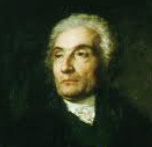
War is divine in itself, since it is a law of the world. War is divine through its consequences of a supernatural nature which are as much general as particular, consequences little known because little studied, but which are nevertheless incontestable. War is divine in the mysterious glory that surrounds it and in the no less inexplicable attraction that draws us to it. War is divine by the manner in which it breaks out.
▼
Source
source
Seventh Dialogue, p. 218

2 months 2 weeks ago
But many of us seek community solely to escape the fear of being alone. Knowing how to be solitary is central to the art of loving. When we can be alone, we can be with others without using them as a means of escape.
▼
Source
source
All About Love: New Visions, 1999
4 months 1 week ago
There is an inconvenience which attends all abstruse reasoning. That it may silence, without convincing an antagonist, and requires the same intense study to make us sensible of its force, that was at first requisite for its invention. When we leave our closet, and engage in the common affairs of life, its conclusions seem to vanish, like the phantoms of the night on the appearance of the morning; and 'tis difficult for us to retain even that conviction, which we had attain'd with difficulty.
▼
Source
source
Part 1, Section 1

4 months 2 weeks ago
It is manifest that there is no danger at all in the proportion or quantity of knowledge, how large soever, lest it should make it swell or out-compass itself; no, but it is merely the quality of knowledge, which, be it in quantity more or less, if it be taken without the true corrective thereof, hath in it some nature of venom or malignity, and some effects of that venom, which is ventosity or swelling. This corrective spice, the mixture whereof maketh knowledge so sovereign, is charity, which the Apostle immediately addeth to the former clause; for so he saith, "Knowledge bloweth up, but charity buildeth up".
▼
Source
source
Book I
1 month 4 weeks ago
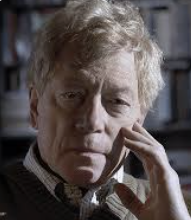
Many Britons...feel strongly about something which was once called "the alien wedge". And surely it cannot be doubted, even by those who profess allegiance to the "multicultural society", that our society, unlike America, is not of that kind, and therefore that immigration cannot be an object of merely passive contemplation on the part of the present citizenship. There is perhaps no greater sign of the strength of liberalism (a strength which issues, not from popular consensus, but from the political power of the liberal elite) than that it has made it impossible for any but the circumlocutory to argue that the English, the Scots and the Welsh have a prior claim to the benefits of the civilization that their ancestors created, which entitles them to reserve its benefits for themselves.
▼
Source
source
The Meaning of Conservatism: Third Edition (2001), p. 62

4 months 5 days ago
Look for yourself, and you will find in the long run only hatred, loneliness, despair, rage, ruin, and decay. But look for Christ and you will find Him, and with Him everything else thrown in.
▼
Source
source
Book IV, Chapter 10, "The New Men"
3 months 2 days ago
Only optimists commit suicide, the optimists who can no longer be . . . optimists. The others, having no reason to live, why should they have any to die?

3 months 6 days ago
If the State, modeled after the universe, is split into two spheres or classes of beings - wherein the free represent the ideas and the unfree the concrete and sensate things - then the ultimate and uppermost order remains unrealized by both. By using sensate things as tools or organs, the ideas obtain a direct relationship to the apparitions and enter into them as souls. God, however, as identity of the highest order, remains above all reality and eternally has merely an indirect relationship. If then in the higher moral order the State represents a second nature, then the divine can never have anything other than an indirect relationship to it, never can it bear any real relationship to it, and religion, if it seeks to preserve itself in unscathed pure ideality, can therefore never exist - even in the most perfect State - other than esoterically in the form of mystery cults.
▼
Source
source
P. 51
2 months 3 weeks ago
To its very core, the mind of ressentiment man is filled with envy, the impulse to detract, malice, and secret vindictiveness. These affects have become fixed attitudes, detached from all determinate objects. Independently of his will, this man's attention will be instinctively drawn by all events which can set these affects in motion. The ressentiment attitude even plays a role in the formation of perceptions, expectations, and memories. It automatically selects those aspects of experience which can justify the factual application of this pattern of feeling.
▼
Source
source
L. Coser, trans. (1973), p. 74

4 months 1 week ago
The harm that is done by a religion is of two sorts, the one depending on the kind of belief which it is thought ought to be given to it, and the other upon the particular tenets believed. As regards the kind of belief: it is thought virtuous to have faith-that is to say, to have a conviction which cannot be shaken by contrary evidence. Or, if contrary evidence might induce doubt, it is held that contrary evidence must be suppressed.
▼
Source
source
preface xxiii

4 months 1 week ago
The composer reveals the innermost nature of the world, and expresses the profoundest wisdom in a language that his reasoning faculty does not understand, just as a magnetic somnambulist gives information about things of which she has no conception when she is awake. Therefore in the composer, more than in any other artist, the man is entirely separate and distinct from the artist.
▼
Source
source
Vol. I, Ch. III, The World As Representation
4 months 6 days ago
The economic concept of value does not occur in antiquity.
▼
Source
source
Notebook VII, The Chapter on Capital, p. 696.
2 months 4 days ago
Money is a corporate image depending on society for its institutional status.
▼
Source
source
(p. 133)
4 months 1 week ago
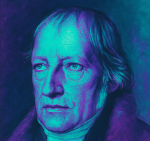
Very similar were the views expressed by Raymundus of Sabunde or Sabeyde, a Spaniard of the fifteenth century, and professor at Toulouse about the year 1437. In his theologia natural is, which he handled in a speculative spirit, he dealt with the Nature of things, and with the revelation of God in Nature and in the history of the God-man. He sought to prove to unbelievers the Being, the trinity, the incarnation, the life, and the revelation of God in Nature, and in the history of the God-man, basing his arguments on Reason. From the contemplation of Nature he rises to God; and in the same way he reaches morality from; observation of man's inner nature. This purer and simpler style must be set off against the other, if we are to do justice to the Scholastic theologians in their turn.
▼
Source
source
Georg Wilhelm Friedrich Hegel, Lectures on the Philosophy of History Vol 3 1837 translated by ES Haldane and Francis H. Simson) first translated 1896 P. 91-92
6 days ago
It is said that our paper is as good as silver, because we may have silver for it at the bank where it issues. This is not true. One, two, or three persons might have it; but a general application would soon exhaust their vaults, and leave a ruinous proportion of their paper in its intrinsic worthless form.
▼
Source
source
ME 13:426

3 months 2 days ago
One of the most difficult tasks men can perform, however much others may despise it, is the invention of good games and it cannot be done by men out of touch with their instinctive selves.
▼
Source
source
Jung and the Story of Our Time, Laurens van der Post

4 months 1 week ago
Mercantile jealousy is excited, and both inflames, and is itself inflamed, by the violence of national animosity.
▼
Source
source
Chapter III, Part II, p. 534.
CivilSimian.com created by AxiomaticPanic, CivilSimian, Kalokagathia