

2 months 1 week ago
The strides of humanity are slow, they can only be counted in centuries.
▼
Source
source
Act II.

3 months 1 week ago
Classical political economy nearly touches the true relation of things, without, however,consciously formulating it. This it cannot so long as it sticks in its bourgeois skin.
▼
Source
source
Vol. I, Ch. 19, pg. 594.
3 months 1 week ago
Every emancipation is a restoration of the human world and of human relationships to a man himself.

2 months 3 weeks ago
It is not proper either to have a blunt sword or to use freedom of speech ineffectually. Neither is the sun to be taken from the world, nor freedom of speech from erudition.
▼
Source
source
As quoted in the translation of Thomas Taylor

3 months 1 week ago
Words are good servants but bad masters.
▼
Source
source
As quoted by Laura Huxley, in conversation with Alan Watts about her memoir This Timeless Moment (1968), in Pacifica Archives #BB2037

4 months 1 week ago
Spontaneous love can reach the point of despair, shows that it is in despair, that even when it is happy it loves with the power of despair.

3 months 6 days ago
To obey a rule, to make a report, to give an order, to play a game of chess, are customs.
▼
Source
source
(uses, institutions) § 199
3 months 1 week ago
If you are tired of the real landscape, look at it in a mirror. By putting bread, gold, horse, apple, or the very roads into a myth, we do not retreat from reality: we rediscover it. As long as the story lingers in our mind, the real things are more themselves. This book applies the treatment not only to bread or apple but to good and evil, to our endless perils, our anguish, and our joys. By dipping them in myth we see them more clearly.
1 month 3 weeks ago
Man's main task in life is to give birth to himself, to become what he potentially is. The most important product of his effort is his own personality.
▼
Source
source
Ch. 4 "Problems of Humanistic Ethics"
2 months 1 week ago
To execute laws is a royal office; to execute orders is not to be a king. However, a political executive magistracy, though merely such, is a great trust.
▼
Source
source
Volume iii, p. 497
1 month 3 weeks ago
the impressionable mind of the child realizes early enough that the lives of their parents are in contradiction to the ideas they represent; that, like the good Christian who fervently prays on Sunday, yet continues to break the Lord's commands the rest of the week, the radical parent arraigns God, priesthood, church, government, domestic authority, yet continues to adjust himself to the condition he abhors.

3 months 5 days ago
All affected can accept the consequences and the side effects that [the norm's] general observance can be anticipated to have for the satisfaction of everyone's interests, and the consequences are preferred to those of known alternative possibilities for regulation.
▼
Source
source
p. 65

3 months 1 week ago
Consider MacArthur and his Republican supporters. So limited is his intelligence and his imagination that he is never puzzled for one moment. All we have to do is to go back to the days of the Opium War. After we have killed a sufficient number of millions of Chinese, the survivors among them will perceive our moral superiority and hail MacArthur as a saviour. But let us not be one-sided. Stalin, I should say, is equally simple- minded and equally out of date. He, too, believes that if his armies could occupy Britain and reduce us all to the economic level of Soviet peasants and the political level of convicts, we should hail him as a great deliverer and bless the day when we were freed from the shackles of democracy. One of the painful things about our time is that those who feel certainty are stupid, and those with any imagination and understanding are filled with doubt and indecision.
▼
Source
source
Part I: Man and Nature, Ch. 1: Current Perplexities, pp. 4-5

3 months 2 weeks ago
Every tax, however, is to the person who pays it a badge, not of slavery but of liberty. It denotes that he is a subject to government, indeed, but that, as he has some property, he cannot himself be the property of a master.
▼
Source
source
Chapter II, Part II, p. 927.
2 months 3 days ago
I hope I may claim in the present work to have made it probable that the laws of arithmetic are analytic judgments and consequently a priori. Arithmetic thus becomes simply a development of logic, and every proposition of arithmetic a law of logic, albeit a derivative one. To apply arithmetic in the physical sciences is to bring logic to bear on observed facts; calculation becomes deduction.
▼
Source
source
Gottlob Frege (1950 ). The Foundations of Arithmetic. p. 99.
2 months 1 week ago
The world is chaos. Nothingness is the yet-to-be-born god of the world.
▼
Source
source
Act IV
3 weeks 5 days ago
If a well were sunk at our feet in the midst of the city of Norwich, the diggers would very soon find themselves at work in that white substance almost too soft to be called rock, with which we are all familiar as "chalk".

4 months 1 week ago
People who want to do so can lose weight most safely and permanently if they realize that above all they must be patient. ... It is better to eat a little less at each meal than impulse would suggest and to do that constantly. Add to this a little more exercise or activity than impulse suggests and keep that up constantly too. A few less calories taken in each day and a few more used up will decrease weight, slowly, to be sure, but without undue misery. And with better long-range results too.

3 months 1 week ago
England and France, the two most civilized nations on earth, who are in contrast to each other because of their different characters, are, perhaps chiefly for that reason, in constant feud with one another. Also, England and France, because of their inborn characters, of which the acquired and artificial character is only the result, are probably the only nations who can be assumed to have a particular and, as long as both national characters are not blended by the force of war, unalterable characteristics. That French has become the universal language of conversation, especially in the feminine world, and that English is the most widely used language of commerce among tradesmen, probably reflects the difference in their continental and insular geographic situation.
▼
Source
source
Kant, Immanuel (1996), page 226
2 months 1 week ago
It is sometimes difficult to avoid the impression that there is a sort of foreknowledge of the coming series of events.
▼
Source
source
p. 94
3 days ago
The cultural atmosphere of Russia in those years had an adolescent quality, common to all periods of revolution: the belief that life is just beginning, that the future is unlimited, and that mankind is no longer bound by the shackles of history.
▼
Source
source
(pg. 47)

3 months 1 week ago
My desire for knowledge is intermittent; but my desire to bathe my head in atmospheres unknown to my feet is perennial and constant. The highest that we can attain to is not Knowledge, but Sympathy with Intelligence. I do not know that this higher knowledge amounts to anything more definite than a novel and grand surprise on a sudden revelation of the insufficiency of all that we called Knowledge before - a discovery that there are more things in heaven and earth than are dreamed of in our philosophy.

2 months 6 days ago
The only interesting philosophers are the ones who have stopped thinking and have begun to search for happiness.
3 months 5 days ago
This book, admirable in so many respects, power in its break and style, is even more intimidating for me in that, having formely had the good fortune to study under Michel Foucault, I retain the consciousness of an admiring and grateful disciple. Now, the disciple's consciousness, when he starts, I would not say to dispute, but to engage in dialogue with the master or, better, to articulate the interminable and silent dialogue which made him into a disciple-this disciple's consciousness is an unhappy consciousness.
▼
Source
source
Cogito and The History of Madness (Routledge classics edition)

3 months 4 weeks ago
Philosophers do not claim that God does not know particulars; they rather claim that He does not know them the way humans do. God knows particulars as their Creator whereas humans know them as a privileged creations of God might know them.

1 month 3 weeks ago
The problem is that sex is the most dangerous way of trying to achieve personal growth, because the life force has mixed it so liberally with a string sense of "magic", which, in the attempt at possession turns out to be an illusion. The attempt to possess a woman through an act of sex is as frustrating as trying to possess the scent of a rose by cooking and eating it.
▼
Source
source
p. 250



1 month 3 weeks ago
Zen Buddhism is inspired by a basic trust in the Here, a basic trust in the world.
2 months 2 weeks ago
The first promise exchanged by two beings of flesh was at the foot of a rock that was crumbling into dust; they took as witness for their constancy a sky that is not the same for a single instant; everything changed in them and around them, and they believed their hearts free of vicissitudes. O children! always children!

1 day ago
One comfort is, that Great Men, taken up in any way, are profitable company. We cannot look, however imperfectly, upon a great man, without gaining something by him. He is the living light-fountain, which it is good and pleasant to be near. The light which enlightens, which has enlightened the darkness of the world; and this not as a kindled lamp only, but rather as a natural luminary shining by the gift of Heaven; a flowing light-fountain, as I say, of native original insight, of manhood and heroic nobleness;-in whose radiance all souls feel that it is well with them.
2 months 1 week ago
In the first place, the German is a branch of the Teutonic race. Of the latter it is sufficient to say here that its mission was to combine the social order established in ancient Europe with the true religion preserved in ancient Asia, and in this way to develop in and by itself a new and different age after the ancient world had perished.
▼
Source
source
The Chief Difference Between The Germans And The Other Peoples Of Teutonic Descent.
1 day ago
Nothing that was worthy in the past departs; no truth or goodness realized by man ever dies, or can die.

3 months 1 week ago
Children are all foreigners.
▼
Source
source
September 25, 1839
2 months 1 day ago
It is necessary to insist upon this extraordinary but undeniable fact: experimental science has progressed thanks in great part to the work of men astoundingly mediocre, and even less than mediocre. That is to say, modern science, the root and symbol of our actual civilization, finds a place for the intellectually commonplace man and allows him to work therein with success.
▼
Source
source
Chapter XII: The Barbarism Of "Specialisation"

3 months 2 weeks ago
The sun, which passeth through pollutions and itself remains as pure as before.
1 month 3 weeks ago
The thought of being under absolute compulsion, the plaything of another, is unendurable for a human being. Hence, if every way of escape from the constraint is taken from him, there is nothing left for him to do but to persuade himself that he does the things he is forced to do willingly, that is to say, to substitute devotion for obedience. ... It is by this twist that slavery debases the soul: this devotion is in fact based on a lie, since the reasons for it cannot bear investigation. ... Moreover, the master is deceived too by the fallacy of devotion.
▼
Source
source
p. 142
1 month 1 week ago
I have often regretted my speech, never my silence.
▼
Source
source
Maxim 1070
1 month 3 weeks ago
The universities are schools of education, and schools of research. But the primary reason for their existence is not to be found either in the mere knowledge conveyed to the students or in the mere opportunities for research afforded to the members of the faculty. Both these functions could be performed at a cheaper rate, apart from these very expensive institutions. Books are cheap, and the system of apprenticeship is well understood. So far as the mere imparting of information is concerned, no university has had any justification for existence since the popularization of printing in the fifteenth century. Yet the chief impetus to the foundation of universities came after that date, and in more recent times has even increased. The justification for a university is that it preserves the connection between knowledge and the zest of life, by uniting the young and the old in the imaginative consideration of learning.
3 months 1 week ago
All exact science is dominated by the idea of approximation. When a man tells you that he knows the exact truth about anything, you are safe in inferring that he is an inexact man.
▼
Source
source
The Scientific Outlook (1931), Part I, chapter II, "Characteristics of the Scientific Method"
2 months 1 week ago
Tyrants seldom want pretexts.

3 months 2 weeks ago
Wonder is the foundation of all philosophy, research is the means of all learning, and ignorance is the end.
3 months 2 weeks ago
The administration of the great system of the universe, however, the care of the universal happiness of all rational and sensible beings, is the business of God and not of man. To man is allotted a much humbler department, but one much more suitable to the weakness of his powers, and to the narrowness of his comprehension; the care of his own happiness, of that of his family, his friends, his country: that he is occupied in contemplating the more sublime, can never be an excuse for his neglecting the more humble department.
▼
Source
source
Section II, Chap. III.

2 months 2 weeks ago
Truth is the cry of all, but the game of the few.
▼
Source
source
Paragraph 368
3 months 1 week ago
Blessed are those who have no talent!
▼
Source
source
February 1850

3 months 2 weeks ago
But though all the general rules of art are founded only on experience and on the observation of the common sentiments of human nature, we must not imagine, that, on every occasion, the feelings of men will be conformable to these rules.
3 months 1 week ago
I saw men go up and down, In the country and the town, With this tablet on their neck,- 'Judgement and a judge we seek.' Not to monarchs they repair, Nor to learned jurist's chair; But they hurry to their peers, To their kinsfolk and their dears; Louder than with speech they pray,- 'What am I? companion, say.'
▼
Source
source
Astræa

2 months 3 days ago
Verily I say unto you, I have not found so great faith, no, not in Israel. And I say unto you, That many shall come from the east and west, and shall sit down with Abraham, and Isaac, and Jacob, in the kingdom of heaven. But the children of the kingdom shall be cast out into outer darkness: there shall be weeping and gnashing of teeth.
▼
Source
source
8:10-12 (KJV) Said about the officer.

3 months 1 week ago
The sad truth of the matter is that most evil is done by people who never made up their minds to be or do either evil or good.
▼
Source
source
The Life of the Mind (1978), "Thinking"
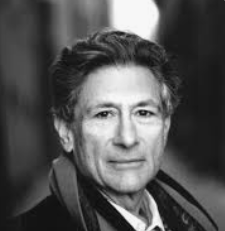
1 month 3 weeks ago
Theory is taught so as to make the student believe that he or she can become a Marxist, a feminist, an Afrocentrist, or a deconstructionist with about the same effort and commitment required in choosing items from a menu.
▼
Source
source
Chap 4, Sect 2
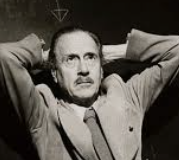
1 month 1 week ago
The pre-atomist multisensory void was an animate, pulsating, and moving vibrant interval, neither container nor contained, acoustic space penetrated by tactility.
▼
Source
source
p. 34
CivilSimian.com created by AxiomaticPanic, CivilSimian, Kalokagathia