


1 month 1 week ago
Nonviolent forms of resistance can and must be aggressively pursued. A practice of aggressive nonviolence is, therefore, not a contradiction in terms. Mahatma Gandhi insisted that satyagraha, or "soul force," his name for a practice and politics of nonviolence, is a nonviolent force, one that consists at once of an "insistence on truth ... that arms the votary with matchless power." To understand this force or strength, there can be no simple reduction to physical strength. At the same time, "soul force" takes an embodied form. The practice of "going limp" before political power is, on the one hand, a passive posture, and is thought to belong to the tradition of passive resistance; at the same time, it is a deliberate way of exposing the body to police power, of entering the field of violence, and of exercising an adamant and embodied form of political agency. It requires suffering, yes, but for the purposes of transforming both oneself and social reality.
▼
Source
source
pp. 21-22

3 months 3 weeks ago
If there is something more excellent than the truth, then that is God; if not, then truth itself is God.
Just now
Nothing in all literature is so depressing as the "Dissertations" of the slave [Epictetus], unless it be the "Meditations" of the Emperor [Marcus Aurelius] ...[after some excerpts from the two books]..... In such passages we feel the proximity of Christianity and its dauntless martyrs; indeed were not the Christian ethic of self-denial, the Christian political ideal of an almost communistic brotherhood of man, and the Christian eschatology of the final conflagration of all the world, fragments of Stoic doctrine floating on the stream of thought? In Epictetus the Greco-Roman soul has lost its paganism, and is ready for a new faith".

3 months 2 weeks ago
Men are most apt to believe what they least understand.
▼
Source
source
Book III, Ch. 11. Of Cripples

1 month 3 weeks ago
Today, to live means merely to produce.

3 months 2 weeks ago
Even from their infancy we frame them to the sports of love: their instruction, behavior, attire, grace, learning and all their words azimuth only at love, respects only affection. Their nurses and their keepers imprint no other thing in them.
2 months 1 week ago
Man needs difficulties; they are necessary for health.
▼
Source
source
The Transcendent Function ("Die Transzendente Funktion") (1916) Volume 8: Structure & Dynamics of the Psyche, The Collected Works of C. G. Jung

2 months 2 weeks ago
Obstinacy in a bad cause, is but constancy in a good.
▼
Source
source
Section 25

2 months 6 days ago
If death had only negative aspects, dying would be an unmanageable action.
2 months 1 week ago
Let us apply these principles to adultery. The state can no more prohibit it or punish it by law than any other illegitimate satisfaction of the sexual impulse.
▼
Source
source
P. 431
1 month 3 weeks ago
Enlightenment is an awakening to the everyday.

3 months 1 week ago
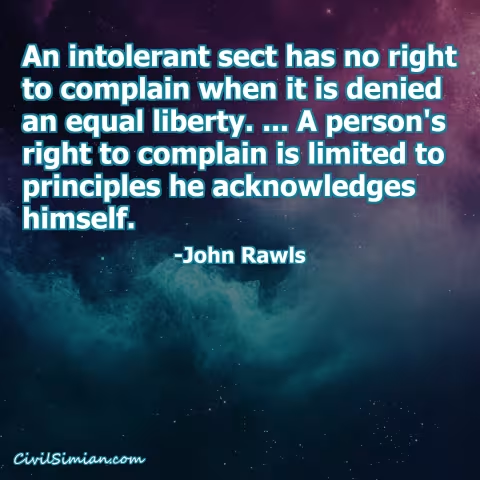
Suppose atomic bombs had reduced the population of the world to one brother and one sister, should they let the human race die out? I do not know the answer, but I do not think it can be in the affirmative merely on the ground that incest is wicked.
▼
Source
source
p. 47
3 weeks 3 days ago
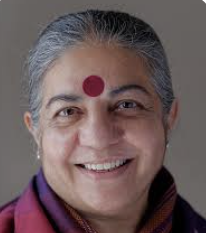
Being a planetary citizen does not need space travel. It means being conscious that we are part of the universe and of the earth. The most fundamental law is to recognise that we share the planet with other beings, and that we have a duty to care for our common home.

3 months 1 week ago
Let us not forget what befits our present state in the pursuit of vain fancies. Mankind has its place in the sequence of things; childhood has its place in the sequence of human life; the man must be treated as a man and the child as a child. Give each his place, and keep him there. Control human passions according to man's nature; that is all we can do for his welfare. The rest depends on external forces, which are beyond our control.

3 months 2 weeks ago
The world thought well of my schoolmaster guardian, because he was neither a liar, nor a scamp, nor a gambler; but he was coarse, avaricious, and ignorant; he knew nothing beyond the confused lessons which he taught to his classes. He imagined that in forcing a youth to become a monk he would be offering a sacrifice acceptable to God. He used to boast of the many victims which he devoted annually to Dominic and Francis and Benedict.
▼
Source
source
As quoted in Life and Letters of Erasmus: Lectures Delivered at Oxford 1893-4 (1899) by James Anthony Froude
2 months 1 week ago
Education to true religion is the final task of the new education.
▼
Source
source
General Nature of New Eduction p. 38
3 months 1 week ago
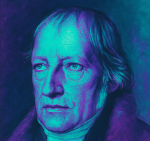
Every philosophy is complete in itself and, like a genuine work of art, contains the totality. Just as the works of Apelles and Sophocles, if Raphael and Shakespeare had known them, should not have appeared to them as mere preliminary exercises for their own work, but rather as a kindred force of the spirit, so, too reason cannot find in its own earlier forms mere useful preliminary exercises for itself.
▼
Source
source
Difference of the Fichtean and Schellingean System of Philosophy, cited in W. Kaufmann, Hegel (1966), p. 49

1 month 3 weeks ago
Pettiness separates; breadth unites. Let us be broad and big. Let us not overlook vital things because of the bulk of trifles confronting us. A true conception of the relation of the sexes will not admit of conqueror and conquered; it knows of but one great thing: to give of one's self boundlessly, in order to find one's self richer, deeper, better. That alone can fill the emptiness, and transform the tragedy of woman's emancipation into joy, limitless joy.

3 months 1 week ago
All is riddle, and the key to a riddle is another riddle.
▼
Source
source
Illusions

2 months 1 week ago
It is better to be unhappy and know the worst, than to be happy in a fool's paradise!
▼
Source
source
Part 4, Chapter 5
3 months 6 days ago
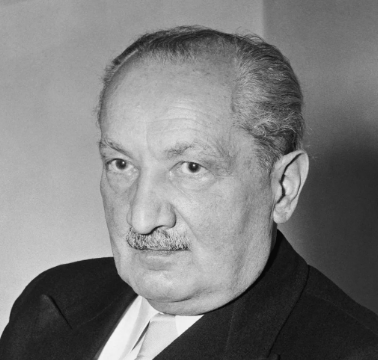
Agriculture is now a motorized food industry, the same thing in its essence as the production of corpses in the gas chambers and the extermination camps, the same thing as blockades and the reduction of countries to famine, the same thing as the manufacture of hydrogen bombs.
▼
Source
source
Four Lectures on Technology

3 months 1 week ago
Good tests kill flawed theories; we remain alive to guess again.
▼
Source
source
As quoted in My Universe : A Transcendent Reality (2011) by Alex Vary, Part II
2 months 3 days ago
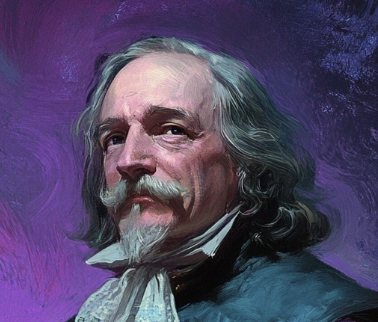
The doctrine of Right and Wrong, is perpetually disputed, both by Pen and the Sword: Whereas the doctrine of Lines, and Figures, is not so; because men care not, in that subject what be truth, as a thing that crosses no mans ambition, profit, or lust. For I doubt not, but if it had been a thing contrary to any mans right of dominion, or to the interest of men that have dominion, That the three Angles of a Triangle, should be equall to two Angles of a Square; that doctrine should have been, if not disputed, yet by the burning of all books of Geometry, suppressed, as far as he whom it concerned was able.
▼
Source
source
The First Part, Chapter 11, p. 80-81

3 months 1 week ago
If this labourer were in possession of his own means of production, and was satisfied to live as a labourer, he need not work beyond beyond the time necessary for the reproduction of his means of subsistence, say 8 hours a day.
▼
Source
source
Vol. I, Ch. 11, pg. 336.

1 day ago
It is the property of every Hero, in every time, in every place and situation, that he come back to reality; that he stand upon things, and not shows of things. According as he loves, and venerates, articulately or with deep speechless thought, the awful realities of things, so will the hollow shows of things, however regular, decorous, accredited by Koreishes or Conclaves, be intolerable and detestable to him.

4 months ago
You [a disciple], shall I teach you about knowledge? What you know, you know, what you don't know, you don't know. This is true knowledge.

3 months 2 weeks ago
Our merchants and master-manufacturers complain much of the bad effects of high wages in raising the price, and thereby lessening the sale of their goods both at home and abroad. They say nothing concerning the bad effects of high profits. They are silent with regard to the pernicious effects of their own gains. They complain only of those of other people.
▼
Source
source
Chapter IX, p. 117.
1 week 3 days ago
The most obvious failure of organized religions is surely that almost all of them have made a mockery of what their founders taught.
▼
Source
source
p. 267

3 months 1 week ago
God made us: invented us as a man invents an engine. A car is made to run on petrol, and it would not run properly on anything else. Now God designed the human machine to run on Himself.
▼
Source
source
Book II, Chapter 3, "The Shocking Alternative"

2 months 1 week ago
A diversity of opinion upon almost every principle of politics, had indeed drawn a strong line of separation between them and some others. However, they were desirous not to extend the misfortune by unnecessary bitterness; they wished to prevent a difference of opinion on the commonwealth from festering into rancorous and incurable hostility. Accordingly they endeavoured that all past controversies should be forgotten; and that enough for the day should be the evil thereof. There is however a limit at which forbearance ceases to be a virtue. Men may tolerate injuries, whilst they are only personal to themselves. But it is not the first of virtues to bear with moderation the indignities that are offered to our country.
▼
Source
source
Describing the Government's position at a previous time of deep division in British politics in fact over policy on America, Observations on a Late Publication on the Present State of the Nation (1769), page 2
3 months 1 week ago
Those truly natural wants, which reason alone, without some other help, is not able to fence against, nor keep from disturbing us. The pains of sickness and hurts, hunger, thirst, and cold, want of sleep and rest or relaxation of the part weary'd with labour, are what all men feel and the best dispos'd minds cannot but be sensible of their uneasiness; and therefore ought, by fit applications, to seek their removal, though not with impatience, or over great haste, upon the first approaches of them, where delay does not threaten some irreparable harm. The pains that come from the necessities of nature, are monitors to us to beware of greater mischiefs, which they are the forerunner of; and therefore they must not be wholly neglected, and strain'd too far. But yet the more children can be inur'd to hardships of this kind, by a wise care to make them stronger in body and mind, the better it will be for them.
▼
Source
source
Sec. 107
3 months 2 weeks ago
Anyone who actually admires money as the most precious thing in life, and rests his security on it to the extent of believing that as long as he possesses it he will be happy, has fashioned too many false gods for himself. Too many people put money in the place of Christ, as if it alone has the key to their happiness or unhappiness.
▼
Source
source
p. 100
1 month 2 weeks ago
In the process of decision those alternatives are chosen which are considered to be appropriate means of reaching desired ends. Ends themselves, however, are often merely instrumental to more final objectives. We are thus led to the conception of a series, or hierarchy, of ends. Rationality has to do with the construction of means-ends chains of this kind.
▼
Source
source
p. 62.
3 months 1 week ago
Man differs from other animals in one very important respect, and that is that he has some desires which are, so to speak, infinite, which can never be fully gratified, and which would keep him restless even in Paradise. The boa constrictor, when he has had an adequate meal, goes to sleep, and does not wake until he needs another meal. Human beings, for the most part, are not like this.
3 months 1 week ago
The gods sell anything to everybody at a fair price.
▼
Source
source
Quotation and Originality

4 months 1 week ago
The objective of all human arrangements is through distracting one's thoughts to cease to be aware of life.
2 months 6 days ago
Anxiety - or the fanaticism of the worst.
1 month 4 days ago
It is the interest of the individual and of all society, that he should be made, at the earliest period, to understand his own construction, the proper use of its parts, and how to keep them at all times in a state of health; and especially that he should be taught to observe the varied effects of different kinds of food, and different quantities, upon his own constitution. He should be taught the general and individual laws of health, thus early, that he may know how to prevent the approach of disease. And the knowledge of the particular diet best suited to his constitution, is one of the most essential laws of health.
▼
Source
source
3rd Part
1 month 3 weeks ago
Power is not opposed to freedom. It is precisely freedom that distinguishes power from violence or coercion.

2 weeks 3 days ago
Knowledge grows, but human beings remain much the same.Belief in progress is a relic of the Christian view of history as a universal narrative, and an intellectually rigorous atheism would start by questioning it.

3 months 5 days ago
Instead of insanity eliminating the crime according to the original meaning of article 64,every crime and even every offense now carries within it, as a legitimate suspicion, but also as a right that may be claimed, the hypothesis of insanity, in any case of anomaly. And the sentence that condemns or acquits is not simply a judgement of guily, a legal decision that lays down punishment; it bears within it an assessment of normality and a technical prescription for a possible normalization Today the judge- magistrate or juror0 certainly does more than 'judge'.
▼
Source
source
pp. 20-21
2 months 6 days ago
The fact that life has no meaning is a reason to live - moreover, the only one.
3 months 1 week ago
Next to the originator of a good sentence is the first quoter of it.
▼
Source
source
Quotation and Originality

3 months 1 week ago
For the moment, the jazz is playing; there is no melody, just notes, a myriad of tiny tremors. The notes know no rest, an inflexible order gives birth to them then destroys them, without ever leaving them the chance to recuperate and exist for themselves.... I would like to hold them back, but I know that, if I succeeded in stopping one, there would only remain in my hand a corrupt and languishing sound. I must accept their death; I must even want that death: I know of few more bitter or intense impressions.

3 months 6 days ago
But ordinary language is all right.
▼
Source
source
p. 28

1 month 3 weeks ago
But Don Quixote was converted. Yes - and died, poor soul. But the other, the real Don Quixote, he who remained on earth and lives among us with his spirit - this Don Quixote was not converted, this Don Quixote continues to incite us to make ourselves ridiculous, this Don Quixote must never die.
3 weeks 3 days ago
Just like Chief Seattle talked about being in the web of life, in India we talk about vasudhaiva kutumbkam, which means the earth family. Indian cosmology has never separated the human from the non-human-we are a continuum.
1 month 3 days ago
National loyalty is founded in the love of place, of the customs and traditions that have been inscribed in the landscape and of the desire to protect these good things through a common law and a common loyalty.
2 months 6 days ago
It is an understatement to say that in this society injustices abound: in truth, it is itself the quintessence of injustice.
CivilSimian.com created by AxiomaticPanic, CivilSimian, Kalokagathia