


4 months 2 days ago
If women get tired and die of bearing, there is no harm in that; let them die as long as they bear; they are made for that.
▼
Source
source
-- Essays, quoted in Luther On "Woman"
2 months 2 days ago
The physicist who states a law of nature with the aid of a mathematical formula is abstracting a real feature of a real material world, even if he has to speak of numbers, vectors, tensors, state-functions, or whatever to make the abstraction.
▼
Source
source
"What is Mathematical Truth?"
5 days ago
I must interpret the life about me as I interpret the life that is my own. My life is full of meaning to me. The life around me must be full of significance to itself. If I am to expect others to respect my life, then I must respect the other life I see, however strange it may be to mine. And not only other human life, but all kinds of life: life above mine, if there be such life; life below mine, as I know it to exist. Ethics in our Western world has hitherto been largely limited to the relations of man to man. But that is a limited ethics. We need a boundless ethics which will include the animals also.
1 week 3 days ago
Feuerbach ... recognizes ... "even love, in itself the truest, most inward sentiment, becomes an obscure, illusory one through religiousness, since religious love loves man only for God's sake, therefore loves man only apparently, but in truth God only." Is this different with moral love? Does it love the man, this man for this man's sake, or for morality's sake, for Man's sake, and so-for homo homini Deus-for God's sake?
▼
Source
source
Cambridge 1995, p. 56

2 months 4 weeks ago
Good music is very close to primitive language.
▼
Source
source
"Correspondence of Ideas with the Motion of Organs"

1 month 3 weeks ago
I once had a conversation with a famous French philosopher who's a friend of mine. And I said to him, "Why the hell do you write so badly? Pourquoi tu écris si mal?" ... And this was Michel Foucault. He was a very smart guy and wrote a lot of very good stuff but in general he just wrote badly. When you heard him give a lecture in Berkeley, it was perfectly clear, just as clear as I am. ... And he said, "Well, in France, it would be regarded as somewhat childish and naive if you wrote clearly. ... In France you've got to have 10% incomprehensible."
▼
Source
source
Otherwise people won't think it's deep. They won't think you're a profound thinker.
3 months 1 week ago
So people should abstain from other animals just as they should from the human.
▼
Source
source
4, 9, 6

3 months 3 weeks ago
Only the great generalizations survive. The sharp words of the Declaration of Independence, lampooned then and since as 'glittering generalities,' have turned out blazing ubiquities that will burn forever and ever.
▼
Source
source
From a lecture on Books given in the Fraternity Course in Boston in 1864

2 months 3 weeks ago
It's easier for a Russian to become an atheist than for anyone else in the world.
▼
Source
source
Part 4, Chapter 7

2 months 2 weeks ago
To those who hold abstractly to Hegel's political philosophy, Hobhouse replies that the very fact of class society, the patent influence of class interests on the state, renders it impossible to designate the state as expressive of the real will of individuals as a whole. 'Wherever a community is governed by one class or one race, the remaining class or race is permanently in the position of having to take what it can get.'
▼
Source
source
P. 396

3 months 3 weeks ago
To teach him betimes to love and be good-natur'd to others, is to lay early the true foundation of an honest man; all injustice generally springing from too great love of ourselves and too little of others.
▼
Source
source
Sec. 139
3 months 3 weeks ago
Science does not know its debt to imagination.
▼
Source
source
Poetry and Imagination

2 months 1 week ago
Alexander is to a peasant proprietor what Don Juan is to a happily married husband.
▼
Source
source
p. 78,
2 months 2 weeks ago
Lichtenberg ... held something of the following kind: one should neither affirm the existence of God nor deny it. ... It is not that he wished to leave certain perspectives open, nor to please everyone. It is rather that he was identifying himself, for his part, with a consciousness of self, of the world, and of others that was "strange" (the word is his) in a sense which is equally well destroyed by the rival explanations.
▼
Source
source
pp. 45-46

2 months 2 weeks ago
Love of the absolute engenders a predilection for self-destruction. Hence the passion for monasteries and brothels. Cells and women, in both cases. Weariness with life fares well in the shadow of whores and saintly women.
4 months 2 days ago
We must calm the mind of the common man, and tell him to abstain from the words and even the passions which lead to insurrection.
▼
Source
source
p. 62
5 days ago
Now, you see, if you understand what I'm saying, with your intelligence, and then take the next step and say "But I understood it now, but I didn't feel it." Then, next I raise the question: Why do you want to feel it? You say: "I want something more", because that's again that spiritual greed. And you could only say that because you didn't understand it.
▼
Source
source
Intellectual Yoga
1 month 1 week ago
That mysterious independent variable of political calculation, Public Opinion.
▼
Source
source
Universities, Actual and Ideal

3 months 3 weeks ago
A commodity appears, at first sight, a very trivial thing, and easily understood.Its analysis shows that it is, in reality, a very queer thing, abounding in metaphysical subtleties and theological niceties.
▼
Source
source
Vol. I, Ch. 1, Section 4, pg. 81.

2 months 1 week ago
Rousseau has said in his Emile (book iv.): "Even though philosophers should be in a position to discover the truth, which of them would take any interest in it? Each one knows well that his system is not better founded than the others, but he supports it because it is his. ...The essential thing is to think differently from others. With believers he is an atheist; with atheists he is a believer." How much substantial truth there is in these gloomy confessions of this man of painful sincerity.

1 month 2 weeks ago
The picture of modern philosophy as centered in epistemology and driven by the desire to ground our representations is so tenacious that some philosophers are prepared to bite the bullet and declare the effort simply wasted. Rorty, for example, finds it easier to reject modern philosophy altogether than to reject the standard accounts of its history. His narrative is more polemical than most, but it's a polemical version of the story told in most philosophy departments in the second half of the twentieth century. The story is one of tortuously decreasing interest. Philosophy, like some people, was prepared to accept boredom in exchange for certainty as it grew to middle age.
2 months 2 weeks ago
The historical approach, with its aim of detecting how things began and arriving from these origins at a knowledge of their nature, is certainly perfectly legitimate; but it also has its limitations. If everything were in continual flux, and nothing maintained itself fixed for all time, there would no longer be any possibility of getting to know about the world, and everything would be plunged into confusion.
▼
Source
source
Translation J. L. Austin (Oxford, 1950) as quoted by Stephen Toulmin, Human Understanding: The Collective Use and Evolution of Concepts (1972) Vol. 1, p. 55.

3 months 3 weeks ago
People will tell us that without the consolations of religion they would be intolerably unhappy. So far as this is true, it is a coward's argument. Nobody but a coward would consciously choose to live in a fool's paradise. When a man suspects his wife of infidelity, he is not thought the better of for shutting his eyes to the evidence. And I cannot see why ignoring evidence should be contemptible in one case and admirable in the other.
▼
Source
source
"Is There a God?", 1952

4 months 3 weeks ago
The best way to describe anyone is to give an example of the kind of thing he would do.

2 months 2 weeks ago
What man shall there be among you, that shall have one sheep, and if it fall into a pit on the sabbath day, will he not lay hold on it, and lift it out? How much then is a man better than a sheep? Wherefore it is lawful to do well on the sabbath days.
▼
Source
source
12:11-12 (KJV) Said to the Pharisees.
5 days ago
This letter, if judged by the novelty and profundity of ideas it contains, is perhaps the most substantial piece of writing in the whole literature of mankind.
▼
Source
source
Symmetry (1952), quote on p. 138; referring to a letter by Évariste Galois to Auguste Chevalier from May 29, 1832, two days before Galois' death, containing a testamentary summary of Galois' discoveries
1 month 3 weeks ago
There is no aphrodisiac like innocence.
▼
Source
source
Chapter 5
2 months 2 weeks ago
Is it always permissible to speak of the extension of a concept, of a class? And if not, how do we recognize the exceptional cases? Can we always infer from the extension of one concept's coinciding with that of a second, that every object which falls under the first concept also falls under the second?
▼
Source
source
Vol. 2, p. 127. Replying to Bertrand Russell's letter about Russell's Paradox; quoted in The Stanford Encyclopedia of Philosophy
2 months 2 weeks ago
All they that take the sword shall perish with the sword.
▼
Source
source
Matthew 26:52 (KJV)

2 months 1 week ago
It may seem to be a long way from Blake's innocent talk of love and copulation to De Sade's need to inflict pain. And yet both are the outcome of a sexual mysticism that strives to transcend the everyday world. Simone de Beauvoir said penetratingly of De Sade's work that 'he is trying to communicate an experience whose distinguishing characteristic is, nevertheless its will to remain incommunicable'. De Sade's perversion may have sprung from his dislike of his mother or of other women, but its basis is a kind of distorted religious emotion.
▼
Source
source
p. 90

2 months 1 week ago
All science must start with some assumptions as to the ultimate analysis of the facts with which it deals. These assumptions are justified partly by their adherence to the types of occurrence of which we are directly conscious, and partly by their success in representing the observed facts with a certain generality, devoid of ad hoc suppositions.
▼
Source
source
Ch. 8: "The Quantum Theory", p. 189

4 months 2 days ago
The ceaseless labour of your life is to build the house of death.
▼
Source
source
Book I, Ch. 20
3 months 3 weeks ago
In short, competition has to shoulder the responsibility of explaining all the meaningless ideas of the economists, whereas it should rather be the economists who explain competition.
▼
Source
source
Vol. III, Ch. L, Illusions Created by Competition, p. 866.

2 months 1 week ago
One must give one power a ballast, so to speak, to put it in a position to resist another.
▼
Source
source
Book V, Chapter 14.

2 weeks 1 day ago
A man of Intellect, of real and not sham Intellect, is by the nature of him likewise inevitably a man of nobleness, a man of courage, rectitude, pious strength; who, even because he is and has been loyal to the Laws of this Universe, is initiated into discernment of the same; to this hour a Missioned of Heaven; whom if men follow, it will be well with them; whom if men do not follow, it will not be well. Human Intellect, if you consider it well, is the exact summary of Human Worth; and the essence of all worth-ships and worships is reverence for that same.
3 months 3 weeks ago
The history of all hitherto existing society is the history of class struggles.
▼
Source
source
Section 1, paragraph 1, lines 1-2.

2 months 6 days ago
You must go to Mahometanism, to Buddhism, to the East, to the Sufis & Fakirs, to Pantheism, for the right growth of mysticism.
▼
Source
source
Letter (2 March 1853), quoted in Suggestions for Thought : Selections and Commentaries (1994), edited by Michael D. Calabria and Janet A. MacRae, p. xiii



4 months 1 week ago
If there is something more excellent than the truth, then that is God; if not, then truth itself is God.
4 months 2 days ago
We are, I know not how, double in ourselves, which is the cause that what we believe we do not believe, and cannot disengage ourselves from what we condemn.
▼
Source
source
Ch. 16. Of Glory, tr. Cotton, rev. W. Carew Hazlitt, 1877
4 months 2 days ago
Leave the ass burdened with laws behind in the valley. But your conscience, let it ascend with Isaac into the mountain.
▼
Source
source
Chapter 2, Verse 14

2 weeks 6 days ago
The regular rhythms of factory production and its clear divisions of work time and nonwork time tend to decline in the realm of immaterial labor. Think how at the high end of labor market companies like Microsoft try to make the office more like home, offering free meals and exercise programs to keep employees in the office as many of their waking hours as possible. At the low end of the labor market workers have to juggle several job to make ends meet. Such practices always existed, but today, with the passage from Fordism to post-Fordism, the increased flexibility and mobility imposed on workers, and the decline of the stable, long-term employment typical of factory work, this tends to become the norm. At both the high end and low ends or labor market the new paradigm undermines the division between work time and the time of life.
▼
Source
source
145

3 months 3 weeks ago
Love is of all the passions the strongest, for it attacks simultaneously the head, the heart, and the body.
▼
Source
source
Le Dernier Volume Des Œuvres De Voltaire: Contes - Comédie - Pensées - Poésies - Lettres, 1862
4 days ago
I am not indeed ignorant that certain over-wise people will call these legends "old wives' fables," and not worth listening to; but I think, for my part, that in such matters it is better to believe the testimony of nations than of those witty individuals, whose little soul is acute indeed, but has a clear insight into no one thing.

4 months 3 weeks ago
Anxiety may be compared with dizziness. He whose eye happens to look down into the yawning abyss becomes dizzy. But what is the reason for this? It is just as much in his own eye as in the abyss, for suppose he had not looked down. Hence, anxiety is the dizziness of freedom, which emerges when the spirit wants to posit the synthesis and freedom looks down into its own possibility, laying hold of finiteness to support itself. Freedom succumbs to dizziness. Further than this, psychology cannot and will not go. In that very moment everything is changed, and freedom, when it again rises, sees that it is guilty. Between these two moments lies the leap, which no science has explained and which no science can explain. He who becomes guilty in anxiety becomes as ambiguously guilty as it is possible to become.

3 months 2 weeks ago
If you want to go down deep you do not need to travel far; indeed, you don't have to leave your most immediate and familiar surroundings.
▼
Source
source
p. 50e

3 months 3 weeks ago
..Whenever it ceases to be true that mankind, as a rule, prefer themselves to others, and those nearest to them to those more remote, from that moment Communism is not only practicable, but the only defensible form of society...
2 months 1 week ago
We must leave on one side the beliefs which fill up voids and sweeten what is bitter. The belief in immortality. The belief in the utility of sin: etiam peccata. The belief in the providential ordering of events - in short the "consolations" which are ordinarily sought in religion.
▼
Source
source
p. 258
3 months 3 weeks ago
Thus heaven I've forfeited, I know it full well. My soul, once true to God, is chosen for hell.
▼
Source
source
"The Pale Maiden" (1837) ballad
4 months 1 week ago
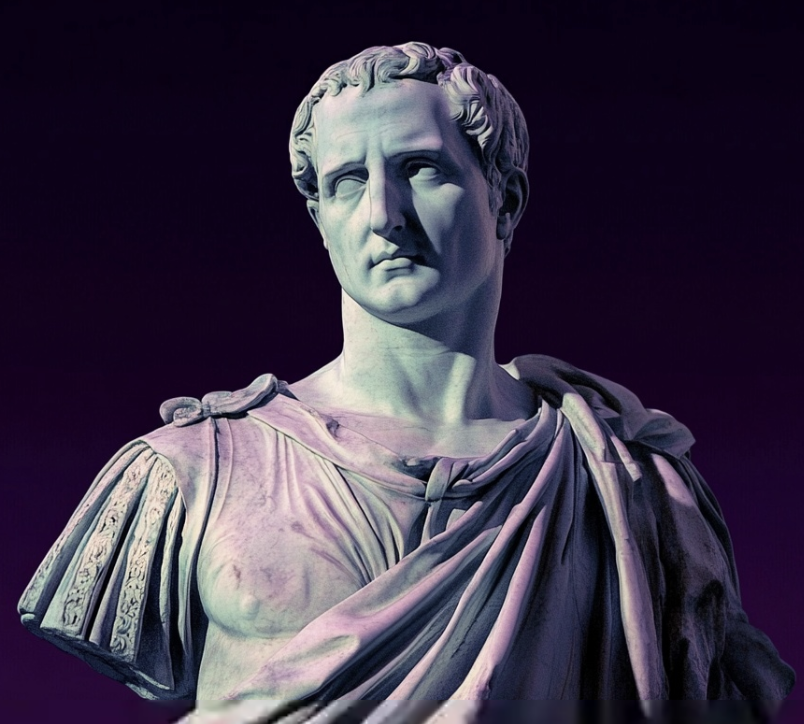
And what can be more divine than the exhalations of the earth, which affect the human soul so as to enable her to predict the future ? And could the hand of time evaporate such a virtue? Do you suppose you are talking of some kind of wine or salted meat ?
▼
Source
source
Book I, Chapter III
CivilSimian.com created by AxiomaticPanic, CivilSimian, Kalokagathia