


3 months 3 weeks ago
As there is a use in medicine for poisons, so the world cannot move without rogues.
▼
Source
source
Power
2 months 1 week ago
The lack of objectivity, as far as foreign nations are concerned, is notorious. From one day to another, another nation is made out to be utterly depraved and fiendish, while one's own nation stands for everything that is good and noble. Every action of the enemy is judged by one standard - every action of oneself by another. Even good deeds by the enemy are considered a sign of particular devilishness, meant to deceive us and the world, while our bad deeds are necessary and justified by our noble goals which they serve.

4 months 3 weeks ago
And the true order of going, or being led by another, to the things of love, is to begin from the beauties of earth and mount upwards for the sake of that other beauty, using these steps only, and from one going on to two, and from two to all fair forms to fair practices, and from fair practices to fair notions, until from fair notions he arrives at the notion of absolute beauty, and at last knows what the essence of beauty is.
3 months 3 weeks ago
The writers by whom, more than by any others, a new mode of political thinking was brought home to me, were those of the St. Simonian school in France. In 1829 and 1830 I became acquainted with some of their writings. They were then only in the earlier stages of their speculations. They had not yet dressed out their philosophy as a religion, nor had they organized their scheme of Socialism. They were just beginning to question the principle of hereditary property. I was by no means prepared to go with them even this length; but I was greatly struck with the connected view which they for the first time presented to me, of the natural order of human progress; and especially with their division of all history into organic periods and critical periods.
▼
Source
source
(p. 163)

1 month 3 weeks ago
When a person inflates his own importance, he does not see his own sins; and his sins get bigger right along with him.
▼
Source
source
p. 108
2 months 3 weeks ago
Time with its continuity logically involves some other kind of continuity than its own. Time, as the universal form of change, cannot exist unless there is something to undergo change, and to undergo a change continuous in time, there must be a continuity of changeable qualities.
3 months 3 weeks ago
The bitterest tragic element in life to be derived from an intellectual source is the belief in a brute Fate or Destiny.
▼
Source
source
"The Tragic", p. 217. From The Dial (April 1844) p. 515


4 months 3 weeks ago
Civilizations have always been pyramidal in structure. As one climbs toward the apex of the social edifice, there is increased leisure and increasing opportunity to pursue happiness. As one climbs, one finds also fewer and fewer people to enjoy this more and more. Invariably, there is a preponderance of the dispossessed. And remember this, no matter how well off the bottom layers of the pyramid might be on an absolute scale, they are always dispossessed in comparison with the apex.So there is always social friction in ordinary human societies. The action of social revolution and the reaction of guarding against such revolution or combating it once it has begun are the causes of a great deal of the human misery with which history is permeated.
4 months 1 week ago
If a man has reported to you, that a certain person speaks ill of you, do not make any defense (answer) to what has been told you: but reply, The man did not know the rest of my faults, for he would not have mentioned these only.
▼
Source
source
(33) [tr. George Long (1888)].
2 months 3 weeks ago
When ethics thus moves into the domain of politics and becomes morality, the possibility of violence appears because of the threat of the application of such absolutist forms of thought. Further, although the moral agent must remain free in order to avoid the totalizing domination of the state, morality must still be grounded in the ethical relation of the face-to-face.
▼
Source
source
Steven Bindeman, Levinas: The Face of Otherness and the Ethics of Therapy
1 month 3 weeks ago
People try to do all sorts of clever and difficult things to improve life instead of doing the simplest, easiest thing-refusing to participate in activities that make life bad.
▼
Source
source
p. 210

4 months 2 weeks ago
The way which the superior man pursues, reaches wide and far, and yet is secret. Common men and women, however ignorant, may intermeddle with the knowledge of it; yet in its utmost reaches, there is that which even the sage does not know. Common men and women, however much below the ordinary standard of character, can carry it into practice; yet in its utmost reaches, there is that which even the sage is not able to carry into practice. Great as heaven and earth are, men still find some things in them with which to be dissatisfied. Thus it is that, were the superior man to speak of his way in all its greatness, nothing in the world would be found able to embrace it, and were he to speak of it in its minuteness, nothing in the world would be found able to split it.
2 months 2 weeks ago
Society is eliminating the prerogatives and privileges of feudal. aristocratic culture together with its content. The fact that the transcending truths of the fine arts, the aesthetics of life and thought, were accessible only to the few wealthy and educated was the fault of a repressive society. But this fault is not corrected by paperbacks, general education, long-playing records, and the abolition of formal dress in the theater and concert hall. The cultural privileges expressed the injustice of freedom, the contradiction between ideology and reality, the separation of intellectual from material productivity; but they also provided a protected realm in which the tabooed truths could survive in abstract integrity-remote from the society which suppressed them.
▼
Source
source
pp. 64-65
3 months 3 weeks ago
Quietism is the attitude of people who say, "let others do what I cannot do." The doctrine I am presenting before you is precisely the opposite of this, since it declares that there is no reality except in action. It goes further, indeed, and adds, "Man is nothing else but what he purposes, he exists only in so far as he realizes himself, he is therefore nothing else but the sum of his actions, nothing else but what his life is." Hence we can well understand why some people are horrified by our teaching.
▼
Source
source
p. 41

3 months 3 weeks ago
Science may be described as the art of systematic over-simplification - the art of discerning what we may with advantage omit.
▼
Source
source
The Open Universe : An Argument for Indeterminism (1992), p. 44
2 months 2 weeks ago
Works of art express space as opportunity for movement and action.
▼
Source
source
p. 217

4 months 3 days ago
To which we may add this other Aristotelian consideration, that he who confers a benefit on any one loves him better than he is beloved by him again.
▼
Source
source
Book II, Ch. 8. Of the Affections of Fathers
3 months 2 weeks ago
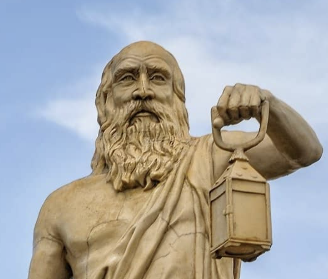
He once begged alms of a statue, and, when asked why he did so, replied, "To get practice in being refused."
▼
Source
source
Diogenes Laërtius, vi. 49
3 months 3 weeks ago
Again, defenders of utility often find themselves called upon to reply to such objections as this-that there is not time, previous to action, for calculating and weighing the effects of any line of conduct on the general happiness. This is exactly as if any one were to say that it is impossible to guide our conduct by Christianity, because there is not time, on every occasion on which anything has to be done, to read through the Old and New Testaments. The answer to the objection is, that there has been ample time, namely, the whole past duration of the human species. During all that time mankind have been learning by experience the tendencies of actions.
▼
Source
source
Ch. 2

2 months 2 weeks ago
Whit Meynell was a sociologist; he had got into an intellectual muddle early on in life and never managed to get out.
▼
Source
source
The Philosopher's Pupil (1983) p. 165.
4 months 3 days ago
How many worthy men have we seen survive their own reputation!
▼
Source
source
Book II, Ch. 16. Of Glory
3 months 3 weeks ago
I regard it as the irresistible effect of the Copernican astronomy to have made the theological scheme of redemption absolutely incredible.
▼
Source
source
Quoted in Robert D. Richardson, Jr., Emerson, the Mind On Fire (Univ. of Calif Press 1995), p. 124

3 days ago
The murder of one person is called unrighteous and incurs one death penalty. Following this argument, the murder of ten persons will be ten times as unrighteous and there should be ten death penalties; the murder of a hundred persons will be a hundred times as unrighteous and there should be a hundred death penalties. All the gentlemen of the world know that they should condemn these things, calling them unrighteous. But when it comes to the great unrighteousness of attacking states, they do not know that they should condemn it. On the contrary, they applaud it, calling it righteous.
▼
Source
source
Book 5: Condemnation of Offensive War I

4 months 4 days ago
The obliteration of the evil hath been practised by two means, some kind of redemption or expiation of that which is past, and an inception or account de novo for the time to come. But this part seemeth sacred and religious, and justly; for all good moral philosophy (as was said) is but a handmaid to religion.
▼
Source
source
Book II, xxii, 14

3 months ago
There are three principal means of acquiring knowledge available to us: observation of nature, reflection, and experimentation. Observation collects facts; reflection combines them; experimentation verifies the result of that combination. Our observation of nature must be diligent, our reflection profound, and our experiments exact. We rarely see these three means combined; and for this reason, creative geniuses are not common.
▼
Source
source
No. 15
1 month 3 weeks ago
It is often better for a person to recognize a sin than to do a good deed. Recognizing a sin makes a person humble. Doing a good deed often can feed a person's pride.
▼
Source
source
p. 108

2 weeks 2 days ago
For the Able Man, meet him where you may, is definable as the born enemy of Falsity and Anarchy, and the born soldier of Truth and Order: into what absurdest element soever you put him, he is there to make it a little less absurd, to fight continually with it till it become a little sane and human again. Peace on other terms he, for his part, cannot make with it; not he, while he continues able, or possessed of real intellect and not imaginary. There is but one man fraught with blessings for this world, fated to diminish and successively abolish the curses of the world; and it is he. For him make search, him reverence and follow; know that to find him or miss him, means victory or defeat for you, in all Downing Streets, and establishments and enterprises here below.
2 months 2 weeks ago
Two half philosophers will probably never a whole metaphysician make.
▼
Source
source
A Retrospective Glance at the Lifework of a Master of Books
2 weeks 2 days ago
Battles, in these ages, are transacted by mechanism; with the slightest possible development of human individuality or spontaneity: men now even die, and kill one another, in an artificial manner.
▼
Source
source
Pt. I, Bk. VII, ch. 4.
4 months 3 weeks ago
We can hope that the ways of peace will attract the Arabic nations, for their territory and opportunities are broad enough for immeasurable advance, if the energies vented in spleen, are turned instead to a modernisation of the technology, a restoration of the soil, and a renovation of the economic, social, and political structure of those great and venerable lands.
3 days ago
Those who regard the Crusades, with indignation, as among the most extravagant episodes of the 'dark' Middle Ages, have not even the slightest suspicion that what they call 'religious fanaticism' was the visible sign of the presence and effectiveness of a sensitivity and decisiveness, the absence of which is more characteristic of true barbarism. [...] The one who fights according to the sense of 'sacred war' is spontaneously beyond every particularism and exists in a spiritual climate which, at any given moment, may very well give rise and life to a supra-national unity of action. This is precisely what occurred in the Crusades when Princes and Dukes of every land gathered in the heroic and sacred enterprise, regardless of their particular utilitarian interests or political divisions, bringing about for the first time a great European unity, true to the common civilisation and to the very principle of the Sacred Roman Empire.
▼
Source
source
pp. 40-41
4 months 2 weeks ago
When a country is well governed, poverty and a mean condition are things to be ashamed of. When a country is ill governed, riches and honor are things to be ashamed of.

4 months 1 week ago
Woman, compared to other creatures, is the image of God, for she bears dominion over them. But compared unto man, she may not be called the image of God, for she bears not rule and lordship over man, but ought to obey him. The woman shall be subject to man as unto Christ. For woman, has not her example from the body and from the flesh, that so she shall be subject to man, as the flesh is unto the Spirit, because that the flesh in the weakness and mortality of this life lusts and strives against the Spirit, and therefore would not the Holy Ghost give example of subjection to the woman of any such thing.
▼
Source
source
As quoted by John Knox The First Blast to Awaken Women Degenerate (1558)

2 months 2 weeks ago
If you have money, don't lend it at interest. Rather, give it to someone from whom you won't get it back.
1 week 3 days ago
The truth is, that most men want knowledge, not for itself, but for the superiority which knowledge confers; and the means they employ to secure this superiority, are as wrong as the ultimate object, for no man can ever end with being superior, who will not begin with being inferior.
▼
Source
source
Lecture IX : On the Conduct of the Understanding
3 months 3 weeks ago
On the stage on which we are observing it, - Universal History - Spirit displays itself in its most concrete reality.

4 months 3 days ago
We believe that the very beginning and end of salvation, and the sum of Christianity, consists of faith in Christ, who by His blood alone, and not by any works of ours, has put away sin, and destroyed the power of death.
▼
Source
source
p. 224
3 months 3 weeks ago
The entire history of social improvement has been a series of transitions, by which one custom or institution after another, from being a supposed primary necessity of social existence, has passed into the rank of an universally stigmatized injustice and tyranny. So it has been with the distinctions of slaves and freemen, nobles and serfs, patricians and plebeians; and so it will be, and in part already is, with the aristocracies of colour, race, and sex.
▼
Source
source
Ch. 5

2 months 3 weeks ago
All writers, not ours alone but foreigners also, who have sought to represent Absolute Beauty, were unequal to the task, for it is an infinitely difficult one. The beautiful is the ideal ; but ideals, with us as in civilized Europe, have long been wavering. There is in the world only one figure of absolute beauty: Christ. That infinitely lovely figure is, as a matter of course, an infinite marvel.
▼
Source
source
Letter to his Niece Sofia Alexandrovna, Geneva, January 1, 1868. Ethel Golburn Mayne, Letters of Fyodor Michailovitch Dostoyevsky to His Family and Friends (1879), Dostoevsky's Letters XXXIX, p. 136
2 months 3 weeks ago
While all these are disturbed and divided by the multifarious objects to which their thoughts must be applied, the Philosopher pursues, in solitary silence and in unbroken concentration of mind, his single and undeviating course towards the Good, the Beautiful, and the True; and that is his daily labour, to which others can only resort at times for rest and refreshment after toil.
▼
Source
source
P. 17
3 months 2 weeks ago
Look round and round the man you recommend, for yours will be the shame should he offend.
▼
Source
source
Book I, epistle xviii, line 76 (translated by John Conington).
4 months 4 days ago
For all knowledge and wonder (which is the seed of knowledge) is an impression of pleasure in itself.
▼
Source
source
Book I, i, 3
1 month 2 weeks ago
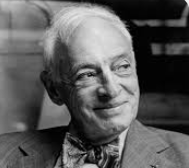
I never yet touched a fig leaf that didn't turn into a price tag.
▼
Source
source
Humboldt's Gift (1975), p. 159
4 months 3 days ago
No wind serves him who addresses his voyage to no certain port.
▼
Source
source
Book II, Ch. 1

1 month 3 weeks ago
There are people in the world who desperately want not to have to believe in Darwinism.
▼
Source
source
Chapter 9 "Puncturing Punctuationism" (p. 250)
1 month 3 weeks ago
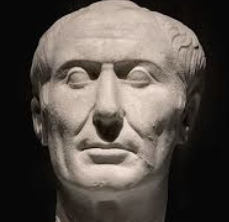
Confession of our faults is the next thing to innocence.
▼
Source
source
Maxim 1060
4 months 3 days ago
We were halves throughout, and to that degree that, methinks, by outliving him I defraud him of his part.
▼
Source
source
Ch. 27. Of Friendship, tr. Cotton, rev. W. Hazlitt, 1842
6 days ago
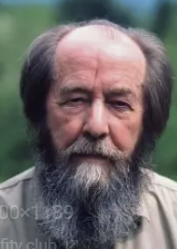
There is a word very commonly used these days: "anti-communism." It's a very stupid word, badly put together. It makes it appear as though communism were something original, something basic, something fundamental. Therefore, it is taken as the point of departure, and anti-communism is defined in relation to communism. Here is why I say that this word was poorly selected, that it was put together by people who do not understand etymology: the primary, the eternal concept is humanity. And communism is anti-humanity. Whoever says "anti-communism" is saying, in effect, anti-anti-humanity. A poor construction. So we should say: that which is against communism is for humanity. Not to accept, to reject this inhuman Communist ideology is simply to be a human being. It isn't being a member of a party.
▼
Source
source
Speech in Washington D.C. (30 June 1975), published in Solzhenitsyn: The Voice of Freedom (1975), p. 30

3 months 3 weeks ago
There is something in human history like retribution; and it is a rule of historical retribution that its instrument be forged not by the offended, but by the offender himself. The first blow dealt to the French monarchy proceeded from the nobility, not from the peasants. The Indian revolt does not commence with the ryots, tortured, dishonoured and stripped naked by the British, but with the sepoys, clad, fed and petted, fatted and pampered by them.
▼
Source
source
In an article written for the New York Daily Tribune, September 16, 1857
CivilSimian.com created by AxiomaticPanic, CivilSimian, Kalokagathia