

3 months 1 week ago
The romantic poetry is a progressive universal poetry.
▼
Source
source
Progressive Universalpoesie (1798)
4 months 2 weeks ago
In Matthew 12:23 Christ says: "Either make the tree good, and its fruit good; or make the tree bad and its fruit bad," as if to say: "Let the one who wishes to have good fruit begin by planting a good tree." Therefore, let the person who wishes to do good works being not with the works but with the believing, for this alone makes a person good.
▼
Source
source
p. 76
1 week 6 days ago
With clarity and quiet, I look upon the world and say: All that I see, hear, taste, smell, and touch are the creations of my mind. The sun comes up and the sun goes down in my skull. Out of one of my temples the sun rises, and into the other the sun sets. The stars shine in my brain; ideas, men, animals browse in my temporal head; songs and weeping fill the twisted shells of my ears and storm the air for a moment.
5 months 1 day ago
Come the Day of Judgment, some believe that the body will be different from our present body. This is only transient, that will be eternal. For this also there are religious arguments.
2 months 1 week ago
I sit on a man's back, choking him, and making him carry me, and yet assure myself and others that I am very sorry for him and wish to ease his lot by any means possible, except getting off his back.
▼
Source
source
Writings on Civil Disobedience and Nonviolence

4 months 1 week ago
There lies before us, if we choose, continual progress in happiness, knowledge, and wisdom. Shall we, instead, choose death, because we cannot forget our quarrels? We appeal as human beings to human beings: Remember your humanity, and forget the rest. If you can do so, the way lies open to a new Paradise; if you cannot, there lies before you the risk of universal death.
2 months 1 week ago
A good reputation is more valuable than money.
▼
Source
source
Maxim 108
5 months 1 week ago
Since the science of nature is conversant with magnitudes, motion, and time, each of which must necessarily be either infinite or finite...[we] should speculate the infinite, and consider whether it is or not; and if it is what it is. ...[A]ll those who appear to have touched on a philosophy of this kind... consider it as a certain principle of beings. Some, indeed, as the Pythagoreans and Plato, consider it, per se, not as being an accident to any thing else, but as having an essential subsistence... the Pythagoreans... consider the infinite as subsisting in sensibles; for they do not make number to be separate; and they assert that what is beyond the heavens is infinite; but Plato says that beyond the heavens there is not any body, nor ideas, because these are no where: he affirms, however, that the infinite is both in sensibles, and in ideas. ...Plato establishes two infinities, viz. the great and the small.

3 weeks 6 days ago
Fortune has taken away, but Fortune has given.
1 week 2 days ago
Think not disdainfully of death, but look on it with favor; for even death is one of the things that Nature wills.
▼
Source
source
IX, 3
2 months 3 weeks ago
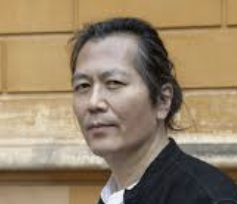
Twenty-first-century society is no longer a disciplinary society, but rather an achievement society.

4 months 1 week ago
Long hours of labour seem to be the secret of the rational and healthful processes, which are to raise the condition of the labourer by an improvement of his mental and moral powers and to make a rational consumer out of him.
▼
Source
source
Vol. II, Ch. XXI, p. 520.
4 months ago
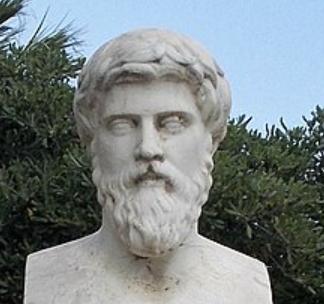
Themistocles being asked whether he would rather be Achilles or Homer, said, "Which would you rather be,-a conqueror in the Olympic games, or the crier that proclaims who are conquerors?"
▼
Source
source
48 Themistocles
2 weeks 6 days ago
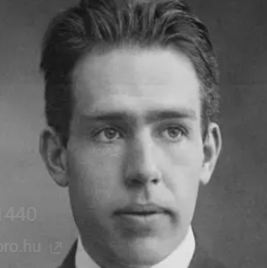
Physics is to be regarded not so much as the study of something a priori given, but rather as the development of methods of ordering and surveying human experience. In this respect our task must be to account for such experience in a manner independent of individual subjective judgement and therefore objective in the sense that it can be unambiguously communicated in ordinary human language.
▼
Source
source
The Unity of Human Knowledge

3 months 2 weeks ago
For those endowed with insight there is in reality no object of love but God, nor does anyone but He deserve love Love, Longing, Intimacy and Contentment.
▼
Source
source
Islamic Texts Society. 2011. p. 23. ISBN 978-1-903682-27-2. Translated with an introduction and notes by Eric Ormsby.
3 months 1 week ago
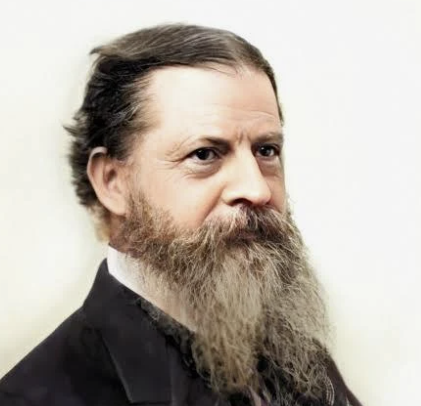
I call a sign which stands for something merely because it resembles it, an icon. Icons are so completely substituted for their objects as hardly to be distinguished from them. Such are the diagrams of geometry. A diagram, indeed, so far as it has a general signification, is not a pure icon; but in the middle part of our reasonings we forget that abstractness in great measure, and the diagram is for us the very thing. So in contemplating a painting, there is a moment when we lose the consciousness that it is not the thing, the distinction of the real and the copy disappears, and it is for the moment a pure dream, - not any particular existence, and yet not general. At that moment we are contemplating an icon.
4 months 1 week ago
With Leibnitz the extent to which thoughts advance is the extent of the universe; where comprehension ceases, the universe ceases, and God begins: so that later it was even maintained that to be comprehended was derogatory to God, because He was thus degraded into finitude. In that procedure a beginning is made from the determinate, this and that are stated to be necessary; but since in the next place the unity of these moments is not comprehended, it is transferred to God. God is therefore, as it were, the waste channel into which all contradictions flow: Leibnitz's Théodicée is just a popular summing up such as this.
▼
Source
source
Third division, Chapter I. - The Metaphysics of the Understanding Alternate translation: "God is, as it were, the sewer into which all contradictions flow."
2 months 1 week ago
To spendthrifts money is so living and actual-it is such a thin veil between them and their pleasures! There is only one limit to their fortune-that of time; and a spendthrift with only a few crowns is the Emperor of Rome until they are spent. For such a person to lose his money is to suffer the most shocking reverse, and fall from heaven to hell, from all to nothing, in a breath.
▼
Source
source
A Lodging for the Night.

4 months 1 week ago
Though thou loved her as thyself, As a self of purer clay, Tho' her parting dims the day, Stealing grace from all alive, Heartily know, When half-gods go, The gods arrive.
▼
Source
source
Give All to Love, st. 4
3 months 1 week ago
The first philosophers were astronomers. The heavens remind man ... that he is destined not merely to act, but also to contemplate.
▼
Source
source
Introduction, Z. Hanfi, trans., in The Fiery Brook (1972), pp. 101-102

4 months 1 week ago
I respect orders but I respect myself too and I do not obey foolish rules made especially to humiliate me.
▼
Source
source
Hugo to Slick and Georges, Act 3, sc. 2

2 months 3 weeks ago
No art can be judged by purely aesthetic standards, although a painting or a piece of music may appear to give a purely aesthetic pleasure. Aesthetic enjoyment is an intensification of the vital response, and this response forms the basis of all value judgements. The existentialist contends that all values are connected with the problems of human existence, the stature of man, the purpose of life. These values are inherent in all works of art, in addition to their aesthetic values, and are closely connected with them.
▼
Source
source
The Chicago Review, Volume 13, no. 2, 1959, p. 152-181
1 week 6 days ago
You are not free. Myriad invisible hands hold your hands and direct them. When you rise in anger, a great-grandfather froths at your mouth; when you make love, an ancestral caveman growls with lust; when you sleep, tombs open in your memory till your skull brims with ghosts.
3 weeks 1 day ago
All characteristics of material things as they are presented to us in the acts of external perception (e.g. colour) are endowed with the separateness of spatial extension, but it is only when we build up a single connected real world out of all our experiences that the spatial extension, which is a constituent of every perception, becomes a part of one and the same all-inclusive space. ... every material thing can, without changing content, equally well occupy a position in Space different from its present one. This immediately gives us the property of the homogeneity of space which is the root of the conception, Congruence.
▼
Source
source
Introduction
4 months 2 weeks ago
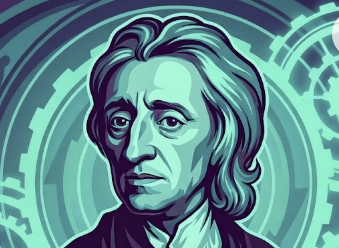
To love truth for truth's sake is the principal part of human perfection in this world, and the seed-plot of all other virtues.
▼
Source
source
Letter to Anthony Collins, 29 October 1703
1 month 3 weeks ago
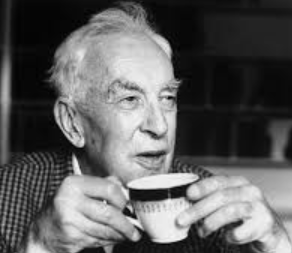
I don't believe a committee can write a book. ... It can, oh, govern a country, perhaps. But I don't believe it can write a book.
▼
Source
source
Interviewed by Christopher Wright (1955). Printed in James Nelson (ed.) Wisdom: Conversations with the Elder Wise Men of Our Day (New York: Norton, 1958) p. 208
3 months 1 week ago
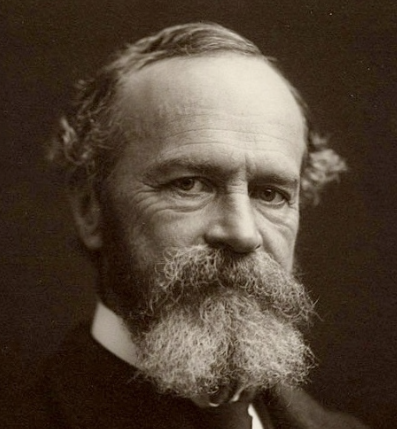
The only possible way of accounting for the laws of nature and for uniformity in general is to suppose them results of evolution. This supposes them not to be absolute, not to be obeyed precisely. It makes an element of indeterminacy, spontaneity, or absolute chance in nature. Just as, when we attempt to verify any physical law, we find our observations cannot be precisely satisfied by it, and rightly attribute the discrepancy to errors of observation, so we must suppose far more minute discrepancies to exist owing to the imperfect cogency of the law itself, to a certain swerving of the facts from any definite formula.
4 months 1 week ago
History is a bath of blood.

4 months 1 week ago
Legal and economic equality are absolutely necessary remedies for the Fall, and protection against cruelty.

4 months 2 weeks ago
We speak not strictly and philosophically when we talk of the combat of passion and of reason. Reason is, and ought only to be the slave of the passions, and can never pretend to any other office than to serve and obey them.
▼
Source
source
Part 3, Section 3
2 months 4 weeks ago
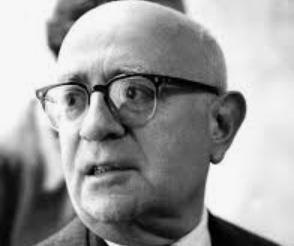
The concept of positivity in itself, in abstracto, has become part and parcel of the ideology today. ... Critique has started to become suspect, regardless of its content.
▼
Source
source
p. 23
4 months 2 weeks ago
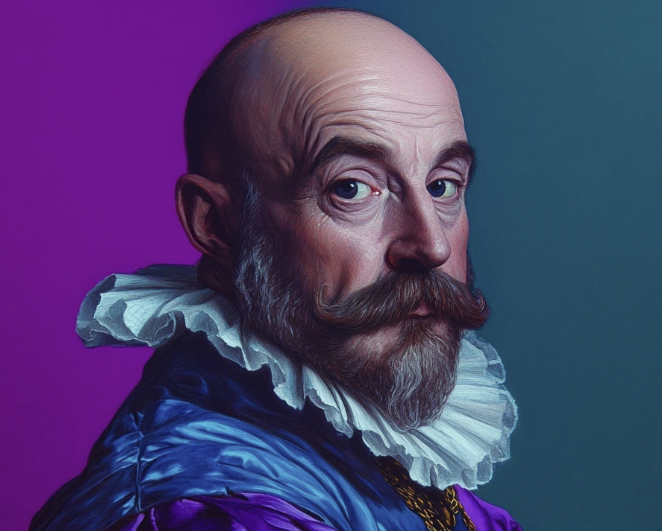
Beauty is no quality in things themselves: It exists merely in the mind which contemplates them; and each mind perceives a different beauty. One person may even perceive deformity, where another is sensible of beauty; and every individual ought to acquiesce in his own sentiment, without pretending to regulate those of others.
▼
Source
source
Part I, Essay 23: Of The Standard of Taste
4 months 2 weeks ago
Every man bears the whole stamp of the human condition.
▼
Source
source
Ch. 2
2 months 1 week ago
Do not take part in the council, unless you are called.
▼
Source
source
Maxim 310
3 months 1 week ago
The introduction of free competition is thus public declaration that from now on the members of society are unequal only to the extent that their capitals are unequal, that capital is the decisive power, and that therefore the capitalists, the bourgeoisie, have become the first class in society. Free competition is necessary for the establishment of big industry, because it is the only condition of society in which big industry can make its way.
2 months 1 week ago
A king is history's slave.
▼
Source
source
Bk. IX, ch. 1

4 months 1 week ago
Even when the experts all agree, they may well be mistaken.
▼
Source
source
A Fresh Look at Empiricism: 1927-42 (1996), p. 281

5 months 2 weeks ago
Woe to the thinker who is not the gardener but only the soil of the plants that grow in him!
4 weeks ago
The characteristic feature of militarism is not the fact that a nation has a powerful army or navy. It is the paramount role assigned to the army within the political structure. Even in peacetime the army is supreme; it is the predominant factor in political life. The subjects must obey the government as soldiers must obey their superiors. Within a militarist community there is no freedom; there are only obedience and discipline.
▼
Source
source
Omnipotent Government: The Rise of the Total State and Total War
3 months 1 week ago
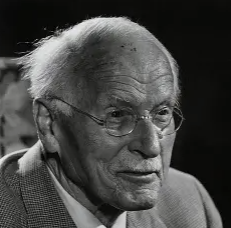
This whole creation is essentially subjective, and the dream is the theater where the dreamer is at once scene, actor, prompter, stage manager, author, audience, and critic.
▼
Source
source
General Aspects of Dream Psychology

4 months 2 weeks ago
The necessity of speaking, the predicament of having nothing to say, and the desire for tact are three things that can turn the greatest man into a laughingstock.
1 month 5 days ago
It would be silly, of course, to be either 'for' or 'against' modernity tout court, not only because it is pointless to try to stop the development of technology, science, and economic rationality, but because both modernity and antimodernity may be expressed in barbarous and antihuman terms.
▼
Source
source
"Modernity on Endless Trial"
4 months 1 week ago
But there is a devil of a difference between barbarians who are fit by nature to be used for anything, and civilized people who apply them selves to everything.
▼
Source
source
Introduction, p. 25.

4 months 1 week ago
Most kings and priests have been despotic, and all religions have been riddled with superstition.
▼
Source
source
Chapter 6 (pp. 52-53)
2 months 3 weeks ago
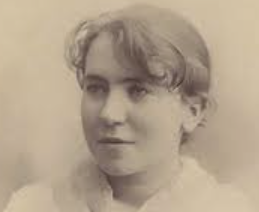
Anarchism, more than any other social theory, values human life above things.
5 months 1 week ago
Now men seem, not unreasonably, to form their notions of the supreme good and of happiness from the lives of men.
1 week 6 days ago
All hopes and despairs vanish in the voracious, funneling whirlwind of God. God laughs, wails, kills, sets us on fire, and then leaves us in the middle of the way, charred embers. And I rejoice to feel between my temples, in the flicker of an eyelid, the beginning and the end of the world. I condense into a lightning moment the seeding, sprouting, blossoming, fructifying, and the disappearance of every tree, animal, man, star, and god. All Earth is a seed planted in the coils of my mind. Whatever struggles for numberless years to unfold and fructify in the dark womb of matter bursts in my head like a small and silent lightning flash. Ah! let us gaze intently on this lightning flash, let us hold it for a moment, let us arrange it into human speech. Let us transfix this momentary eternity which encloses everything, past and future, but without losing in the immobility of language any of its gigantic erotic whirling.
3 months 5 days ago
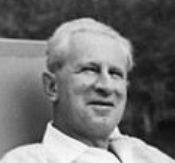
Nobody really thinks who does not abstract from that which is given, who does not relate the facts to the factors which have made them, who does not - in his mind - undo the facts. Abstractness is the very life of thought, the token of its authenticity.
▼
Source
source
p. 134
4 months 2 weeks ago
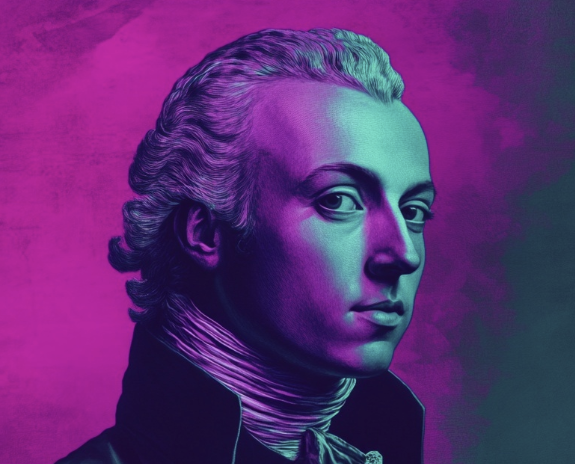
This species works intentionally on its own destruction (by war). This, however, does not keep the rational creatures of such a constantly advancing culture, even in the midst of war, from promising to mankind in coming centuries an unequivocal prospect of bliss which will never end.
▼
Source
source
Kant, Immanuel (1996), page 185
CivilSimian.com created by AxiomaticPanic, CivilSimian, Kalokagathia