


3 months 1 week ago
The man described for us, whom we are invited to free, is already in himself the effect of a subjection much more profound than himself. A 'soul' inhabits him and brings him to existence...the soul is the effect and instrument of political anatomy; the soul is the prison of the body.

3 months 2 weeks ago
If we take a survey of ages and of countries, we shall find the women, almost - without exception - at all times and in all places, adored and oppressed. Man, who has never neglected an opportunity of exerting his power, in paying homage to their beauty, has always availed himself of their weakness He has been at once their tyrant and their slave.

3 months 2 weeks ago
I perfectly agree with your Lordship too, that to crush the Industry of so great and so fine a province of the empire, in order to favour the monopoly of some particular towns in Scotland or England, is equally unjust and impolitic. The general opulence and improvement of Ireland might certainly, under proper management, afford much greater resources to the Government, than can ever be drawn from a few mercantile or manufacturing towns.
▼
Source
source
Letter to Henry Dundas (1 November 1779), quoted in Adam Smith, The Correspondence of Adam Smith, eds. E. C. Mossner and I. S. Ross (1987), p. 241

3 months 2 weeks ago
Pacifists ought to enter more deeply into the aesthetical and ethical point of view of their opponents. ... So long as antimilitarists propose no substitute for war's disciplinary function, no moral equivalent of war, analogous, as one might say, to the mechanical equivalent of heat, so long they fail to realize the full inwardness of the situation. And as a rule they do fail. The duties, penalties, and sanctions pictured in the utopias they paint are all too weak and tame to touch the military-minded.

2 months 2 weeks ago
The following general definition of an animal: a system of different organic molecules that have combined with one another, under the impulsion of a sensation similar to an obtuse and muffled sense of touch given to them by the creator of matter as a whole, until each one of them has found the most suitable position for it shape and comfort.
▼
Source
source
No. 51
3 months 2 weeks ago
The force of the word World, as commonly used, of itself falls in with us. For no one will attribute accidents to the World as parts, but as determinations, states; hence the so-called world of the ego, unrestrained by the single substance and its accidents, is not very appositely called a World, unless, perhaps, an imaginary one.
2 months 2 weeks ago
Superstition is more injurious to God than atheism.

1 week ago
The true University of these days is a Collection of Books.

2 months 3 weeks ago
Be charitable before Wealth makes thee covetous.

2 months 1 week ago
To resign oneself or to blow out one's brains, that is the choice one faces at certain moments. In any case, the only real dignity is that of exclusion.

1 month 2 weeks ago
The hardware world tends to move into software form at the speed of light.

3 weeks 2 days ago
From a Darwinian point of view, human beliefs are adaptations to our part of the world. No doubt much of what we believe must be roughly accurate, or else we would not have survived. But the beliefs we have evolved might latch on to the world only enough to help us stumble our way through it, and then only for the time being. Human belief-systems could be useful illusions, appearing and disappearing as they prove to be more or less advantageous in the random walk of natural selection. Might not evolution be one of these illusions? Scientific naturalism is the theory that human beliefs are evolutionary adaptations whose survival has nothing to do with their truth. But in that case scientific naturalism is self-defeating, since on its own premises scientific theories cannot be known to be true.
▼
Source
source
Cross-correspondences (p. 69)

3 months 2 weeks ago
Whenever I have read any part of the Vedas, I have felt that some unearthly and unknown light illuminated me. In the great teaching of the Vedas, there is no touch of sectarianism. It is of all ages, climes and nationalities and is the royal road for the attainment of the Great Knowledge. When I am at it, I feel that I am under the spangled heavens of a summer night.
▼
Source
source
Quoted in Bansi Pandit, The Hindu Mind (B & V Enterprises, 1996) p. 307

1 month 4 weeks ago
The basic paradox about sex is that it always seems to be offering more than it can deliver. A glimpse of a girl undressing through a lighted bedroom window induces a vision of ecstatic delight, but in the actual process of persuading the girl into bed, the vision somehow evaporates.
▼
Source
source
p. 16


1 month 2 weeks ago
The new media are not bridges between man and nature - they are nature...The new media are not ways of relating us to the old world; they are the real world and they reshape what remains of the old world at will.
▼
Source
source
Media as the New Nature, 1969, p. 14
4 months 2 weeks ago
The single harmony produced by all the heavenly bodies singing and dancing together springs from one source and ends by achieving one purpose, and has rightly bestowed the name not of "disordered" but of "ordered universe" upon the whole.
3 months 1 week ago
It is also the becoming-space of the spoken chain - which has been called temporal or linear; a becoming-space which makes possible both writing and every correspondence between speech and writing, every passage from one to the other.The activity or productivity connoted by the a of différance refers to the generative movement in the play of differences. The latter are neither fallen from the sky nor inscribed once and for all in a closed system, a static structure that a synchronic and taxonomic operation could exhaust. Differences are the effects of transformations, and from this vantage the theme of différance is incompatible with the static, synchronic, taxonomic, ahistoric motifs in the concept of structure.
▼
Source
source
p. 28

3 months 2 weeks ago
In fact, it is as difficult to appropriate the thoughts of others as it is to invent.
▼
Source
source
Quotation and Originality

1 month 4 weeks ago
I hope I shall never live to see Anarchism become thoroughly respectable, for then I shall have to look for a new ideal.
▼
Source
source
Letter to Helen Keller (1916), published by "The American Foundation for the Blind"

1 week 5 days ago
Fleeing from a life of constant insecurity and forced mobility is good preparation for dealing with and resisting the typical forms of exploitation of immaterial labor.
▼
Source
source
133
2 months 1 week ago
If we could sleep twenty-four hours a day, we would soon return to the primordial slime, the beatitude of that perfect torpor before Genesis-the dream of every consciousness sick of itself.

3 months 2 weeks ago
When I found myself regarded as respectable, I began to wonder what sins I had committed. I must be very wicked, I thought. I began to engage in the most uncomfortable introspection. Interview with Irwin Ross, September 1957;If there were a God, I think it very unlikely that he would have such an uneasy vanity as to be offended by those who doubt his existence.
▼
Source
source
Collected Papers of Bertrand Russell (2005), p. 385

3 months 2 weeks ago
The universal propensity to believe in invisible, intelligent power, if not an original instinct, being at least a general attendant of human nature, may be considered as a kind of mark or stamp, which the divine workman has set upon his work; and nothing surely can more dignify mankind, than to be thus selected from all other parts of the creation, and to bear the image or impression of the universal Creator. But consult this image, as it appears in the popular religions of the world. How is the deity disfigured in our representations of him! What caprice, absurdity, and immorality are attributed to him! How much is he degraded even below the character, which we should naturally, in common life, ascribe to a man of sense and virtue!
▼
Source
source
Part XV - General corollary
2 months 2 weeks ago
It has been said that love robs those who have it of their wit, and gives it to those who have none.
▼
Source
source
Paradoxe sur le Comédien
1 month 4 days ago
Soon fades the spell, soon comes the night: Say will it not be then the same, Whether we played the black or white,Whether we lost or won the game?
▼
Source
source
Sermon in a Churchyard, st. 8 (1825), quoted in The Miscellaneous Writings of Lord Macaulay, Vol. II (1860), p. 390

3 months 2 weeks ago
We, on the contrary, now send to the Brahmans English clergymen and evangelical linen-weavers, in order out of sympathy to put them right, and to point out to them that they are created out of nothing, and that they ought to be grateful and pleased about it. But it is Just the same as if we fired a bullet at a cliff. " In India, our religions wIll never at any time take root; the ancient wisdom of the human race will not be supplanted by the events in Galilee. On the contrary, Indian Wisdom flows back to Europe, and will produce a fundamental change in our knowledge and thought.
▼
Source
source
Schopenhauer, Arthur The world as will and representation. Translated from the German by E. F. J. Payne. New York, Dover Publications [c1969 - Volume I, & 63 p. 356-357. quoted in Londhe, S. (2008).
2 months ago
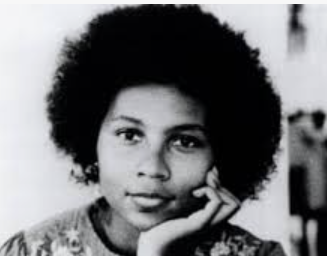
We need to recognize the destructive role played by the media in fanning the flames of the "Black-Jewish Conflict." Cornel West, bell hooks, Richard Green, Barbara Christian, Henry Louis Gates, Marian Wright Edelman, Nell Painter, Albert Raby....Why are these names not as well known outside the African American community as the names of Louis Farrakhan or Leonard Jeffries? Are they, in their diversity and dynamism, less representative of the African American community?
▼
Source
source
Melanie Kaye/Kantrowitz "Jews, Class, Color, and the Cost of Whiteness" in The Issue is Power

1 month 2 weeks ago
The truth is that the State is a conspiracy designed not only to exploit, but above all to corrupt its citizens ... Henceforth, I shall never serve any government anywhere.
▼
Source
source
As quoted in Tolstoy (1988) by A. N. Wilson, p. 146

2 months 3 days ago
Your own philosophy condemns you and supports us.
▼
Source
source
Salbatore Mitxelena (1958): Unamuno eta Abendats, Baiona: Darracq

4 months 1 week ago
A robot may not injure a human being, or, through inaction, allow a human being to come to harm.
1 month 1 week ago
It is only the ignorant who despise education.
▼
Source
source
Maxim 571
2 months 1 week ago
A philosophy has no private store of knowledge or methods for attaining truth, so it has no private access to good. As it accepts knowledge and principles from those competent in science and inquiry, it accepts the goods that are diffused in human experience. It has no Mosaic or Pauline authority of revelation entrusted to it. But it has the authority of intelligence, of criticism of these common and natural goods.
3 months 4 weeks ago
There are hardly any truths upon which we always remain agreed, and still fewer objects of pleasure which we do not change every hour, I do not know whether there is a means of giving fixed rules for adapting discourse to the inconstancy of our caprices.
3 months 2 weeks ago
We are born believing. A man bears beliefs as a tree bears apples.
▼
Source
source
Worship
2 months 1 week ago
If there is a devil in human history, that devil is the principle of command. It alone, sustained by the ignorance and stupidity of the masses, without which it could not exist, is the source of all the catastrophes, all the crimes, and all the infamies of history.
▼
Source
source
On the Program of the Alliance (1871), in Bakunin on Anarchy (1971), translated and edited by Sam Dolgoff Variant translation: If there is a devil in history, it is the power principle.
1 month 2 weeks ago
The TV camera has no shutter. It does not deal with aspects or facets of objects in high resolution. It is a means of direct pick-up by the electrical groping over surfaces.
▼
Source
source
Arts in society, Volume 3, 1964, p. 242

2 months 2 weeks ago
The best definition of man is: a being that goes on two legs and is ungrateful.
▼
Source
source
Part 1, Chapter 8 (tr. David Magarshack, 1950) The best definition of man is: a biped, ungrateful.

1 day ago
Do you desire another case? Take that of the younger Marcus Cato, with whom Fortune dealt in a more hostile and more persistent fashion. But he withstood her, on all occasions, and in his last moments, at the point of death, showed that a brave man can live in spite of Fortune, can die in spite of her. His whole life was passed either in civil warfare, or under a political regime which was soon to breed civil war.
1 week 5 days ago
Just sit back and listen to some of the clamorous grievances against the contemporary global system. Our list does not pretend to be comprehensive, and the partiality of its selections will undoubtedly reveal our own blindnesses, but it should nonetheless give a sense of the range and depth of today's grievances.
▼
Source
source
270
2 months 3 weeks ago
There is no man alone, because every man is a Microcosm, and carries the whole world about him.
▼
Source
source
Section 10
3 months 2 weeks ago
The sensuous may be exceedingly distinct, while intellectual concepts are extremely confused. The former we observe in the prototype of sensuous knowledge geometry; the latter, in the organon of all intellectual concepts, metaphysics. It is evident how much toil the latter is expending to dispel the fogs of confusion darkening the common intellect, though not always with the happy success of the former science.

3 months 3 weeks ago
Do not wonder, if the common people speak more truly than those of high rank; for they speak with more safety.
▼
Source
source
Exempla Antithetorum, IX. Laus, Existimatio (Pro.)

2 months 2 days ago
The capacity to give one's attention to a sufferer is a very rare and difficult thing; it is almost a miracle; it is a miracle. Nearly all those who think they have this capacity do not possess it. Warmth of heart, impulsiveness, pity are not enough.

2 months 2 weeks ago
The statue of Freedom has not been cast yet, the furnace is hot, we can all still burn our fingers.
▼
Source
source
Act I.

3 months 1 week ago
I believe that one of the things Christianity says is that sound doctrines are all useless. That you have to change your life. (Or the direction of your life.)
▼
Source
source
p. 53e
2 months 1 week ago
The pint would call the quart a dualist, if you tried to pour the quart into him.
▼
Source
source
p. 60
2 months 1 week ago
Spontaneous social action will be broken up over and over again by State intervention; no new seed will be able to fructify. Society will have to live for the State, man for the governmental machine. And as, after all, it is only a machine whose existence and maintenance depend on the vital supports around it, the State, after sucking out the very marrow of society, will be left bloodless, a skeleton, dead with that rusty death of machinery, more gruesome than the death of a living organism. Such was the lamentable fate of ancient civilisation. ... Already in the times of the Antonines (IInd Century), the State overbears society with its anti-vital supremacy. Society begins to be enslaved, to be unable to live except in the service of the State. The whole of life is bureaucratised. What results? The bureaucratisation of life brings about its absolute decay in all orders.
▼
Source
source
Chapter XIII: The Greatest Danger, The State
CivilSimian.com created by AxiomaticPanic, CivilSimian, Kalokagathia