

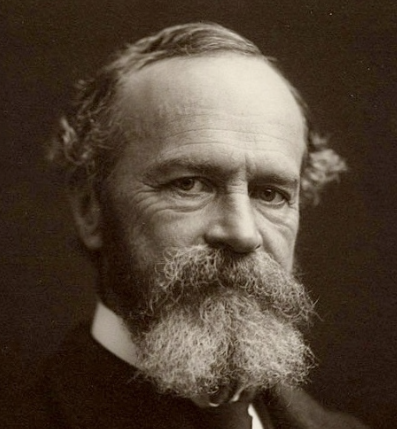
3 months 3 weeks ago
It makes a tremendous emotional and practical difference to one whether one accepts the universe in the drab discolored way of stoic resignation to necessity, or with the passionate happiness of Christian saints.
▼
Source
source
Lecture II, "Circumscription of the Topic"

2 months 1 week ago
Warmth, warmth, more warmth! for we are dying of cold and not of darkness. It is not the night that kills, but the frost.
2 weeks ago
The virtues are not poured into us, they are natural. Seek, and you will find them: neglect, and you will lose them.
▼
Source
source
Uses and Sanctions, no. 22
3 weeks 4 days ago
Whatever the practical origins of aesthetic discernment may have been, it has been used to create great works of art. When the very loftiest human creations are seen to derive from humble origins and functions, what needs revision is not our esteem for these creations but our notion of nobility.
▼
Source
source
The Nature of Rationality (1993), Ch. V : Instrumental Rationality and Its Limits; Rationality's Imagination, p. 181
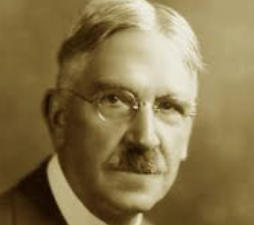
2 months 1 week ago
When we come to inanimate elements, the prevailing view has been that time and sequential change are entirely foreign to their nature. According to this view they do not have careers; they simply change their relations is space. We have only to think of the classic conception of atoms. The Newtonian atom, for example, moved and was moved, thus changing its position in space, but it was unchangeable in its own being. ... In itself it was like a God, the same yesterday, today, and forever.
2 months 4 days ago
Society triumphs over many. They wish to regenerate the world with their institutions, with their moral philosophy, with their love. Then they sink to living from breakfast till dinner, from dinner till tea, with a little worsted work, and to looking forward to nothing but bed. When shall we see a life full of steady enthusiasm, walking straight to its aim, flying home, as that bird is now, against the wind - with the calmness and the confidence of one who knows the laws of God and can apply them?

3 months 3 weeks ago
I am no longer sure of anything. If I satiate my desires, I sin but I deliver myself from them; if I refuse to satisfy them, they infect the whole soul.
▼
Source
source
Act 10, sc. 2
2 weeks ago
Marx sees Epicurus as a destroyer of the Greek myths and as a philosopher bringing to light the break-up of a tribal community. His system destroyed the visible heaven of the ancients as a keystone of political and religious life. Marx allies himself, so to speak, with Epicurean atheism, which he regards at this stage as a challenge by the intellectual élite to the cohorts of common sense. 'As long as a single drop of blood pulses in her world-conquering and totally free heart, philosophy will continually shout at her opponents the cry of Epicurus: "Impiety does not consist in destroying the gods of the crowd but rather in ascribing to the gods the ideas of the crowd."'
▼
Source
source
(pp. 102-3)
2 months 2 weeks ago
Poetry heals the wounds inflicted by reason.
▼
Source
source
As quoted in Quote, Unquote (1989) by Jonathan Williams, p. 136
3 months 3 weeks ago
Life has a value only when it has something valuable as its object.
3 months 3 weeks ago
What the history of Philosophy shows us is a succession of noble minds, a gallery of heroes of thought, who, by the power of reason, have penetrated into the being of things, of nature and of spirit, into the Being of God, and have won for us by their labours the highest treasure, the treasure of reasoned knowledge.
▼
Source
source
Introduction p. 1 Lectures on the history of philosophy, Translated from German by E. S. Haldane in Three Volumes (1892-96) full text


1 month 1 day ago
Humans already massively intervene in Nature, whether through habitat destruction, captive breeding programs for big cats, "rewilding", etc. So the question is not whether humans should "interfere", but rather what ethical principles should govern our interventions.
▼
Source
source
The Antispeciesist Revolution, Institute for Ethics and Emerging Technologies, 26 Jul. 2013
3 months 3 weeks ago
To be independent of public opinion is the first formal condition of achieving anything great or rational whether in life or in science. Great achievement is assured, however, of subsequent recognition and grateful acceptance by public opinion, which in due course will make it one of its own prejudices.
▼
Source
source
Sect. 318, as translated by T. M. Knox,, 1952
1 week ago
The difficulty in our education up till now lies, for the most part, in the fact that knowledge did not refine itself into will, to application of itself, to pure practice. The realists felt the need and supplied it, though in a most miserable way, by cultivating idea-less and fettered "practical men." Most college students are living examples of this sad turn of events. Trained in the most excellent manner, they go on training; drilled they continue drilling.
▼
Source
source
p. 25
3 months 3 weeks ago
Enjoin him to play so many hours every day, and look that he do it; and you shall see he will quickly be sick of it; and willing to leave it. By this means making the recreations you dislike a business to him, he will of himself with delight betake himself to those things you would have him do, especially if they be proposed as rewards for having performed the task in that play which is commanded of him.
▼
Source
source
Sec. 129

1 week ago
The man who hopes for naught at least has naught to fear.
▼
Source
source
Line 163;
1 month 3 weeks ago
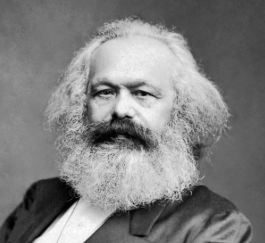
Service of the people by sciences and arts will only exist when men live with the people and as the people live, and without presenting any claims will offer their scientific and artistic services, which the people will be free to accept or decline as they please.
3 months 3 weeks ago
Ideas do not exist separately from language.
▼
Source
source
Notebook I, The Chapter on Money, p. 83.

2 months 2 weeks ago
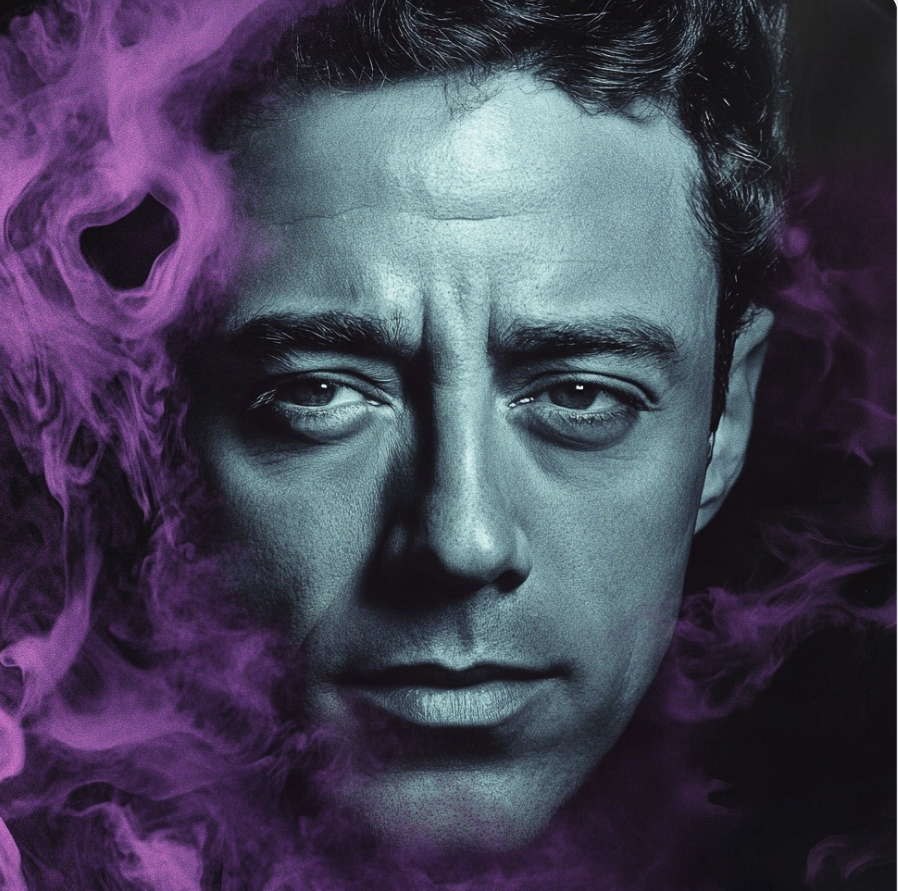
Creation is in fact a fault, man's famous sin thereby appearing as a minor version of a much graver one. What are we guilty of, except of having followed, more or less slavishly, the Creator's example? Easy to recognize in ourselves the fatality which was His: not for nothing have we issued from the hands of a wicked and woebegone god, a god accursed.
4 months 2 weeks ago
Of all the schools of patience and lucidity, creation is the most effective. It is also the staggering evidence of man's sole dignity: the dogged revolt against his condition, perseverance in an effort considered sterile. It calls for a daily effort, self-mastery, a precise estimate of the limits of truth, measure, and strength. It constitutes an ascesis. All that "for nothing," in order to repeat and mark time. But perhaps the great work of art has less importance in itself than in the ordeal it demands of a man and the opportunity it provides him of overcoming his phantoms and approaching a little closer to his naked reality.

4 months 2 weeks ago
There is no way of being almost funny or mildly funny or fairly funny or tolerably funny. You are either funny or not funny and there is nothing in between. And usually it is the writer who thinks he is funny and the reader who thinks he isn't.

1 month 2 weeks ago
For tribal man, space was the uncontrollable mystery. For technological man it is time that occupies the same role.
▼
Source
source
p. 85; "Magic that Changes Mood")

2 months 5 days ago
"Why do you not say how things will be operated under Anarchism?" is a question I have had to meet thousands of times. Because I believe that Anarchism can not consistently impose an iron-clad program or method on the future. The things every new generation has to fight, and which it can least overcome, are the burdens of the past, which holds us all as in a net. Anarchism, at least as I understand it, leaves posterity free to develop its own particular systems, in harmony with its needs. Our most vivid imagination can not foresee the potentialities of a race set free from external restraints. How, then, can any one assume to map out a line of conduct for those to come? We, who pay dearly for every breath of pure, fresh air, must guard against the tendency to fetter the future. If we succeed in clearing the soil from the rubbish of the past and present, we will leave to posterity the greatest and safest heritage of all ages.
2 months 2 weeks ago
I seem to myself, among civilised men, an intruder, a troglodyte enamored of decrepitude, plunged into subversive prayers.

3 months 3 weeks ago
Music is the poor man's Parnassus.
▼
Source
source
Poetry and Imagination

1 week 6 days ago
Democracy is, by the nature of it, a self-canceling business; and it gives in the long run a net result of zero.
▼
Source
source
Ch. 6, Laissez-Faire.
2 months 2 weeks ago
"Meeting, after several years, someone we used to know as a child, the first glance almost always suggests that some great disaster must have befallen him" Leopardi, quoted by cioran.
3 months 3 weeks ago
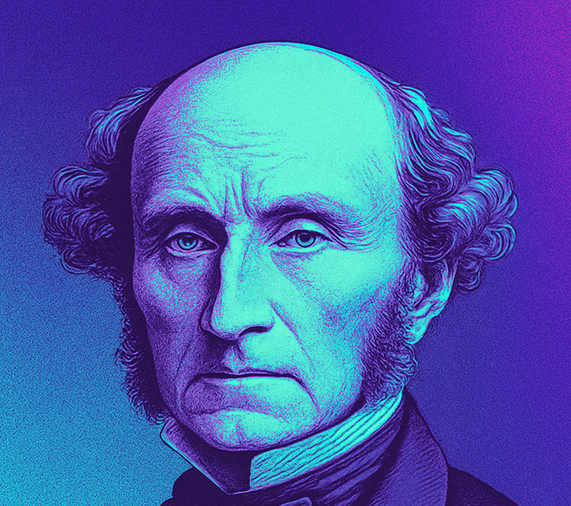
Again, defenders of utility often find themselves called upon to reply to such objections as this-that there is not time, previous to action, for calculating and weighing the effects of any line of conduct on the general happiness. This is exactly as if any one were to say that it is impossible to guide our conduct by Christianity, because there is not time, on every occasion on which anything has to be done, to read through the Old and New Testaments. The answer to the objection is, that there has been ample time, namely, the whole past duration of the human species. During all that time mankind have been learning by experience the tendencies of actions.
▼
Source
source
Ch. 2
1 month 1 week ago
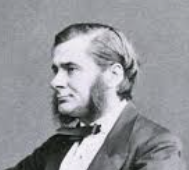
So far as cerebral structure goes... it is clear that Man differs less from the Chimpanzee or the Orang, than these do even from the Monkeys, and that the difference between the brains of the Chimpanzee and of Man is almost insignificant, when compared with that between the Chimpanzee brain and that of a Lemur.
▼
Source
source
Ch.2, p. 120
3 months 3 weeks ago
It is the duty of every patriot to protect his country from its government.
▼
Source
source
Edward Abbey, "A patriot must always be ready to defend his country against his government." as written in "A Voice Crying in the Wilderness" (Vox Clamantis en Deserto): Notes from a Secret Journal (1990), ISBN 0312064888

3 months 3 weeks ago
Acquisitiveness - the wish to possess as much as possible of goods, or the title to goods - is a motive which, I suppose, has its origin in a combination of fear with the desire for necessaries.
2 months 2 weeks ago
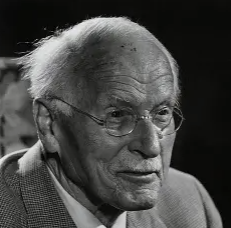
Among all my patients in the second half of life-that is to say, over thirty-five-there has not been one whose problem in the last resort was not that of finding a religious outlook on life. It is safe to say that every one of them fell ill because he had lost what the living religions of every age have given their followers, and none of them has been really healed who did not regain his religious outlook.
▼
Source
source
Chap. 11 (Psychotherapists or the Clergy), p. 229
1 week ago
I do not trust my eyes to tell me what a man is: I have a better and more trustworthy light by which I can distinguish what is true from what is false: let the mind find out what is good for the mind.
▼
Source
source
De Vita Beata (On the Happy Life): cap. 2, line 2 Alternate translation: I do not distinguish by the eye, but by the mind, which is the proper judge of the man. (translator unknown).
1 week 6 days ago
Speech is human, silence is divine, yet also brutish and dead: therefore we must learn both arts.
▼
Source
source
Notebooks (1830).
2 months 1 week ago
Before his death, Rabbi Zusya said, "In the coming world, they will not ask me: 'Why were you not Moses?' They will ask me: 'Why were you not Zusya?'"
▼
Source
source
Tales of the Hasidim (1947), 1991 Ebook edition, p.251, as quoted in Jewish Currents.
2 months 2 weeks ago
To conceive that compulsion and punishment are the proper means of reformation, is the sentiment of a barbarian; civilisation and science are calculated to explode so ferocious an idea. It was once universally admitted and approved; it is now necessarily upon the decline.
▼
Source
source
Vol. 2, bk. 7, ch. 5

4 weeks 1 day ago
An old fairy tale has it that science began with the rejection of superstition. In fact it was the rejection of rationalism that gave birth to scientific inquiry. Ancient and medieval thinkers believed the world could be understood by applying first principles. Modern science begins when observation and experiment come first, and the results are accepted even when what they show seems to be impossible.
▼
Source
source
Foreword: Two Attempts to Cheat Death (pp. 5-6)
1 week 6 days ago
Friend!-Will the ballot-box raise the Noblest to the chief place; does any sane man deliberately believe such a thing?
1 month 1 week ago
As free constitutions are the strongest supports of governments, social order is the best safeguard of freedom. Liberty has no enemies so pernicious as those misguided friends whose ardour in her cause leads them to outrage the moral sense of mankind, and to arm against her the interests and feelings which are her natural allies. Even the prejudices of nations should be respected.
▼
Source
source
'Essay on the Life and Character of King William III' (1822), written for the Greaves Historical Prize at Cambridge, quoted in The Times Literary Supplement (1 May 1969), p. 469
4 months ago
Faith, like light, should ever be simple and unbending; while love, like warmth, should beam forth on every side, and bend to every necessity of our brethren.
▼
Source
source
p. 220

1 month 3 weeks ago
The truth is that the State is a conspiracy designed not only to exploit, but above all to corrupt its citizens ... Henceforth, I shall never serve any government anywhere.
▼
Source
source
As quoted in Tolstoy (1988) by A. N. Wilson, p. 146
1 week 6 days ago
For the Scepticism, as I said, is not intellectual only; it is moral also; a chronic atrophy and disease of the whole soul. A man lives by believing something; not by debating and arguing about many things.
3 days ago
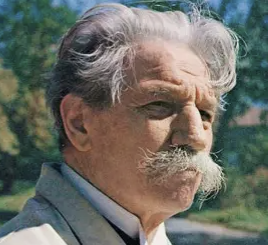
The only way out of today's misery is for people to become worthy of each other's trust.
2 months 1 week ago
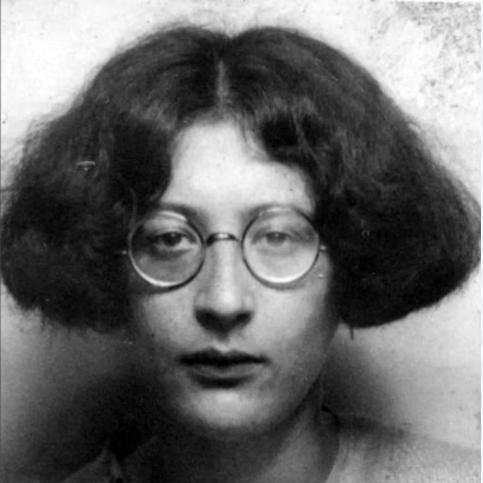
It is impossible to feel equal respect for things that are in fact unequal unless the respect is given to something that is identical in all of them. Men are unequal in all their relations with the things of this world, without exception. The only thing that is identical in all men is the presence of a link with the reality outside the world. All human beings are absolutely identical in so far as they can be thought of as consisting of a centre, which is an unquenchable desire for good, surrounded by an accretion of psychical and bodily matter.
2 months 2 weeks ago
Every political good carried to the extreme must be productive of evil.
▼
Source
source
The French Revolution, Bk. V, ch. 4
2 months 1 week ago
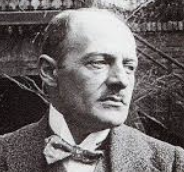
The precepts "Love your enemies, do good to them which hate you, bless them that curse you" ... are born from the Gospel's profound spirit of individualism, which refuses to let one's own actions and conduct depend in any way on somebody else's acts. The Christian refuses to let his acts be mere reactions-such conduct would lower him to the level of his enemy. The act is to grow organically from the person, "as the fruit from the tree." ... What the Gospel demands is not a reaction which is the reverse of the natural reaction, as if it said: "Because he strikes you on the cheek, tend the other"-but a rejection of all reactive activity, of any participation in common and average ways of acting and standards of judgment.
▼
Source
source
L. Coser, trans. (1961), pp. 99-100
CivilSimian.com created by AxiomaticPanic, CivilSimian, Kalokagathia