


4 months 4 weeks ago
Believe me, there is no such thing as great suffering, great regret, great memory...Everything is forgotten, even great love.
1 month 2 weeks ago
Lost time was like a run in a stocking. It always got worse.
▼
Source
source
The Steep Ascent

2 months 4 weeks ago
We are born to exist, not to know, to be, not to assert ourselves.

3 weeks 3 days ago
For the whole Past, as I keep repeating, is the possession of the Present; the Past had always something true, and is a precious possession. In a different time, in a different place, it is always some other side of our common Human Nature that has been developing itself. The actual True is the sum of all these; not any one of them by itself constitutes what of Human Nature is hitherto developed. Better to know them all than misknow them. "To which of these Three Religions do you specially adhere?" inquires Meister of his Teacher. "To all the Three!" answers the other: "To all the Three; for they by their union first constitute the True Religion."
4 months 1 day ago
He was genuinely incapable of uttering a single sentence that was not a cliché. Eichmann, despite his rather bad memory, repeated word for word the same stock phrases and self-invented clichés (when he did succeed in constructing a sentence of his own, he repeated it until it became a cliché) each time he referred to an incident or event of importance to him. The longer one listened to him, the more obvious it became that his inability to speak was closely connected with an inability to think, namely to think from the standpoint of somebody else. No communication was possible with him, not because he lied but because he was surrounded by the most reliable of all safeguards against the words and the presence of others, and hence against reality as such.
▼
Source
source
Ch. III
2 months 4 weeks ago
Where are my sensations? They have melted into... me, and what is this me, this self, but the sum of these evaporated sensations?

3 weeks ago
There should be 2 systems. One for needs and one for wants. We shouldn't have to compete for needs, and we shouldn't expect the things we want. An ideal system would definitely be a seriously regulated capitalism with an uncompromised safety net that we focus on with automation and AI. But, those with just want those without to die. In the end, they will lose.
3 months 3 weeks ago
Is it surprising that prisons resemble factories, schools, barracks, hospitals, which all resemble prisons?
▼
Source
source
Discipline and Punish (1977) as translated by Alan Sheridan, p. 228
4 months 3 days ago
To him who looks upon the world rationally, the world in its turn presents a rational aspect. The relation is mutual.

2 months 3 weeks ago
Whoever believes and is baptized will be saved, but whoever does not believe will be condemned. And these signs will accompany those who believe: In my name they will drive out demons; they will speak in new tongues; they will pick up snakes with their hands; and when they drink deadly poison, it will not hurt them at all; they will place their hands on sick people, and they will get well.
▼
Source
source
Jesus, Mark 16:16-18

3 months 3 weeks ago
In the weightiest matters we must go to school to the animals, and learn spinning and weaving from the spider, building from the swallow, singing from the birds,-from the swan and the nightingale, imitating their art.
1 week 4 days ago
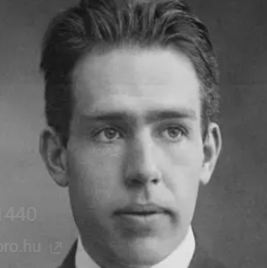
What is it that we humans depend on? We depend on our words... Our task is to communicate experience and ideas to others. We must strive continually to extend the scope of our description, but in such a way that our messages do not thereby lose their objective or unambiguous character ... We are suspended in language in such a way that we cannot say what is up and what is down. The word "reality" is also a word, a word which we must learn to use correctly.
▼
Source
source
Quoted in Philosophy of Science Vol. 37 (1934), p. 157, and in The Truth of Science : Physical Theories and Reality (1997) by Roger Gerhard Newton, p. 176

4 months 3 days ago
Nothing makes the earth seem so spacious as to have friends at a distance; they make the latitudes and longitudes.
▼
Source
source
Pearls of Thought (1881) p. 95
3 months ago
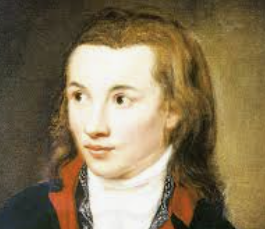
Life is a disease of the spirit; a working incited by Passion. Rest is peculiar to the spirit.
4 months 3 days ago
I do not wish to kill nor to be killed, but I can foresee circumstances in which both these things would be by me unavoidable. We preserve the so-called peace of our community by deeds of petty violence every day. Look at the policeman's billy and handcuffs! Look at the jail! Look at the gallows! Look at the chaplain of the regiment! We are hoping only to live safely on the outskirts of this provisional army. So we defend ourselves and our hen-roosts, and maintain slavery. I know that the mass of my countrymen think that the only righteous use that can be made of Sharp's rifles and revolvers is to fight duels with them, when we are insulted by other nations, or to hunt Indians, or shoot fugitive slaves with them, or the like. I think that for once the Sharp's rifles and the revolvers were employed in a righteous cause. The tools were in the hands of one who could use them.
4 months 1 week ago
Man is forming thousands of ridiculous relations between himself and God.
▼
Source
source
Ch. 12
2 months 4 weeks ago
My faculty for disappointment surpasses understanding. It is what lets me comprehend Buddha, but also what keeps me from following him.
2 weeks ago
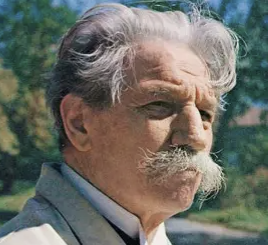
We came to a tree which was still bare, and on which the birds were singing out gaily in the morning, without any fear of us. Then stooping over like an Indian on the hunt, my companion placed a pebble in the leather of his sling and stretched it. Obeying his peremptory glance I did the same, with frightful twinges of conscience, vowing firmly that I would shoot when he did. At that very moment the church bells began to sound, mingling with the song of the birds in the sunshine. It was the warning bell that came a half-hour before the main bell. For me it was a voice from heaven. I threw the sling down, scaring the birds away, so that they were safe from my companion's sling, and fled home. And ever afterwards when the bells of Holy Week ring out amidst the leafless trees in the sunshine I remember with moving gratitude how they rang into my heart at that time the commandment: Thou shalt not kill.
4 months 1 week ago
The laws of conscience, which we pretend to be derived from nature, proceed from custom.
▼
Source
source
Ch. 22. Of Custom, tr. Cotton, rev. W. Hazlitt, 1842
Just now
He who fears death either fears to lose all sensation or fears new sensations. In reality, you will either feel nothing at all, and therefore nothing evil, or else, if you can feel any sensations, you will be a new creature, and so will not have ceased to have life.
▼
Source
source
VIII, 58
2 months 3 weeks ago
And when all the world is overcharged with Inhabitants, then the last remedy of all is Warre, which provideth for every man, by Victory or Death.
▼
Source
source
The Second Part, Chapter 30, p. 181
2 months 2 weeks ago
We live in a nightmare of falsehoods, and there are few who are sufficiently awake and aware to see things as they are. Our first duty is to clear away illusions and recover a sense of reality. If war should come, it will do so on account of our delusions, for which our hag-ridden conscience attempts to find moral excuses. To recover a sense of reality is to recover the truth about ourselves and the world in which we live, and thereby to gain the power of keeping this world from flying asunder.
▼
Source
source
p. 80
2 months 5 days ago
Seduction is the world's elementary dynamic... All this has changed significantly for us, at least in appearance. For what has happened to good and evil? Seduction hurls them against one another, and unites them beyond meaning, in a paroxysm [sudden outbreak of emotion] of intensity and charm.
▼
Source
source
(p. 59)
2 months 4 weeks ago
When you know quite absolutely that everything is unreal, you then cannot see why you should take the trouble to prove it.

Just now
Burke said with a depth that it is impossible to admire enough that art is man's nature: yes, undoubtedly, man with all his affections, all his knowledge, all his arts, is truly the man of nature, and the weaver's web is as natural as the spider's.
▼
Source
source
p. 52

4 months 3 weeks ago
The superior man is satisfied and composed; the mean man is always full of distress. The virtuous is frank and open; the non-virtuous is secretive and worrying.

4 months 3 days ago
Shallow men believe in luck.
▼
Source
source
Worship
1 month 2 weeks ago
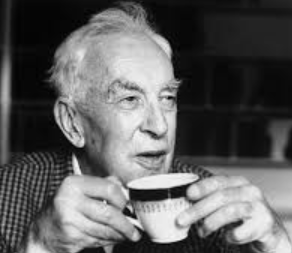
When I was a child, the institution of war, which, by then, had been in existence for perhaps about five thousand years, was still being taken for granted by most people in the World as a normal and acceptable fact of life. One small religious community, the Society of Friends, was at that time singular in condemning war as immoral and in consequently refusing to have any part or lot in war-making.
▼
Source
source
Experiences (New York: Oxford UP, 1969) pt. 2, sect. 4
2 months 3 weeks ago
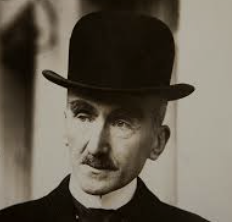
The prestige of the Nobel Prize is due to many causes, but in particular to its twofold idealistic and international character: idealistic in that it has been designed for works of lofty inspiration; international in that it is awarded after the production of different countries has been minutely studied and the intellectual balance sheet of the whole world has been drawn up. Free from all other considerations and ignoring any but intellectual values, the judges have deliberately taken their place in what the philosophers have called a community of the mind.
▼
Source
source
In a letter accepting the 1927 Nobel Prize in literature, read by the French minister, Armand Bernard.

4 months 6 days ago
My philosophical views approach somewhat closely those of the late Countess of Conway, and hold a middle position between Plato and Democritus, because I hold that all things take place mechanically as Democritus and Descartes contend against the views of Henry More and his followers, and hold too, nevertheless, that everything takes place according to a living principle and according to final causes - all things are full of life and consciousness, contrary to the views of the Atomists.
▼
Source
source
Letter to Thomas Burnet (1697), as quoted in Platonism, Aristotelianism and Cabalism in the Philosophy of Leibniz (1938) by Joseph Politella, p. 18
4 months 4 weeks ago
Truth, like light, blinds. Falsehood, on the contrary, is a beautiful twilight that enhances every object.
2 months 2 weeks ago
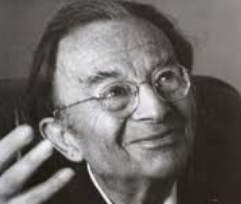
The application of psychoanalysis to sociology must definitely guard against the mistake of wanting to give psychoanalytic answers where economic, technical, or political facts provide the real and sufficient explanation of sociological questions. On the other hand, the psychoanalyst must emphasize that the subject of sociology, society, in reality consists of individuals, and that it is these human beings, rather than abstract society as such, whose actions, thoughts, and feelings are the object of sociological research.
▼
Source
source
"Psychoanalyse und Soziologie" (1929); published as "Psychoanalysis and Sociology" as translated by Mark Ritter, in Critical Theory and Society : A Reader (1989) edited by S. E. Bronner and D. M. Kellner
1 month 6 days ago
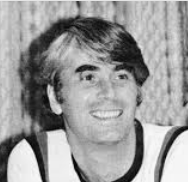
It goes without saying that any persons may attempt to unite kindred spirits, but, whatever their hopes and longings, none have the right to impose their vision of unity upon the rest.
▼
Source
source
Ch. 10 : A Framework for Utopia; The Framework as Utopian Common Ground, p. 325

4 months 3 days ago
Compared with the greatest poets, he may be said to be the poet of unpoetical natures, possessed of quiet and contemplative tastes. But unpoetical natures are precisely those which require poetic cultivation. This cultivation Wordsworth is much more fitted to give, than poets who are intrinsically far more poets than he.
▼
Source
source
(p. 149)
4 months 3 weeks ago
By the ruler's cultivation of his own character, the duties of universal obligation are set forth. By honoring men of virtue and talents, he is preserved from errors of judgment.
2 months 4 weeks ago
When you know that every problem is only a false problem, you are dangerously close to salvation.
2 months 4 weeks ago
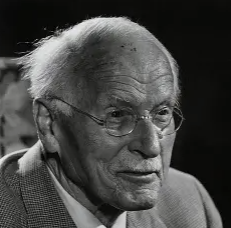
There are as many nights as days, and the one is just as long as the other in the year's course. Even a happy life cannot be without a measure of darkness, and the word "happy" would lose its meaning if it were not balanced by sadness.
▼
Source
source
"The Art of Living", interview with journalist Gordon Young first published in 1960

Just now
As thou thyself art a component part of a social system, so let every act of thine be a component part of social life. Whatever act of thine that has no reference, either immediately or remotely, to a social end, this tears asunder thy life, and does not allow it to be one, and it is of the nature of a mutiny, just as when in a popular assembly a man acting by himself stands apart from the general agreement.
▼
Source
source
IX, 23
4 weeks 1 day ago
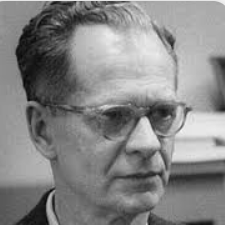
Man's power appears to have increased out of all proportion to his wisdom. He has never been in a better position to build a healthy, happy, and productive world; yet things have perhaps never seemed so black.
▼
Source
source
Science and Human Behavior
4 months 3 weeks ago
The Superior Man is all-embracing and not partial. The inferior man is partial and not all-embracing.

2 months 2 weeks ago
We Americans claim to be a peace-loving people. We hate bloodshed; we are opposed to violence. Yet we go into spasms of joy over the possibility of projecting dynamite bombs from flying machines upon helpless citizens. We are ready to hang, electrocute, or lynch anyone, who, from economic necessity, will risk his own life in the attempt upon that of some industrial magnate. Yet our hearts swell with pride at the thought that America is becoming the most powerful nation on earth, and that it will eventually plant her iron foot on the necks of all other nations. Such is the logic of patriotism.
2 months 3 weeks ago
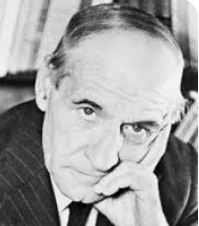
He [the "specialist"] is one who, out of all that has to be known in order to be a man of judgment, is only acquainted with one science, and even of that one only knows the small corner in which he is an active investigator. He even proclaims it as a virtue that he takes no cognisance of what lies outside the narrow territory specially cultivated by himself, and gives the name of "dilettantism" to any curiosity for the general scheme of knowledge.
▼
Source
source
Chapter XII: The Barbarism Of "Specialisation"
2 months 3 weeks ago
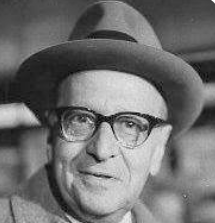
Calvin's theocentric irrationalism eventually revealed itself as the cunning to technocratic reason which had to shape its human material. Misery and the poor laws did not suffice to drive men into the workshops of the early capitalistic era. The new spirit helped to supplement external pressures with a concern for wife and child to which the moral autonomy of the introverted subject in reality was tantamount.
▼
Source
source
p. 34.

3 days ago
The Bank of the United States... is one of the most deadly hostility existing, against the principles and form of our Constitution... An institution like this, penetrating by its branches every part of the Union, acting by command and in phalanx, may, in a critical moment, upset the government. I deem no government safe which is under the vassalage of any self-constituted authorities, or any other authority than that of the nation, or its regular functionaries. What an obstruction could not this bank of the United States, with all its branch banks, be in time of war! It might dictate to us the peace we should accept, or withdraw its aids. Ought we then to give further growth to an institution so powerful, so hostile?
▼
Source
source
Letter to Albert Gallatin, 1803. ME 10:437
4 months 3 days ago
My education, which was wholly his work, had been conducted without any regard to the possibility of its ending in this result; and I saw no use in giving him the pain of thinking that his plans had failed, when the failure was probably irremediable, and, at all events, beyond the power of his remedies. Of other friends, I had at that time none to whom I had any hope of making my condition intelligible. It was however abundantly intelligible to myself; and the more I dwelt upon it, the more hopeless it appeared.
▼
Source
source
(p. 135)

3 months 1 week ago
That there is no such thing as what philosophers call material substance, I am seriously persuaded: but if I were made to see any thing absurd or skeptical in this, I should then have the same reason to renounce this, that I imagine I have now to reject the contrary opinion.
▼
Source
source
Philonous to Hylas
3 months ago
All religions are cruel, all founded on blood; for all rest principally on the idea of sacrifice - that is, on the perpetual immolation of humanity to the insatiable vengeance of divinity.

4 months 4 days ago
You find as you look around the world that every single bit of progress of humane feeling, every improvement in the criminal law, every step toward the diminution of war, every step toward better treatment of the colored races, or even mitigation of slavery, every moral progress that there has been in the world, has been consistently opposed by the organized churches of the world. I say quite deliberately that the Christian religion, as organized in its churches, has been and still is the principal enemy of moral progress in the world.
▼
Source
source
"The Emotional Factor"
2 months 4 weeks ago
Eros is a superhuman power which, like nature herself, allows itself to be conquered and exploited as though it were impotent. But triumph over nature is dearly paid for. Nature requires no explanations of principle, but asks only for tolerance and wise measure. "Eros is a mighty daemon," as the wise Diotima said to Socrates. We shall never get the better of him, or only to our own hurt. He is not the whole of our inward nature, though he is at least one of its essential aspects.
▼
Source
source
Two Essays on Analytical Psychology, CW 7 (1957). "On the Psychology of the Unconscious" P.32f
CivilSimian.com created by AxiomaticPanic, CivilSimian, Kalokagathia