

3 months 1 day ago
I know every numbskull will babble on about "black man," "maneater," "chance," and "retrospective interpretation," in order to banish something terribly inconvenient that might sully the familiar picture of childhood innocence. Ah, these good, efficient, healthy-minded people, they always remind me of those optimistic tadpoles who bask in a puddle in the sun, in the shallowest of waters, crowding together and amiably wriggling their tails, totally unaware that the next morning the puddle will have dried up and left them stranded. On a phallic dream he had as a young child.
▼
Source
source
p. 14
5 days ago
I will not accept boundaries; appearances cannot contain me; I choke! To bleed in this agony, and to live it profoundly, is the second duty. The mind is patient and adjusts itself, it likes to play; but the heart grows savage and will not condescend to play; it stifles and rushes to tear apart the nets of necessity.

2 months 2 weeks ago
Concern for the symbol has completely disappeared from our science. And yet, if one were to give oneself the trouble, one could easily find, in certain parts at least of contemporary mathematics... symbols as clear, as beautiful, and as full of spiritual meaning as that of the circle and mediation. From modern thought to ancient wisdom the path would be short and direct, if one cared to take it.
▼
Source
source
The Need for Roots (1949), p. 292

1 month 2 weeks ago
By and large, mothers and housewives are the only workers who do not have regular time off. They are the great vacationless class.

1 month 4 days ago
The most obvious failure of organized religions is surely that almost all of them have made a mockery of what their founders taught.
▼
Source
source
p. 267

4 months 5 days ago
The heavens are as deep as our aspirations are high.
▼
Source
source
Quoted in Maturin M. Ballou (ed.) Pearls of Thought (Boston: Houghton, Mifflin and Co., 1881) p. 21


4 months 4 days ago
In modern eyes, precious though wars may be they must not be waged solely for the sake of the ideal harvest. Only when forced upon one, is a war now thought permissible. It was not thus in ancient times. The earlier men were hunting men, and to hunt a neighboring tribe, kill the males, loot the village and possess the females, was the most profitable, as well as the most exciting, way of living. Thus were the more martial tribes selected, and in chiefs and peoples a pure pugnacity and love of glory came to mingle with the more fundamental appetite for plunder. Modern war is so expensive that we feel trade to be a better avenue to plunder; but modern man inherits all the innate pugnacity and all the love of glory of his ancestors. Showing war's irrationality and horror is of no effect on him. The horrors make the fascination. War is the strong life; it is life in extremis; war taxes are the only ones men never hesitate to pay, as the budgets of all nations show us.

3 months 5 days ago
Toleration is good for all, or it is good for none.
▼
Source
source
Speech on the Bill for the Relief of Protestant Dissenters
1 month 1 week ago
Dialogue never ends not for lack of time or opportunity but for essential reasons.
▼
Source
source
Chapter 7, Vigilance and Interruption, p. 121

2 months 4 days ago
The whole life of the upper classes is a constant inconsistency. The more delicate a man's conscience is, the more painful this contradiction is to him.
▼
Source
source
Chapter V, Contradiction Between our Life and our Christian Conscience
3 months 5 days ago
It is a general popular error to suppose the loudest complainers for the publick to be the most anxious for its welfare.
▼
Source
source
Observations on a Late Publication on the Present State of the Nation

4 months 1 week ago
...happiness is not an ideal of reason but of imagination, resting solely on empirical grounds.
▼
Source
source
Fundamental Principles of the Metaphysics of Ethics (1785), Second Section.
4 months 5 days ago
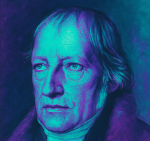
Not only must philosophy be in agreement with our empirical knowledge of Nature, but the origin and formation of the Philosophy of Nature presupposes and is conditioned by empirical physics. However, the course of a science's origin and the preliminaries of its construction are one thing, while the science itself is another. In the latter, the former can no longer appear as the foundation of the science; here, the foundation must be the necessity of the Concept.
2 weeks ago
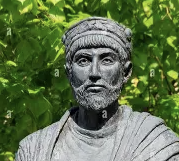
The same things, therefore, does the Sun communicate to things intelligible, over whom he was appointed by the Good to reign and to command: although these were created and began to exist at the same moment with himself.

4 months 5 days ago
In every stock-jobbing swindle everyone knows that some time or other the crash must come, but every one hopes that it may fall on the head of his neighbour, after he himself has caught the shower of gold and placed it in safety.
▼
Source
source
Vol. I, Ch. 10, Section 5, pg. 296.

2 months 2 weeks ago
But Zarathustra made it clear in which direction the answer lay; it is towards the artist-psychologist, the intuitional thinker. There are very few such men in the world's literature; the great artists are not thinkers, the great thinkers are seldom artists.
▼
Source
source
p. 158
1 month 1 day ago
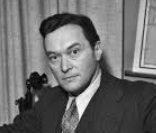
There can be no higher law in journalism than to tell the truth and shame the devil.
▼
Source
source
Journalism and the Higher Law, p. 13

5 months 1 day ago
There is no fate that can not be surmounted by scorn. If the descent is thus sometimes performed in sorrow, it can also take place in joy. This word is not too much. Again I fancy Sisyphus returning toward his rock, and the sorrow was in the beginning.

4 months 1 week ago
I have turned my entire attention to Greek. The first thing I shall do, as soon as the money arrives, is to buy some Greek authors; after that, I shall buy clothes.
▼
Source
source
Letter to Jacob Batt (12 April 1500); Collected Works of Erasmus Vol 1 (1974)

3 months ago
To detach yourself elegantly from the world; to give contour and grace to sadness; a solitude in style; a walk that gives cadence to memories; stepping towards the intangible; with the breath in the trembling margins of things; the past reborn in the overflow of fragrances; the smell, through which we conquer time; the contour of the invisible things; the forms of the immaterial; to deepen yourself in the intangible; to touch the world airborne by smell; aerial dialogue and gliding dissolution; to bathe in your own reflecting fragmentation...

2 months 2 weeks ago
It is obvious that many women have appropriated feminism to serve their own ends, especially those white women who have been at the forefront of the movement; but rather than resigning myself to this appropriation I choose to re-appropriate the term "feminism," to focus on the fact that to be "feminist" in any authentic sense of the term is to want for all people, female and male, liberation from sexist role patterns, domination, and oppression.

4 months 6 days ago
There ought to be some regulation with respect to the spirit of denunciation that now prevails. If every individual is to indulge his private malignancy or his private ambition, to denounce at random and without any kind of proof, all confidence will be undermined and all authority be destroyed. Calumny is a species of treachery that ought to be punished as well as any other kind of treachery. It is a private vice productive of public evils; because it is possible to irritate men into disaffection by continual calumny who never intended to be disaffected. It is therefore equally as necessary to guard against the evils of unfounded or malignant suspicion as against the evils of blind confidence. It is equally as necessary to protect the characters of public officers from calumny as it is to punish them for treachery or misconduct.
▼
Source
source
Letter to George Jacques Danton

4 months 5 days ago
In fact the opposition of instinct and reason is mainly illusory. Instinct, intuition, or insight is what first leads to the beliefs which subsequent reason confirms or confutes; but the confirmation, where it is possible, consists, in the last analysis, of agreement with other beliefs no less instinctive. Reason is a harmonising, controlling force rather than a creative one. Even in the most purely logical realms, it is insight that first arrives at what is new.
▼
Source
source
p. 21
4 months 5 days ago
I do like clarity and exact thinking and I believe that very important to mankind because when you allow yourself to think inexactly your prejudices, your bias, your self interest comes in in ways you don't notice and you do bad things without knowing that you are doing them: self deception is very easy. So that I do think clear thinking immensely important.
▼
Source
source
Television interview ("On clarity and exact thinking" - available on youtube)

4 days ago
To imply by the word "terrorism" that this sort of terror is the work exclusively of "terrorists" is misleading. The "legitimate" warfare of technologically advanced nations likewise is premeditated, politically motivated violence perpetrated against innocents. The distinction between the intention to perpetrate violence against innocents, as in "terrorism," and the willingness to do so, as in "war," is not a source of comfort.
1 day ago
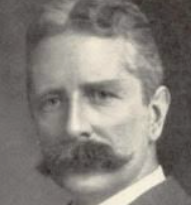
Speech is insufficient to utter the last things; and this troubles it not, because the last things may be heard speaking for themselves. At last, after long delay the wondering soul gives form to that which is stirring within it and produces its works art and song and mighty deeds.
1 month 2 weeks ago
I have come to believe that you can get along without anyone - that is, without the close contact of any one person. That is a terrible shock to me, but I think it is true. You do need companionship, but wherever you go, in whatever new environment, you will find people who, to a large degree, take the place of those you left...The intimate companionship goes, I think, when you leave a friend, but friendship stays. It is an inherent possibility of relationship that, once admitted - well, there it is.

3 weeks 4 days ago
Complete, at the same time, was his confidence in his own judgment when it spoke to him decisively. He was one of those few that could believe and know as well as inquire and be of opinion. When I remember how much he admired intellectual force, how much he had of it himself, and yet how unconsciously and contentedly he gave others credit for superiority, I again see the healthy spirit of the genuine man.

5 months 1 week ago
Life is, after all, not a product of morality.

2 months 3 weeks ago
From whatever side the matter is regarded, it is always found that reason confronts our longing for personal immortality and contradicts it. And the truth is, in all strictness, that reason is the enemy of life.
2 months 2 weeks ago
The sadistic person is as dependent on the submissive person as the latter is on the former; neither can live without the other. The difference is only that the sadistic person commands, exploits, hurts, humiliates, and that the masochistic person is commanded, exploited, hurt, humiliated. This is a considerable difference in a realistic sense; in a deeper emotional sense, the difference is not so great as that which they both have in common: fusion without integrity.
▼
Source
source
Ch. 2

2 months 2 weeks ago
Perhaps power is never free from a feeling of lack.

2 months 2 days ago
Man works when he is partially involved. When he is totally involved he is at play or leisure.

2 months 2 weeks ago
The terrible struggle of the thinking man and woman against political, social and moral conventions owes its origin to the family, where the child is ever compelled to battle against the internal and external use of force. The categorical imperatives: You shall! you must! this is right! that is wrong! this is true! that is false! shower like a violent rain upon the unsophisticated head of the young being and impress upon its sensibilities that it has to bow before the long established and hard notions of thoughts and emotions.
2 months 2 weeks ago
By relieving the brain of all unnecessary work, a good notation sets it free to concentrate on more advanced problems, and in effect increases the mental power of the race..
▼
Source
source
ch. 5

4 months 1 week ago
For man seeketh in society comfort, use, and protection: and they be three wisdoms of divers natures, which do often sever: wisdom of the behaviour, wisdom of business, and wisdom of state.
▼
Source
source
Book II, xxiii

4 months 3 days ago
Kant ... discovered "the scandal of reason," that is the fact that our mind is not capable of certain and verifiable knowledge regarding matters and questions that it nevertheless cannot help thinking about.
▼
Source
source
p. 14
4 months 5 days ago
You ask particularly after my health. I suppose that I have not many months to live; but, of course, I know nothing about it. I may add that I am enjoying existence as much as ever, and regret nothing.
▼
Source
source
Last letter, to Myron Benton, March 31, 1862
4 months 5 days ago
An atheist, like a Christian, holds that we can know whether or not there is a God. The Christian holds that we can know there is a God; the atheist, that we can know there is not. The Agnostic suspends judgment, saying that there are not sufficient grounds either for affirmation or for denial. At the same time, an Agnostic may hold that the existence of God, though not impossible, is very improbable; he may even hold it so improbable that it is not worth considering in practice. In that case, he is not far removed from atheism. His attitude may be that which a careful philosopher would have towards the gods of ancient Greece. If I were asked to prove that Zeus and Poseidon and Hera and the rest of the Olympians do not exist, I should be at a loss to find conclusive arguments. An Agnostic may think the Christian God as improbable as the Olympians; in that case, he is, for practical purposes, at one with the atheists.
▼
Source
source
What is an Agnostic?, 1953

3 months 1 week ago
I think that democratic communities have a natural taste for freedom: left to themselves, they will seek it, cherish it, and view any privation of it with regret. But for equality, their passion is ardent, insatiable, incessant, invincible: they call for equality in freedom; and if they cannot obtain that, they still call for equality in slavery.
▼
Source
source
Book Two, Chapter I.

5 months 5 days ago
Anxiety may be compared with dizziness. He whose eye happens to look down into the yawning abyss becomes dizzy. But what is the reason for this? It is just as much in his own eye as in the abyss, for suppose he had not looked down. Hence, anxiety is the dizziness of freedom, which emerges when the spirit wants to posit the synthesis and freedom looks down into its own possibility, laying hold of finiteness to support itself. Freedom succumbs to dizziness. Further than this, psychology cannot and will not go. In that very moment everything is changed, and freedom, when it again rises, sees that it is guilty. Between these two moments lies the leap, which no science has explained and which no science can explain. He who becomes guilty in anxiety becomes as ambiguously guilty as it is possible to become.
3 months 4 days ago
Peace to the shacks! War on the palaces!

5 months 2 days ago
Science fiction may be defined as that branch of literature which deals with the response of human beings to advances in science and technology. Actual change in science and technology, occurring quickly enough and striking deeply enough to affect a human being in the course of his normal lifetime, is a phenomenon peculiar to the world only since the Industrial Revolution ... The first well-known writer who responded to this new factor in human affairs by dealing regularly with science fiction, by studying the effect of additional scientific advance upon mankind ... was Jules Verne. In the English language, the early master was H. G. Wells. Between them, they laid the foundation for every theme upon which science fiction writers have been ringing variations ever since.

4 months 3 days ago
There is but one good; that is God. Everything else is good when it looks to Him and bad when it turns from Him.
▼
Source
source
Ch. 11
4 months 6 days ago
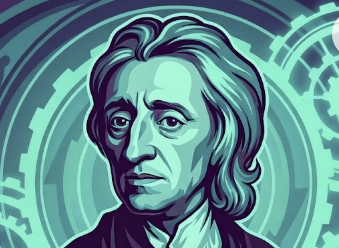
Another thing wherein they shew their love of dominion, is, their desire to have things to be theirs: They would have propriety and possession, pleasing themselves with the power which that seems to give, and the right that they thereby have, to dispose of them as they please. He that has not observ's these two humours working very betimes in children, has taken little notice of their actions: And he who thinks that these two roots of almost all the injustice and contention that so disturb human life, are not early to be weeded out, and contrary habits introduc'd, neglects the proper season to lay the foundations of a good and worthy man.
▼
Source
source
Sec. 105
4 months 5 days ago
It would be worth the while to look closely into the eye which has been open and seeing at such hours, and in such solitudes, its dull, yellowish, greenish eye. Methinks my own soul must be a bright invisible green.
4 months 3 days ago
The best way to drive out the devil, if he will not yield to texts of Scripture, is to jeer and flout him, for he cannot bear scorn.
▼
Source
source
Martin Luther, quoted at the beginning of The Screwtape Letters

4 days ago
Bigotry is the disease of ignorance, of morbid minds; enthusiasm of the free and buoyant. Education & free discussion are the antidotes of both.
▼
Source
source
Letter to John Adams
CivilSimian.com created by AxiomaticPanic, CivilSimian, Kalokagathia