


3 months 4 weeks ago
Riches are a good handmaid, but the worst mistress.
▼
Source
source
De Augmentis Scientiarum, Book II, "Antitheta"
3 months 4 weeks ago
Holy Christendom has, in my judgment, no better teacher after the apostles than St. Augustine.
▼
Source
source
Luther's Works, American Ed., Robert H. Fischer, Helmut T. Lehman, eds., Concordia Publishing House/Fortress Press, 1959, ISBN 0800603370 (Word and Sacrament III), vol. 37:107

4 months 2 weeks ago
Courtiers don't take wagers against the king's skill.

3 months 2 weeks ago
Ah! yes, I know: those who see me rarely trust my word: I must look too intelligent to keep it.
▼
Source
source
Act 2, sc. 3

1 month 2 weeks ago
The new overkill is simply an extension of our nervous system into a total ecological service environment. Such a service environment can liquidate or terminate its beneficiaries as naturally as it sustains them.
▼
Source
source
(p. 152)
2 weeks 3 days ago
Unless our ideas are questioned, they become part of the furniture of eternity.
▼
Source
source
Ch. IV: "The Line of Least Resistance", p. 51
1 month 1 week ago
I think that New York is not the cultural center of America, but the business and administrative center of American culture.
▼
Source
source
BBC radio interview, The Listener
2 months 1 week ago
The characteristic activity of science is not construction, but induction. The more often something has occurred in the past, the more certain that it will in all the future. Knowledge relates solely to what is and to its recurrence. New forms of being, especially those arising from the historical activity of man, lie beyond empiricist theory. Thoughts which are not simply carried over from the prevailing pattern of consciousness, but arise from the aims and resolves of the individual, in short, all historical tendencies that reach beyond what is present and recurrent, do not belong to the domain of science.
▼
Source
source
p. 144.

2 months 2 weeks ago
Opinion is ultimately determined by the feelings, and not by the intellect.
▼
Source
source
Pt. IV, Ch. 30 : General Considerations
2 months 2 weeks ago
Reason alone does not suffice.
▼
Source
source
p 98
1 month 2 weeks ago
Just because science so far has failed to explain something, such as consciousness, to say it follows that the facile, pathetic explanations which religion has produced somehow by default must win the argument is really quite ridiculous.
▼
Source
source
Steve Paulson, "The flying spaghetti monster" Salon.com
1 week 6 days ago
Bukharin, like Lenin, regarded the system of basing economic life on mass terror not as a transient necessity but as a permanent principle of socialist organization. He did not shrink from justifying all means of coercion and held, like Trotsky at the same period, that the new system called essentially for the militarization of labour - i.e. the use of police and military force to compel the whole population to work in such places and conditions as the state might arbitrarily decree. Indeed, once the market is abolished there is no longer any free sale of labour or competition between workers, and police coercion is therefore the only means of allocating "human resources". If hired labour is eliminated, only compulsory labour remains. In other words, socialism - as conceived by both Trotsky and Bukharin at this time - is a permanent, nation-wide labour camp.
▼
Source
source
(pg. 28-9)
1 month 2 weeks ago
I am extremely pleased by Daniel Fincke's article, which says exactly what I SHOULD have said and, to my regret, didn't make sufficiently clear in my Reason Rally speech. The best way to summarise it would be to modify the quotation from Johann Hari. Johann said, "I respect you too much to respect your ridiculous beliefs". From now on, my version will be, "I respect you too much to accept that you really believe anything so ridiculous as you claim. Please either defend those beliefs and explain why they are not ridiculous, or else declare that you do not hold them and publicly disown the church to which you claim loyalty."
▼
Source
source
comment on Daniel Fincke (2 April 2012), "In Defense of Dawkins's Reason Rally Speech", RichardDawkins.net, retrieved on 1 May 2012

3 months 2 weeks ago
The most dangerous thing you can do is to take any one impulse of your own nature and set it up as the thing you ought to follow at all costs. There is not one of them which will not make us into devils if we set it up as an absolute guide. You might think love of humanity in general was safe, but it is not. If you leave out justice you will find yourself breaking agreements and faking evidence in trials "for the sake of humanity", and become in the end a cruel and treacherous man.
▼
Source
source
Book I, Chapter 2, "Some Objections"
1 month 2 weeks ago
Mysticism is just tomorrow's science dreamed today.

4 months 2 weeks ago
Can one be a saint without God?, that's the problem, in fact the only problem, I'm up against today.
1 month 2 weeks ago
With Gutenberg Europe enters the technological phase of progress, when change itself becomes the archetypal norm of social life.
▼
Source
source
(p. 177)


3 months 3 weeks ago
By quarrelling amongst themselves, instead of confederating, Germans and Scandinavians, both of them belonging to the same great race, only prepare the way for their hereditary enemy, the Slav.
▼
Source
source
The Eastern Question: A Reprint of Letters written 1853 -1856 dealing with the events of the Crimean War, edit., Eleanor Marx Aveling, London, Swan Sonnenschein & Co. (1897) p. 90
2 months 1 week ago
Give an inch, he'll take an ell.
▼
Source
source
Liberty and Necessity (no. 111)
3 months 1 week ago
In adversity, remember to keep an even mind.
▼
Source
source
Book II, ode iii, line 1

2 months 2 weeks ago
Lucidity is not necessarily compatible with life, actually not at all.
4 months 2 weeks ago
Nonsense. You are a military man and should know better. If there is one science into which man has probed continuously and successfully, it is that of military technology. No potential weapon would remain unrealized for ten thousand years.

2 months 3 weeks ago
I look upon you as a gem of the old rock. Dedication
3 months 3 weeks ago
Because people have no thoughts to deal in, they deal cards, and try and win one another's money. Idiots!

2 months 5 days ago
A culture is in its finest flower before it begins to analyze itself.
▼
Source
source
Ch. 22, August 17, 1941.
4 months 1 week ago
This is one of the most intricate problems of religion. For if you look into the traditional arguments (Hadith) about this problem you will find them contradictory; such also being the case with arguments of reason. The contradiction in the arguments of the first kind is found in the Qur'an and the Hadith.
2 months 1 week ago
Even the most inspired verse, which boasts not without a relative justification to be immortal, becomes in the course of ages a scarcely legible hieroglyphic; the language it was written in dies, a learned education and an imaginative effort are requisite to catch even a vestige of its original force. Nothing is so irrevocable as mind.

2 months 3 weeks ago
And having looked to Government for bread, on the very first scarcity they will turn and bite the hand that fed them.

3 months 2 weeks ago
What can be said can and should always be said more and more simply and clearly.
2 weeks 2 days ago
Ignorant as regards the unity of man with himself, the world is still more ignorant in respect to the two other unities - unity of man with God and the universe.
3 months 1 week ago
Absurdity is one of the most human things about us: a manifestation of our most advanced and interesting characteristics. ... It is possible only because we possess a certain kind of insight - the capacity to transcend ourselves in thought.If a sense of the absurd is a way of perceiving our true situation (even though the situation is not absurd until the perception arises), then what reason can we have to resent or escape it? ... It results from the ability to understand our human limitations. It need not be a matter of agony unless we make it so. Nor need it evoke a defiant contempt of fate that allows us to feel brave or proud. Such dramatics even if carried on in private, betray a failure to appreciate the cosmic unimportance of the situation. If sub specie aeternitatis there is no reason to believe that anything matters, then that does not matter either, and we can approach our absurd lives with irony instead of heroism or despair.
▼
Source
source
"The Absurd" (1971), p. 23.
1 month 1 week ago
The book of the world, so richly studied by autodidacts, is being closed by the "learned," who are raising walls of opinions to shut the world out.
▼
Source
source
p. 15

2 months 1 week ago
Ideas, aspirations, and objectives that, by their content, transcend the established universe of discourse and action are either repelled or reduced to terms of this universe.
▼
Source
source
p. 12
2 months 1 week ago
Power as is really divided, and as dangerously to all purposes, by sharing with another an Indirect Power, as a Direct one.
▼
Source
source
The Third Part, Chapter 42, p. 315

3 months 3 weeks ago
Compared with the greatest poets, he may be said to be the poet of unpoetical natures, possessed of quiet and contemplative tastes. But unpoetical natures are precisely those which require poetic cultivation. This cultivation Wordsworth is much more fitted to give, than poets who are intrinsically far more poets than he.
▼
Source
source
(p. 149)

2 months 6 days ago
Might is that which makes a thing of anybody who comes under its sway. When exercised to the full, it makes a thing of man in the most literal sense, for it makes him a corpse.
▼
Source
source
in The Simone Weil Reader, p. 153

2 months 1 week ago
Yes, I know well that others before me have felt what I feel and express; that many others feel it today, although they keep silence about it. ...And I do not keep silence about it because it is for many the thing which must not be spoken, the abomination of abominations - infandum - and I believe that it is necessary now and again to speak the thing which must not be spoken. ...Even if it should lead only to irritating the devotees of progress, those who believe that truth is consolation, it would lead to not a little. To irritating them and making them say: "Poor fellow! if he would only use his intelligence to better purpose!... Someone perhaps will add that I do not know what I say, to which I shall reply that perhaps he may be right - and being right is such a little thing! - but that I feel what I say and I know what I feel and that suffices me. And that it is better to be lacking in reason than to have too much of it.

1 week 4 days ago
And so in City after City, street-barricades are piled, and truculent, more or less murderous insurrection begins; populace after populace rises, King after King capitulates or absconds; and from end to end of Europe Democracy has blazed up explosive, much higher, more irresistible and less resisted than ever before; testifying too sadly on what a bottomless volcano, or universal powder-mine of most inflammable mutinous chaotic elements, separated from us by a thin earth-rind, Society with all its arrangements and acquirements everywhere, in the present epoch, rests! The kind of persons who excite or give signal to such revolutions-students, young men of letters, advocates, editors, hot inexperienced enthusiasts, or fierce and justly bankrupt desperadoes, acting everywhere on the discontent of the millions and blowing it into flame,-might give rise to reflections as to the character of our epoch. Never till now did young men, and almost children, take such a command in human affairs.
3 months 2 weeks ago
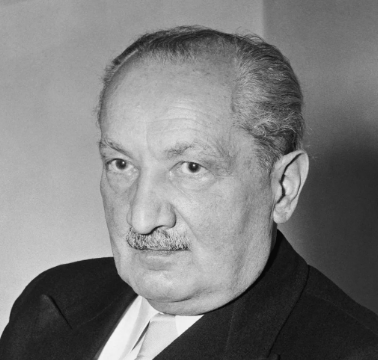
Kant's philosophy shifts for the first time the whole of modern thought and being (Desein) into the clarity and transparency of the foundation (Begrundung). This determines every attitude toward knowledge since then, as well as the bounds (Abgrenzungen) and appraisals of the sciences in the nineteenth century up to the present time. Therein Kant towers so far above all who precede and follow that even those who reject him or go beyond him still remain entirely dependent upon him.
▼
Source
source
p. 55-56

3 months 3 weeks ago
Separate an individual from society, and give him an island or a continent to possess, and he cannot acquire personal property. He cannot be rich. So inseparably are the means connected with the end, in all cases, that where the former do not exist the latter cannot be obtained. All accumulation, therefore, of personal property, beyond what a man's own hands produce, is derived to him by living in society; and he owes on every principle of justice, of gratitude, and of civilization, a part of that accumulation back again to society from whence the whole came.
▼
Source
source
Means by Which the Fund Is to Be Created
1 month 3 weeks ago
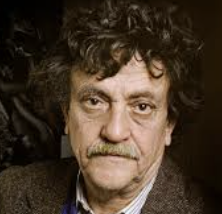
I was taught that the human brain was the crowning glory of evolution so far, but I think it's a very poor scheme for survival.
▼
Source
source
As quoted in The Observer [London]
2 months 3 weeks ago
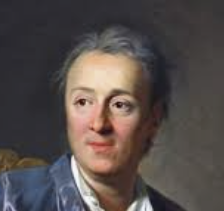
Patriotism is an ephemeral motive that scarcely ever outlasts the particular threat to society that aroused it.

3 months 2 weeks ago
A thing forgotten on one day will be remembered on the next. Something we have made the most strenuous efforts to recall, but all in vain, will, soon after... saunter into the mind... The sphere of possible recollection may be wider than we think, and... apparent oblivion is no proof against possible recall under other conditions.
▼
Source
source
Ch. 16

3 months 1 week ago
By Thy perfect Intelligence, O MazdaThou didst first create us having bodies and spiritual consciences,And by Thy Thought gave our selves the power of thought, word, and deed.Thus leaving us free to choose our faith at our own will.
▼
Source
source
Ahunuvaiti Gatha; Yasna 31, 11.
3 months 2 weeks ago
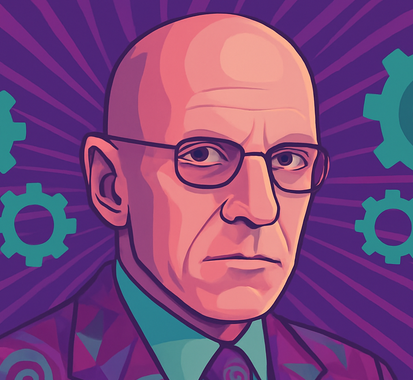
I believe that political power also exercises itself through the mediation of a certain number of institutions that seem to have nothing in common with political power, that have the appearance of being independent, but are not.
▼
Source
source
Debate with Noam Chomsky, École Supérieure de Technologie à Eindhoven, November 1971
4 months 3 weeks ago
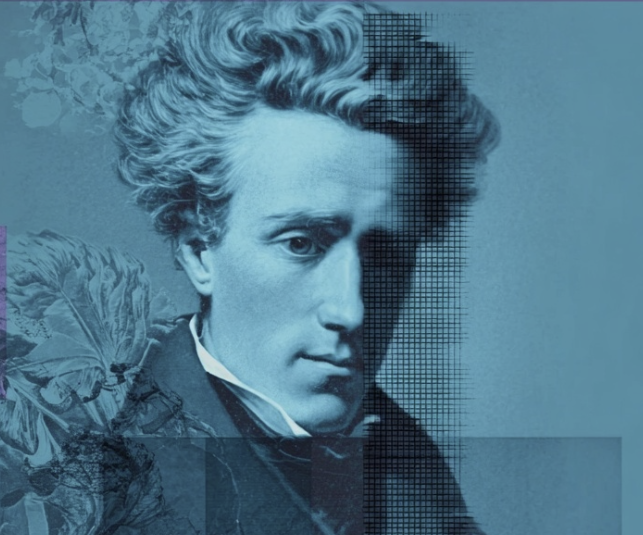
The truth is always in the minority, and the minority is always stronger than the majority, because as a rule the minority is made up of those who actually have an opinion, while the strength of the majority is illusory, formed of that crowd which has no opinion - and which therefore the next moment (when it becomes clear that the minority is the stronger) adopts the latter's opinion, which now is in the majority, i.e. becomes rubbish by having the whole retinue and numerousness on its side, while the truth is again in a new minority.

3 months 2 days ago
You will know that wretched men are the cause of their own suffering, who neither see nor hear the good that is near them, and few are the ones who know how to secure release from their troubles. Such is the fate that harms their minds; like pebbles they are tossed about from one thing to another with cares unceasing. For the dread companion Strife harms them unawares, whom one must not walk behind, but withdraw from and flee.
▼
Source
source
As quoted in Divine Harmony: The Life and Teachings of Pythagoras by John Strohmeier and Peter Westbrook
2 months 1 week ago
Man does not exercise his thought because he finds it amusing, but because, obliged as he is to live immersed in the world and to force his way among things, he finds himself under the necessity of organizing his psychic activities, which are not very different from those of the anthropoid, in the form of thought - which is what the animal does not do.
▼
Source
source
p. 28
CivilSimian.com created by AxiomaticPanic, CivilSimian, Kalokagathia