


3 months 2 weeks ago
As to the having and possessing of things, teach them to part with what they have, easily and freely to their friends, and let them find by experience that the most liberal has always the most plenty, with esteem and commendation to boot, and they will quickly learn to practise it.
▼
Source
source
Sec. 110

1 week 1 day ago
There is an irrepressible tendency in every man to develop himself according to the magnitude which Nature has made him of; to speak out, to act out, what nature has laid in him. This is proper, fit, inevitable; nay it is a duty, and even the summary of duties for a man. The meaning of life here on earth might be defined as consisting in this: To unfold your self, to work what thing you have the faculty for.

2 months ago
It was Rousseau who was largely responsible for the problem by giving currency to the idea that freedom can exist without responsibility and discipline.
▼
Source
source
Introductory Essay, p. xx

4 months 2 weeks ago
Generals are, as a matter of course, allowed to be far more idiotic than ordinary human beings are permitted to be.

1 week 6 days ago
Wisdom, virtue, morality, all these have fallen out of fashion: everybody worships at the shrine of commerce.
▼
Source
source
The Theory of the Four Movements (1808), G. Jones, ed. (1966), p. 269

1 month 2 weeks ago
The other part of the true religion is our duty to man. We must love our neighbour as our selves, we must be charitable to all men for charity is the greatest of graces, greater then even faith or hope & covers a multitude of sins. We must be righteous & do to all men as we would they should do to us.
▼
Source
source
Of Humanity

3 months 2 weeks ago
Only a male intellect clouded by the sexual drive could call the stunted, narrow-shouldered, broad-hipped and short-legged sex the fair sex.
▼
Source
source
Vol. 2, Ch. 27, § 369

3 months 2 weeks ago
The philosophy of Plotinus has the defect of encouraging men to look within rather than to look without: when we look within we see nous, which is divine, while when we look without we see the imperfections of the sensible world. This kind of subjectivity was a gradual growth; it is to be found in the doctrines of Protagoras, Socrates, and Plato, as well as in the Stoics and Epicureans. But at first it was only doctrinal, not temperamental; for a long time it failed to kill scientific curiosity. [...] Plotinus is both an end and a beginning-an end as regards the Greeks, a beginning as regards Christendom.
▼
Source
source
Russell, Bertrand (2008). History of Western Philosophy. Simon and Schuster. pp. 296-297. ISBN 978-1-4165-9915-9.
2 months 1 week ago
Prosperity, both for individuals and for states, means possessions; and possessions mean burdens and harness and slavery; and slavery for the mind, too, because it is not only the rich man's time that is pre-empted, but his affections, his judgement, and the range of his thoughts.
▼
Source
source
"The Irony of Liberalism"

3 months 2 weeks ago
The religion and philosophy of the Hebrews are those of a wilder and ruder tribe, wanting the civility and intellectual refinements and subtlety of Vedic culture.
▼
Source
source
A Tribute to Hinduism, 2008

4 months 1 week ago
Listen widely to remove your doubts and be careful when speaking about the rest and your mistakes will be few. See much and get rid of what is dangerous and be careful in acting on the rest and your causes for regret will be few. Speaking without fault, acting without causing regret: 'upgrading' consists in this.

3 months 2 weeks ago
Thoughts without content are empty, intuitions without concepts are blind. The understanding can intuit nothing, the senses can think nothing. Only through their unison can knowledge arise.
▼
Source
source
A 51, B 75
4 months 2 weeks ago
In my fiction I am careful to make everything probable and to tie up all loose ends. Real life is not hampered by such considerations.
1 month 2 weeks ago
Everything is worth what its purchaser will pay for it.
▼
Source
source
Maxim 847

1 month 2 weeks ago
I've always been careful never to predict anything that had not already happened.
▼
Source
source
Interview: Tom Wolfe, TVOntario, August 1970

2 months 1 week ago
Illusion begets and sustains the world; we do not destroy one without destroying the other. Which is what I do every day. An apparently ineffectual operation, since I must begin all over again the next day.

3 months 2 weeks ago
Imagination is not an empirical or superadded power of consciousness, it is the whole of consciousness as it realizes its freedom.
▼
Source
source
L'imagination (Imagination: A Psychological Critique)
1 month 3 weeks ago
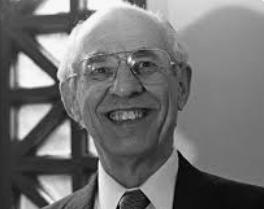
In conclusion, then, no satisfactory interpretation of quantum mechanics exists today. The questions posed by the confrontation between the Copenhagen interpretation and the hidden variable theorists go to the very foundations of microphysics, but the answers given by hidden variable theorists and Copenhagenists are alike unsatisfactory. Human curiosity will not rest until those questions are answered, but whether they will be answered by conceptual innovations within the framework of the present theory or only within the framework of an as yet unforeseen theory is unknown. The first step toward answering them has been attempted here. It is the modest but essential step of becoming clear on the nature and magnitude of the difficulties.
▼
Source
source
A philosopher looks at quantum mechanics

2 months 2 weeks ago
The second half of a man's life is made up of nothing but the habits he has acquired during the first half.
▼
Source
source
As quoted in Peter's Quotations: Ideas for Our Time (1979) by Laurence J. Peter, p. 299
3 months 2 weeks ago
No man who believes that all is for the best in this suffering world can keep his ethical values unimpaired, since he is always having to find excuses for pain and misery.
▼
Source
source
The Collected Papers of Bertrand Russell: A fresh look at empiricism, 1927-42 (G. Allen & Unwin, 1996), p. 217

4 months 2 weeks ago
Whatever we may do, excess will always keep its place in the heart of man, in the place where solitude is found. We all carry within us our places of exile, our crimes and our ravages. But our task is not to unleash them on the world; it is to fight them in ourselves and in others.

3 months 3 weeks ago
Where men are the most sure and arrogant, they are commonly the most mistaken, and have there given reins to passion, without that proper deliberation and suspense, which can alone secure them from the grossest absurdities.
▼
Source
source
§ 9.13 : Conclusion, Pt. 1

2 days ago
All things are poison, and nothing is without poison; but the dose makes it clear that a thing is not a poison.
2 months 1 week ago
A regret understood by no one: the regret to be a pessimist. It's not easy to be on the wrong foot with life
1 month 6 days ago
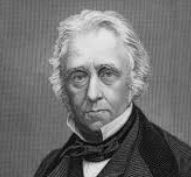
There is only one cure for the evils which newly acquired freedom produces, and that cure is freedom.
▼
Source
source
p. 41
3 months 2 weeks ago
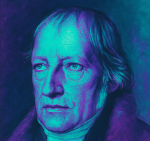
A command can express no more than an ought or a shall, because it is a universal, but it does not express an 'is'; and this at once makes plain its deficiency. Against such commands Jesus sets virtue, i.e., a loving disposition, which makes the content of the command superfluous and destroys its form as a command, because that form implies an opposition between a commander and something resisting the command.

2 months ago
Rituals are processes of embodiment and bodily performances. In them, the valid order and values of a community are physically experienced and solidified.

3 months 2 weeks ago
Of all tyrannies, a tyranny sincerely exercised for the good of its victims may be the most oppressive. It would be better to live under robber barons than under omnipotent moral busybodies. The robber baron's cruelty may sometimes sleep, his cupidity may at some point be satiated; but those who torment us for our own good will torment us without end for they do so with the approval of their own conscience. They may be more likely to go to Heaven yet at the same time likelier to make a Hell of earth. This very kindness stings with intolerable insult. To be "cured" against one's will and cured of states which we may not regard as disease is to be put on a level of those who have not yet reached the age of reason or those who never will; to be classed with infants, imbeciles, and domestic animals.
▼
Source
source
God in the Dock: Essays on Theology (Making of Modern Theology)
2 months 1 week ago
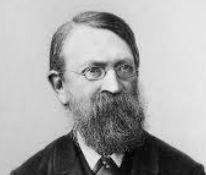
Personally, people know themselves very poorly.
▼
Source
source
Contributions to the analysis of the sensations (1897), translated by Cora May Williams, published by Open Court Publishing Company, p. 4

3 months 1 week ago
You can't be reluctant to give up your lie and still tell the truth.
▼
Source
source
p. 44e

2 months ago
There can be no freedom in the large sense of the word, no harmonious development, so long as mercenary and commercial considerations play an important part in the determination of personal conduct.
3 months 2 weeks ago
If we are going to be destroyed by an atomic bomb, let that bomb when it comes find us doing sensible and human things - praying, working, teaching, reading, listening to music, bathing the children, playing tennis, chatting to our friends over a pint and a game of darts - not huddled together like frightened sheep and thinking about bombs. They might break our bodies (a microbe can do that) but they need not dominate our minds.
3 months 2 weeks ago
It is obvious that "obscenity" is not a term capable of exact legal definition; in the practice of the Courts, it means "anything that shocks the magistrate."
▼
Source
source
Ch. 10: Recrudescence of Puritanism
2 months 1 week ago
I have never taken myself for a being. A non-citizen, a marginal type, a nothing who exists only by the excess, by the superabundance of his nothingness.
2 months 2 weeks ago
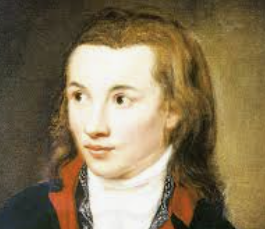
Someone arrived there - who lifted the veil of the goddess, at Sais. - But what did he see? He saw - wonder of wonders - himself. Novalis here alludes to Plutarch's account of the shrine of the goddess Minerva, identified with Isis, at Sais, which he reports had the inscription "I am all that hath been, and is, and shall be; and my veil no mortal has hitherto raised."
1 week 4 days ago
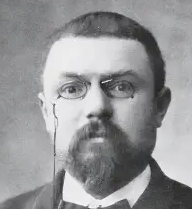
Everyone is sure of this [that errors are normally distributed], Mr. Lippman told me one day, since the experimentalists believe that it is a mathematical theorem, and the mathematicians that it is an experimentally determined fact.
▼
Source
source
Calcul des probabilités (2nd ed., 1912), p. 171

2 days ago
You will thus understand that what you fear is either insignificant or short-lived.
2 months 1 week ago
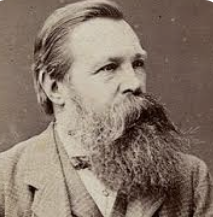
The manufacturing worker almost always lives in the countryside and in a more or less patriarchal relation to his landlord or employer; the proletarian lives, for the most part, in the city and his relation to his employer is purely a cash relation. The manufacturing worker is torn out of his patriarchal relation by big industry, loses whatever property he still has, and in this way becomes a proletarian.
2 months 2 weeks ago
We are near awakening when we dream that we dream.
1 month 1 week ago
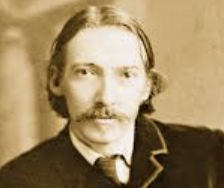
It is the mark of a good action that it appears inevitable in the retrospect. We should have been cut-throats to do otherwise. And there's an end. We ought to know distinctly that we are damned for what we do wrong; but when we have done right, we have only been gentlemen, after all. There is nothing to make a work about.
▼
Source
source
"Reflections and Remarks on Human Life", VI: Right and Wrong, published in Works: Letters and Miscellanies of Robert Louis Stevenson -- Sketches, Criticisms, Etc. (1895), p. 628.
1 month 3 weeks ago
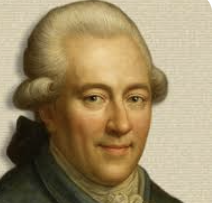
Man can acquire accomplishments or he can become an animal, whichever he wants. God makes the animals, man makes himself.
▼
Source
source
F 49
4 months 2 weeks ago
The whole business is the crudest sort of stratagem, since we have no way of foreseeing it to the end. It is a mere paying out of rope on the chance that somewhere along the length of it will be a noose.
1 month 2 weeks ago
Try not to have Emily exposed to hours and hours of TV. It is a vile drug which permeates the nervous system, especially in the young.
▼
Source
source
Letter to son Eric McLuhan, regarding one of Eric's daughters, 1976

2 months 3 weeks ago
Aristotle whilst he labours to refute the ideas of Plato, falls upon one himself: for his summum bonum, is a Chimera, and there is no such thing as his Felicity.
▼
Source
source
Section 15
3 months 2 weeks ago
Written words differ from spoken words in being material structures. A spoken word is a process in the physical world, having an essential time-order; a written word is a series of pieces of matter, having an essential space-order.
▼
Source
source
An Outline of Philosophy Ch.4 Language, 1927

1 week 6 days ago
Empire is emerging today as the center that supports the globalization of productive networks and casts its widely inclusive net to try to envelop all power relations within its world order - and yet at the same time it deploys a powerful police function against the new barbarians and the rebellious slaves who threaten its order.

2 months 1 week ago
Since the communists cannot enter upon the decisive struggle between themselves and the bourgeoisie until the bourgeoisie is in power, it follows that it is in the interest of the communists to help the bourgeoisie to power as soon as possible in order the sooner to be able to overthrow it.

3 months 2 weeks ago
I care not how affluent some may be, provided that none be miserable in consequence of it. But it is impossible to enjoy affluence with the felicity it is capable of being enjoyed, while so much misery is mingled in the scene.
▼
Source
source
Means by Which the Fund Is to Be Created
CivilSimian.com created by AxiomaticPanic, CivilSimian, Kalokagathia