


4 months 3 days ago
With respect to a true culture and manhood, we are essentially provincial still, not metropolitan, - mere Jonathans. We are provincial, because we do not find at home our standards, - because we do not worship truth, but the reflection of truth, - because we are warped and narrowed by an exclusive devotion to trade and commerce and manufactures and agriculture and the like, which are but means, and not the end.
▼
Source
source
p. 493

2 months 3 weeks ago
He that is not with me is against me: and he that gathereth not with me scattereth.
▼
Source
source
Luke 11:23 (KJV)

4 months 2 days ago
Take the happiest man, the one most envied by the world, and in nine cases out of ten his inmost consciousness is one of failure. Either his ideals in the line of his achievements are pitched far higher than the achievements themselves, or else he has secret ideals of which the world knows nothing, and in regard to which he inwardly knows himself to be found wanting.
▼
Source
source
Lectures VI and VII, "The Sick Soul"

4 months 1 day ago
It is the same: a chosen one is a man whom God's finger crushes against the wall.
▼
Source
source
Act 2, sc. 4

4 months 3 days ago
It is the duty of all who care for their country or for civilisation to point out that we cannot further any of our ideals by participation in the next war, and that we ought therefore to resist all measures based upon the assumption that we shall take part in it. In the late war it was arguable that victory, being possible, might do some good. With the modern technique of gas attack, no belligerent can hope for victory. Absolute pacifism, therefore, in every country, in which it is politically possible, is the only sane policy both for Governments and individuals.
▼
Source
source
Letter to The New Statesman and Nation (10 August 1935), quoted in Yours Faithfully, Bertrand Russell
2 months 2 weeks ago
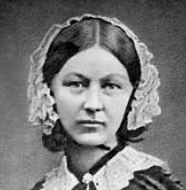
That man and woman have an equality of duties and rights is accepted by woman even less than by man. Behind his destiny woman must annihilate herself, must be only his complement. A woman dedicates herself to the vocation of her husband; she fills up and performs the subordinate parts in it. But if she has any destiny, any vocation of her own, she must renounce it, in nine cases out of ten.
1 month 4 weeks ago
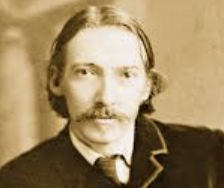
Youth now flees on feathered foot.
▼
Source
source
To Will H. Low, reported in Bartlett's Familiar Quotations, 10th ed. (1919).
3 months 3 weeks ago
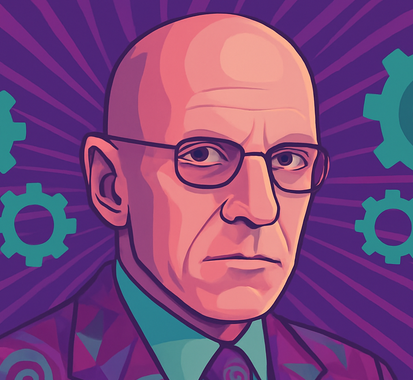
My point is not that everything is bad, but that everything is dangerous, which is not exactly the same as bad. If everything is dangerous, then we always have something to do. So my position leads not to apathy but to a hyper- and pessimistic activism. I think that the ethico-political choice we have to make every day is to determine which is the main danger. "
▼
Source
source
On the Genealogy of Ethics: An Overview of Work in Progress." Afterword, in Hubert L. Dreyfus and Paul Rabinow, Michel Foucault: Beyond Structuralism and Hermeneutics, 2nd ed. Chicago: University of Chicago Press.
Just now
Man cannot be wicked without being evil, nor evil without being degraded, nor degraded without being punished, nor punished without being guilty. In short ... there is nothing so intrinsically plausible as the theory of original sin.
▼
Source
source
Second Dialogue, p. 38
2 months 3 weeks ago
Injustice, poverty, slavery, ignorance - these may be cured by reform or revolution. But men do not live only by fighting evils. They live by positive goals, individual and collective, a vast variety of them, seldom predictable, at times incompatible.
4 months 3 days ago
Modern physics... reduces matter to a set of events which proceed outward from a centre. If there is something further in the centre itself, we cannot know about it, and it is irrelevant to physics.
▼
Source
source
An Outline of Philosophy Ch.15 The Nature of our Knowledge of Physics, 1927

3 months 3 weeks ago
He who does wrong is more unhappy than he who suffers wrong.
2 months 5 days ago
Those who used to sacrifice animals did not take them for beasts. And even the Middle Ages, which condemned and punished them in due form, was in this way much closer to them than we are, we who are filled with horror at this practice. They held them to be guilty: which was a way of honoring them. We take them for nothing, and it is on this basis that we are "human" with them. We no longer sacrifice them, we no longer punish them, and we are proud of it, but it is simply that we have domesticated them, worse: that we have made of them a racially inferior world, no longer even worthy of our justice, but only of our affection and social charity, no longer worthy of punishment and of death, but only of experimentation and extermination like meat from the butchery.
▼
Source
source
"The Animals: Territory and Metamorphoses," pp. 134-135
1 week 4 days ago
Those who regard the Crusades, with indignation, as among the most extravagant episodes of the 'dark' Middle Ages, have not even the slightest suspicion that what they call 'religious fanaticism' was the visible sign of the presence and effectiveness of a sensitivity and decisiveness, the absence of which is more characteristic of true barbarism. [...] The one who fights according to the sense of 'sacred war' is spontaneously beyond every particularism and exists in a spiritual climate which, at any given moment, may very well give rise and life to a supra-national unity of action. This is precisely what occurred in the Crusades when Princes and Dukes of every land gathered in the heroic and sacred enterprise, regardless of their particular utilitarian interests or political divisions, bringing about for the first time a great European unity, true to the common civilisation and to the very principle of the Sacred Roman Empire.
▼
Source
source
pp. 40-41
2 months 3 weeks ago
Man must not only make himself: the weightiest thing he has to do is to determine what he is going to be. He is causa sui to the second power.
▼
Source
source
As quoted in Existentialism from Dostoevsky to Sartre, p. 155
2 months 3 weeks ago
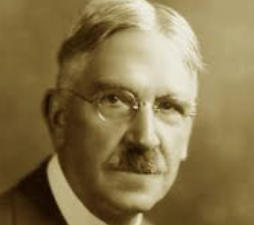
While they denounce as subversive anarchy signs of independent thought, of thinking for themselves on the part of others lest such thought disturb the conditions by which they profit, they think quite literally for themselves, that is of themselves.
▼
Source
source
Human Nature and Conduct (1921) Part 1 Section IV.
4 months 2 days ago
I saw a moving sight the other morning before breakfast in a little hotel where I slept in the dusty fields. The young man of the house shot a little wolf called coyote in the early morning. The little heroic animal lay on the ground, with his big furry ears, and his clean white teeth, and his little cheerful body, but his little brave life was gone. It made me think how brave all living things are. Here little coyote was, without any clothes or house or books or anything, with nothing to pay his way with, and risking his life so cheerfully - and losing it - just to see if he could pick up a meal near the hotel. He was doing his coyote-business like a hero, and you must do your boy-business, and I my man-business bravely, too, or else we won't be worth as much as a little coyote.
▼
Source
source
28-Aug-89
4 months 4 days ago
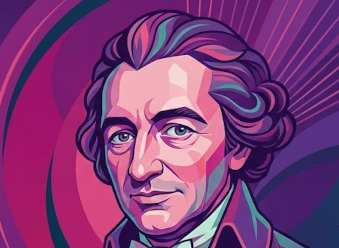
As these people are not convicted of forfeiting freedom, they have still a natural, perfect right to it; and the Governments whenever they come should, in justice set them free, and punish those who hold them in slavery.

2 weeks 3 days ago
Perhaps its destruction has been brought about only that it may be raised up again to a better destiny. Oftentimes a reverse has but made room for more prosperous fortune. Many structures have fallen only to rise to a greater height.
4 months 4 days ago
The trade of governing has always been monopolized by the most ignorant and the most rascally individuals of mankind.
▼
Source
source
Earliest citation to Paine appears to be in "Freedom: A Journal of Anarchist Communism Vol. XXIV". Not found in any of his works.

2 months ago
The most human thing about us is our technology.
▼
Source
source
Man and the future of organizations, Volume 5, School of Business Administration, Georgia State University, 1974, p. 19
1 week 3 days ago
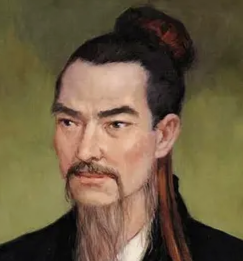
All states in the world, large or small, are cities of Heaven, and all people, young or old, honourable or humble, are its subjects; for they all graze oxen and sheep, feed dogs and pigs, and prepare clean wine and cakes to sacrifice to Heaven. Does this not mean that Heaven claims all and accepts offerings from all? Since Heaven does claim all and accepts offerings from all, what then can make us say that it does not desire men to love and benefit one another? Hence those who love and benefit others Heaven will bless. Those who hate and harm others Heaven will curse, for it is said that he who murders the innocent will be visited by misfortune. How else can we explain the fact that men, murdering each other, will be cursed by Heaven? Thus we are certain that Heaven desires to have men love and benefit one another and abominates to have them hate and harm one another.
▼
Source
source
Book 1; On the necessity of standards
1 week 3 days ago
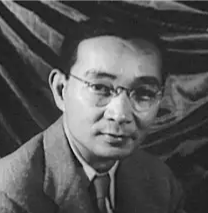
The greatest ideal that man can aspire to is not to be a show-case of virtue, but just to be a genial, likable and reasonable human being.
▼
Source
source
p. 242
1 month 2 weeks ago
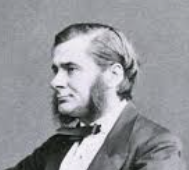
God give me strength to face a fact though it slay me.
▼
Source
source
As quoted in Nature Vol. 149 (Jan-Jun) 1942 p. 291, and A Philosophy for Our Time (1954) by Bernard Mannes Baruch, p. 13

2 months 2 days ago
Science may fall back on its stupid excuse that science works for science, and that when it has been developed by the scientists it will become accessible to the people also; but art, if it be art, should be accessible to all, and particularly to those for whom it is produced. And the position of our art strikingly arraigns the producers of art for not wishing, not knowing how, and being unable, to serve the people.
2 months 3 weeks ago
That Marxism should triumph in Russia, where there is no industry, would be the greatest contradiction that Marxism could undergo. But there is no such contradiction, for there is no such triumph. Russia is Marxist more or less as the Germans of the Holy Roman Empire were Romans.
▼
Source
source
Chapter XIV: Who Rules The World?
2 days ago
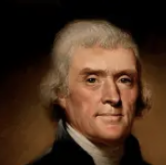
...the more a subject is understood, the more briefly it may be explained.

4 months 4 weeks ago
Of course, I had to own that he was right; I didn't feel much regret for what I'd done. Still, to my mind, he overdid it, and I'd have liked to have a chance of explaining to him, in a quite friendly, almost affectionate way, that I have never been able to really regret anything in all my life. I've always been far too much absorbed in the present moment, or the immediate future, to think back.
1 month 2 weeks ago
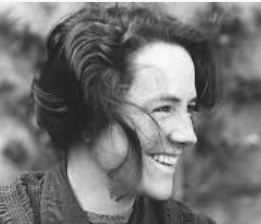
One cannot collect all the beautiful shells on the beach. One can collect only a few, and they are more beautiful if they are few.
▼
Source
source
p. 114

2 months 1 week ago
Be wary of passing the judgment: obscure. To find something obscure poses no difficulty: elephants and poodles find many things obscure.
▼
Source
source
E 36
2 months 3 weeks ago
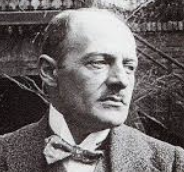
It is precisely the essential feature of egoism that it does not apprehend the full value of the isolated self. The egoist sees himself only with regard to the others, as a member of society who wishes to possess and acquire more than the others. Self-directedness or other-directedness have no essential bearing on the specific quality of love or hatred. These acts are different in themselves, quite independently of their direction.
▼
Source
source
L. Coser, trans. (1961), p. 96

2 months 2 weeks ago
You've got the temperament of a scholar, and you live on your own and write books. You don't have anything to do with civilization. You've been in London a few days and you can't wait to get back home. But how about the people who can't write books -- people there's no outlet for in this civilization? What about your new men who don't know what to do?
▼
Source
source
p. 200
2 weeks 3 days ago
I forbid you to be cast down or depressed. It is not enough if you do not shrink from work; ask for it.
4 months 1 day ago
The extreme nature of dominant-end views is often concealed by the vagueness and ambiguity of the end proposed.
▼
Source
source
Chapter IX, Section 83, p. 554
4 months 4 weeks ago
Absolute freedom mocks at justice. Absolute justice denies freedom. To be fruitful, the two ideas must find their limits in each other.
▼
Source
source
"Historical Murder", as translated by Anthony Bower

4 months 3 days ago
The object of this Essay is to explain as clearly as I am able grounds of an opinion which I have held from the very earliest period when I had formed any opinions at all on social political matters, and which, instead of being weakened or modified, has been constantly growing stronger by the progress reflection and the experience of life. That the principle which regulates the existing social relations between the two sexes - the legal subordination of one sex to the other - is wrong itself, and now one of the chief hindrances to human improvement; and that it ought to be replaced by a principle of perfect equality, admitting no power or privilege on the one side, nor disability on the other.
▼
Source
source
Ch. 1

3 months 4 weeks ago
One of the most difficult of the philosopher's tasks is to find out where the shoe pinches.
▼
Source
source
p. 61

2 months 4 weeks ago
There are no solutions, only cowardice masquerading as such.
5 months 3 days ago
It is simplicity that makes the uneducated more effective than the educated when addressing popular audiences.
2 months 4 weeks ago
The poor maidservant who used to say that she only believed in God when she had a toothache puts all theologians to shame.
2 days ago
Put down all banks, admit none but a metallic circulation that will take its proper level with the like circulation in other countries, and then our manufacturers may work in fair competition with those of other countries, and the import duties which the government may lay for the purposes of revenue will so far place them above equal competition.
▼
Source
source
Letter to Charles Pinckney (1820) ME 15:280

2 months 2 weeks ago
We can know only one thing about God - that he is what we are not. Our wretchedness alone is an image of this. The more we contemplate it, the more we contemplate him.
▼
Source
source
p. 216

4 months 3 weeks ago
To throw oneself into strange teachings is quite dangerous.
3 days ago
The bodies breathe, feed, store up strength, and then in an erotic moment are shattered, are spent and drained utterly, that they may bequeath their spirit to their sons. What spirit? The drive upward!
2 days ago
I like the dreams of the future better than the history of the past, - so good night!
▼
Source
source
Letter to John Adams
2 months 2 weeks ago
Exploitation and manipulation produce boredom and triviality; they cripple man, and all factors that make man into a psychic cripple turn him also into a sadist or a destroyer. This position will be characterized by some as "overoptimistic," "utopian," or "unrealistic." In order to appreciate the merits of such criticism a discussion of the ambiguity of hope and the nature of optimism and pessimism seems called for.
▼
Source
source
p. 483
2 months ago
World War III is a guerrilla information war with no division between military and civilian participation.
▼
Source
source
(p.66)
3 months 2 days ago
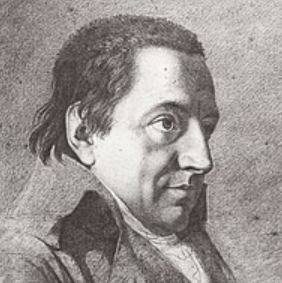
Since it cannot be overlooked by the Doctrine of Knowledge that Actual Knowledge does by no means present itself as a Unity, such as is assumed above but as a multiplicity, there is consequently a second task imposed upon it, - that of setting forth the ground of this apparent Multiplicity. It is of course understood that this ground is not to be derived from any outward source, but must be shown to be contained in the essential Nature of Knowledge itself as such; - and that therefore this problem, although apparently two-fold, is yet but one and the same, - namely, to set forth the essential Nature of Knowledge.
2 days ago
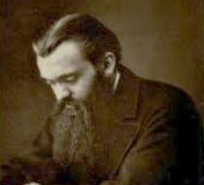
I am endeavouring in a general way to explain the laws of double refraction on this hypothesis, but have not yet arrived at any results sufficiently decisive to be communicated.

3 weeks 2 days ago
Religion in most countries, more or less in every country, is no longer what it was, and should be,-a thousand-voiced psalm from the heart of Man to his invisible Father, the fountain of all Goodness, Beauty, Truth, and revealed in every revelation of these; but for the most part, a wise prudential feeling grounded on mere calculation; a matter, as all others now are, of Expediency and Utility; whereby some smaller quantum of earthly enjoyment may be exchanged for a far larger quantum of celestial enjoyment. Thus Religion too is Profit, a working for wages; not Reverence, but vulgar Hope or Fear.
CivilSimian.com created by AxiomaticPanic, CivilSimian, Kalokagathia