

1 month 2 weeks ago
I want to write - I want to write - I want to write and never never never will. I know it and I am so unhappy and it seems as though nothing else mattered. Whatever I'm doing, it's always there, an ultimate longing there saying, "Write this - write that - write -" and I can't. Lack ability, time, strength, and duration of vision. I wish someone would tell me brutally, "You can never write anything. Take up home gardening!"
1 month 3 weeks ago
Kant's position is extremely subtle - so subtle, indeed, that no commentator seems to agree with any other as to what it is.
▼
Source
source
Some More -isms (p. 25)

5 months 1 day ago
A punishment that penalizes without forestalling is indeed called revenge.

4 months 1 week ago
Now, as there is an infinity of possible universes in the Ideas of God, and as only one of them can exist, there must be a sufficient reason for God's choice, which determines him toward one rather than another. And this reason can be found only in the fitness, or the degrees of perfection, that these worlds contain, since each possible thing has the right to claim existence in proportion to the perfection it involves.
▼
Source
source
La monadologie (53 & 54).

1 month 3 weeks ago
While the intellectual space does contain universal ideas, definitions, those definitions are detailed a posteriori. Truth corresponds with reality at a minimum.

4 months 3 weeks ago
Sincerity is that whereby self-completion is effected, and its way is that by which man must direct himself.

3 months ago
At different degrees, everything is pathology, except for indifference.

4 days ago
The policy of American government is to leave its citizens free, neither restraining them nor aiding them in their pursuits.
▼
Source
source
Letter to M. L'Hommande, (1787), as quoted in The Jeffersonian Cyclopedia (1900), edited by John P. Foley, p. 500
2 months 2 days ago
Learn to see in another's calamity the ills which you should avoid.
▼
Source
source
Maxim 120

2 months 3 weeks ago
The soul, too, has her virginity and must bleed a little before bearing fruit.
▼
Source
source
"Normal Madness," Ch. 3, P. 56

3 weeks 4 days ago
It is no longer the moral, religious, spiritual condition of the people that is our concern, but their physical, practical, economical condition, as regulated by public laws.
2 weeks 5 days ago
If you could be alarmed into the semblance of modesty, you would charm everybody; but remember my joke against you about the Moon and the Solar System;-"Damn the solar system! bad light - planets too distant - pestered with comets - feeble contriviance; - could make a better with great ease."
▼
Source
source
Vol. II, letter to Lord Jeffrey (1806), p. 23 Discussed in David A. Kent, D. R. Ewen, "Romantic Parodies, 1797-1831", The Review of English Studies, New Series, Vol. 44, No. 175, (1993), pp. 430-432

2 months 2 weeks ago
When we resist impermanence, the self intensifies.

4 months 1 week ago
It is absurd to excite reason against the primary postulates of pure time, as, for example, continuity, etc., since they follow from laws prior and superior to which nothing is found, and since reason herself in the use of the principle of contradiction cannot dispense with the support of this concept, so primitive and original is it.
1 week 5 days ago
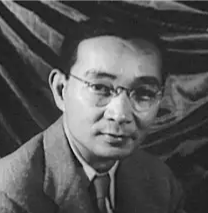
I do not think that any civilization can be called complete until it has progressed from sophistication to unsophistication, and made a conscious return to simplicity of thinking and living, and I call no man wise until he has made the progress from the wisdom of knowledge to the wisdom of foolishness, and become a laughing philosopher, feeling first life's tragedy and then life's comedy. For we must weep before we can laugh. Out of sadness comes the awakening, and out of the awakening comes the laughter of the philosopher, with kindliness and tolerance to boot.
▼
Source
source
Ch. I : The Awakening, p. 13
3 months 4 days ago
But like the desire for eternal life, the desire for omniscience and absolute perfection is merely an imaginary desire; and, as history and daily experience prove, the supposed human striving for unlimited knowledge and perfection is a myth. Man has no desire to know everything; he only wants to know the things to which he is particularly drawn.
▼
Source
source
Lecture XXX, Atheism alone a Positive View
2 months 2 weeks ago
A precise language awaits a completed metaphysics.
2 weeks 1 day ago
Blow the dust off the clock. Your watches are behind the times. Throw open the heavy curtains which are so dear to you - you do not even suspect that the day has already dawned outside.
▼
Source
source
Letter to the Secretariat of the Soviet Writers' Union (12 November 1969) as translated in Solzhenitsyn: A Documentary Record (1970) edited by Leopold Labedz, "Expulsion"

3 months 4 weeks ago
This investigation aims to analyze the type "bourgeois public sphere". Its particular approach is required, to begin with, by the difficulties specific to an object whose complexity precludes exclusive reliance on the specialized methods of a single discipline. Rather, the category. "public sphere" must be investigated within the broad field formerly reflected in the perspective of the traditional science of "politics."' When particular social-scientific discipline, this object disintegrates. The problems that result from fusing aspects of sociology and economics, of constitutional law and political science, and of social and intellectual history are obvious: given the present state of differentiation and specialization in the social sciences, scarcely anyone will be able to master several, let alone all, of these disciplines.
▼
Source
source
p.xvii
2 months 2 weeks ago
The erotic is never free of secrecy.


2 months 3 weeks ago
He that is without sin among you, let him first cast a stone at her.
▼
Source
source
8:7 (King James Version)

2 months 2 weeks ago
A dangerous form of psychological splitting had to have taken place, and it continues to take place, in the psyches of many African Americans who can on one hand oppose racism, and then on the other hand passively absorb ways of thinking about beauty that are rooted in white supremacist thought.

2 weeks 5 days ago
But both courses are to be avoided; you should not copy the bad simply because they are many, nor should you hate the many because they are unlike you.

5 months 2 days ago
Probably, the most-often-repeated lesson in history is that foreigners who are called in to help one side in a civil war take over for themselves. It is a lesson that seems never to be learned despite endless repetition.
5 months 2 days ago
My parents, both of whom spoke Russian fluently, made no effort to teach me Russian, but insisted on my learning English as rapidly and as well as possible. They even set about learning English themselves, with reasonable, but limited, success.In a way, I am sorry. It would have been good to know the language of Pushkin, Tolstoy, and Dostoevski. On the other hand, I would not have been willing to let anything get in the way of the complete mastery of English. Allow me my prejudice: surely there is no language more majestic than that of Shakespeare, Milton, and the King James Bible, and if I am to have one language that I know as only a native can know it, I consider myself unbelievably fortunate that it is English.
4 months 5 days ago
There are but few points in which the English, as a people, are entitled to the moral pre-eminence with which they are accustomed to compliment themselves at the expense of other nations: but, of these points, perhaps the one of greatest importance is, that the higher classes do not lie, and the lower, though mostly habitual liars, are ashamed of lying. To run any risk of weakening this feeling, a difficult one to create, or, when once gone, to restore, would be a permanent evil too great to be incurred for so very temporary a benefit as the ballot would confer, even on the most exaggerated estimate necessity.
▼
Source
source
Thoughts on Parliamentary Reform (1859), pp. 48-49
2 weeks 6 days ago
The will is not fundamentally right, as the practical ones would like very much to assure us; one may not pass over the desire for knowledge in order to stand immediately in the will, but knowledge perfects itself to will when it desensualizes itself and creates itself as a spirit "which builds its own body."
▼
Source
source
p. 21

3 months 5 days ago
Bad laws are the worst sort of tyranny.
▼
Source
source
Speech at Bristol Previous to the Election (6 September 1780), quoted in The Works of the Right Honourable Edmund Burke, Vol. II (1855), p. 148

4 months 4 days ago
Our chief want in life, is somebody who shall make us do what we can.
▼
Source
source
Considerations by the Way
3 weeks 4 days ago
Happy the people whose annals are blank in history books!
▼
Source
source
Life of Frederick the Great, Bk. XVI, ch. 1.
3 months 1 day ago
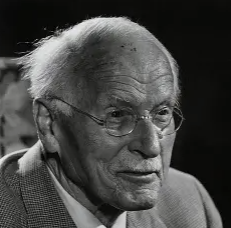
Eros is a superhuman power which, like nature herself, allows itself to be conquered and exploited as though it were impotent. But triumph over nature is dearly paid for. Nature requires no explanations of principle, but asks only for tolerance and wise measure. "Eros is a mighty daemon," as the wise Diotima said to Socrates. We shall never get the better of him, or only to our own hurt. He is not the whole of our inward nature, though he is at least one of its essential aspects.
▼
Source
source
Two Essays on Analytical Psychology, CW 7 (1957). "On the Psychology of the Unconscious" P.32f

3 months 2 weeks ago
Sobriety is the strength of the soul, for it preserves its reason unclouded by passion.
▼
Source
source
As quoted in The History of Philosophy: From the Earliest Times to the Beginning of the Present Century (1819) by William Enfield Sobriety is the strength of the mind
2 months ago
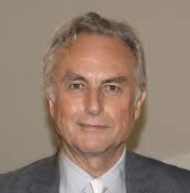
Ignorance, to a scientist, is an itch that begs to be pleasurably scratched. Ignorance, if you are a theologian, is something to be washed away by shamelessly making something up.
▼
Source
source
The Intellectual and Moral Courage of Atheism
3 months 2 weeks ago
None but God is wise.
▼
Source
source
As quoted in The Diegesis (1829) by Robert Taylor, p. 219
2 months 1 week ago
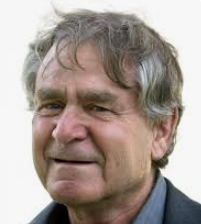
Until the seventeenth century there was no concept of evidence with which to pose the problem of induction!
▼
Source
source
Chapter 4, Evidence, p. 31.

4 months 5 days ago
In art the Chinese aim at being exquisite, and in life at being reasonable.
▼
Source
source
The Problem of China (1922), Ch. XI: Chinese and Western Civilization Contrasted

2 months 2 days ago
By electricity we have not been driven out of our senses so much as our senses have been driven out of us.
▼
Source
source
(p. 375)

2 weeks 5 days ago
If you have been given a talent, exercise it freely and happily like the sun: give everyone from your splendour.
3 months ago
By capitulating to life, this world has betrayed nothingness. . . . I resign from movement, and from my dreams. Absence! You shall be my sole glory. . . . Let "desire" be forever stricken from the dictionary, and from the soul! I retreat before the dizzying farce of tomorrows. And if I still cling to a few hopes, I have lost forever the faculty of hoping.
3 months ago
Scaffolds, dungeons, jails flourish only in the shadow of a faith - of that need to believe which has infested the mind forever. The devil pales beside the man who owns a truth, his truth. We are unfair to a Nero, a Tiberius: it was not they who invented the concept heretic: they were only degenerate dreamers who happened to be entertained by massacres. The real criminals are men who establish an orthodoxy on the religious or political level, men who distinguish between the faithful and the schismatic.
1 month 3 weeks ago
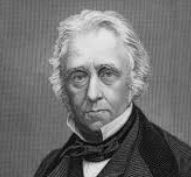
It is surely delightful, Sir, to look forward to that period when a series of liberal and prudent measures shall have delivered islands, so highly favoured by the bounty of Providence, from the curse inflicted on them by the frantic rapacity of man. Then the peasant of the Antilles will no longer crawl in listless and trembling dejection round a plantation from whose fruits he must derive no advantage, and a hut whose door yields him no protection; but, when his cheerful and voluntary labour is performed, he will return with the firm step and erect brow of a British citizen from the field which is his freehold to the cottage which is his castle.
▼
Source
source
Speech to a meeting of the Anti-Slavery Society held in Freemasons' Tavern (25 June 1824), quoted in Report of the Committee of the Society for the Mitigation and Gradual Abolition of Slavery Throughout the British Dominions, Volume I (1824), p. 77

3 months 4 weeks ago
Not only must people know, they must see with their own eyes. Because they must be made to be afraid; but also because they must be the witnesses, the guarantors, of the punishment, and because they must to a certain extent take part in it.
▼
Source
source
Chapter One, pp.58

5 months 2 days ago
Neither perception nor true opinion, nor reason or explanation combined with true opinion could be knowledge. Then our art of midwifery declare to us that all the offspring that have been born are mere wind-eggs and not worth rearing and if you remain barren, you will be less harsh and gentler to your associates, for you will have the wisdom not to think you know that which you do not know.
2 weeks ago
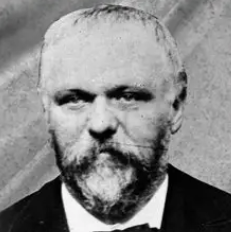
Revolutionary syndicalism keeps alive the desire to strike in the masses and only prospers when important strikes, accompanied by violence, take place.
▼
Source
source
p. 39

4 days ago
People who live at the lower ends of watersheds cannot be isolationists - or not for long. Pretty soon they will notice that water flows, and that will set them to thinking about the people upstream who either do or do not send down their silt and pollutants and garbage. Thinking about the people upstream out to cause further thinking about the people downstream. Such pondering on the facts of gravity and the fluidity of water shows us that the golden rule speaks to a condition of absolute interdependency and obligation. People who live on rivers - or, in fact, anywhere in a watershed - might rephrase the rule in this way: Do unto those downstream as you would have those upstream do unto you.
CivilSimian.com created by AxiomaticPanic, CivilSimian, Kalokagathia